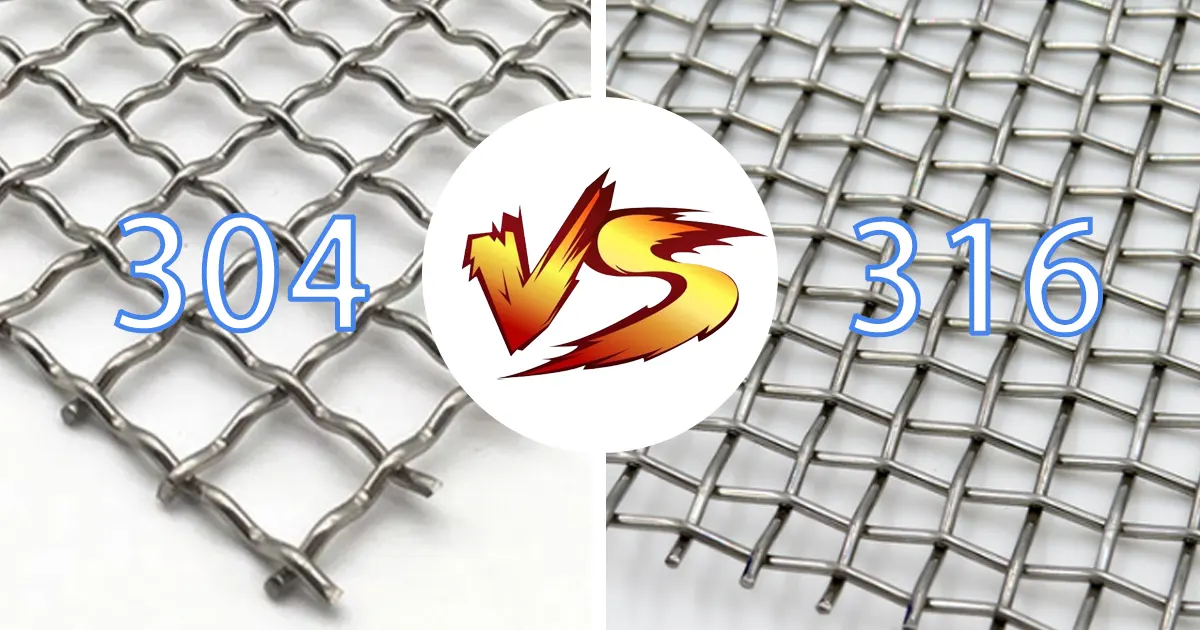
When selecting industrial mesh, you face an important decision regarding 304 vs 316 stainless steel. The significant difference between these two grades lies in their chemical composition. Grade 316 stainless steel contains 2-3% molybdenum, which enhances its resistance to damage from chemicals, saltwater, and chlorides. On the other hand, grade 304 stainless steel is more cost-effective and performs adequately for basic screening applications. However, its protective layer can deteriorate quickly in harsh environments. Your choice between 304 vs 316 stainless steel will impact the mesh’s performance and your overall expenses. Therefore, selecting the right mesh grade is crucial for ensuring its longevity.
Key Takeaways
- 304 stainless steel mesh costs less and works well in dry places. It is good for simple screening and filtering jobs.
- 316 stainless steel mesh has molybdenum. This helps it fight rust from saltwater and chemicals. It is great for tough environments.
- Pick 304 mesh for jobs like food processing or screening rocks. Use it when rust is not a big problem.
- Use 316 mesh in places with water, chemicals, or acid. It lasts longer and needs less fixing over time.
- Both mesh types look the same, but they work differently. The environment changes how well they perform. Picking the right mesh is very important.
- Think about the total cost, including fixing and replacing. This helps you choose between 304 and 316 stainless steel mesh.
- Look at what your job needs, like chemical exposure or shaking. This helps you pick the best mesh grade.
- Always match the mesh grade to where you work. This stops expensive repairs and keeps the mesh working for a long time.
304 vs 316 Stainless Steel: Quick Comparison
Key Differences Table
You want to compare 304 vs 316 stainless steel mesh quickly. The table below shows their chemical makeup, corrosion resistance, cost, and uses.
| Property | 304 Stainless Steel Mesh | 316 Stainless Steel Mesh |
|---|---|---|
| Chemical Composition | 18.0–20.0% Chromium, 8.0–11.0% Nickel | 16.0–18.0% Chromium, 10.0–14.0% Nickel, 2.0–3.0% Molybdenum |
| Corrosion Resistance | Good for dry, mild places | Excellent in saltwater, acids, chemicals |
| Cost | $1.71 per pound (spot price) | Costs more than 304 because of molybdenum |
| Durability | Works well for regular screening | Better for high-frequency vibration |
| Typical Applications | Aggregates, food processing, filtration | Marine, chemical, acidic slurries |
Tip: 316 stainless steel mesh lasts longer in tough places. If you use 304 in a corrosive area, it can rust and break in a few months.
Typical Uses
You need to pick the right mesh for your job. Here is how 304 vs 316 mesh works in real life:
- 304 Stainless Steel Mesh
- Screens dry materials and aggregates well.
- Used in industry for filtration and ventilation guards.
- Common in food processing where corrosion is not a big problem.
- Gives good value for simple screening jobs.
- Works for insect screens and decoration.
- 316 Stainless Steel Mesh
- Best for marine and coastal areas.
- Needed for chemical processing and fertilizer making.
- Handles acidic slurries and salty places without pitting.
- Stays strong under high-frequency vibration and fatigue.
- Cuts down on downtime and maintenance in rough settings.
Both grades look alike, but your choice depends on your environment. Picking the wrong mesh can cause rust, breakage, and expensive fixes. Always think about corrosion and mechanical needs before you decide.
304 Stainless Steel Mesh
Composition and Properties
Chromium-Nickel Content
304 stainless steel has a balanced mix of metals. It is part of the austenitic stainless steels family. This means it has chromium and nickel in it. These metals help make a strong layer. The layer stops rust and wear from happening. The usual mix for 304 stainless steel mesh is:
| Alloy | Carbon [C] | Manganese [Mn] | Phosphorus [P] | Sulfur [S] | Silicon [Si] | Chromium [Cr] | Nickel [Ni] | Iron [Fe] | Others, if Applicable |
|---|---|---|---|---|---|---|---|---|---|
| T-304 SS | 0.08 Max | 2.0 Max | 0.045 Max | 0.03 Max | 1.00 Max | 18.00–20.00 | 8.00–10.50 | Balance | Nitrogen [N] = 0.10 Max |
This mix helps the mesh last through daily use. It works well in most places and gives steady results.
Flexibility and Malleability
304 stainless steel mesh bends easily. The wire does not snap when you bend it. You can shape it for screens or panels. This makes putting it in and fixing it simple. 316 stainless steel is stronger, but 304 stainless steel still holds up under stress. You can use it for screens that you move or adjust often.
Corrosion Resistance
304 stainless steel mesh fights rust well. It works best in dry and mild places. You do not have to worry about rust or oxidation. The mesh can handle heat up to 1600 °F. It also stays strong in cold weather. Here is a table showing its resistance to corrosion and heat:
| Property | Description |
|---|---|
| Corrosion Resistance | Resistant to corrosion |
| Oxidation | Unlikely to oxidize |
| Temperature Resistance | Heat-resistant in temperatures as high as 1600 °F |
| Operational Temperatures | Operational in sub-zero temperatures |
Note: Do not use 304 stainless steel mesh in very acidic or salty places. For dry material screening and aggregates, it protects well against rust.
Cost and Availability
304 stainless steel mesh costs less than other grades. It is easy to find from suppliers. You can pick from many mesh sizes and types. Prices change, so ask your supplier for the latest cost. For example, Grade 304 twill weave mesh costs between £19.99 and £79.99 with VAT.
- 304 stainless steel mesh is best for general wear and dry screening.
- You save money on screening jobs for aggregates and construction.
- It is easy to buy and gets delivered fast because it is popular.
Tip: If you need mesh for simple screening, ventilation, or food processing, 304 stainless steel works well and costs less.
Common Applications
304 stainless steel mesh is used in many industries. It is a good choice because it costs less. It works well where corrosion is not a big problem. The mesh can be used for screening and filtration jobs. Here are the most common ways people use 304 stainless steel mesh.
Dry Materials
304 stainless steel mesh is used to screen dry materials. It works with powders, grains, and minerals. The mesh bends easily for vibrating screens and sieving machines. You can sort sand, flour, and other bulk items with it. The mesh does not wear out fast from moving and rubbing. You save money because it lasts longer in dry places and does not need to be replaced often.
- Screens powders and grains in factories
- Separates sand and minerals in mines
- Used in sieving machines for flour and dry foods
Tip: Pick 304 stainless steel mesh for dry material screening if you want something that lasts and needs little care.
Aggregates
304 stainless steel mesh is used for sorting stones and gravel. It is strong and can handle heavy loads and shaking. You can put it in vibrating screens without worrying about it breaking. The mesh keeps its shape and strength even with rough materials.
- Used in building for sorting gravel and stones
- Screens aggregates in mining and quarrying
- Handles shaking and heavy loads
You spend less time fixing and replacing mesh when you use 304 stainless steel mesh for aggregates. It gives you good performance and saves money.
Food Processing
304 stainless steel mesh is used a lot in food factories. It helps strain and filter food and drinks. You use it to sieve flour, filter oils, clear juices, and strain pasta. The mesh is also part of food equipment like sieves and filters. Its resistance to corrosion keeps food safe.
- Needed for straining and filtering in food and drink factories
- Used for sieving flour, filtering oils, clearing juices, and straining pasta
- Part of food processing and handling tools
Note: 304 stainless steel mesh is safe for food and easy to clean. You can trust it for food jobs.
304 stainless steel mesh is a smart choice for dry materials, aggregates, and food processing. The mesh works well and keeps your work going smoothly.
316 Stainless Steel Mesh
Composition and Properties
Molybdenum Addition
316 stainless steel mesh is special because it has molybdenum. This element helps the mesh resist damage from chemicals and saltwater. Molybdenum makes the mesh stronger against chlorides. You see this in places like the ocean or chemical factories. The molybdenum keeps the mesh’s surface layer stable. This layer stops the mesh from breaking down when it touches harsh stuff. You get less rust and the mesh lasts longer.
- 316 stainless steel mesh has molybdenum, which helps it fight chemicals and chlorides.
- Molybdenum keeps the mesh’s surface layer strong in tough places.
- The mesh resists pitting and crevice corrosion in salty water.
- It works well with acids like sulfuric and phosphoric acid.
You pick 316 stainless steel mesh for jobs in rough places. It is part of the austenitic stainless steels family. This means it is strong and flexible.
Tensile Strength and Hardness
316 stainless steel mesh is tough and hard. You can use it where the mesh shakes a lot or holds heavy things. The mesh keeps its shape and does not bend easily. It lasts a long time in marine and factory jobs. Molybdenum helps the mesh resist damage from stress. You get a mesh that needs less fixing and lasts longer.
Corrosion Resistance
Saltwater and Chemicals
316 stainless steel mesh fights rust really well. It has 2-3% molybdenum, so it works great in salty water and with chemicals. You do not worry about rust or damage, even in harsh places. The mesh protects itself from chlorides and other bad stuff.
| Feature | Description |
|---|---|
| Best for harsh environments | Yes |
| Highly resistant to saltwater | Yes |
| Stronger corrosion resistance | Compared to 304 stainless steel |
You use 316 stainless steel mesh in the ocean, chemical plants, and salty places. It lasts longer and keeps your work going.
Pitting and Crevice Corrosion
Pitting and crevice corrosion happen in places with lots of chlorides or acids. 316 stainless steel mesh stops these problems better than other types. Molybdenum protects the mesh from tiny holes and cracks. You do not have to fix or replace the mesh often. It stays strong, even in tough spots.
Cost Factors
316 stainless steel mesh costs more because it has molybdenum. The higher price means it works better in harsh places. You pay more for 316 stainless steel mesh, but it lasts longer and needs less care. The cost is worth it because you do not have to replace it often. You get good value in jobs with saltwater, chemicals, or acids.
Common Applications
Marine Environments
Marine places are very tough for mesh. Saltwater and humidity can ruin regular mesh fast. Chlorides also cause damage. 316 stainless steel mesh protects best in these places. Molybdenum stops rust and pitting near the ocean or on boats. You can use 316 stainless steel for boat parts and yacht hardware. It works for offshore platforms too. The mesh is good for marine filtration systems. It is strong and reliable, so you do not fix it often.
- Boat and yacht fittings
- Offshore platforms
- Marine filtration systems
- Architectural features in coastal areas
- Security screens for marine environments
If you need mesh for marine jobs, pick 316 stainless steel. You save money on repairs and your equipment lasts longer.
Chemical Processing
Chemical plants use strong acids and chemicals. They need mesh that does not break down. 316 stainless steel mesh handles these tough chemicals well. Molybdenum keeps the mesh safe from sulfuric and phosphoric acids. You use this mesh for filtering and separating particles. It is also used for equipment guards in chemical plants. The mesh works in pharmaceuticals and labs. It is good for food preparation and rubber or plastic machines. You get steady performance and safety where chemicals are common.
- Filtration and particle separation
- Equipment guards in chemical plants
- Pharmaceuticals and laboratory use
- Food processing and preparation
- Rubber and plastic machinery
If you work with chemicals, 316 stainless steel mesh helps you worry less. You do not replace it often and your process stays safe.
Acidic Slurries
Acidic slurries are hard for mesh to handle. You need mesh that can take strong acids and salt. 316 stainless steel mesh is best for these jobs. Molybdenum stops pitting and crevice corrosion. You can use it for screening acidic minerals in mining. It works in refineries and oil fields. The mesh is good for labs and scientific work. It also handles heavy welding and high vibration.
- Mining and mineral processing
- Refinery and oil field screening
- Scientific and laboratory filtration
- Applications requiring heavy welding
Pick 316 stainless steel mesh for acidic slurries. Your screens last longer and you avoid sudden breaks.
316 stainless steel mesh is best where corrosion, salt, and acids are problems. You protect your equipment and make sure it works for a long time by choosing the right mesh for marine, chemical, and slurry jobs.
304 vs 316: Performance Comparison
Corrosion Resistance
When you look at corrosion resistance, there are big differences. Both 304 and 316 stainless steel are austenitic stainless steels. But they do not act the same in tough places.
- 304 stainless steel resists rust in many places. It works well indoors or where there is no water or salt.
- 316 stainless steel is much better in harsh places. It has 2-3% molybdenum, which helps stop pitting and crevice corrosion. You should use it near the ocean, in chemical plants, or where there are chlorides.
- If you need mesh for marine, chemical, or salty areas, pick 316 stainless steel. It keeps its surface safe and does not rust, even with water and strong chemicals.
If you use the wrong type, like 304 stainless steel near the sea, it can rust and break in just a few months. Always choose the right mesh for your environment to get the best results and save money.
Durability and Longevity
You want your mesh to last a long time, especially in hard jobs. How long 304 and 316 stainless steel last depends on where and how you use them.
| Stainless Steel Type | Average Lifespan | Recommended Environment | Notes |
|---|---|---|---|
| 304 | Decades | Indoor, dry climates | Routine cleaning extends lifespan |
| 316 | Significantly longer | Corrosive environments | Superior corrosion resistance, especially in chloride-rich areas |
- 304 stainless steel mesh is good for indoors and dry places. If you clean it often, it can last for decades.
- 316 stainless steel mesh is made for tough, corrosive places. It lasts much longer, even with water, salt, or chemicals.
- 316 stainless steel mesh is stronger when machines shake a lot. The molybdenum in 316 helps stop cracks and breaks. The mesh stays strong, even with lots of vibration.
- If you use 304 stainless steel mesh in the wrong place, like a chemical plant or near the sea, it can rust and break early. This can cause problems and cost more money.
Picking the right mesh makes it last longer. Even though 304 and 316 look the same, they work very differently in tough places.
Cost Effectiveness
You should think about both the starting price and long-term costs when picking 304 or 316 stainless steel mesh.
- 304 stainless steel costs less at first. You save money right away, so it is popular for simple jobs.
- 316 stainless steel costs more because it has molybdenum. But it can save you money over time in harsh places.
- If you add up cleaning, fixing, and replacing, 316 stainless steel can be a better deal in tough spots. You spend less on repairs and your equipment works longer.
- In dry or mild places, 304 stainless steel gives good value. You get solid results without paying for extra features you do not need.
To get the best value, always match the mesh to your job and environment. This helps you get the most from your mesh and avoid costly mistakes.
Suitability by Environment
You should pick the mesh grade that fits your environment. The choice between 304 vs 316 stainless steel mesh depends on where you use it. Each grade has its own strengths. You need to think about how and where you use the mesh.
304 Stainless Steel Mesh
304 stainless steel mesh is a good value in dry places. It works well for screening, building, and sorting aggregates. The mesh keeps its shape and lasts through daily use. You can trust it in factories, mines, and food plants where corrosion is not a big problem.
- Best for dry, indoor areas
- Handles powders, grains, and aggregates
- Works well in food processing and ventilation
- Stays strong at high temperatures
- Saves money for routine screening jobs
316 Stainless Steel Mesh
316 stainless steel mesh is needed in tough environments. Molybdenum in 316 gives extra protection from salt, acids, and chemicals. This mesh stands up to marine air, chemical spills, and acidic slurries. You see it used in coastal building, chemical plants, and fertilizer making. It also resists pitting and crevice corrosion, so you fix it less often.
- Great for marine and coastal places
- Handles chemical processing and acidic slurries
- Protects against chlorides and contamination
- Works under high-frequency vibration and fatigue
- Cuts down on downtime and repairs in tough spots
| Environment Type | Recommended Mesh Grade | Why It Works Best |
|---|---|---|
| Dry, indoor, general use | 304 | Cost-effective, reliable for routine jobs |
| Aggregate screening | 304 | Strong enough for heavy loads and shaking |
| Food processing | 304 | Safe, easy to clean, resists mild corrosion |
| Marine/coastal | 316 | Molybdenum resists saltwater and pitting |
| Chemical plants | 316 | Handles acids and harsh chemicals |
| Acidic mineral slurries | 316 | Prevents rapid corrosion and mesh failure |
Tip: If you pick the wrong mesh grade, your screens can rust and break fast. Always check your environment before you choose.
You also need to think about vibration and fatigue. High-frequency vibrating screens put extra stress on mesh. 316 stainless steel mesh lasts longer in these conditions because molybdenum makes the wire stronger. You avoid sudden breaks and costly downtime. 304 stainless steel mesh is good for basic screening, but it may not last in harsh or corrosive places.
Picking the right mesh grade helps your screens last longer and work better. You protect your investment and keep your process running smoothly. The right choice between 304 vs 316 matters for both cost and reliability.
How to Choose Stainless Steel Mesh
Picking the right stainless steel mesh is important. You need to know about your environment, budget, and what you want the mesh to do. If you choose well, your mesh will work better and last longer.
Decision Factors
Environment
Think about where you will use the mesh. If you are inside and it is dry, 304 stainless steel mesh is a good choice. It is strong and does not cost much. If you are near the sea, in a chemical plant, or around salt, 316 stainless steel mesh is better. Molybdenum in 316 mesh helps stop rust, pitting, and damage from acids. If your mesh will shake a lot, 316 mesh is stronger and lasts longer than 304.
Budget
How much you can spend matters. 304 stainless steel mesh is cheaper and works for most jobs with dry stuff or rocks. 316 stainless steel mesh costs more at first. But it saves money later because it does not need to be replaced as often in tough places.
Application Needs
Think about what you want the mesh to do. If you need to screen dry rocks, food, or building stuff, 304 mesh is enough and costs less. If you work with chemicals, salty water, or acids, 316 mesh keeps your machines safe and helps you work without stopping.
Tip: Always pick the mesh grade that fits your place and job. This helps you avoid mesh breaking too soon.
Selection Steps
Assess Corrosive Risks
- Find out if the mesh will touch chemicals, salt, or acids.
- Check if the mesh will get wet, sprayed with salt, or touch chemicals.
- Pick 316 mesh for tough, salty, or chemical places. Use 304 mesh for dry, safe, or indoor jobs.
Calculate Total Cost
- Look at how much 304 and 316 mesh cost at first.
- Think about how much you will spend on cleaning, fixing, or replacing the mesh.
- Add in the cost to put the mesh in and any extra parts.
- Remember, saving money at first with 304 mesh can cost more later if it breaks in a hard place.
Match to Process
- Decide what the mesh will do—filter, screen, or protect.
- Pick the right mesh size, weave, and thickness for your job.
- Make sure the mesh is strong and bends enough for your machines.
Note: The right mesh thickness and hole size help your mesh last and work well.
Mistakes to Avoid
- Not knowing what you need can make you pick the wrong mesh.
- Using 304 mesh in salty or chemical places makes it rust and break fast.
- Forgetting about mesh thickness or weave can make the mesh weak or too stiff.
- Only thinking about price can mean you spend more later on new mesh.
- Not planning for putting in or cleaning the mesh can make you spend too much.
- Not cleaning the mesh often makes it wear out faster.
Warning: 304 and 316 mesh look the same, but picking the wrong one can make your screens rust and break in just a few months. Always check your place and job before you choose.
The right stainless steel mesh keeps your stuff safe and your work going. Think about both the first price and what you will spend later to get the best mesh for your needs.
304 vs 316 Stainless Steel: Application Scenarios
304 Mesh Examples
Mining and Aggregates
You see 304 stainless steel mesh used in mines and for sorting rocks. This mesh helps sort materials by size and shape. You use woven wire cloth and slotted screens in machines that shake. These screens work with dry things like sand, gravel, and minerals. You get steady results and save money because 304 stainless steel lasts well in these places.
- Screens for sorting sand and gravel
- Woven wire cloth for separating minerals
- Slotted screens in vibrating machines
You get good value and do not need much maintenance when you pick 304 stainless steel for dry and aggregate jobs. The mesh lasts through daily use and keeps your work going.
General Industry
In factories and other industries, you use 304 stainless steel mesh for filtering, letting air through, and safety guards. You use it in factories, warehouses, and places where food is made. The mesh bends easily and fits many machines. You get steady results and do not have to replace it often. This grade works well for simple screening and basic protection.
- Filtration screens in factories
- Ventilation guards in machines
- Safety barriers in food processing
You pick 304 stainless steel mesh because it costs less and is easy to find. It works for standard screening and protection jobs.
316 Mesh Examples
Marine and Coastal
You need 316 stainless steel mesh near the sea or coast. The molybdenum in 316 helps it resist saltwater and bad weather. You use this mesh for boat parts, marine equipment, and building projects near the water. It protects against rust and keeps your equipment safe.
- Boat fittings and marine hardware
- Filtration systems for offshore platforms
- Building features exposed to saltwater
You avoid rust and pitting, and your mesh lasts longer in these tough places.
Fertilizer and Chemicals
You use 316 stainless steel mesh in making fertilizer and working with chemicals. The mesh stands up to acids and harsh chemicals. You rely on it for filtering and separating tasks. It keeps your process safe and cuts down on downtime.
- Filtration screens in chemical plants
- Equipment guards in fertilizer factories
- Particle separation in labs
You get steady results and fewer repairs when you use 316 stainless steel mesh for these hard jobs.
Acidic Processing
In acidic processing, you need mesh that resists pitting and cracks. 316 stainless steel mesh works best for screening acidic mineral slurries and handling machines that shake a lot. You use it in mines, refineries, and science labs. The mesh stays strong and does not break suddenly.
- Screening acidic minerals in mining
- Filtration in refineries and oil fields
- Lab jobs with strong acids
You protect your equipment and spend less on repairs by using 316 stainless steel mesh.
Why One Grade is Preferred
You must match the mesh grade to your place and job. If you use 304 stainless steel in dry or mild places, you get good value and do not need much maintenance. In tough places, like near the sea or with chemicals, 316 stainless steel mesh lasts longer and needs fewer repairs. The molybdenum in 316 helps it resist rust and damage from shaking. You avoid costly downtime and get your money back faster, even though it costs more at first.
- 316 stainless steel mesh saves money on repairs in tough places.
- 304 stainless steel is smart for less corrosive spots, but may need more fixing over time.
- Your choice affects downtime and repair costs. Picking the right mesh keeps your screens working and saves money.
If you pick the wrong mesh, your screens can rust and break in just a few months. Always check your place and job before you decide.
You see that picking the right stainless steel mesh matters. The mesh may look the same, but the grade decides how long it lasts and how much you spend on repairs.
Conclusion
You must pick either 304 or 316 stainless steel mesh. The choice depends on where you use it and what you need. 304 mesh works well for dry materials and sorting rocks. It gives good value for these jobs. 316 mesh has molybdenum, so it is best for places near the sea, with chemicals, or with acids. The table below shows how they are different:
| Feature | 304 Mesh | 316 Mesh |
|---|---|---|
| Cost | Lower | Higher |
| Corrosion Resistance | Moderate | High |
| Durability | Good for general | Superior in harsh areas |
Choosing the right mesh reduces breakage, shortens maintenance time, and lowers replacement costs. Anpeng is a screen media manufacturer, and we help you select the best woven wire screen setup for your material and vibrating screen—so you get stable performance, longer wear life, and lower overall operating cost.
FAQ
What is the main difference between 304 and 316 stainless steel mesh?
You find the biggest difference in their chemical makeup. 316 mesh contains molybdenum, which gives it better resistance to corrosion from saltwater and chemicals. 304 mesh costs less and works well for dry materials.
When should you choose 304 stainless steel mesh?
You should pick 304 mesh for screening dry aggregates or materials in construction. It offers high value and lasts through normal wear. You save money when you use it in places without harsh chemicals or salt.
Why does 316 stainless steel mesh perform better in marine environments?
316 mesh contains molybdenum. This element protects the mesh from saltwater, acids, and chlorides. You get longer-lasting screens and fewer repairs in coastal or marine jobs.
How do 304 and 316 mesh compare under high-frequency vibration?
316 mesh stands up to vibration and fatigue better. You avoid sudden breaks and downtime. 304 mesh works for basic screening but may fail faster in machines that shake a lot.
Can you use 304 mesh for chemical processing?
You should not use 304 mesh in chemical plants or acidic slurries. It can rust and break quickly. 316 mesh resists acids and chemicals, so your equipment stays safe.
Do 304 and 316 mesh look different?
Both mesh grades look the same. You cannot tell them apart by appearance. The difference lies in their performance and durability. Picking the wrong grade can lead to rust and failure in just a few months.
How does mesh grade affect maintenance costs?
Choosing the right mesh grade reduces repairs and downtime. 316 mesh costs more upfront but saves money in harsh environments. 304 mesh offers value for routine jobs and needs less maintenance in dry places.
What happens if you select the wrong mesh grade?
If you pick the wrong mesh, your screens can rust and break within three months. You face costly repairs and production stops. Always match the mesh grade to your environment and job needs.