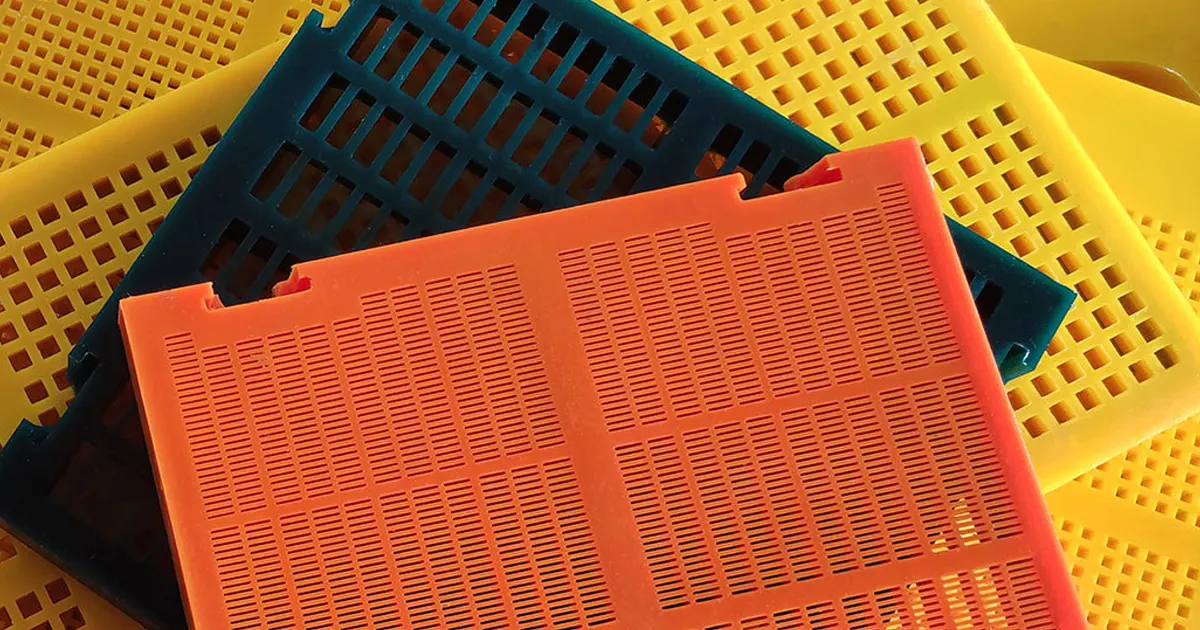
You want a screening solution that stays strong for a long time. Polyurethane screen mesh is special in industrial screening because it is tough and works well. You can find this mesh in mining and quarrying. These places need materials that resist damage and clean themselves. Polyurethane mesh can carry heavy loads in aggregate and recycling plants easily. Its toughness lets you worry less about damage and focus more on getting good results. Why use Polyurethane Screen Mesh? The answer is easy—polyurethane mesh helps your operation stay strong in mining and quarrying.
Key Takeaways
- Polyurethane screen mesh lasts much longer than metal mesh. It can last 3 to 10 times longer. This means you do not need to replace it as often. You can save money because of this.
- Polyurethane mesh cleans itself. This means machines stop less often. You can get up to 30% more work done.
- Polyurethane mesh does not wear out easily. It can handle hard hits and rough use. This makes it great for mining and recycling jobs.
- Polyurethane mesh is both strong and bendy. It works well in many different places. It does a good job in both wet and dry areas.
- Using polyurethane mesh means you spend less on fixing and cleaning. You do not need to clean or repair it as much.
- Polyurethane mesh keeps filtering and separating materials the same way every time. This helps make the whole process work better.
- Polyurethane mesh makes less noise and shakes less. This makes the workplace safer and more comfortable.
- You can pick the size of the holes in polyurethane mesh. This helps you match the mesh to the material you need to screen. It makes screening work better.
Why Use Polyurethane Screen Mesh
Key Advantages
You may wonder why you should use polyurethane screen mesh. The answer is about its benefits. Polyurethane mesh is strong and lasts a long time. It works well in tough jobs. You see it used in mining and recycling plants. These places need mesh that keeps working. Polyurethane mesh gives you strength and durability. It handles rough materials and helps your plant keep running.
Abrasion Resistance
You work with rough materials every day. Polyurethane mesh resists damage better than metal mesh. It lasts longer and wears out less. Polyurethane screens last three to five times longer than metal mesh. You save money and time because you change screens less.
Polyurethane mesh stays strong even with hot, rough materials. It keeps its shape in high heat. You do not worry about materials sticking or losing quality.
Here’s a quick look at how polyurethane mesh compares to other screen media:
| Material Type | Abrasion Resistance |
|---|---|
| Traditional Metal Mesh | Baseline (1×) |
| Polyurethane Mesh | 3 – 5× longer |
You see the benefits of polyurethane mesh every day. It gives you strength and durability. Your plant stays productive.
Impact Resistance
You need mesh that can take hits. Polyurethane screens handle impacts better than other types. They resist shocks and drops. Polyurethane mesh stands up to big rocks and rough materials.
Here’s what lab tests show about polyurethane mesh:
| Test Parameter | Mining Standard | Construction Aggregate Standard |
|---|---|---|
| Particle Impact (Joules) | 150J cyclic @ 5Hz | 75J continuous @ 3Hz |
| Slurry Abrasion (g/hr) | ≤8.2 (ASTM D4060) | ≤5.9 (ASTM D3389) |
| Hydrolytic Stability | 500hr @ 85°C/85% RH | 300hr @ 70°C/75% RH |
| Dynamic Load Resistance | 106 cycles at 2 G | <5% permanent deformation |
| Wet Abrasion Resistance | 500 hrs @ 50 PSI | <0.8 mm material loss |
Polyurethane mesh keeps its strength after many impacts. You get screens that stay tough and flexible.
Toughness and Flexibility
You want mesh that bends but does not break. Polyurethane screens are tough and flexible. You can use them in many places. Polyurethane mesh works in wet and dry conditions. It handles changes in temperature and pressure. It resists cracking and tearing.
- Polyurethane mesh is light and easy to put in.
- You can use it where material buildup happens.
- Polyurethane screens keep working when conditions change.
Polyurethane mesh gives you strength and durability. You get screens that last longer and work better. You see the benefits of polyurethane mesh in every job. You get strength, flexibility, and reliability.
Now you know why you should use polyurethane screen mesh. Polyurethane screens give you strength and durability. You get mesh that works in mining and recycling. Polyurethane mesh stands up to tough jobs and keeps your plant running.
Screening Efficiency
If you want your plant to work well, you need good screens. Polyurethane mesh helps your plant run better. It makes the screening and sieving process more efficient. You get better filtration and separation. There is less downtime. Your results are more steady. Let’s see how polyurethane screens help you do your best.
Self-Cleaning Properties
It is annoying when mesh gets clogged. Polyurethane mesh fixes this with its self-cleaning design. Polyurethane is flexible. The screens can move and shake off stuck material. This shaking and bouncing keeps the mesh clear. It works even with wet or sticky materials. You do not have to stop often to clean. You get more work done.
Polyurethane mesh keeps your plant running. You can have up to 30% less downtime than rubber screens. This is true when you handle damp bulk solids. The self-cleaning action means you do not stop for manual cleaning. Your throughput stays high. Filtration and separation stay steady.
Reduced Blinding and Pegging
Blinding and pegging slow down your work. Polyurethane mesh helps stop this problem. The material is strong and flexible. It stops particles from getting stuck in the holes. You get good filtration in wet or dry conditions. Polyurethane screens like Trellex UFS cloths handle fine particles. They work with sizes from 0.075 to 1 mm. They do not lose efficiency.
You can count on polyurethane mesh to keep screens open. The mix of strength and open area means less blinding. You get more steady separation. Your plant keeps working. You do not have to fix things all the time.
Consistent Separation
You want the same good results every time. Polyurethane mesh gives you steady separation. It works no matter the material or place. The mesh keeps its shape. The holes stay the same size. Your filtration stays correct. You get high-quality separation in both wet and dry jobs.
- Polyurethane screens keep throughput steady.
- Filtration and separation stay the same.
- Your plant meets quality standards every shift.
A case study shows that using polyurethane panels can make screening 65% more efficient than old options. Companies also see up to 30% less downtime. When you use polyurethane mesh, you get more done with less work.
Polyurethane mesh helps you filter and separate better. You get more efficiency, less build-up, and more uptime. Your plant works smoother. Your results stay strong.
Maintenance and Downtime
You want your plant to work well. Polyurethane mesh helps you keep things easy. You spend less time fixing screens. You get more work done. Let’s see how polyurethane screens make maintenance simple and downtime short.
Less Frequent Replacement
Metal mesh needs changing often. Polyurethane mesh lasts much longer. You do not replace screens as much. This saves money and keeps your plant running.
Here’s a quick comparison:
| Material Type | Lifespan Comparison | Replacement Frequency |
|---|---|---|
| Polyurethane Screen Mesh | 3 to 10 times longer than steel mesh | Significantly reduced |
| Metal Mesh | Shorter lifespan | Higher replacement frequency |
- Polyurethane mesh needs fewer replacements over time.
- You spend less on operating costs.
- Your plant keeps working.
Polyurethane mesh keeps working for a long time. You do not worry about changing screens all the time.
Easy Cleaning
Cleaning screens can be hard. Polyurethane mesh makes it easier. The self-cleaning feature shakes off stuck material. You spend less time cleaning. You get more time to process materials.
- Polyurethane screens last 8-10 times longer than metal screens.
- They let water pass through, so wet fine particles do not clog the mesh.
- Polyurethane mesh is tough and handles impacts well.
The mesh stays clear, so you process materials better. Polyurethane screens help your plant stay clean and keep running.
Plant Uptime
You want your plant to keep working. Polyurethane mesh helps you reach that goal. Polyurethane screen media is strong and boosts uptime. You do not stop for cleaning or replacing screens often.
- Polyurethane screen media lasts up to 10 times longer than wire mesh.
- You spend less money to run your plant.
- Handling is safer, and production goes up.
- Polyurethane mesh makes your plant more efficient and reliable.
Polyurethane mesh keeps your plant working. You spend less time fixing things. You get more time to make products. Your screens stay strong. Your plant stays busy.
Polyurethane mesh makes maintenance easy. Screens last longer and clean themselves. Your plant keeps running. You see less downtime and more results every day.
Cost-Effectiveness
You want your plant to save money and work well. Polyurethane mesh helps you do both. When you pick these screens, you get more than just strong material. You also save money in your budget and see better results.
Lower Total Cost
Polyurethane mesh costs less over time. These screens last longer and need fewer changes. You spend less money because you do not replace them often. Look at the table below:
| Screen Type | Average Lifespan | Cost per Ton Processed | Maintenance Costs | Overall Ownership Savings |
|---|---|---|---|---|
| Polyurethane Screen | 22 months | $0.03 | Lower | Up to 40% |
| Steel Screen | 4.3 months | $0.11 | Higher | N/A |
Polyurethane mesh lasts almost five times longer than steel. You pay less for fixing and changing screens. Your plant keeps working, and you save more money. This helps a lot in aggregate processing where every dollar matters.
Savings on Labor
Labor costs can get high very fast. Polyurethane mesh helps you lower these costs. These screens last longer, so you do not change them as much. That means less downtime and less time spent fixing things. Here are some ways you save:
- Polyurethane mesh panels last 3-5 times longer than stainless steel screens.
- Fewer changes mean less downtime and lower labor costs.
- You get more value for your money and spend less overall.
Your team spends less time fixing screens. They spend more time making your plant work well. You see these benefits in tough jobs like aggregate processing. Polyurethane mesh makes your work easier and more efficient.
Long-Term Value
You want screens that give you value for many years. Polyurethane mesh does that. These screens keep working year after year. You do not worry about changing them all the time or paying for repairs. You get steady work and good results.
Polyurethane mesh gives you value for a long time. You see fewer stops, lower costs, and better results. Your plant keeps working, and your money is well spent.
When you pick polyurethane mesh, you choose to save money and get good results for a long time. Your screens work harder, last longer, and help your plant do better.
Versatility and Customization
Adaptable Screen Media
You want screens that fit your needs. Polyurethane screen panel systems are flexible. You can pick panels for your material type. You can choose based on particle size and plant needs. This helps you get the right panel for each job.
- Choose a strong panel for rough materials.
- Pick a softer panel for easier jobs.
- Change the design to handle more material or less maintenance.
Polyurethane mesh works in many situations. You do not need one type for everything. You get a mesh that fits your process.
Range of Apertures
You need the right opening size for your job. Polyurethane screen panels have many aperture sizes. You can find openings from less than 1 mm to over 100 mm. This lets you separate fine sand or big rocks with the same mesh.
- You can pick the aperture size for your material.
- You can keep your screening goals on track.
- You can stop blinding and clogging, even with tough materials.
Polyurethane mesh is good because it handles many materials. It keeps working well. You get steady performance for wet or dry products.
Industrial Applications
Polyurethane screen panel systems are used in many industries. They work in mining, sand and gravel, dewatering, and recycling. You can use them for ore sorting, sizing, and washing. They help separate plastics, waste, and minerals.
Here are some common uses:
- Mining plants use them for gold, iron ore, copper, and coal.
- Sand and gravel sites use them for washing and separating.
- Dewatering systems use them to remove water from fine materials.
- Recycling centers use them to sort plastics and other materials.
Here’s a quick look at the technical details:
| Attributes | Details |
|---|---|
| Hardness/Shore A | 80±2, 85±2, 90±2, 95±2 |
| Tensile Strength/MPa | ≥ 40, ≥ 43, ≥ 46, ≥ 48 |
| Elongation at Break/% | ≥ 600, ≥ 580, ≥ 550, ≥ 500 |
| Tear Strength/(kN/m) | ≥ 70, ≥ 75, ≥ 85, ≥ 100 |
| Resilience/% | ≥ 25 |
| Relative Volume Abrasion Loss/mm3 | ≤ 60 |
You can trust polyurethane mesh in many places. You get a solution that fits your plant and keeps your operation running smoothly.
Noise and Vibration Reduction
Quieter Operation
Screening plants can be very loud. Metal screens make a lot of noise. Polyurethane mesh helps make things quieter. The softer material soaks up sound. You hear less banging and clanging. Your work area feels much calmer.
- Polyurethane mesh can lower noise by over 10 dB compared to steel.
- Tests show noise drops by 5–20 dB with polyurethane screens.
Think about standing by a machine. Metal mesh makes a lot of rattling. Polyurethane mesh makes the sound much lower. You can talk to coworkers without yelling. You feel less stress from loud sounds. Your ears feel better.
Many plants say workers feel more comfortable. You do not worry as much about loud noise. You can focus better on your job. Polyurethane mesh makes your plant a quieter place.
Improved Safety
Loud noise is not just annoying. It can hurt your hearing. You want to keep your team safe. Polyurethane mesh helps protect ears. Less noise means safer hearing.
Vibration is also a problem. Metal screens shake a lot. Polyurethane mesh soaks up vibration. You feel less shaking in the machines. Equipment lasts longer. You see fewer cracks and breaks.
Polyurethane mesh helps cut down vibration. Your plant stays steady. Everyone gets a safer place to work.
Safety is important every day. You want your team to feel safe. Polyurethane mesh helps make that happen. You lower the chance of hearing loss. You also stop accidents from too much shaking. You build a safer workplace.
Here are some ways polyurethane mesh helps safety:
- Workers wear ear protection less often.
- Machines break less from vibration.
- You meet safety rules more easily.
You see these good changes every shift. Polyurethane mesh gives you quieter work and safer conditions. Your plant is a better place to work.
Application Suitability and Limitations
Where Polyurethane Screens Work Best
You want your screens to handle hard jobs. Polyurethane screens are used in many places. They are found in mining, aggregate plants, and recycling centers. These screens are good when you need strong and long-lasting mesh. They can take heavy hits and keep working in tough spots.
Here are some places where polyurethane screens do well:
- Mining and aggregate plants with lots of impacts
- Chemical plants where screens must resist chemicals
- Wet or sticky materials because they clean themselves
- Recycling centers needing flexible screens and less noise
- Jobs needing less fixing and steady work
Polyurethane screens help your plant run smoothly. They work in both wet and dry jobs. You get less stopping and more work done.
Choosing the Right Screen Media
Picking the right screen is important. You need to match your screen to your job. Polyurethane screens come in different shapes and sizes. You can pick panels that fit your machines and your materials.
Think about these things when you choose:
- What material you want to screen
- How big the holes are (aperture size)
- How thick the panel is
- Any special needs for your job
You may need a thick panel for big rocks. You may want small holes for sand or tiny pieces. Polyurethane screens let you change your setup. You get the best results for your plant.
Tip: Ask your supplier about your job. They can help you pick the best screen for your needs.
When to Consider Alternatives
Polyurethane screens work in many places. Sometimes, you need something else. If your job uses very high heat, check if polyurethane works. These screens do not handle extreme heat as well as other types.
If you work with very big or super hard materials, think about what you need. Polyurethane screens are strong, but some jobs need even stronger mesh. Always match your screen to your plant’s needs.
You get the best results when you pick the right screen for your job. Polyurethane screens fit most jobs in mining, aggregate, and recycling. For special jobs, ask an expert for help.
Comparison with Metal Mesh
You may wonder how polyurethane mesh compares to metal mesh. Let’s look at the differences so you can understand them. Many plants have used metal mesh for a long time. Polyurethane mesh is newer and works better in many jobs.
Here is a table that shows how they compare:
| Aspect | Polyurethane Screen Mesh | Metal Mesh (inferred) |
|---|---|---|
| Wear Life | Exceptional durability and abrasion resistance, leading to longer lifespan and fewer replacements | Generally shorter lifespan due to wear |
| Maintenance | Requires less maintenance due to smooth surface and high durability | Likely requires more frequent repairs |
| Throughput | High efficiency in high-abrasion applications | May be less efficient in similar conditions |
Polyurethane mesh is great for tough jobs. It lasts longer, so you do not stop your plant as much. The smooth surface helps materials move through easily. You spend less time fixing screens and more time working.
Here are some real-life differences:
- Polyurethane mesh works well in mining and aggregate jobs.
- You get fewer clogs and less downtime, even with wet or sticky stuff.
- Metal mesh wears out faster in rough jobs, so you replace it more.
Tip: If you want your plant to work better, try polyurethane mesh in your hardest jobs. You will see better performance and need less fixing.
Polyurethane mesh also helps make your plant quieter. It cuts down on noise and vibration. This makes your plant safer and more comfortable. Metal mesh can be loud and shake more, which can hurt your machines.
You want a screen that can handle hard work and keep going. Polyurethane mesh gives you that. You can use it in many places, like mining or recycling, and it works well every time.
When you compare both, polyurethane mesh has big benefits. You get longer use, less fixing, and better results. Your plant runs more and gets more done.
Conclusion
Polyurethane screen mesh offers excellent strength, long service life, and reliable performance in demanding screening applications. It helps reduce replacement frequency and maintenance costs, making it a cost-effective choice for many plants. As a polyurethane screen mesh manufacturer, we understand that different materials and working conditions require different screen solutions, so we focus on providing durable and adaptable products for a wide range of screening applications.
| Adaptability Feature | Long-Term Value Benefit |
|---|---|
| Chemical and Thermal Stability | Longer service life in harsh environments |
| High Filtration Efficiency | Consistent screening performance over time |
| Retained Efficiency After Washing | Reliable performance after repeated cleaning |
Polyurethane screen mesh is also valued for its durability, flexibility, and stable performance in tough working conditions. With ongoing improvements in material quality and manufacturing processes, it continues to be a practical choice for plants that want longer wear life, lower maintenance needs, and dependable screening results. As a manufacturer, we are committed to supplying polyurethane screen mesh solutions that help customers improve efficiency and reduce overall operating costs.
FAQ
What makes polyurethane screen mesh different from metal mesh?
Polyurethane mesh lasts longer than metal mesh. It resists wear much better. You get less downtime at your plant. You do not need to replace it as often. The mesh stays strong with rough materials.
Can I use polyurethane screens for wet materials?
Yes, you can use polyurethane screens for wet materials. They work well with sticky materials too. The self-cleaning feature keeps the mesh clear. It helps you avoid clogs in your plant.
How often do I need to replace polyurethane screen mesh?
You replace polyurethane mesh much less often than metal mesh. Many people see it last three to ten times longer. You save time and money by changing screens less.
Is polyurethane screen mesh easy to install?
You can install polyurethane mesh quickly and easily. The panels are lightweight and flexible. You do not need special tools for the job. Your team can handle installation without trouble.
Does polyurethane mesh reduce noise in my plant?
Yes, polyurethane mesh absorbs sound and vibration. You notice your work area is quieter. Your team feels more comfortable and safe at work.
What industries use polyurethane screen mesh?
Polyurethane mesh is used in mining, aggregate, recycling, and sand plants. It works for ore sorting, dewatering, and material separation jobs.
Can I customize the aperture size for my screening needs?
You can pick from many aperture sizes. Polyurethane mesh fits fine sand or large rocks. You get the right screen for your job every time.
How does polyurethane mesh help with maintenance?
Polyurethane mesh needs less cleaning and fewer replacements. The self-cleaning action keeps the mesh clear. You spend less time on maintenance and more time working.