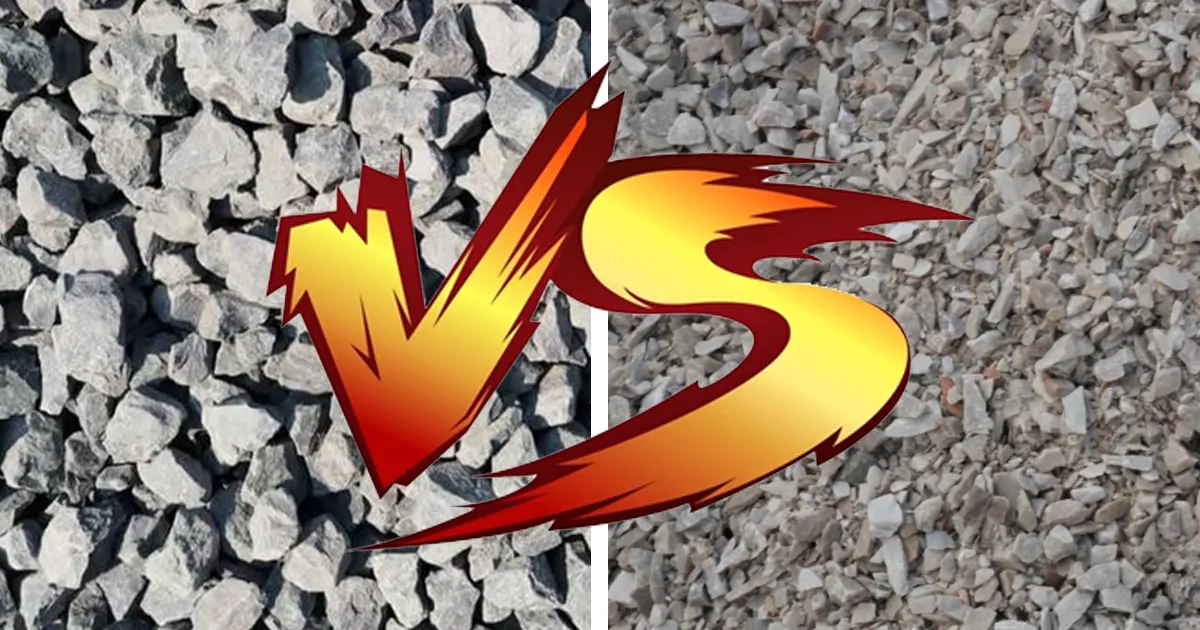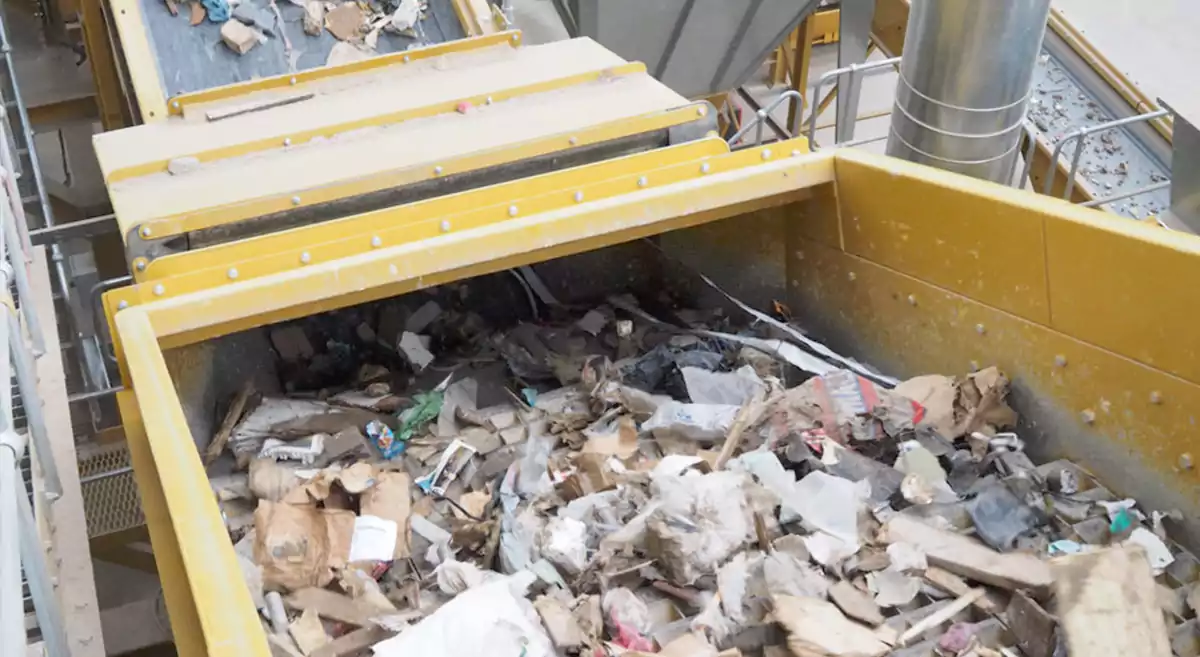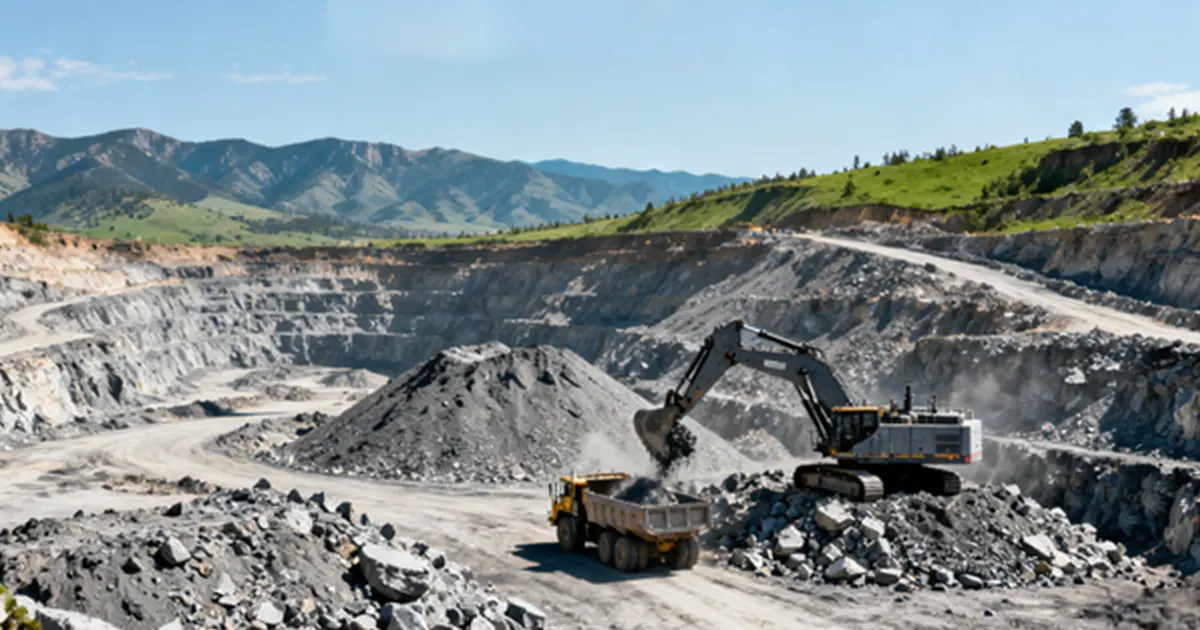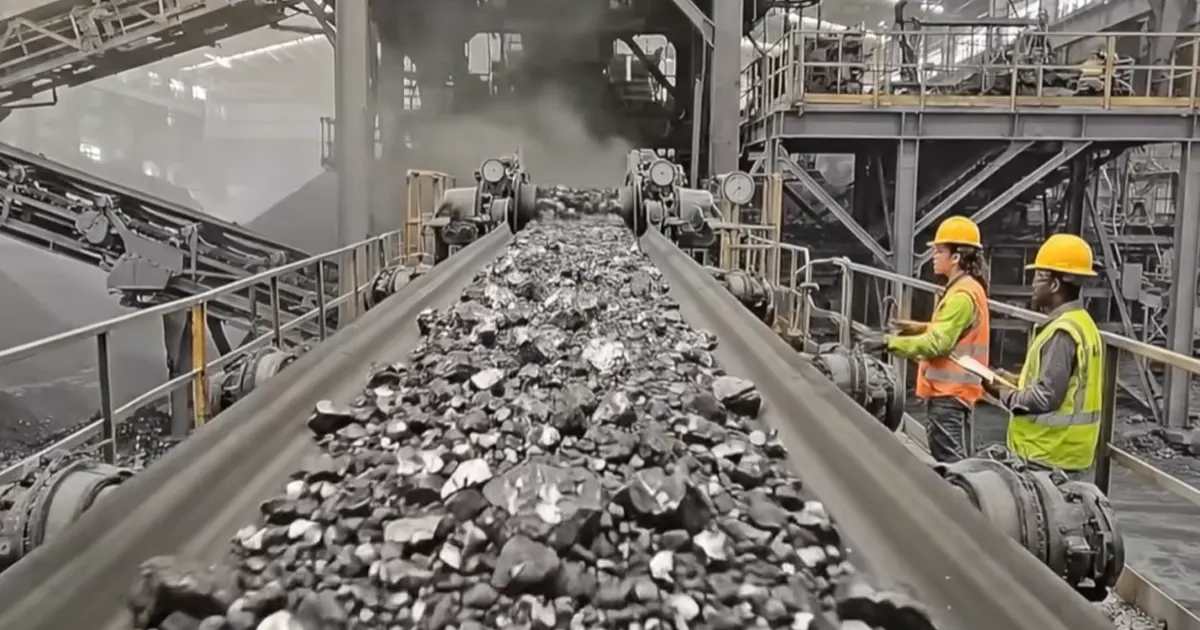
If you’ve ever watched a vibrating screen slow down because the apertures “skin over” with wet fines—or seen holes packed with near-size stones—you already know why self-cleaning screens exist. The right self-cleaning screen can help keep your deck open longer, stabilize product sizing, and reduce the stop-and-clean routine that kills uptime.
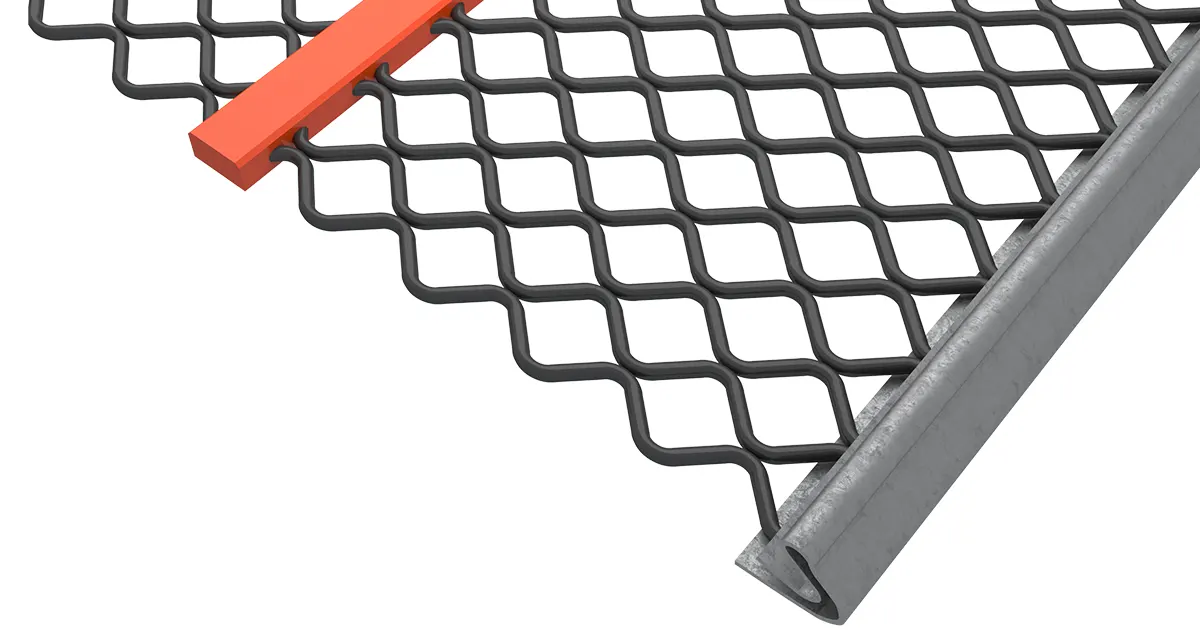
But “best” doesn’t mean one magic screen that works everywhere. In industrial screening, best means best fit for your application: your material, moisture, cut size, throughput, and the job each deck is doing.
This guide walks you through a simple, practical selection process—no hype, just the steps that help mining, quarry, aggregate, and recycling operations choose the right self-cleaning screen the first time.
Quick Answer
- First, identify the main problem: blinding, pegging, or both
- Define the duty: scalping (top deck), sizing (lower deck), dewatering only if applicable
- Check your feed: moisture, clay/fines content, near-size %, particle shape
- Choose an opening style: diamond (anti-blinding) or slotted (anti-pegging/flow)
- Balance aperture size, wire diameter, and open area
- Consider deck position: top deck usually needs more impact tolerance; bottom deck needs accuracy
- Confirm installation details: hook type, tensioning method, side sealing
- Fix process issues too (feed distribution, bed depth). Self-cleaning screens can’t compensate for chronic overload
What Makes a Screen “Self-Cleaning”?
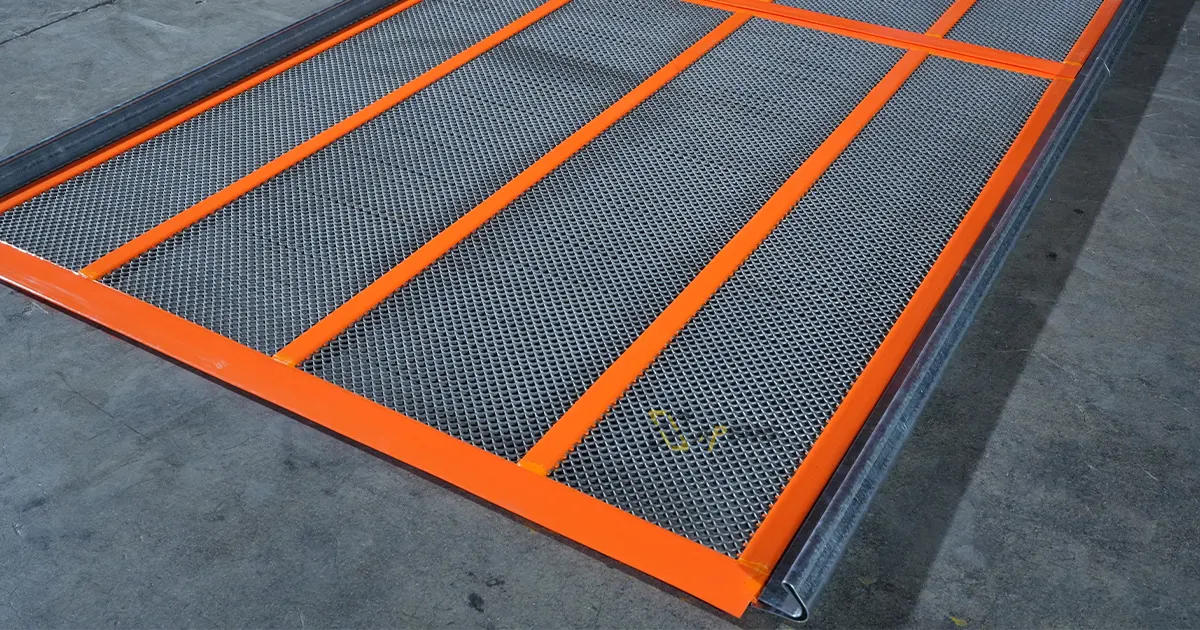
First thing to clear up: a self-cleaning screen doesn’t literally “clean itself” like a washing machine. There’s no motor, no spray bar built in. The “self-cleaning” part comes from how the wires are built and how they behave when the screen is vibrating.
Because of the special wire geometry and proper tension, the wires can make tiny, rapid movements—almost like a subtle flexing or shaking on the surface. That micro-movement is a big deal, because it helps stop material from building up and blocking your openings.
In most plants, self-cleaning screens are fighting two common problems:
- Blinding (anti-blinding): this happens when wet fines, clay, or sticky material starts coating the screen surface. Over time, the apertures get “covered up,” so fines that should pass through can’t. You’ll see throughput drop and your screen starts acting like it has a much smaller opening than it really does.
- Pegging (anti-pegging): this is different. Here, the problem isn’t a coating—it’s individual stones getting stuck in the holes. It usually shows up when you have a lot of near-size particles (close to your cut size) or flat/elongated shapes. They wedge into the openings like little plugs and stay there, so the open area keeps shrinking as the shift goes on.
So in simple terms, a self-cleaning design helps the deck stay open longer because it makes it harder for material to bridge, stick, or lock into the apertures.
One important note though—this is where people sometimes get disappointed: self-cleaning screens aren’t magic. If the deck is overloaded, the feed is hitting one spot, the bed depth is too thick, or the moisture/clay content is extreme, even the best screen media will struggle. In those cases, you usually need to pair the right screen type with a few process fixes—like improving feed distribution, controlling bed depth, or adjusting the circuit strategy—so the screen can actually do its job.
Step 1 — Define Your Screening Needs
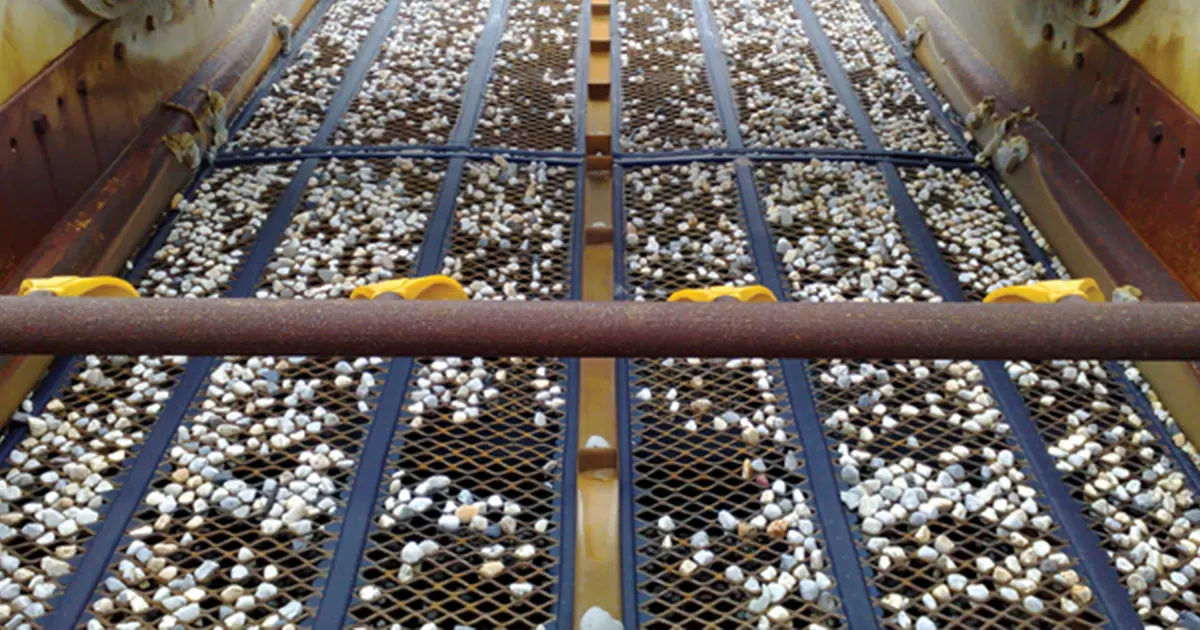
Screening duty and deck role
Start with what the deck is supposed to do:
- Scalping (usually top deck): remove oversize, protect downstream equipment, handle impact
- Sizing (often lower deck): produce a tighter cut, more sensitive to efficiency changes
- Dewatering (if applicable): different objective (water removal), often different setup and expectations
Deck position matters:
Top decks see more impact and large lumps; bottom decks usually need better accuracy and consistent open area.
Material type and moisture
Next, get clear on what you’re screening:
- Hard rock / ore (abrasive, impact-heavy)
- Clay-contaminated feed (sticky, blinding-prone)
- High fines (more coating risk)
- Flat or elongated particles (higher pegging risk)
- Near-size heavy feed (lots of particles close to the aperture size)
A quick rule: the more moisture + fines + clay you have, the more you should think anti-blinding first.
Throughput and capacity targets
Then define the operating goal:
- Target cut size (what you’re trying to separate)
- Tons per hour (tph) expectation
- Acceptable downtime (how often can you stop to clean?)
- Product quality tolerance (how much carryover is acceptable?)
This is where “best” becomes real: you’re balancing uptime + accuracy + wear life.
Step 2 — Diagnose the Real Problem: Blinding vs Pegging
A lot of “wrong screen” decisions happen because the site treats blinding and pegging like the same issue. They’re related, but not identical.
Blinding: what you’ll see
- Apertures look covered, like a thin layer has formed across the surface
- Fine material stops passing even though it “should”
- Throughput drops and you see more fines in the oversize stream
Common causes:
- Moisture + fines
- Clay coating
- Sticky contamination
- Poor stratification (bed depth too high, not enough separation on the deck)
Pegging: what you’ll see
- Individual apertures look plugged with stuck particles
- Deck surface looks like it has “pegs” in the holes
- Often happens when a lot of particles are close to the aperture size (near-size)
Common causes:
- Near-size heavy PSD (particle size distribution)
- Flat/elongated shapes wedging into openings
- Incorrect aperture shape for the material movement
- Overloading that forces particles into openings
Why this matters:
If blinding is your main problem, you typically want a self-cleaning style that prevents coating/bridging. If pegging is your main problem, you often need a design that helps near-size particles “release” instead of wedging.
Step 3 — Choose the Right Self-Cleaning Screen Type
There are many variations, but most self-cleaning screens used in industrial vibrating screens fall into a few practical categories.
Type 1: Diamond-opening self-cleaning screens
What it is: a flexible wire arrangement that creates a “diamond” style opening pattern, often chosen for anti-blinding behavior.
Where it works best
- Wet or sticky feed
- Clay contamination
- High fines that tend to coat the deck
- Applications where you need the deck to stay open consistently
Pros
- Strong anti-blinding effect
- Broadly useful across mining, aggregate, and recycling
- Often a good first choice when moisture is the main problem
Watch-outs
- If your feed is strongly near-size heavy (lots of particles near the cut point), pegging can still occur unless aperture and operating conditions are matched carefully.
Deck guidance
- Common on both decks, especially where wet fines are present.
- If placed on a top deck with heavy impact, wire diameter/material selection becomes more important.
Type 2: Slotted-opening self-cleaning screens
What it is: a self-cleaning configuration that uses slot-like apertures to encourage flow and reduce wedging.
Where it works best
- Near-size pegging problems
- Materials with shapes that wedge easily
- Situations where you want directional flow through the openings
Pros
- Can reduce pegging by helping particles escape instead of locking into a square opening
- Can improve movement of near-size particles across the deck
Watch-outs
- Slot orientation and duty matter. If the slot choice doesn’t match your material movement and deck role, you can lose accuracy or create unexpected carryover.
Deck guidance
- Often effective on sizing decks where pegging is the main limiter.
- On top decks, confirm impact demands and wear expectations.
Type 3: Hybrid / specialty self-cleaning variations (keep it simple)
What it is: designs that blend anti-blinding and anti-pegging behavior, often used when the feed is both wet/sticky and near-size heavy.
Where it works best
- Mixed or variable feed conditions
- Sites that see seasonal moisture swings
- Situations where standard diamond or slotted designs don’t fully stabilize performance
Watch-outs
- Specialty designs are usually best chosen with real feed data and deck details. They can be great—but only when matched correctly.
Step 4 — Confirm the Key Specifications
This is where most “best screen” choices are made (or missed). Type alone isn’t enough.
Aperture size vs target cut size
Your aperture size determines your separation point, but it also changes clogging behavior.
- Too tight to the near-size fraction → pegging risk increases
- Too large to “avoid pegging” → you may move the cut size and lose gradation control
A practical approach:
- Confirm the cut size you actually need
- Review how much near-size material exists around that cut
- Choose aperture with the goal of stable efficiency, not just “less plugging”
Wire diameter and open area
Wire diameter affects both wear life and open area.
- Thicker wire: longer wear life, better impact resistance, but lower open area
- Thinner wire: higher open area and potentially better capacity, but faster wear in abrasive/impact zones
In mining and hard rock:
- Top deck impact zones often need more wire strength (or a different media strategy in the impact area)
- Bottom deck sizing usually prioritizes consistent aperture and stable open area
Open area vs real-world performance
Open area matters, but it isn’t a magic KPI.
Open area helps when:
- Stratification is good (material is layered properly)
- Bed depth is controlled
- Feed distribution is even
Open area won’t help much when:
- The deck is overloaded
- Moisture/clay causes coating
- Pegging is driven by near-size + particle shape
Material grade (mining-focused)
For mining, choose material based on impact, abrasion, and corrosion exposure:
- High manganese steel (Mn steel): often considered where impact + abrasion are severe
- High-tensile / spring steel: strong and stable in many mining and aggregate duties
- Carbon steel: cost-effective standard option for general duties
- Stainless steel (304/316): when corrosion in wet circuits or chemicals matters more than wear cost
Your specific best choice depends on your feed and deck role.
Step 5 — Installation and Fitment (Don’t Skip This)
You can buy a great screen and still get poor results if installation is wrong.
Hook strip and tensioning
Confirm:
- Hook type matches your screen frame
- Correct tensioning method is used consistently
- Panels sit flat and tight across the deck
Poor tension can cause:
- early wire fatigue
- inaccurate separation
- increased pegging/blinding
- uneven wear patterns
Side sealing and leakage control
Side sealing problems can create bypass (material traveling around the media), which ruins accuracy and wastes capacity. It can also concentrate wear along the edges.
Impact zone protection (brief, practical)
If top-deck impact is extreme, you may need heavier-duty wire, different configurations, or localized protection strategy. Self-cleaning screens help with clogging, but impact management is a separate problem you still have to address.
Step-by-Step Selection Summary
- Define duty and deck position
- Diagnose blinding vs pegging (or both)
- Choose type: diamond / slotted / hybrid
- Select aperture based on cut size and near-size risk
- Balance wire diameter and open area
- Choose material grade for mining duty
- Confirm hook, fitment, tensioning, and side sealing
- Trial run → inspect → adjust (if needed)
Selection Table
| Material condition | Symptom | Best self-cleaning type | Why | Notes |
|---|---|---|---|---|
| Wet feed + high fines | Blinding (coating) | Diamond opening | Better anti-blinding behavior | Also check feed distribution and bed depth |
| Clay-contaminated ore | Blinding + throughput drop | Diamond opening | Reduces bridging and surface buildup | If extreme clay, process changes may still be needed |
| Near-size heavy PSD | Pegging (plugged holes) | Slotted opening | Helps release near-size particles | Confirm slot choice fits deck role and cut size |
| Flat/elongated particles | Pegging + carryover | Slotted opening | Reduces wedging vs square-style openings | Also reduce overload and improve stratification |
| Seasonal moisture swings | Efficiency varies week to week | Hybrid / specialty | Balances anti-blinding and anti-pegging | Best chosen with real feed data |
| Top deck, heavy impact | Early wear / breakage | Diamond or hybrid | Self-cleaning helps uptime, but wire duty matters | Prioritize wire diameter/material grade for impact |
| Bottom deck, tight sizing | Off-spec gradation | Diamond or slotted (by symptom) | Choose based on blinding vs pegging | Don’t sacrifice accuracy just to “avoid plugging” |
| Recycling mixed feed (C&D) | Blinding + variable performance | Diamond opening | Handles sticky fines better | Watch for contamination and uneven feed loading |
| Abrasive hard rock | Fast wear, reduced open area | Type depends on clogging | Self-cleaning helps only if clogging is the limiter | Optimize wire diameter/material for wear life |
Common Mistakes to Avoid
- Picking a self-cleaning screen type without confirming whether the real issue is blinding or pegging
- Choosing aperture size without checking near-size fraction
- Over-focusing on open area and ignoring stratification and bed depth
- Installing with poor tension or mismatched hooks
- Running overloaded and expecting media to “solve” it
- Selecting the wrong material grade for impact/abrasion
- Skipping routine inspection until failure
Maintenance and Monitoring
- Check tension and panel seating regularly
- Inspect for broken wires, edge wear, and uneven wear zones
- Watch performance signals: rising carryover, falling throughput, more deck buildup
- Review moisture and fines changes—especially seasonal shifts
- Keep feed distribution consistent across the deck
- Replace panels before small failures spread into large downtime events
Conclusion
Choosing the best self-cleaning screen is mostly about matching the screen type and specs to what your material is actually doing on the deck. Diagnose blinding vs pegging first, select the opening style (diamond or slotted), then lock in the right aperture, wire diameter, open area, and material grade—plus correct hook fitment and tensioning.
As a manufacturer of industrial screening media, ANPENG can recommend the right self-cleaning screen specification based on your material, moisture, target cut size, throughput, and screen model/deck layout.
If you want, tell me your typical feed (ore type / rock type), moisture range, target cut size, tph, and whether the problem is mostly blinding or pegging—I can tailor the “Quick Answer” and table rows to your exact mining use case.
FAQs
Diamond vs slotted: which is better?
If blinding is the main issue, diamond styles are often the first option. If pegging from near-size is the main issue, slotted styles are often a better fit. If you have both, hybrid approaches may help.
Why am I still getting blinding with self-cleaning screens?
Common reasons are overload, poor feed distribution, high clay coating, or bed depth that prevents stratification. Media helps, but process still matters.
What is “near-size” and why does it cause pegging?
Near-size particles are close to the aperture size. They don’t pass cleanly or stay clearly oversize—so they tend to wedge into openings and plug them.
Does higher open area always improve screening?
Not always. Open area helps most when stratification is good and the deck isn’t overloaded. If the deck is coating or pegging, open area alone won’t fix it.
Should top and bottom decks use the same self-cleaning screen?
Often not. Top decks may need more impact tolerance, while bottom decks prioritize sizing accuracy and stable apertures.
When should I switch from woven wire to self-cleaning screens?
When blinding/pegging is consistently limiting efficiency and causing downtime—especially with wet, sticky, clayey, or near-size heavy feed.