
Punch Plate
Punch plates (also called perforated plate screens) are heavy-duty screening media used on vibrating screens for scalping and coarse screening. Made from steel plate with punched apertures, punch plates provide a rigid, stable surface that handles high impact, large feed, and abrasive material. They are commonly installed on the top deck or feed impact zone, where wire cloth can suffer from premature breakage.
ANPENG manufactures punch plates for mining, quarry, aggregate, and recycling screening applications, and supplies custom sizes to match different deck layouts and mounting systems.
What Is a Punch Plate?
A punch plate is a steel plate with a controlled hole pattern—such as round, square, or slotted openings—used as a screening surface on a vibrating screen. Material moves across the plate under vibration, and particles smaller than the hole size pass through, while oversize is discharged.
Compared with woven wire screens, punch plates are more rigid and are often selected when strength and stability are more important than maximum open area.
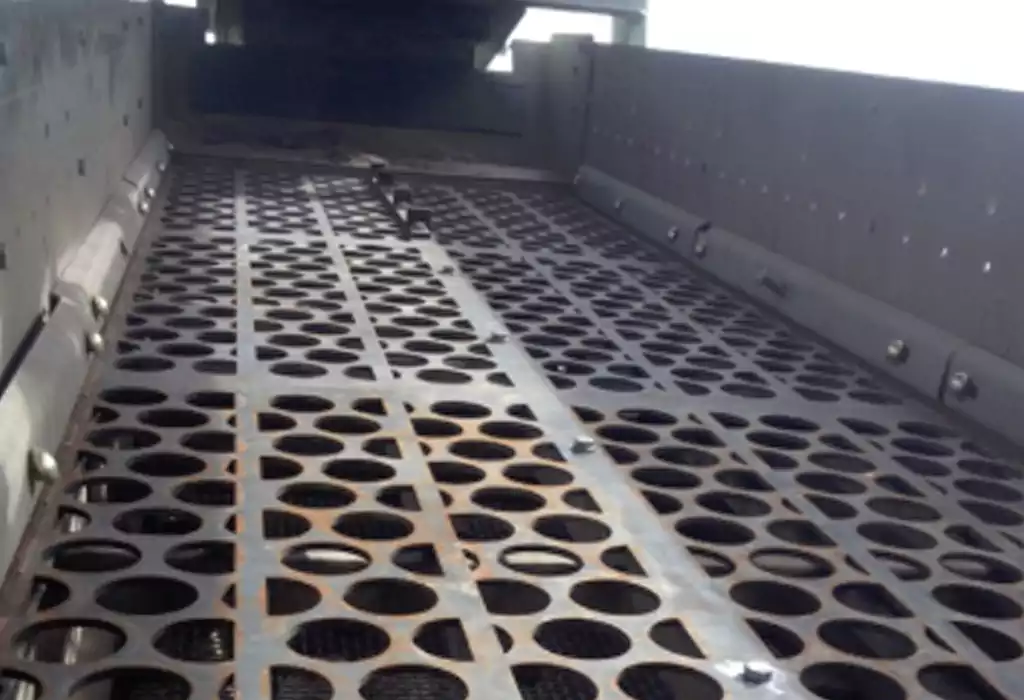
Where Punch Plates Work Best
Punch plates are typically chosen for:
Scalping (Top Deck): remove oversize early and protect downstream equipment
Primary screening: large lumps and heavy bed depth
High impact zones: feed end where rock drop and impact are severe
Abrasive duty: sharp rock, hard ore, coarse aggregate
Coarse separation: when the cut size is larger and durability is the priority
Key Benefits
High impact resistance for heavy-duty screening
Rigid and stable surface that holds shape under load
Reduced risk of wire breakage in impact zones
Multiple hole patterns to match flow and separation behavior
Good wear life in coarse duty with the right thickness and steel grade
Easy to standardize for consistent scalping performance
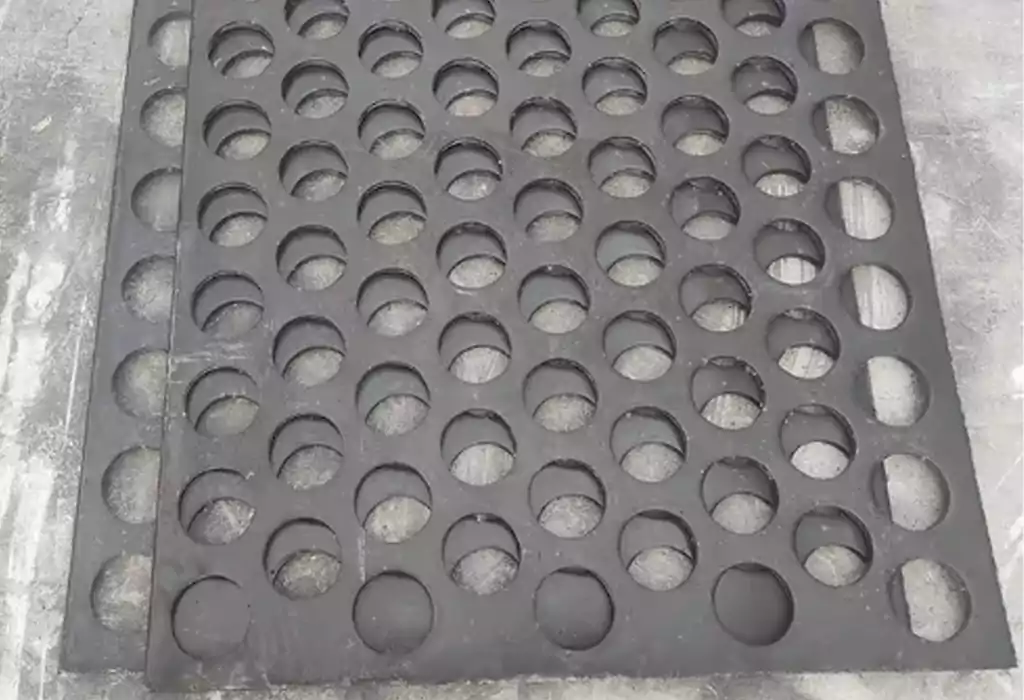
Technical Specifications
| Specification | Details |
|---|---|
| Product Name | Punch Plate (Perforated Plate Screen) |
| Plate Material | Carbon Steel, High-Carbon Steel, Manganese Steel (65Mn), Wear-Resistant Steel (optional), 304/316 Stainless Steel (optional) |
| Plate Thickness | 3–20 mm (custom available) |
| Hole Shape | Round, Square, Slotted (custom patterns available) |
| Hole Size (Aperture) | 3–150 mm (custom available) |
| Slot Options | Slot width & length customized; slot direction available based on deck motion |
| Pitch / Open Area | Customized to balance throughput and plate strength (based on tph and bed depth) |
| Plate Size | Custom per deck layout (panel or full-sheet options) |
| Edge Connection / Mounting | Bolt-down, Clamp bar mounting, Hooked edges (optional, match your screen system) |
| Surface Finish | Plain / Galvanized / Coated (optional, based on corrosion requirements) |
| Recommended Duty | Scalping and coarse screening on vibrating screens (high impact, abrasive feed) |
| Customization | Hole pattern, thickness, plate size, mounting method, and material grade available upon request |
FAQs
What hole pattern is best for scalping?
Round holes are common for general scalping. Slotted holes may help flow and reduce pegging for certain particle shapes.
When should I choose punch plate instead of woven wire?
If your deck sees high impact and wire cloth breaks too quickly, punch plate is often used on the top deck or impact zone.
Can punch plates handle wet or sticky material?
They can, but blinding can still occur depending on material behavior. Hole pattern selection and circuit setup matter.
What information do you need for a quote?
Material type, moisture, target cut size, tph, screen model, deck dimensions/layout, and current issues (impact wear, pegging, blinding).