Rubber Screens for Vibrating Screens
Heavy-Duty Rubber Screen Panels for Quarry, Aggregate & Mining
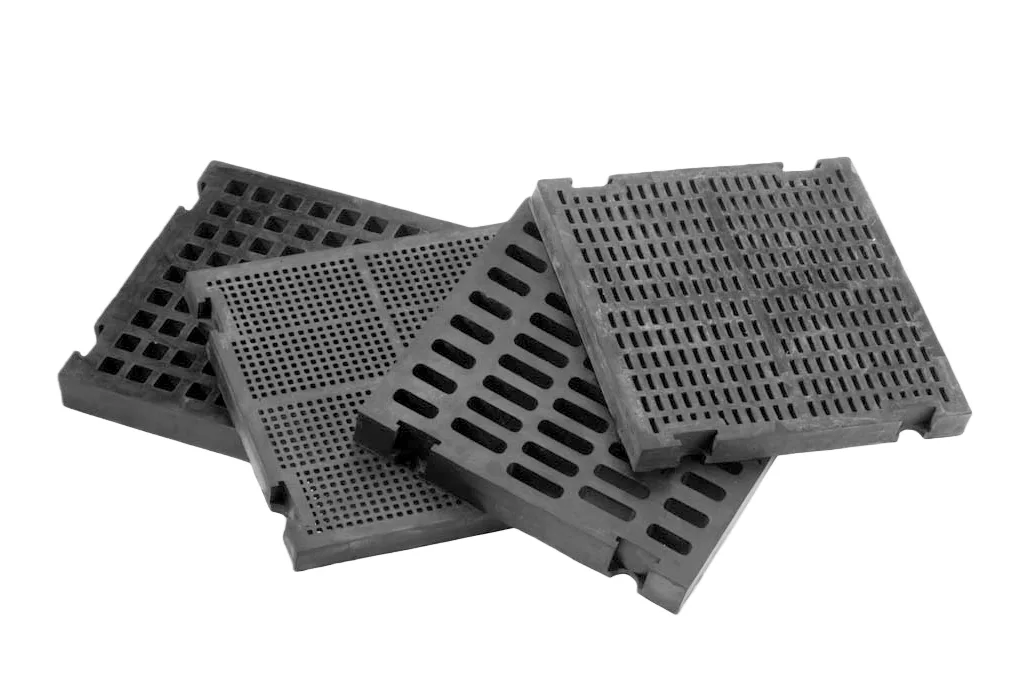
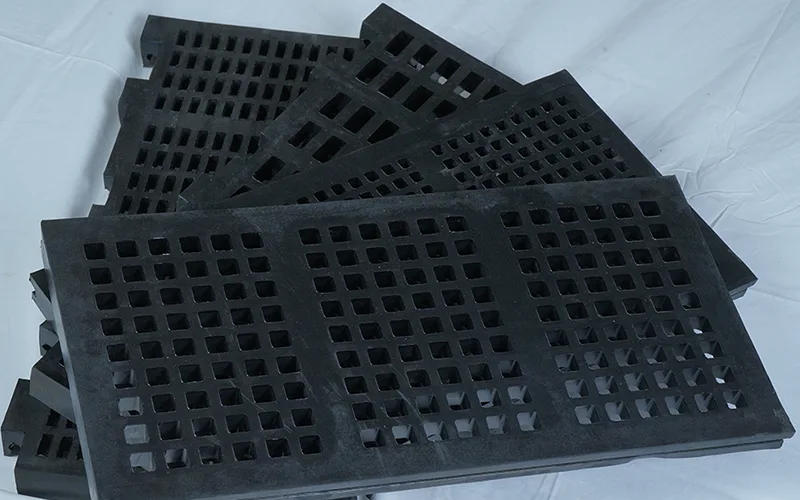
Rubber screen panels are built for tough screening jobs—high impact, abrasive feed, and noisy environments. As a rubber screen manufacturer, we produce modular and bolt-down rubber screens with custom sizes, aperture patterns, and fixing systems to match your vibrating screen deck.
Send your screen model / deck drawing and we’ll recommend the best panel layout for your cut size and throughput.
What Are Rubber Screens?
Rubber screens (also called rubber screen panels or rubber screening media) are durable screening surfaces installed on vibrating screens to separate aggregate, crushed stone, sand, coal, and minerals into different size fractions. Compared with metal screens, rubber panels are often preferred in applications that need better impact absorption, lower noise, and longer wear life under heavy-duty conditions.
Key Benefits of Rubber Screen Panels
Rubber panels resist abrasion and help extend service life in quarry and mining screening—especially where impact and wear are high.
Rubber absorbs vibration and impact energy, helping reduce noise levels and improve workplace comfort.
Rubber’s elasticity helps reduce deck damage and protects downstream components, especially on heavy scalping or coarse screening decks.
With the right aperture shape and open area, rubber screens can reduce pegging/blinding in some wet or clay-heavy materials (application-dependent).
Rubber panels are often easier and safer to handle than steel media. Modular formats can reduce downtime and simplify replacement.
Applications
Rubber screens are commonly used in:
Aggregate & Quarry Screening: crushed stone, gravel, sand, scalping & sizing
Mining: ore screening in high-wear environments
Coal & Power Plants: durable media for heavy throughput
Recycling: construction waste, recycled aggregate, mixed feed
Washing Lines / Wet Screening: when impact and wear are priorities
Technical Specifications
| Specification | Details |
|---|---|
| Product Name | Rubber Screens (Rubber Screen Panels / Rubber Screening Media) |
| Manufacturer | Anpeng (Direct Manufacturer) |
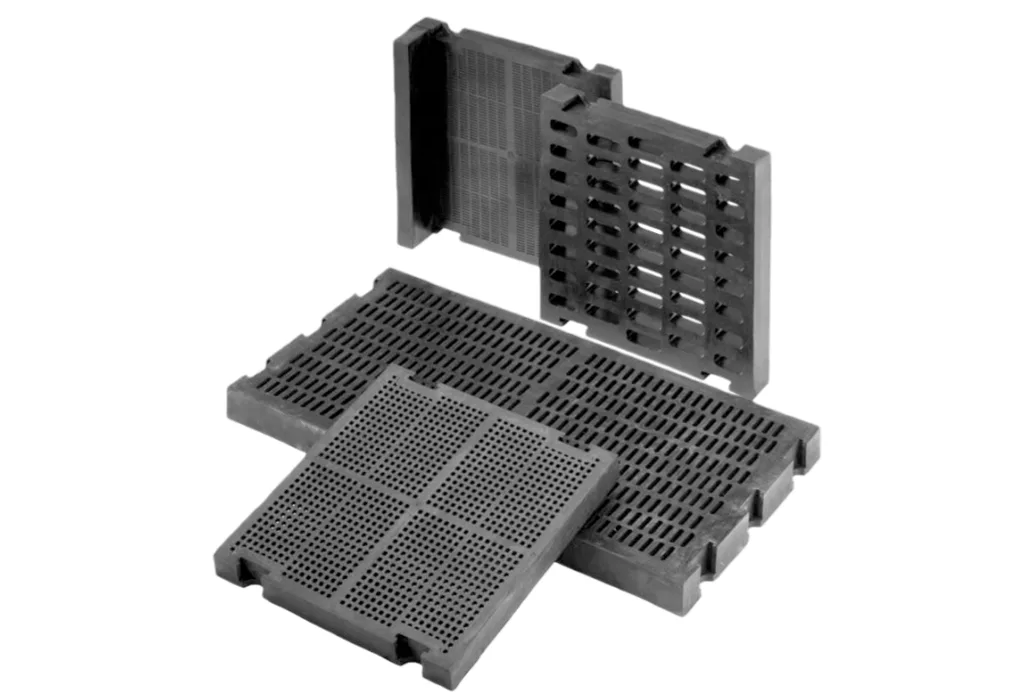
| Screen Type | Modular Rubber Screen Panels; Bolt-Down Rubber Screens; Side Tension Rubber Screens (custom available) |
| Material / Compound | Wear-Resistant Rubber Compound (hardness and formula matched to your material and duty) |
| Aperture Shape | Square / Slot / Round (custom patterns available) |
| Aperture Size (Cut Size) | [Custom] mm (based on your target separation size) |
| Panel Thickness | [Custom] mm (selected based on impact level and wear life targets) |
| Open Area | Customized by aperture + web thickness to balance throughput and panel strength |
| Hardness (Shore A) | [Custom] (matched to abrasion, impact, and operating conditions) |
| Reinforcement Options | Steel inserts / reinforced ribs (optional, for heavy impact zones) |
| Fixing / Mounting System | Pin/lock modular fixing; Bolt-down fixing; Side tension rails (match your screen deck) |
| Panel Size | Custom per vibrating screen deck layout (panel or full-deck configuration) |
| Recommended Duty | Heavy-duty scalping and sizing with impact absorption and noise reduction |
| Typical Applications | Quarry & Aggregate, Mining, Coal, Recycling, Washing Lines / Wet Screening (application-dependent) |
| Key Benefits | Wear resistance, impact absorption, noise reduction, improved safety and reduced maintenance downtime |
| Customization | Panel size, aperture size/pattern, thickness, hardness, reinforcement, fixing system, color, marking, packaging |
| Quotation Info Needed | Material type, wet/dry, target cut size (mm), screen model or deck drawing, panel type (modular/bolt-down/tension), quantity |
| Packing | Export pallets or crates with protective wrapping; labeled by size & order ID |
Rubber Screens vs Polyurethane Screens: Which Should You Choose?
Both rubber and polyurethane screen panels are popular screening media. The right choice depends on your feed condition and performance targets.
Rubber screens are often best when you need:
strong impact absorption in heavy-duty zones
noise reduction and lower vibration
good wear life in coarse or high-impact screening
Polyurethane screens are often best when you need:
more stable performance in fine screening
consistent apertures for precision sizing
certain wear/chemical resistance advantages (depends on formulation)
Not sure? Many plants use a mixed-deck solution: rubber in high-impact zones and polyurethane in sizing zones. Send your deck layout and we’ll recommend a practical combination.
How to Choose the Right Rubber Screen Panel
Use these steps to avoid wrong purchases and downtime:
Material & Abrasion Level: granite vs limestone vs ore behave differently
Wet or Dry? Any Clay?: sticky feed may need special aperture patterns
Target Cut Size (mm): determines aperture size and open area design
Deck Layout & Fixing System: modular / bolt-down / tension type must match
Wear Life vs Throughput: higher open area may improve capacity but affects strength
Impact Zones: choose reinforced designs for high-impact feed areas
FAQs
What is the typical lifespan of rubber screen panels?
Service life depends on feed abrasion, impact, open area, and deck position. High-impact zones wear faster. Share your material and cut size for an estimated service-life range.
Do rubber screens reduce noise?
Yes. Rubber absorbs impact energy and usually reduces noise compared with metal media, especially in coarse and high-impact screening.
Are rubber screens good for wet screening?
They can be used in wet screening, particularly where impact and wear are priorities. For sticky/clay-heavy feeds, aperture design and open area matter—send your feed details for a tailored recommendation.
Rubber vs polyurethane: which is better?
Rubber is strong in impact absorption and noise reduction. Polyurethane often performs well for fine screening and precision sizing. Many plants mix both by deck zone.
Can you produce custom sizes and hole patterns?
Yes. We manufacture rubber screens with custom panel sizes, thickness, aperture shapes, and fixing systems based on your deck drawing.
What fixing systems do you offer?
Common options include modular pin/lock systems, bolt-down fixing, and side tension mounting.
How do I measure my existing panels?
Measure panel length, width, thickness, aperture size, and fixing points. A photo with a tape measure helps. Best option: send your deck drawing.
What are MOQ and lead time?
MOQ and lead time depend on panel type and customization. Send your specs and quantity—we’ll confirm quickly.
Can your rubber panels fit my vibrating screen brand?
In most cases, yes. We match the deck fixing system and layout. Provide your screen model and deck details.