You know it is annoying to get the wrong replacement polyurethane screen panels. You lose time, spend money, and might hurt your equipment. If you do not check before ordering, you could get replacement polyurethane screen panels that do not fit or work right. Modular and dual-color replacement polyurethane screen panels make fixing things easier and help you see damage sooner. Always pick replacement polyurethane screen panels that match your material and equipment for the best results. Choosing the right replacement polyurethane screen panels keeps you from making expensive mistakes.
Key Takeaways
- Always look at your equipment’s specifications before you order replacement polyurethane screen panels. This helps you avoid expensive mistakes and makes sure the panels fit right.
- Pick modular panels if you want easier installation and maintenance. With these, you only need to change the worn parts. This saves you time and money.
- Polyurethane panels last longer than metal or rubber screens. They can help you save up to 20% in costs over time because they are strong.
- Choose the right aperture design for your material type. Different shapes like square or slotted openings change how well the screening works.
- Measure your screen area carefully and think about adding extra space. This stops material from leaking and helps your screen work its best.
- Talk clearly with your supplier about what you need. Give them lots of details about your equipment and the materials you screen.
- Do not make common mistakes by guessing your specifications. Always check sizes and needs before you order.
- Think about custom panels if your equipment is a special size or if you use very rough materials. Custom panels can help your equipment work better.
What Are Replacement Polyurethane Screen Panels
Panel Function and Types
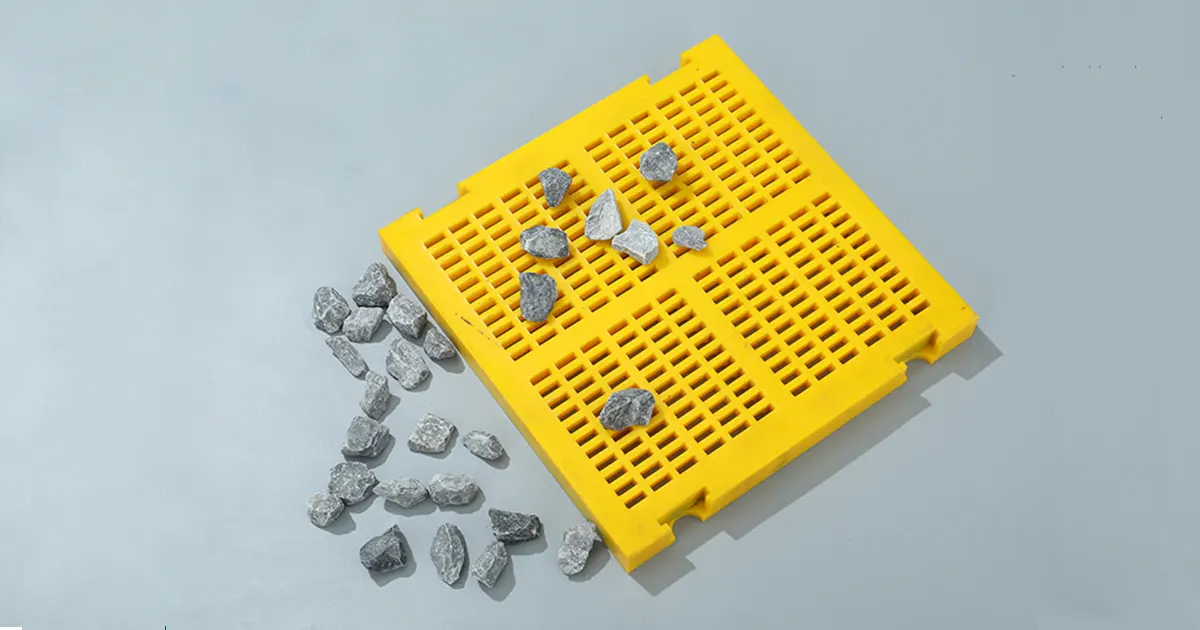
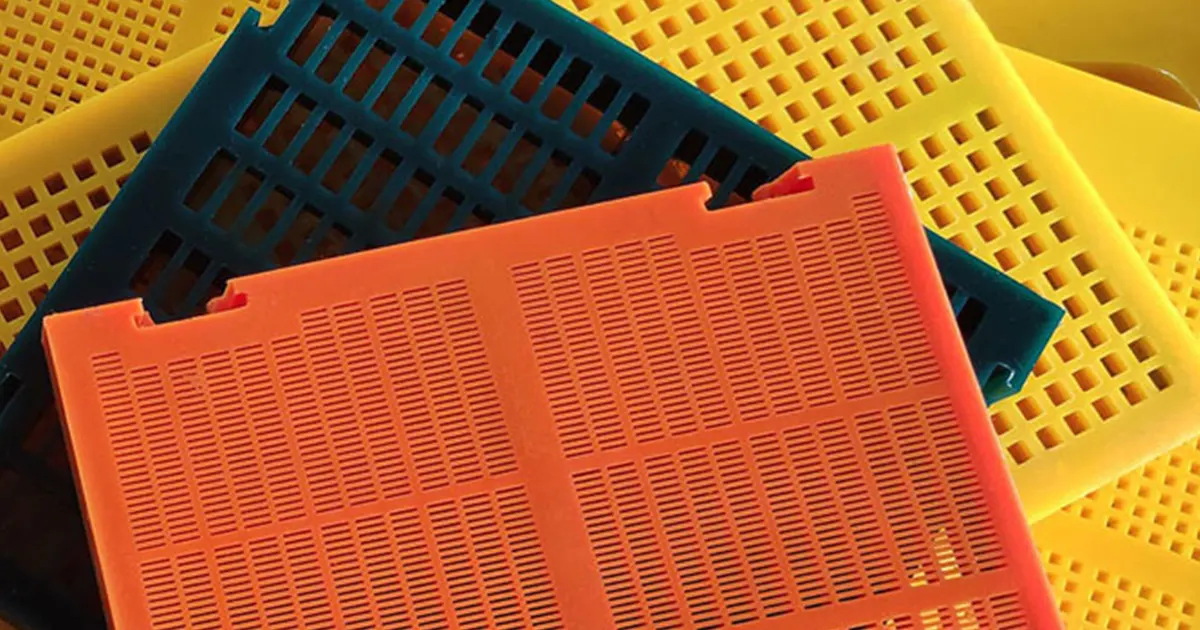
Replacement polyurethane screen panels are important for screening equipment. These panels help sort materials by size. Only the right particles can pass through. They stop clogging, so your work does not slow down. If you use wet materials, these panels work really well. They clean themselves and keep sticky stuff from building up. They last longer than metal or rubber screens. The panels are light, so your machines do not have to work as hard. This saves energy and helps your equipment last longer. You can pick panels with square or slotted openings. Some panels are for fine screening, and some are for coarse screening.
Tip: Always check what type of panel you need before you buy. The wrong panel can slow your work or hurt your equipment.
Modular vs. Traditional Panels
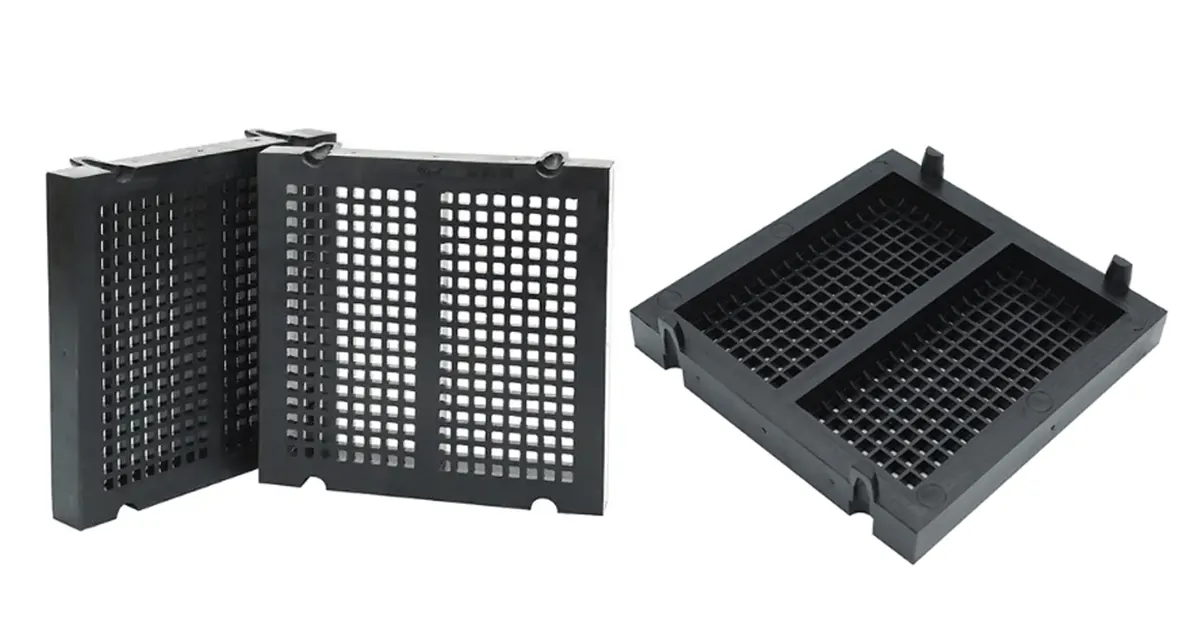
You can pick modular or traditional panels. Modular panels make fixing things easier. You only change the worn-out part, not the whole screen. Traditional panels need you to replace the whole panel. This takes more time.
Here’s a quick comparison:
| Feature | Modular Polyurethane Panels | Traditional Polyurethane Panels |
|---|---|---|
| Installation | Easier to install and replace without special tools | May require more time and effort for installation |
| Maintenance | Allows for quick replacement of worn sections | Typically requires replacing entire panels |
| Performance | Excels in abrasion resistance and accuracy | Better for impact absorption and noise reduction |
Modular systems help you save time and money. They let you change your setup more easily. Traditional panels are good if you want less noise or better impact absorption.
Why Choose Polyurethane
Polyurethane screen panels are better than steel in many ways. They last up to five times longer than steel screens. You do not have to buy new ones as often. This saves you about 20% on costs in mining plants. Polyurethane panels sort materials more accurately by 30%. They use 25% less energy in recycling plants. They have bigger open spaces, so materials move faster and you get more done. Even though they cost more at first, you save money over time because you do not replace them as much.
If you want a screen panel that lasts, stops blinding, and works well, polyurethane is a good choice. You get a strong and affordable panel that keeps your equipment working well.
Compatibility With Equipment
Importance of Fit
You want your replacement polyurethane screen panels to work right the first time. If you skip checking the fit, you might end up with panels that slow down your process or waste money and space. Getting the wrong size can cause big problems. Take a look at this table to see what happens when the panel size is off:
| Panel Size | Implication on Equipment |
|---|---|
| Too Small | Slows down the process |
| Too Big | Wastes money and space |
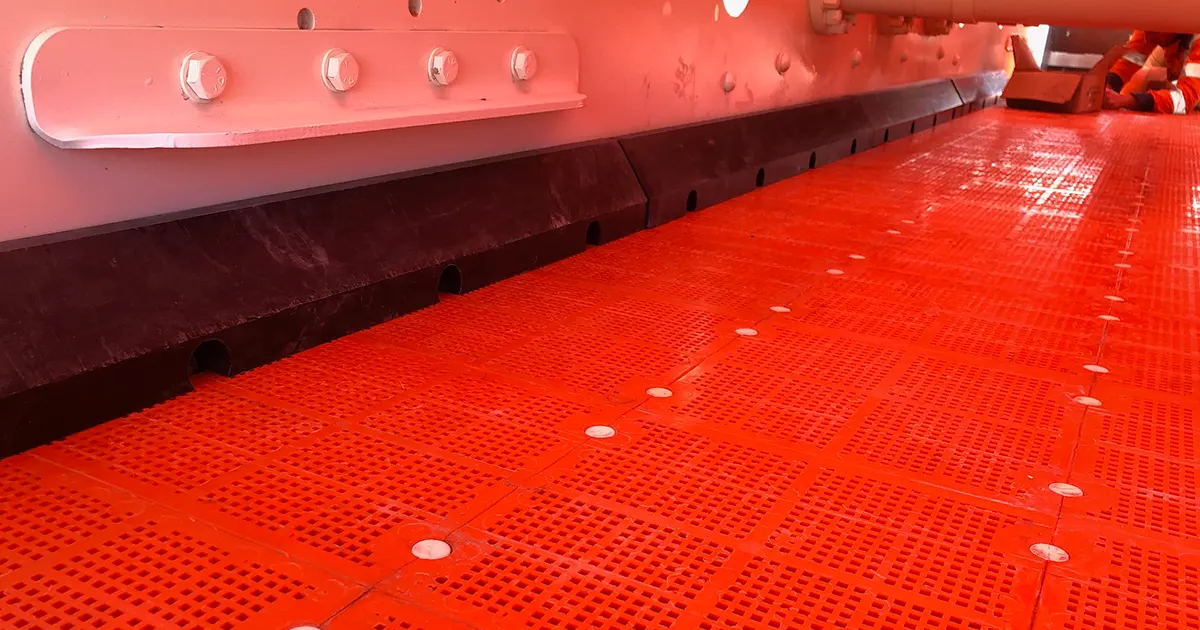
You also need to think about how the panels attach to your equipment. Some machines use bolt-on panels, while others need tensioned or snap-in types. If you pick the wrong attachment system, you could face delays or even damage your equipment. Custom dimensions, special mesh patterns, and unique surface textures all play a role in how well your panels fit and perform. You want panels that match your machine’s brand and model, so everything lines up and works smoothly.
Tip: Always double-check your equipment specs before you order. Even a small mistake can lead to big headaches later.
How to Check Compatibility
You can avoid most problems by following a few simple steps. Here’s a checklist to help you confirm fit and make sure your new panels will attach correctly:
- Measure your screen area and add an extra 50-70mm at the outlet. This helps prevent material from leaking out.
- Make sure the width of your panel matches the net frame of your equipment.
- Tighten the panel before you install it. This keeps it secure and stops it from shifting during use.
- If your screening job handles a lot of material, add a mesh support net. This gives your panel extra strength and helps it last longer.
- Test the panel by running some material through it. Watch for even movement and check that the screening works as expected.
You should also look at your equipment’s manual or talk to your supplier. They can help you match the right panel type, mounting system, and mesh pattern to your machine. If your equipment comes from a major brand, ask if the panels are designed to integrate with it. This step saves you time and money.
- Custom mounting configurations (like bolt-on or tensioned)
- Mesh thickness and pattern for different wear zones
- Surface textures to help material move better
If you follow these steps, you will avoid the most common compatibility issues. You will also get the best performance from your replacement polyurethane screen panels.
Key Technical Details for Replacement Polyurethane Screen Panels
Panel Size and Dimensions
You need your replacement polyurethane screen panels to fit just right. The size and shape are very important. If you pick the wrong size, you lose time and money. Most panels come in standard sizes. You can also get custom sizes for your equipment. Here are some common panel sizes:
| Panel Size | Dimensions | Thickness Range | Customization Options |
|---|---|---|---|
| Standard Sizes | 305x305mm | 5 mm to 50 mm | Yes, special sizes available |
| 305x610mm | 10 mm to 60 mm | Yes, custom by deck position and impact level | |
| 610x610mm | |||
| 500x600mm | |||
| 600x600mm |
If your job needs extra strength, you can choose custom thickness or reinforced edges. Always check the panel size and shape before you order. This helps you avoid mistakes and keeps your screening line working well.
Aperture Design and Opening Size
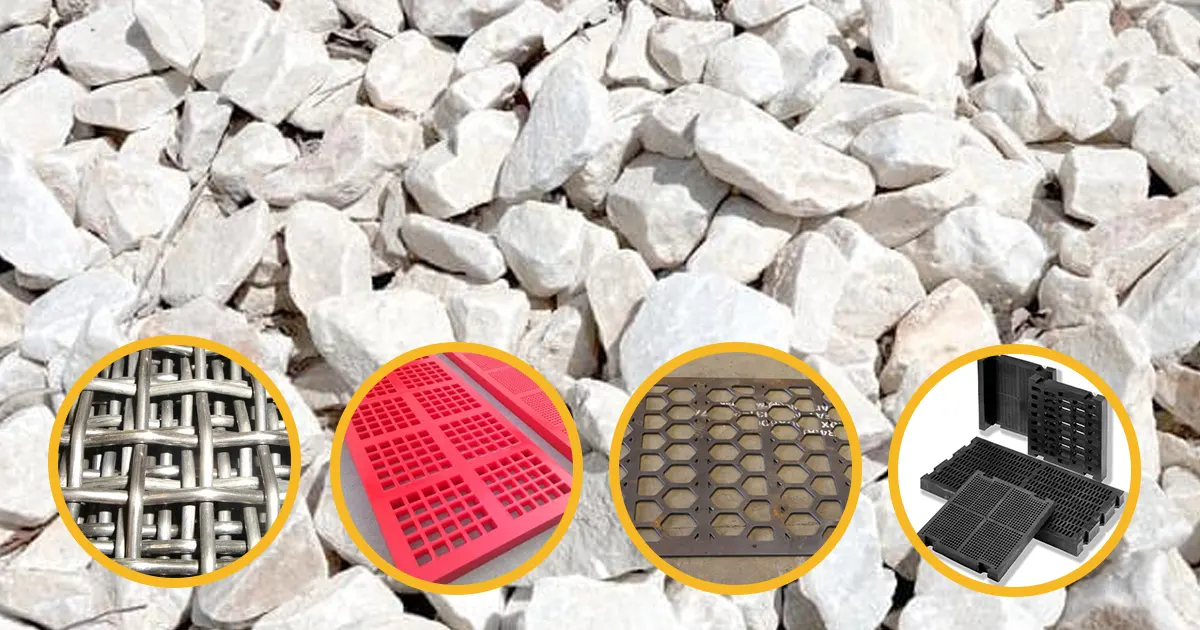
The way the openings are designed changes how your equipment sorts materials. You can pick square, slotted, diamond, round, or hybrid shapes. Each shape is good for different jobs:
- Square apertures sort evenly and let material flow well. They are good for most screening jobs.
- Slotted apertures help with long or sticky materials. They stop pegging and blinding.
- Diamond shapes work for big or odd-shaped particles.
- Round holes resist cracking and stop plugging.
- Hybrid designs let you mix sorting needs in one panel.
| Aperture Shape | Effect on Screening Efficiency | Application/Benefit |
|---|---|---|
| Square | Provides uniform particle sizing and high open area | Ideal for fine screening with consistent particle sizes |
| Diamond | Effective for scalping large debris and handling irregularly shaped particles | Good for initial separation of large or irregular materials |
| Slot-shaped | Facilitates dewatering and sizing of elongated particles | Useful for materials requiring moisture removal or elongated particle sorting |
| Round holes | Reduces stress concentration and resists cracking under impact | Suitable for primary scalping and minimizing plugging or pegging |
| Hybrid/multiple types | Allows staged screening combining scalping and classification | Enhances overall screening efficiency by addressing multiple particle types in one panel |
You can pick the opening size from 0.3 mm up to 100 mm. Custom sizes are also possible if you need them. Always match the aperture design to your material. This makes your screening work better and helps your panels last longer.
Load Capacity and Wear Resistance
You want your panels to last a long time, even in hard jobs. Polyurethane screen panels are strong and resist wear. They can handle heavy loads and work in wet or oily places. Many panels have steel frames or bars inside for extra strength. You can ask for panels with higher uv stabilization if your equipment is outside. This helps the panels last longer in sunlight.
Here’s what you get with good panels:
| Feature | Details |
|---|---|
| Service Life | More than 6 months, up to 1 year; 8-10 times longer than metal screens. |
| Wear Resistance | Good wear resistance and flexing resistance. |
| Load Capacity | Large loading capacity, improved with steel wire or metal frame. |
| Moisture Resistance | Can be used in water or oil and water medium. |
| Storage Life | Can be stored for over 5 years without affecting service life. |
Always check for uv and fire resistance certification when you order. These show your panels can handle tough places and meet safety rules. If you want the best quality, ask for panels made from 100% virgin polyurethane. This gives you the best wear resistance and keeps your screening line working longer.
Tip: Always check the certification and uv rating with your supplier before you buy. This protects your investment and keeps your operation safe.
Installation and Mounting
You want your replacement polyurethane screen panels to work well right away. Making sure they fit during installation is just as important as picking the right size or opening. If you skip steps or rush, the panels might wear out fast or cause problems for your screening line.
Before you put the panels on, check the surface and alignment of your equipment. Use a laser rangefinder to see if everything lines up. Try to keep the difference within plus or minus 1.5mm. Make sure dents are not deeper than 0.3mm for each square meter. This helps stop uneven stress and makes your panels last longer.
When you put the panels on, start by locking down the center. Then move out to the edges using the “center-and-spoke” way. This spreads out the weight and stops the panels from bending or breaking. If your system uses hydraulic tensioning, set the pressure between 0.8 and 1.2 MPa. Always follow the tightening order in your equipment manual. This gives you the best hold and keeps the panels steady.
Here’s a table that shows the main ways to install and mount panels:
| Method | Description |
|---|---|
| Pre-Installation Verification | Use a laser rangefinder for alignment, keep tolerance ±1.5mm, check flatness (≤0.3mm/m²). |
| Dynamic Positioning | Secure center first, expand outward to avoid uneven stress. |
| Intelligent Tensioning System | Set hydraulic pressure to 0.8–1.2 MPa, follow tightening sequence. |
| Vibration Testing | Run a no-load test, keep amplitude differences within 15% of design values. |
| Maintenance Plan | Inspect tension, measure wear, apply protective agents regularly. |
| Inlay Mount | Machine grooves precisely, use composite sealing for mounting. |
| Bead Connection & Bolt-On | Use elastic gaskets and corrosion-resistant fasteners for secure connections. |
After you finish putting the panels on, run a vibration test with no material. Check that the shaking difference is not more than 15% from the design value. This helps you find problems early and keeps the panels from coming loose.
You should also make a maintenance plan. Check the tension often, measure how much the panels wear, and use protective sprays to help them last longer. If you use inlay mounts, make sure the grooves are cut just right and sealed well. For bead connections or bolt-on ways, use elastic gaskets and screws that do not rust. These keep your panels tight and stop leaks or rust.
Always check that your installation method works with your equipment before you buy new panels. Ask your supplier which mounting way is best for your machine. If you follow these steps, your panels will last longer and work better. You will save money and have less downtime.
Tip: Take your time when installing. Careful mounting keeps your screening line working well and helps your panels last longer.
Application Conditions for Polyurethane Screen Panels
Material Type and Properties
You need to pick replacement polyurethane screen panels that fit your material. If you work with rough rocks or sticky minerals, you need strong panels. These panels should not wear out fast. Polyurethane panels do not get clogged by sticky stuff. This means your screening line keeps moving quickly.
When you check your job, look at these things:
- Cut size: Use small holes for tiny pieces. Use big holes for large pieces.
- Panel thickness: Thick panels last longer. Thin panels are better for fine screening.
- Deck compatibility: Make sure your panels fit your deck type. It can be flat, crowned, or modular.
- Reinforcement features: Pick panels with metal edges or strong coatings for heavy loads.
- Quality and durability: Ask your supplier if the panels are tested for strength.
- Abrasion and impact resistance: Polyurethane does not wear down from rough materials. It keeps its shape.
- Corrosion and chemical resistance: Panels should not get damaged by chemicals or water.
If you screen wet or oily materials, you need panels that resist moisture. Polyurethane panels also do not rust or get hurt by chemicals. Always check if your panels have uv protection. This helps them last longer outside.
Operating Environment
Your screening equipment works in tough places every day. You need panels that can handle changes in temperature, humidity, and chemicals. Polyurethane panels with uv resistance are good for outdoor use. Sunlight can break weak panels.
Here are things to watch for in your work area:
- Temperature changes: Big swings can make polyurethane break down and form bad stuff.
- High humidity and heat: Water can make panels bubble and peel.
- Insulation efficiency: Temperature changes can make panels work less well. This can cost more energy.
- Chemical exposure: Panels must stand up to chemicals used in mining or recycling.
- Feeding methods: How you put material on the screen changes how fast panels wear out.
- Maintenance: Checking your panels often helps them last longer.
If your equipment works in hot or cold places, get panels with extra uv stabilization. This keeps them strong and bendy. You should also ask about fire resistance and uv certifications. These features protect your panels from sun and harsh chemicals.
| Environmental Factor | Panel Feature Needed | Why It Matters |
|---|---|---|
| Sunlight | uv resistance | Stops panels from breaking down |
| Chemicals | Corrosion resistance | Prevents damage and wear |
| Temperature swings | uv stabilization | Keeps panels strong and safe |
| Humidity | Moisture resistance | Stops blistering and delamination |
Tip: Always check the uv rating and certifications before you buy. This keeps your panels safe and your screening line working well.
Screening Purpose
You need to match your replacement polyurethane screen panels to your job. Are you sorting fine sand, removing water, or screening big rocks? Each job needs a different panel design.
Think about these screening jobs:
- Dewatering: Use panels with slot-shaped holes and strong uv resistance.
- Demediating: Pick panels with hybrid designs for mixed materials.
- Classification: Choose panels with square or round holes for sorting.
You also need to think about what your panels are made of. Polyester-based polyurethane is good for dry jobs. Polyether-based panels are better for wet jobs. How you fix the panels matters too. Buckle, bolt, or tension types change how easy it is to put on and take off your panels.
If you want panels that last, ask your supplier about uv stabilization and strong features. This helps your panels work well in hard jobs and tough places.
Note: Always match your panel design to your job and work area. This gives you the best results and keeps your equipment safe.
Selection Checklist for Polyurethane Screens
You want to pick the right replacement polyurethane screen panels the first time. If you use a checklist, you can stop mistakes and keep your screening line working well. Let’s look at what you need to check before you order.
Pre-Order Checklist
Here is a checklist for picking polyurethane screens. This table helps you remember all the important things:
| Key Step | Description |
|---|---|
| Screen Size & Equipment Compatibility | Make sure the panel size fits your equipment. The wrong size can break things or slow you down. |
| Customizable Design Options | Choose the right opening shape and thickness for your job. |
| Installation & Operational Compatibility | Check that the panels fit your mounting system and are easy to put on. |
| Thermal & Electrical Resistance | Think about the heat and electricity in your work area. The panels must handle these. |
| Cost vs. Long-Term Value | Look at the price now and how long the panels last. Good panels save money over time. |
| Grid Type & Aperture Geometry | Pick the best grid pattern for good screening and less wear. |
Follow these steps to make ordering easier:
- Measure your equipment and check the panel size.
- Pick the shape and size of the openings for your material.
- Make sure the mounting system matches—bolt-down, snap-in, or modular.
- See if you need extra features like uv resistance or fire safety.
- Compare prices and how long each panel should last.
- Ask your supplier for test reports or certificates.
- Check the grid pattern and opening shape for your job.
Tip: If you do not know what to do, ask your supplier. They can help you pick panels that fit your needs.
Information to Send to Manufacturer
When you talk to the manufacturer, give them clear details. This helps them make panels that fit your equipment and your job. Here is what you should send:
| Specification | Details |
|---|---|
| Sieve Hole Range | 0.075 mm – 3 mm |
| Screen Slot Range | 0.045 mm – 3 mm |
| Opening Rate | 15.25% – 46.51% |
| Material | High-performance polyurethane elastomer |
| Panel Thickness | Made for your screening needs |
| Installation Type | Modular, bolt-down, or rail mounting |
You can also use this list to make sure you cover everything:
- Say what you will use the panels for. Are you scalping, dewatering, classifying, or desliming?
- Describe your feed material. What size is it? Is it wet or dry? Is it rough?
- Check your equipment details. What size is the deck? How fast does it shake? What is the angle?
- Pick the opening type. Do you need round holes, slots, or square shapes?
- Look at the mounting system. Does your machine use bolt-down, modular, or rail mounting?
- Compare technical sheets. Ask for things like hardness and how long the panels last.
- Watch out for problems. Do not buy from vendors who do not give test reports or use unclear words.
Note: The more details you give, the easier it is for the manufacturer to make panels that work for you. Good communication saves time and money.
If you follow this checklist and send the right information, you will get panels that fit your equipment and your job. You will avoid mistakes and keep your screening line working well.
Common Mistakes When Ordering Polyurethane Screen Panels
When you order replacement polyurethane screen panels, you want them to fit and work well. Many people make mistakes that waste time and money. Let’s look at the most common mistakes and how you can avoid them.
Overlooking Specs
You might think you know the right specs, but guessing or using old orders can cause problems. Here are some mistakes you should watch for:
- Ordering panels by memory or old orders without checking for changes.
- Mixing up nominal diameter with actual cloth diameter, which gives you the wrong size.
- Not saying what frame style you need, so the screen does not fit your machine.
- Ordering by machine name only, without measuring the real screen area.
- Mixing up mesh count with micron opening, which gives you the wrong cut point.
- Using worn screens to guess wire diameter, which makes the panel too weak.
- Picking the wrong frame height, which changes how the panel sits on your equipment.
- Thinking the material is 304 stainless steel when you need 316 for corrosion resistance.
Tip: Always check your specs before you order. Write them down and measure everything. Do not trust your memory or old papers.
Ignoring Application Needs
You need to match your panels to your job. If you skip this, you can have big problems. Look at this table to see what happens if you do not match panels to your job:
| Risk | Description |
|---|---|
| Premature failure | Panels may break sooner than you think, which stops your work. |
| Increased maintenance costs | You will spend more money fixing or replacing panels. |
| Reduced throughput | Bad screening can slow down your production. |
If you use panels that do not fit your material or work area, you will pay more for repairs. Your screening line will slow down, and you might have to stop to fix things. Always check the material type, moisture, and chemicals in your job. Make sure your panels have the right resistance and features.
Note: Matching your panel to your job helps your equipment last longer and saves money.
Not Confirming With Manufacturer
You might think you have all the details, but missing a step with your supplier can cause problems. If you do not check specs, mounting style, or certifications, you could get panels that do not fit or work right.
- Always send clear information about your equipment and job.
- Ask for test reports and certifications.
- Check if the panels fit your mounting system and deck type.
If you skip this step, you might have delays, waste money, and get panels that do not last. Good communication with your manufacturer helps you get panels that fit and work well.
Callout: Do not skip the last check with your supplier. Ask questions and confirm every detail. This step protects your money and keeps your screening line working well.
When to Consider Custom Polyurethane Screen Panels
Signs You Need Custom Panels
Sometimes, regular replacement polyurethane screen panels do not work for you. Your equipment might have a special shape or size. Some materials can wear out normal panels very quickly. In these cases, you need custom panels.
Here are some signs you should think about getting custom panels:
- Your screening equipment is not a common brand or model.
- The deck size or shape is different from standard options.
- You handle materials that are extra abrasive, sticky, or have unusual sizes.
- You need special features, like extra-thick panels or unique aperture shapes.
- Your process needs a certain throughput or moisture control that standard panels can’t provide.
Many industries need custom panels. Mining uses them to separate minerals and ores. Quarrying needs them to sort rocks and stones. Coal processing uses custom panels to remove water and sort coal. Construction jobs use them to screen sand and gravel. Recycling plants use custom panels to sort different materials. If you have trouble with fit or performance, custom panels can help your screening line work better.
Tip: If you keep changing standard panels or have lots of breakdowns, it is time to order custom panels.
How to Specify Custom Requirements
Ordering custom polyurethane screen panels is simple if you get the right information first. You want your panels to fit well and last a long time. Here is how you can start:
- Know your screening job. Write down what you screen, the size of the material, if it is wet or dry, and if it is rough.
- Think about what you need from your panels. Decide the hole size (aperture size), how thick the panel should be, and the panel’s size.
- Check your equipment. Measure the deck, look at the mounting system, and see how fast the screen moves.
- Decide if you need special features. Do you want stronger edges, special coatings, or a color to show wear?
- Figure out how much material you need to process each hour.
You can use a table like this to organize your information before you talk to the manufacturer:
| Specification | Your Details |
|---|---|
| Material Size | |
| Moisture Content | |
| Abrasiveness Level | |
| Required Throughput | |
| Aperture Size | |
| Panel Thickness | |
| Panel Size | |
| Mounting System | |
| Special Features |
When you give clear details, the manufacturer can make panels that fit your equipment and job. This saves you time and money. You get panels that last longer and work better.
Note: Always check your measurements and needs before you order custom panels. Good planning means fewer problems and better results.
Comparing the Best Polyurethane Screen Panels and Suppliers
Evaluating Supplier Experience
If you want the best polyurethane screen panels, you need a smart supplier. Do not just look at price or what they say. You should check some important things before you choose. Here are things to look for when picking a supplier:
- Product quality: Does the supplier make panels that last and work well?
- Manufacturing capabilities: Can they make big orders or custom panels for you?
- Customer service: Will they answer your questions and help you if you have problems?
- Technical expertise: Do they know about screening and can they give you advice?
- Ability to provide custom solutions: Can they make panels for your special needs?
- Industry certifications: Do their panels meet safety and quality rules?
- Online presence and portfolio: Can you see their work and what other customers say?
If you want good performance, pick a supplier with a strong reputation. Good suppliers check their products for quality and help you when you need it. This makes your experience better and helps you get the best polyurethane screen panels for your equipment.
Tip: Ask for test reports and certifications. This shows the supplier cares about quality and safety.
Comparing Quality and Value
You should compare the best polyurethane screen panels by looking at quality, price, and support. Not all panels are the same. Some last longer, some cost less, and some come with better help from the supplier. Here is a table to help you compare:
| Panel Type | Avg. Price/Sq Ft | Lifespan (Hours) | Best For |
|---|---|---|---|
| Flat Modular | $30–$70 | 1,500–3,000 | General aggregate screening |
| Tensioned | $80–$140 | 3,000–5,000 | Fine particle separation |
| Curved Crown | $90–$160 | 2,500–4,000 | High-volume feed lines |
| Composite Hybrid | $150–$220 | 4,000–6,000+ | Mining & heavy-duty crushing |
You will see prices for the best polyurethane screen panels go from $30 to $150 per square foot. Some top brands cost over $200 per square foot, but they last longer and work better. If you buy a lot at once, you can save 10-20% on each panel. Big brands like Metso Outotec and Multotec are known for high-quality panels and good support. Other suppliers have lower prices and work well for medium jobs. Warranties usually last from 6 to 12 months, so check this for long-term value.
Let’s see what changes the price of the best polyurethane screen panels:
| Factor | Influence on Price |
|---|---|
| Quality of Components | Better parts cost more but give better results. |
| Material Used | Polyurethane and polyester change cost and quality. |
| Size of Panels | Bigger panels cost more money. |
| Dual-color Features | Extra features like dual-color indicators add to price. |
If you want panels that last and work well, compare quality, price, and support. Do not just pick the cheapest one. The best polyurethane screen panels give you more value over time. You will have less downtime, fewer replacements, and better screening.
Note: Always check the warranty and support. Good suppliers help you fix problems and keep your screening line working.
Conclusion
Before you buy replacement polyurethane screen panels, make sure you check everything:
- Write down what your material is and how wet it is.
- Measure your equipment to see if the panels will fit.
- Pick panels that are strong and last a long time.
- Talk with your supplier so you do not make mistakes and get your panels quickly.
As a screen media manufacturer, we understand that the right panel is not just about size—it must also match your equipment, material, and working conditions. Choosing an experienced manufacturer helps you get panels that fit properly, last longer, and perform better in the field. With proper planning and the right support, you can reduce downtime and improve screening efficiency. Our team is here to help you select the best solution for your application at every step.
FAQ
What information do I need before ordering replacement polyurethane screen panels?
You need your equipment’s measurements, the type of material you screen, the panel size, aperture shape, and mounting system. Write these down before you talk to your supplier.
How do I know if a panel will fit my screening equipment?
Check your equipment manual for panel size and attachment type. Measure your screen deck. If you are not sure, ask your supplier for help.
Can I use the same panels for wet and dry materials?
Not always. Some panels work better for wet jobs, others for dry. Tell your supplier what you screen. They will help you pick the right panel.
What is a dual-color polyurethane screen panel?
A dual-color panel uses two colors to show wear. When you see the second color, it means you should replace the panel soon. This helps you avoid sudden breakdowns.
How often should I replace my polyurethane screen panels?
Replace panels when you see wear, holes, or the second color on dual-color panels. Check your panels during regular maintenance. Worn panels can slow your work or damage your equipment.
Can I order custom-sized polyurethane screen panels?
Yes, you can. Give your supplier the exact size, thickness, and mounting details. Custom panels help if your equipment is not standard or your job is unique.
What should I do if I am not sure about the specs?
Contact your supplier with your equipment details and screening needs. They can guide you and help you avoid costly mistakes.