You might wonder which type works best for strong industrial screening. When you look at round hole vs square hole perforated plate, round holes are usually stronger and last longer. But your choice depends on what you need most—strength, open space, or how well it screens. The round hole vs square hole perforated plate question is important in mining, quarrying, recycling, and aggregate work. In these jobs, the plate’s toughness and how well it works matter a lot. If you want something that can do many things, both round hole vs square hole perforated plate choices are useful.
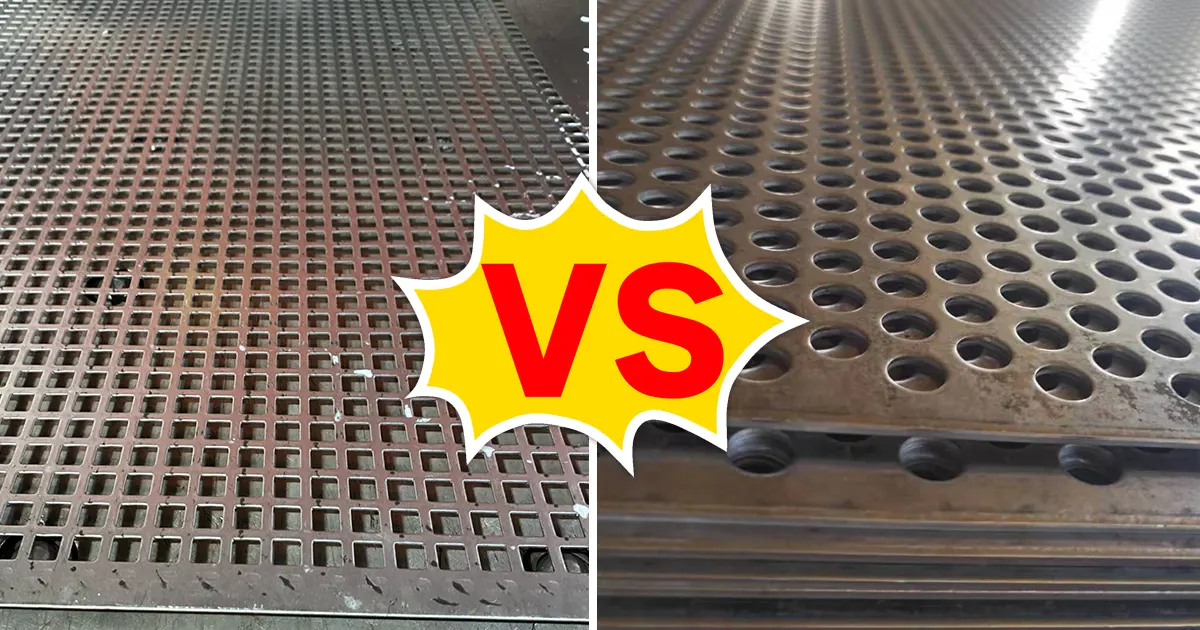
Key Takeaways
- Round holes are strong and last longer. They work well for tough jobs like mining and quarrying.
- Square holes have more open space. This lets materials move faster and helps water drain better in some uses.
- Pick round holes if you deal with wet or sticky stuff. This helps stop clogging and lowers how often you need to clean.
- Think about the shape of the holes. Round holes spread stress out evenly. Square holes can be weak at the corners.
- Plates with round holes usually cost less and are easier to make. This makes them a good choice for big projects.
- For looks, round holes give a classic style. Square holes look modern and geometric.
- Check the size and wetness of your material before picking a plate. This helps it work best.
- Always look at what you need most—strength, airflow, or price. This helps you pick the right plate for your project.
Structural Performance Comparison
Strength: Round Hole vs Square Hole Perforated Plate
When you pick perforated metal panels, you want to know which shape is stronger. Round holes are usually the best for strength. They help spread out stress across the plate. Square holes might look strong, but their corners can be weak spots. If you need panels for hard jobs, round holes often work better.
Tensile Strength and Ligament Area
Tensile strength means how much pulling force a panel can take before breaking. The space between the holes is called the ligament area. Round holes make smooth, curved ligaments. These curves help stop the panel from tearing or stretching. Square holes have sharp corners. These corners can collect stress and make the panel crack more easily.
A study found that how a perforated plate breaks depends a lot on the hole shape. Plates with round holes broke in different ways than plates with square holes. Round holes helped spread out force, so the panel was tougher during sudden hits.
Uniformity of Strength Distribution
You want your panels to be strong everywhere, not just in some places. Round holes help make the strength more even across the whole panel. Square holes can make the panel stiff in one way but weak in another. This can cause problems if you need the same strength everywhere.
Load Capacity Differences
Load capacity means how much weight or force the panels can take before bending or breaking. Round holes usually let the panel hold more weight. The smooth edges of round holes help carry weight without weak spots. Square holes can make the panel stiff in one way, but their corners can build up stress. This can lower how much weight the panel can handle.
If you need to hold heavy things or take strong hits, round holes are safer. They give better stiffness and help the panels last longer in tough jobs.
Crack Propagation and Edge Strength
Cracks can start and spread in perforated metal panels, especially in tough places. How cracks move depends on the hole shape. Round holes slow down crack growth because they do not have sharp corners. Square holes have pointed edges, so cracks can start and spread faster.
Edge strength is important too. You want your panels to stay strong at the edges, where cracks often start. Here is a quick look at how round and square holes compare:
| Hole Type | Edge Strength Characteristics |
|---|---|
| Round Holes | Higher tensile strength per ligament area; smoother transitions; better stress distribution for repeated impacts. |
| Square Holes | Stiffer local lattice in one direction; higher stress concentrations at corners; advantageous for directional stiffness. |
If you need panels that can take many hits or heavy loads, round holes give better edge strength. Square holes can be good if you need stiffness in one way, but you have to watch for cracks at the corners.
Tip: If you want your perforated metal panels to last longer and handle more stress, pick round holes for better strength and edge toughness.
Geometry and Design Impact
Shape and Pattern Differences
You can see that hole shapes and patterns change how a perforated plate looks and works. Geometry is very important here. Round holes look classic and help spread force across the plate. Square holes look modern and make a grid pattern. These differences show up in factory screens and building decorations.
Let’s look at the geometry of each type:
- Round holes can be in straight or staggered rows. This shape helps the plate stay strong and handle stress.
- Square holes make a checkerboard pattern. This shape gives more open space, so air or material can move through easily.
Check out this table to see how geometry changes different features:
| Feature | Round Holes | Square Holes |
|---|---|---|
| Structural Integrity | Better resistance to stress concentrations | Can introduce stress raisers due to sharp corners |
| Open Area Percentage | Lower than square holes | Higher, often exceeding 62% |
| Filtration Efficiency | Reliable for sorting and liquid filtration | Less effective due to sharp corners |
| Aesthetic Appeal | Traditional and functional | Modern and geometric |
| Application Suitability | Ideal for strength and ventilation | Suitable for visibility and decorative purposes |
Note: If you need a plate for tough jobs, round holes give more strength because of their geometry. If you want more open space or a cool look, square holes have a different geometry.
Why Geometry Matters for Plate Strength
Geometry is not just about looks. It also changes how the plate handles force and stress. When you pick a plate, think about how geometry affects strength. Round holes use curves, which spread out stress and stop cracks. Square holes have sharp corners. This shape can make stress build up and make the plate weaker there.
Research shows that geometry changes how strong a plate is. Different hole shapes, like cylindrical or diffused, can help with cooling and performance. The shape of the holes helps the plate stay strong in hard jobs. Small holes, because of their shape, can sometimes make stress worse, even if you think they should help.
You want a plate that lasts and does not break easily. Geometry helps with that. If you pick round holes, the shape gives you good strength. Square holes give you more open space but can make the plate less strong.
- Geometry changes:
- How much weight the plate can hold
- How cracks start and move
- How well the plate takes hits again and again
So, when you look at perforated plates, always check the geometry. It decides how strong your plate is and if it works for your job.
Open Area and Airflow
Open Area: Round Hole vs Square Hole Perforated Plate
When you look at perforated plates, open area percentage is important. This number shows how much of the plate is open for air, water, or other things to go through. If you want more things to pass through, you need a higher open area percentage. Square holes usually give you more open space than round holes. This is because square holes fit together with less empty space between them. You can use this if you need lots of drainage or airflow.
- Square holes can have a higher open area percentage because they fit together without leaving gaps.
- This is good when you want better airflow or faster drainage.
- Square holes are harder to make, so they might cost more money.
Round holes still work well for many jobs. They give you a good mix of open area percentage and strength. You see round holes a lot because they are easier to make and last longer.
Calculating Open Area
You can find the open area percentage by using open area calculations. For round holes, you measure the diameter and the space between holes. For square holes, you measure the side length and the space between holes. These calculations help you pick the right perforated plate for your job. If you want to compare, try these steps:
- Measure the size of the hole.
- Measure the distance from the center of one hole to the next.
- Use open area calculations to find the open area percentage.
You will see that square holes often give you a higher open area percentage for the same plate size. This means more air or material can move through the plate.
Airflow and Ventilation Efficiency
The shape and size of the holes change how well air moves through the plate. Round holes usually give you better airflow because they can have a higher open area percentage. Square holes can make the plate stronger, but they might slow down the air and cause more pressure to build up.
Here is a table to help you see the difference:
| Hole Shape | Airflow Efficiency | Pressure Drop | Material Strength |
|---|---|---|---|
| Round | Higher | Lower | Moderate |
| Square | Moderate | Higher | Higher |
If you want the best airflow and ventilation, round holes are a good choice. Square holes are good when you need more strength and do not mind less airflow. Picking the right open area percentage can also help save energy and make buildings work better.
Screening Efficiency and Material Flow
You want your perforated plate to move things fast and not get blocked. The open area percentage changes how quickly rocks, sand, or other things go through. Round holes give you steady flow and are easy to clean. Square holes let more stuff through because they have a higher open area percentage, but sharp pieces can get stuck in the corners.
Here is a quick look at how each type works:
| Feature | Round Holes | Square Holes |
|---|---|---|
| Structural Integrity | Even stress distribution | Good, but depends on pattern |
| Production Efficiency | Most efficient and least expensive | More complex, higher cost |
| Versatility | Great for many uses | Best for drainage and airflow |
If you want fast screening and less clogging, check the open area percentage and the shape of the holes. You will see that picking the right open area percentage makes your job easier and faster.
Tip: Always check the open area percentage and use open area calculations before you pick a perforated plate. This helps you get the best results for your needs.
Anti-Clogging and Blinding
Blinding Risk: Round vs Square Holes
You want your perforated plate to keep working without getting blocked. Blinding happens when material sticks in the holes and stops the plate from doing its job. This can slow down your work and make you clean the plate more often. You might wonder if round or square holes are better at fighting blinding.
Round holes in a perforated plate usually have less risk of blinding. The smooth, curved shape helps material slide through. Sharp corners in square holes can trap pieces of rock, sand, or other stuff. If you use a perforated plate with square holes, you may see more clogging, especially with sticky or wet material.
Here’s a quick look at how each type handles blinding:
| Hole Shape | Blinding Risk | Why? |
|---|---|---|
| Round | Lower | Smooth edges, easy flow |
| Square | Higher | Corners trap material |
You should think about what you screen. If you work with wet or sticky material, a perforated plate with round holes will help you avoid blockages. If you need a high open area and use dry, free-flowing material, square holes might still work for you.
Tip: Check your material before you choose a perforated plate. The right hole shape can save you time and money on cleaning.
Self-Cleaning and Maintenance
You want a perforated plate that cleans itself as much as possible. Self-cleaning means less downtime and less work for you. Round holes help with self-cleaning because material does not get stuck as easily. When the plate vibrates or shakes, most of the stuck pieces fall out.
Square holes in a perforated plate can hold onto bits of material in the corners. This means you may need to stop and clean the plate more often. If you use a vibrating screen, round holes will clear faster. You will spend less time on maintenance and more time getting work done.
Here are some ways to keep your perforated plate clean:
- Use a plate with round holes for sticky or wet jobs.
- Pick a vibrating screen to shake loose stuck material.
- Clean the plate often if you use square holes.
You can also look for special coatings or surface treatments. These can help both round and square perforated plates resist blinding. Ask your supplier about these options if you have tough material to screen.
Note: A clean perforated plate works better and lasts longer. Choose the right shape and keep up with maintenance to get the best results.
Wear Life and Durability
Abrasion Resistance
You want your perforated plate to last, especially if you work with rough or sharp materials. Abrasion resistance means how well the plate stands up to constant rubbing or scraping. If you use a perforated plate with round holes, you get smoother edges. These edges help slow down wear because there are no sharp corners for material to catch on. Square holes have corners that can wear out faster. The corners take more hits and can break down before the rest of the plate.
If you screen rocks, gravel, or other hard stuff, you need a perforated plate that can handle the grind. Round holes usually give you better abrasion resistance. You will see less chipping and fewer cracks over time. This means you spend less money on new plates and less time changing them out.
Edge Wear and Longevity
Edge wear happens when the sides of the holes start to break down. You want your perforated plate to keep its shape for as long as possible. Round holes have a big advantage here. The smooth, curved edges spread out the force. This helps the plate last longer, even when you use it every day.
Square holes can wear out at the corners. The sharp points take more stress and can chip away. If you use a perforated plate with square holes, check the edges often. You might need to replace the plate sooner if you see cracks or chips.
Here are some tips to help your perforated plate last longer:
- Pick round holes for jobs with lots of movement or vibration.
- Check the edges of your plate during regular maintenance.
- Use thicker plates if you need extra strength.
Note: A plate that lasts longer saves you money and keeps your work running smoothly.
Suitability for High-Impact Use
Some jobs hit your perforated plate hard. Mining, quarrying, and recycling can send heavy rocks or metal pieces crashing into the plate. You need to know which hole shape works best for these tough jobs.
Check out this table to see how each shape handles high-impact use:
| Hole Shape | Advantages in High-Impact Environments |
|---|---|
| Round Holes | Higher tensile strength per ligament area; better stress distribution for repeated impact or vibration. |
| Square Holes | Suitable for heavy, distributed loads; minimizes deflection in thicker carbon steel sheets. |
If you want a perforated plate that can take hit after hit, round holes are a smart choice. They spread out the force and help the plate stay strong. Square holes work well if you use thick steel sheets and need to handle heavy, steady loads.
You should think about what kind of impact your plate will face. For repeated hits or shaking, round holes give you more life. For big, steady weights, square holes in a thick plate can do the job.
Tip: Match your perforated plate to your work. The right shape means fewer repairs and less downtime.
Manufacturing and Cost
Production Complexity
When you choose a perforated plate, you want to know how easy it is to make. Round holes are much easier and faster to produce. Most factories use simple punching tools for round holes. These tools last longer and do not wear out quickly. Square holes need special machines and more steps. The tools for square holes wear down faster because the corners put more stress on the metal.
Here’s a quick table to help you compare:
| Hole Shape | Production Complexity | Tool Wear | Production Costs | Material Waste Reduction |
|---|---|---|---|---|
| Round Hole | Easier and faster | Less wear | Lower costs | Moderate |
| Square Hole | More complex | Higher wear | Higher costs | Higher |
If you want a plate that is simple to make and keeps costs down, round holes are the way to go.
Material Waste and Efficiency
You might wonder how much metal gets wasted during production. With round holes, you get moderate material waste. The punching process is smooth and does not leave much scrap. Square holes, on the other hand, create more waste. The sharp corners and extra cutting steps mean more leftover pieces. This can make the process less efficient and raise your costs.
Factories like to use round holes because they can make more plates from the same amount of metal. If you care about saving material and money, round holes give you an edge.
Tip: Ask your supplier about material waste before you order. Less waste means better value for your project.
Cost Comparison: Round vs Square Holes
Cost matters for every job. Round hole perforated plates usually cost less. The tools last longer, and the process is faster. You save money, especially if you need a lot of plates. Square holes cost more because the machines work harder and the tools wear out quickly. You also pay more for the extra material waste.
If you have a big project or need many plates, round holes help you stay on budget. Square holes might be worth the extra cost if you need special features, but you should plan for higher expenses.
When you look at design and construction advantages, round holes stand out for their low cost and easy production. Square holes offer a unique look and more open area, but you pay more for those benefits.
Note: For most jobs, round holes give you the best mix of price, speed, and efficiency.
Application Suitability
Mining and Quarrying
You work in mining or quarrying, so you know your screens take a beating. You need a plate that stands up to rocks, dust, and heavy loads. Round hole perforated plates shine here. They spread out the force and handle impact well. You get fewer cracks and longer life. If you use square holes, you get more open area. That means faster material flow. But, those sharp corners can wear out faster, especially with sharp stones.
You want to keep your operation running. Round holes help you avoid downtime. They resist cracks and last longer. Square holes work if you need speed and deal with less abrasive material. Think about your main goal. Do you want strength or speed? That answer helps you pick the right plate.
Tip: For tough mining jobs, round holes give you more durability. For lighter quarry work, square holes can boost your output.
Aggregate and Recycling
You handle sand, gravel, or even construction waste. Both round and square hole perforated plates work well for these jobs. You can use them to sort materials from 5 to 100mm. That covers most of what you see in aggregate plants. In recycling, you sort metal scrap and broken concrete. You want your screens to be precise. Modern plates use laser or CNC drilling. This gives you custom holes for your exact needs. You can boost your sorting efficiency by over 25% with the right plate.
Here’s how these plates help you in aggregate and recycling:
- Both round and square holes sort sand, gravel, and stones from 5 to 100mm.
- You can use them to separate construction waste and metal scrap.
- Custom hole sizes, made with laser or CNC drilling, make your process faster and more accurate.
You want to get the most out of your equipment. Pick the plate that matches your material size and sorting needs. Customization helps you hit your targets and save time.
Wet vs Dry Screening
You might screen wet or dry material. Each job needs a different approach. Wet screening means water and sticky stuff. Dry screening deals with dust and loose particles. The shape of your holes changes how well your plate works.
Check out this table to see the pros and cons:
| Hole Shape | Advantages | Disadvantages |
|---|---|---|
| Round Holes | Good strength and ventilation | May not give the most open area |
| Square Holes | Modern look, high open area | Not as strong as round holes |
Round holes give you strength and let air or water move through. They work well for wet jobs where you need the plate to last. Square holes give you more open space. That helps with dry material and faster flow. But, they might not last as long under heavy use.
Note: Match your plate to your job. Wet screening needs strength and easy cleaning. Dry screening benefits from more open area and speed.
Material Size and Moisture Content
When you pick a perforated plate, you need to think about the size of the material you want to screen. You also need to check how wet or dry your material is. These two things can change how well your plate works.
Material Size
If you work with big rocks or chunks, you need bigger holes. Small grains or sand need smaller holes. The shape of the hole matters, too. Round holes work well for most sizes. They let material pass through smoothly. Square holes give you more open area, so you can move more material at once. But, sharp corners in square holes can catch odd-shaped pieces.
Here’s a quick guide:
| Material Size | Best Hole Shape | Why? |
|---|---|---|
| Large (over 50mm) | Round | Less clogging, strong edges |
| Medium (10-50mm) | Round or Square | Good flow, easy sorting |
| Small (under 10mm) | Square | Higher open area, fast flow |
Tip: If you screen mixed sizes, try a custom pattern. You can mix round and square holes for better results.
Moisture Content
Wet material acts differently than dry material. If your rocks or sand are wet, they can stick together. This can block the holes in your plate. Round holes help wet material slide through. They have smooth edges, so less stuff gets stuck. Square holes can trap wet pieces in the corners. You might need to clean the plate more often.
Dry material flows faster. Square holes work well here. You get more open space, so you can move more material. But, if your material is dusty, round holes can help keep the dust moving without clogging.
Here’s what you should remember:
- Wet material: Pick round holes for less clogging.
- Dry material: Square holes give you speed and more open area.
- Sticky or clay-like material: Use round holes and add vibration if you can.
Quick Checklist for You
- Check your material size. Big pieces? Go round. Small pieces? Try square.
- Test your material’s moisture. Wet? Use round holes. Dry? Square holes work.
- Watch for clogging. If you see blockages, switch to round holes or add vibration.
Note: The right hole shape saves you time and money. You get better screening and less downtime.
If you’re not sure, ask your supplier for samples. Test them with your real material. That way, you’ll know what works best for your job.
Selection Guide
How to Choose the Right Hole Shape
Choosing between round and square holes can feel tricky. You want your perforated plate to do its job well and last a long time. Start by thinking about what matters most for your project. Here are some things you should look at:
- Structural Integrity: Round holes spread out stress better. They help your plate stay strong, even under heavy loads. Square holes can make the plate stiff in one direction, but the corners might crack if you push them too hard.
- Airflow Efficiency: If you need lots of air to move through, round holes usually work best. They let air pass easily, which is great for things like HVAC or ventilation.
- Material Flow: Square holes give you more open space. This helps when you want material to move fast, like in screening or filtration.
- Cost Efficiency: Round holes are easier and cheaper to make. Square holes need special tools and can cost more.
- Aesthetic Flexibility: Want a classic look? Go with round holes. Need something modern or geometric? Square holes stand out.
- Acoustic Performance: The shape of the holes can change how sound moves through the plate. If noise control matters, ask your supplier which shape works best.
Tip: Think about your main goal. Do you need strength, speed, or a certain look? Your answer will point you in the right direction.
Checklist for Plate Selection
You can use this checklist to help you pick the right perforated plate. Just answer each question and see which hole shape fits your needs.
| Question | If Yes, Choose… |
|---|---|
| Do you need the strongest plate possible? | Round Holes |
| Is fast material flow your top priority? | Square Holes |
| Will you use the plate for ventilation? | Round Holes |
| Do you want a modern, geometric look? | Square Holes |
| Is cost a big concern for your project? | Round Holes |
| Will you screen sticky or wet material? | Round Holes |
| Do you need a high open area percentage? | Square Holes |
- Check your answers. If you picked mostly round holes, that shape is probably best for you. If you picked square holes more, go with that.
- Still not sure? Try a sample plate or ask for expert advice.
Note: Every job is different. If you have a special project or tough material, talk to a screening expert. They can help you find the perfect plate for your needs.
You have lots of options. Use this guide to make your choice simple and smart. The right perforated plate will help your work go faster, last longer, and look just the way you want.
Comparison Table Overview
Open Area
You probably want to know how much space each plate gives you for air, water, or material to pass through. Open area is a big deal when you need fast flow or good ventilation. Round holes usually offer a balanced mix of strength and open area. Square holes can give you more open space because they fit together tightly. That means you get higher open area percentages, sometimes over 60%. If you need maximum flow, square holes might be your best bet.
Here’s a quick table to help you see the difference:
| Hole Shape | Typical Open Area (%) | Best For |
|---|---|---|
| Round | 40-55 | Balanced strength/flow |
| Square | 55-70 | Maximum flow/ventilation |
Tip: If you work with sticky or wet material, round holes help prevent clogging even with a slightly lower open area.
Strength
Strength matters when your plate faces heavy loads or tough impacts. Round holes spread stress evenly across the plate. You get fewer weak spots and cracks. Square holes have sharp corners. These corners can collect stress and cause cracks to start. If you need a plate that lasts longer and handles rough jobs, round holes are the safer choice.
Check out this table for a quick comparison:
| Hole Shape | Strength Level | Weak Points | Best Use |
|---|---|---|---|
| Round | High | None | Mining, heavy loads |
| Square | Moderate | Corners | Light, steady loads |
Note: Round holes give you more durability. Square holes work well if you need stiffness in one direction.
Screening Accuracy
Screening accuracy tells you how well the plate sorts material by size. You want your plate to let the right pieces through and keep the rest out. Round holes offer reliable accuracy for most jobs. They give you smooth edges, so material passes through easily. Square holes can let more material through at once, but sharp corners may trap odd-shaped pieces. That can affect accuracy, especially with sticky or irregular material.
Here’s a simple table for screening accuracy:
| Hole Shape | Screening Accuracy | Material Flow | Risk of Clogging |
|---|---|---|---|
| Round | High | Steady | Low |
| Square | Moderate | Fast | Higher |
If you need precise sorting, round holes are your best friend. Square holes help when speed matters more than accuracy.
You can use this comparison to pick the right plate for your job. Think about what matters most—open area, strength, or accuracy. The right choice keeps your operation running smoothly.
Anti-Clogging
You want your perforated plate to keep working without getting blocked. Clogging, or “blinding,” happens when material gets stuck in the holes. This can slow down your work and make you stop for cleaning. Round holes usually do a better job at fighting clogging. Their smooth, curved edges help material slide through. You see less stuff getting stuck, even with sticky or wet materials.
Square holes can trap material in the corners. If you work with sharp or odd-shaped pieces, these corners catch more debris. You might need to clean your plate more often if you pick square holes.
Here’s a quick table to help you compare:
| Hole Shape | Anti-Clogging Ability | Why? |
|---|---|---|
| Round | High | Smooth edges, easy flow |
| Square | Moderate | Corners trap material |
Tip: If you deal with wet, sticky, or mixed materials, round holes will save you time on cleaning.
Wear Life
Wear life means how long your perforated plate lasts before you need to replace it. You want a plate that stands up to tough jobs and keeps going strong. Round holes usually last longer. Their edges are smooth, so they wear down slowly. You get fewer cracks and chips, even if you use the plate every day.
Square holes have sharp corners. These corners take more hits and wear out faster. If you use your plate for heavy work, you might see cracks or broken edges sooner with square holes.
Here’s a simple list to help you remember:
- Round holes: Last longer, fewer repairs, better for rough jobs.
- Square holes: Wear out at corners, need more checks, better for light or steady loads.
Note: Check your plate often. If you see cracks or chips, it’s time for a new one.
Typical Applications
You want to pick the right plate for your job. Each hole shape works best in different places. Round holes fit well in mining, quarrying, and places where strength matters most. You see them in screens, guards, and vents. They handle heavy loads and rough materials.
Square holes work great when you need fast flow or want to sort small pieces. You find them in food processing, recycling, and places where you want more open space. They also look modern, so people use them in building designs.
Here’s a quick reference table:
| Hole Shape | Best For | Common Uses |
|---|---|---|
| Round | Strength, durability | Mining, quarrying, guards, vents |
| Square | Fast flow, high open area | Food processing, recycling, décor |
Remember: Match your plate to your job. The right shape makes your work easier and your equipment last longer.
Safety and Load-Bearing
Structural Integrity
You want your perforated plate to stay strong, even when it faces heavy loads. The shape of the holes changes how the plate handles stress. Round holes spread out the force more evenly. This means you get fewer weak spots and less chance of cracks. Square holes can make the plate stiff along the edges, so it bends less under a steady load. But those sharp corners can collect stress, which might lead to cracks if you use the plate for a long time or in tough jobs.
Here’s a table to help you see the main differences:
| Feature | Round Hole | Square Hole |
|---|---|---|
| Stress Distribution | More uniform, fewer stress points | Higher stress at corners |
| Material Retention | Lower | Better for tough screening |
| Overall Performance | Great for changing loads | Can struggle under certain conditions |
You might notice that round holes give you higher tensile strength for each strip of metal between the holes. This helps if your plate faces lots of shaking or repeated hits. Square holes, on the other hand, make the plate stiffer in one direction. That can help if you need less bending, but you have to watch out for those corners.
- Square-hole plates bend less under a steady load.
- Round-hole plates handle repeated impacts better and spread out stress.
If you care about structural integrity and weight, round holes often give you the best mix of strength and durability.
Safety Margins
Safety margins help your plate last longer and keep your team safe. You want to make sure the edges of your plate are strong enough to handle lifting, moving, and daily use. The size of the margin around the holes changes how strong the plate is and how much open area you get.
Check out this table for a quick guide:
| Margin Type | Effect on Strength and Open Area |
|---|---|
| Narrow Margins | More open area, but less strength |
| Wide Margins | More support and durability, better against bending and impact |
| Edge Margin | Should be at least as wide as the hole diameter to stop tearing during use or installation |
If you use narrow margins, you get more open space for air or material to pass through. But the plate might bend or break more easily. Wide margins give you extra support, so your plate can take more hits and last longer. Always make sure the edge margin is at least as wide as the hole. This stops the plate from tearing when you move or install it.
Tip: Don’t cut corners on safety margins. A strong edge keeps your plate working longer and helps prevent accidents.
When you pick a perforated plate, think about both the hole shape and the safety margins. This way, you get the right balance of structural strength and open area for your job.
Conclusion
Round holes and square holes each have their own advantages. Round holes are generally better for heavy-duty screening and longer service life, while square holes are often preferred when higher open area and faster flow are the priority. As a screen media manufacturer, we supply punch plates for a wide range of materials and working conditions. With the right hole shape and plate design, you can improve screening performance, reduce wear, and keep production running more efficiently.
FAQ
What makes round hole perforated plates stronger?
Round holes spread stress evenly. You get fewer weak spots. The smooth edges help stop cracks. If you want a plate that lasts longer under heavy use, round holes are your best bet.
Do square holes let more material through?
Yes! Square holes give you a higher open area. You can move more air, water, or material. This works well if you need fast flow or quick drainage.
Which plate is easier to clean?
You’ll find round holes much easier to clean. Material slides through the smooth edges. Square holes can trap bits in the corners, so you may need to clean them more often.
Are round hole plates cheaper than square hole plates?
Usually, yes. Round holes are faster and easier to make. The tools last longer. You save money, especially on big orders.
Can I use square hole plates for wet material?
You can, but round holes work better for wet or sticky stuff. Square holes trap more material in the corners. You’ll spend more time cleaning.
Which plate should I pick for mining or quarrying?
Go with round holes. They handle heavy rocks and impacts. You get better durability and fewer cracks. Square holes work for lighter jobs or when you need more open area.
How do I choose the right hole size?
Check your material size. Big pieces need bigger holes. Small grains need smaller holes. If you’re not sure, ask your supplier for a sample or advice.
Do both types work for decorative projects?
Absolutely! Round holes give a classic look. Square holes look modern and bold. Pick the style that fits your design.