
Rubber Screens
Rubber screen panels are impact-absorbing screening media designed for vibrating screens in mining, quarry, aggregate, and recycling plants. If your top deck takes heavy hits, noise is a concern, or you’re fighting pegging and carryback in wet conditions, rubber screens are often a practical choice.
- Absorb impact and help protect the deck structure
- Lower operating noise compared with metal screens
- Flexible openings that can reduce pegging in coarse duty
- Modular panels for easier replacement and maintenance
What Are Rubber Screens?
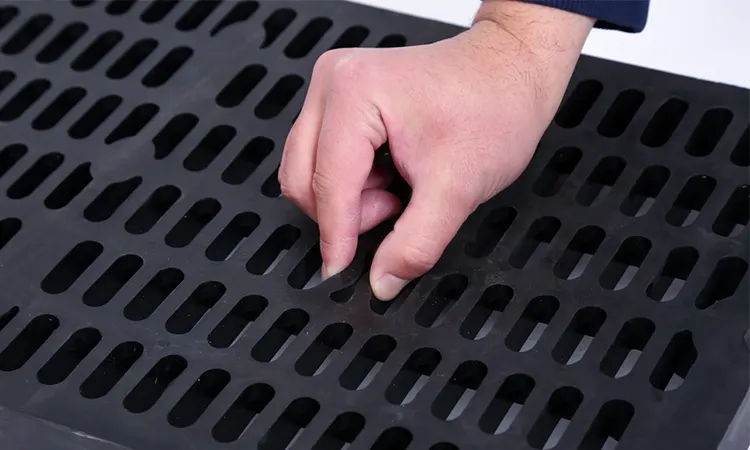
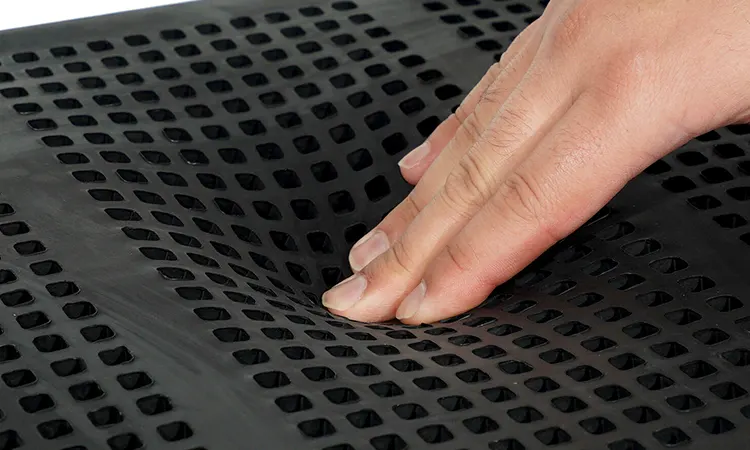
Rubber screens (also called rubber screen panels) are molded screening panels installed on vibrating screen decks. Instead of rigid metal wires, the screening surface is made from a rubber compound selected for durability and flexibility. In operation, the panel flexes under load, which helps absorb impact energy and can reduce material wedging in the openings.
Rubber screens are commonly used where the feed is aggressive (large lumps, high impact), where safety and noise reduction matter, and where a modular panel setup is preferred for maintenance.
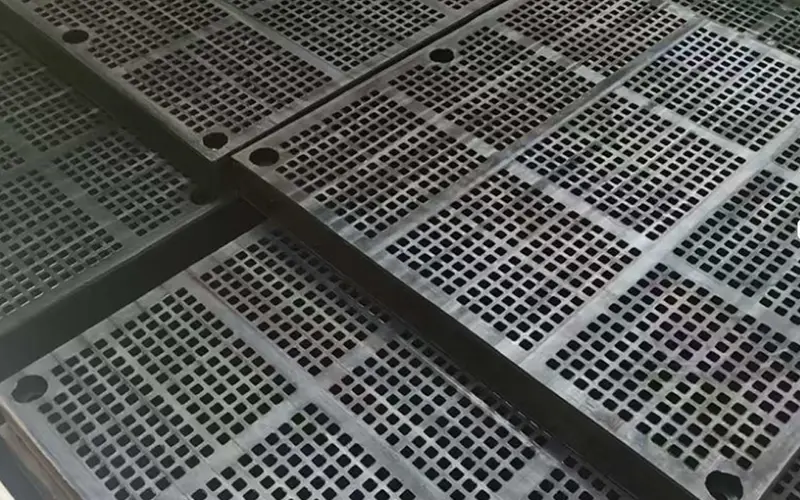
Where Rubber Screens Work Best
Rubber screens are typically used in these duties:
Scalping / primary screening (top deck): handling large lumps and high impact
Coarse sizing: when you need rugged screening with stable performance
Wet screening circuits: where carryback, pegging, and buildup are common
Plants prioritizing lower noise and safer handling
If your main goal is maximum open area and very tight sizing, woven wire screens may be a better fit. If the goal is impact resistance and lower noise, rubber panels are often the better tool.
Key Benefits
Rubber helps cushion the strike from large rocks and heavy feed. This can reduce damage at the feed end and help the deck run more smoothly.
Rubber surfaces generally run quieter than metal wire screens or plate media, especially in coarse, high-impact zones.
Because rubber has some flexibility, near-size particles are less likely to wedge and stay stuck in the openings (depending on material shape and moisture).
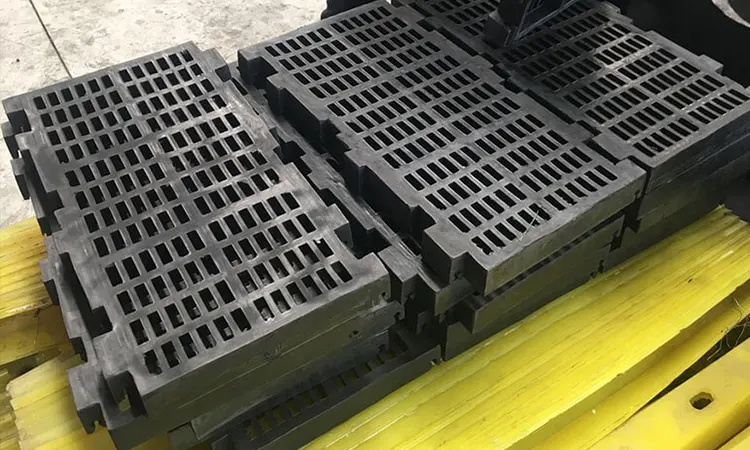
Most rubber screen systems are built as panels. You can replace the high-wear area (often the feed end) without changing the entire deck.
Rubber panels are typically easier and safer to handle than sharp wire edges, especially during change-outs.
Technical Specifications
| Specification | Details |
|---|---|
| Product Name | Rubber Screens (Rubber Screen Panels / Rubber Screening Media) |
| Manufacturer | Anpeng (Direct Manufacturer) |
| Screen Type | Modular Rubber Screen Panels; Bolt-Down Rubber Screens; Side Tension Rubber Screens (custom available) |
| Material / Compound | Wear-Resistant Rubber Compound (hardness and formula matched to your material and duty) |
| Aperture Shape | Square / Slot / Round (custom patterns available) |
| Aperture Size (Cut Size) | [Custom] mm (based on your target separation size) |
| Panel Thickness | [Custom] mm (selected based on impact level and wear life targets) |
| Open Area | Customized by aperture + web thickness to balance throughput and panel strength |
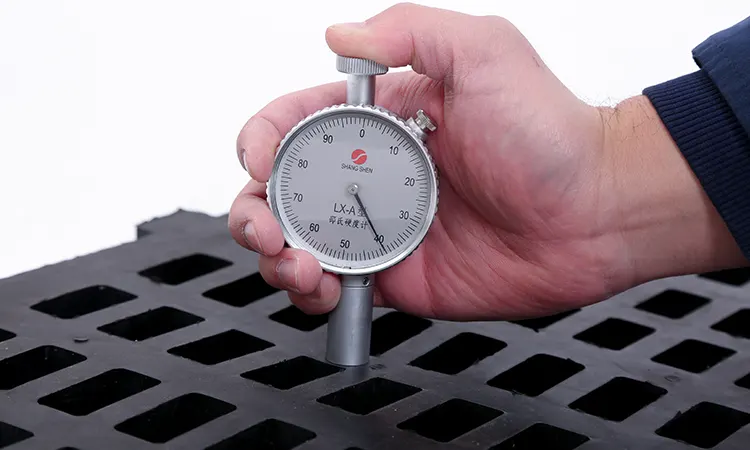
| Hardness (Shore A) | [Custom] (matched to abrasion, impact, and operating conditions) |
| Reinforcement Options | Steel inserts / reinforced ribs (optional, for heavy impact zones) |
| Fixing / Mounting System | Pin/lock modular fixing; Bolt-down fixing; Side tension rails (match your screen deck) |
| Panel Size | Custom per vibrating screen deck layout (panel or full-deck configuration) |
| Recommended Duty | Heavy-duty scalping and sizing with impact absorption and noise reduction |
| Typical Applications | Quarry & Aggregate, Mining, Coal, Recycling, Washing Lines / Wet Screening (application-dependent) |
| Key Benefits | Wear resistance, impact absorption, noise reduction, improved safety and reduced maintenance downtime |
| Customization | Panel size, aperture size/pattern, thickness, hardness, reinforcement, fixing system, color, marking, packaging |
| Quotation Info Needed | Material type, wet/dry, target cut size (mm), screen model or deck drawing, panel type (modular/bolt-down/tension), quantity |
| Packing | Export pallets or crates with protective wrapping; labeled by size & order ID |
Why Choose ANPENG Rubber Screens?
built to handle impact, abrasion, and coarse-duty conditions in mining and aggregate plants.
panels are produced to match your screen deck layout and fastening system, helping reduce bypass and panel movement.
we recommend the right aperture style and panel design based on your material, moisture, target cut size, and throughput.
FAQs
Are rubber screens best for top deck or bottom deck?
Rubber is most commonly used on top decks and impact zones. For tight sizing on bottom decks, you may also compare woven wire or PU/urethane.
Do rubber screens work for wet screening?
They can, especially for coarse duties where carryback and pegging are concerns. Good sealing and correct opening choice are important.
Square vs slotted openings—how do I choose?
Square openings are common for general separation. Slotted openings can help flow and reduce pegging for certain particle shapes and conditions.
How do I confirm the fixing system?
You’ll need the screen model/deck layout and the current fastening style (bolt-down, pin & sleeve, rail/clip, etc.). Photos help.
When should I choose rubber instead of PU?
Choose rubber when impact is high and noise reduction matters. Choose PU/urethane when abrasion is high and sizing needs are tighter.
What information do you need for a quote?
Material type, moisture, target cut size, tph, screen model, deck layout, and current issues (wear, pegging, carryback, breakage).