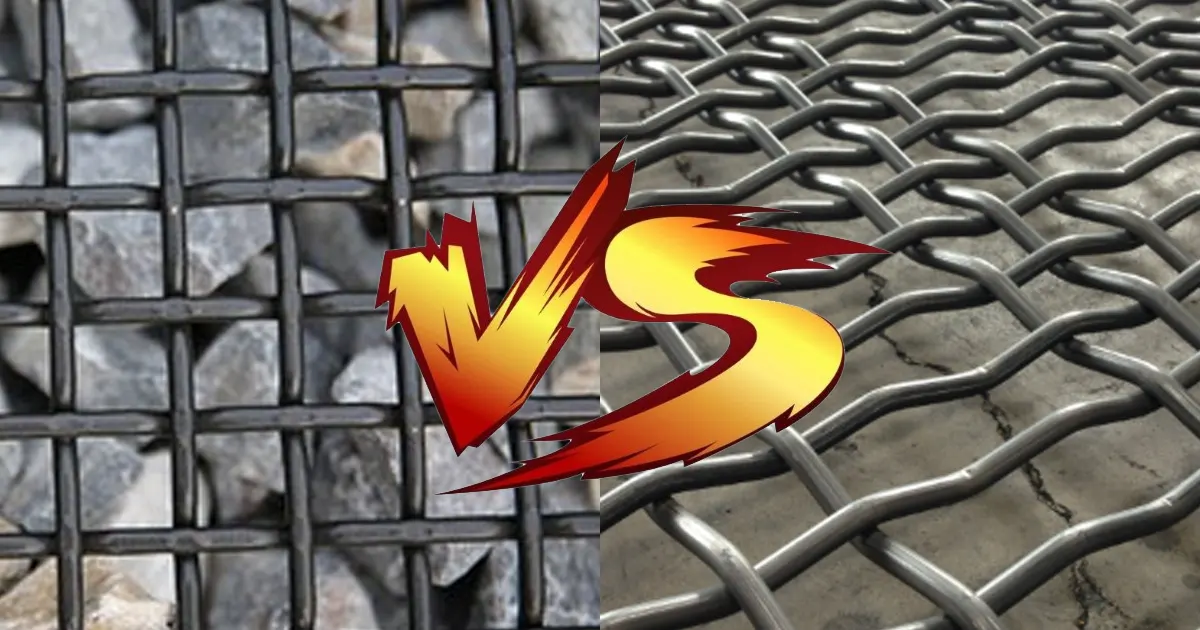
You might wonder which mesh is best for screening at work, particularly when considering Square Mesh vs Slotted Mesh. The answer depends on what you need. Square mesh provides good accuracy and effectively stops long particles from falling through. On the other hand, slotted mesh allows things to flow faster and helps prevent blinding. This trade-off is evident in many jobs, such as filtering or security checks. For example, stainless steel mesh works well with liquids, powders, and solids. It is strong and does not rust. The best choice between square mesh and slotted mesh depends on your material, cut size, and what you want to create. Here is a quick look at common materials used:
| Material | Applications |
|---|---|
| Steel | Industrial filtration, Security Screening, Fencing |
| Aluminum | Handrail Infill Panels, Design Interest |
| Stainless Steel | Grilles, Vents, Filters for liquids and solids |
| Specialty Alloys | Various industrial applications |
You should compare Square Mesh vs Slotted Mesh to pick the best one for your needs.
Key Takeaways
- Square mesh gives high accuracy. It stops long particles well. Use it for careful screening in factories and buildings.
- Slotted mesh lets things move faster. It stops clogging. It works well for wet or sticky stuff. Pick it for jobs like food making and mining.
- Think about the material you use. Stainless steel mesh lasts long. It does not rust. It works for both square and slotted mesh.
- Decide if you need speed or accuracy. Square mesh is good for careful work. Slotted mesh is better for fast and efficient jobs.
- Try using both mesh types together. This helps you get more work done. It also keeps your screening accurate for hard tasks.
- Check and clean your mesh often. This keeps it working well. It stops clogs and helps your system run smoothly.
- Look at your budget. Both mesh types cost about the same. Slotted mesh can save money later by needing less cleaning.
- Always pick the mesh that fits your job. The right mesh makes your work safer, faster, and better.
Quick Comparison: Square Mesh vs Slotted Mesh
It is important to know how square mesh and slotted mesh are different. This helps you pick the right one for your product. Each mesh has its own strengths. Square mesh gives you good accuracy. It also stays the same every time. Slotted mesh lets things move faster. It also stops blinding from happening. You can see these differences in the table below.
Performance Table
| Feature | Square Mesh | Slotted Mesh |
|---|---|---|
| Throughput | Moderate | High |
| Precision | High | Moderate |
| Anti-blinding | Low | High |
| Open Area | Moderate | High |
| Durability | High | High |
| Cost | Moderate | Moderate |
Recent studies show slotted mesh screens work better than square mesh screens for sand retention and flow. Slotted mesh keeps sand in place and makes stable bridges. The bigger open area helps fluid move through the mesh. Fluid flows lower and more evenly through the holes. This makes slotted mesh a good choice when you need fast flow and less blinding.
Tip: If you need to screen sticky or wet stuff, slotted mesh can help stop clogging and make things work better.
Application Table
You should check the main uses for each mesh type. The table below shows which mesh is best for different jobs.
| Application Scenario | Square Mesh Use Cases | Slotted Mesh Use Cases |
|---|---|---|
| Manufacturing | Used in many manufacturing jobs for strength and to stop rust. | N/A |
| Construction | Good for support and safety in building projects. | N/A |
| Pharmaceuticals | Used for filtering and separating in medicine making. | N/A |
| Architectural Design | Used for decoration and security in building designs. | N/A |
| Fall Protection | Helps keep people safe by stopping falls in buildings and public places. | N/A |
| Wet Screening | N/A | Used for wet or sticky materials. |
| Maximizing Flow | N/A | Used to make things move faster. |
Square mesh is best for jobs that need strength and safety. Slotted mesh is better for jobs that need fast flow and less blinding. You should pick the mesh that fits your job to get the best results.
Note: Always check your material and what you want to do before picking a mesh. The right mesh makes your work safer and more efficient.
Square Mesh Overview
What Is Square Mesh
You see square mesh in many industries. This type of mesh uses wires that cross each other at right angles. The wires have the same diameter in both directions. This creates a grid of square openings. You can find square mesh in rolls or as cut-to-size panels. Manufacturers use different weaving techniques to make it, such as plain weave, inter-crimped weave, or pre-crimped weave. The table below shows the standard definition and construction method for square mesh:
| Aspect | Details |
|---|---|
| Definition | A wire mesh variant with identical wire diameters for weft and warp. |
| Weaving Techniques | Can be woven to plain weave, inter-crimped weave, or pre-crimped weave. |
| Availability | Typically available in rolls or cut-to-size panels. |
You often see square mesh made from stainless steel wire mesh. This material resists rust and lasts a long time. You can also find square mesh made from other metals, but stainless steel wire mesh is popular for its strength and clean look.
Key Features
Precision & Consistency
Square mesh stands out for its precision. The wires form a grid-like structure with evenly spaced openings. This design gives you reliable performance every time you use it. You can trust square mesh to filter, reinforce, or protect, because the openings stay the same size across the whole panel. This consistency helps you meet strict standards in your work.
Wire Diameter & Open Area
The wire diameter in square mesh stays the same in both directions. This feature gives you control over the size of the openings. You can choose a mesh with small or large openings, depending on your needs. The open area affects how much material can pass through. If you need more flow, you pick a mesh with larger openings. If you want to block smaller particles, you choose a mesh with tighter spacing. Stainless mesh offers both options, so you can match the mesh to your job.
Square metal wire mesh gives you both strength and flexibility. The uniform grid supports heavy loads and resists bending. You can use metal wire mesh for many jobs, such as filtration, reinforcement, and security. The design also makes cleaning and maintenance easy.
When to Use Square Mesh
Elongated Particles
You should use square mesh when you need to keep elongated particles from passing through. The square openings stop long or thin pieces from slipping by. This makes square mesh a good choice for screening grains, seeds, or other materials with uneven shapes. Metal wire mesh with square openings helps you get accurate results in these cases.
Reinforcement & Structure
Square mesh works well for reinforcement and structure. You can use it to add strength to concrete, walls, or fences. The grid pattern spreads force evenly, which helps prevent cracks or breaks. Stainless mesh is a top pick for these jobs because it does not rust and stays strong over time. If you need a special size or shape, you can order custom metal wire mesh to fit your project.
Tip: Choose square mesh when you need accuracy, strength, and a clean look. It works well for both industrial and architectural uses.
Slotted Mesh Overview
What Is Slotted Mesh
You see slotted mesh in many industries. This mesh uses wires that form long, narrow openings instead of squares. The slots run in one direction. You get a screen that looks different from square mesh. Slotted mesh works well for sorting and filtering. You can find it in both perforated and expanded forms. Perforated mesh uses punched holes, while expanded mesh stretches metal to create slots. Both types give you strong and reliable grating.
Key Features
Throughput & Open Area
Slotted mesh gives you a larger open area than square mesh. The slots let more material pass through at once. You can move more product in less time. This feature helps you when you need high throughput. Perforated mesh with slotted openings also reduces the chance of clogging. You get a steady flow, even with tough materials. The open area makes cleaning easy. You can wash or brush the mesh without much effort. Grating made from slotted mesh stays strong and lasts a long time.
Anti-blinding
You often deal with blinding when small particles block the mesh. Slotted mesh helps stop this problem. The long slots let sticky or wet materials move through. You do not need to stop work to clear blockages. Perforated mesh with slots works better than square mesh for wet or sticky jobs. You save time and keep your process running. Many industries choose slotted mesh for this reason. You get less downtime and more output.
When to Use Slotted Mesh
Wet or Sticky Materials
You should pick slotted mesh when you handle wet or sticky materials. The slots let these materials pass without clogging. Perforated mesh works well in food processing, mining, and recycling. You can also use it in the coal industry. Experts say slotted wire screens filter out dust and gravel during coal grading. You get clean coal and less waste. Grating made from slotted mesh stands up to tough jobs.
Maximizing Flow
You want to move as much material as possible. Slotted mesh helps you reach this goal. The large open area lets you process more in less time. Perforated mesh gives you fast flow and easy cleaning. You can use it for sand, gravel, or other bulk materials. Some factories use slotted mesh for drainage or separation. You can also find it in perforated metal grating for walkways and platforms. Expanded mesh gives you another option for strong and open grating.
Tip: Choose slotted mesh when you need speed, easy cleaning, and less clogging. It works best for wet, sticky, or high-volume jobs.
Key Differences: Square Mesh vs Slotted Mesh
You should know the main differences between square mesh and slotted mesh before you pick one. Each type has its own good points for screening, cleaning, and price. These differences can change how your work goes.
Screening Efficiency & Open Area
Screening efficiency is important for your process. You want to move things fast and stop blockages. The open area tells you how much stuff can go through at once. Square mesh and slotted mesh are not the same here.
Here is a table that shows how both mesh types compare for screening and open area:
| Feature | Square Mesh | Slotted Mesh |
|---|---|---|
| Open Area | Lower | Greater |
| Production Efficiency | Moderate | Higher |
| Clogging/Blinding | More prone | Reduced |
| Particle Handling | Less effective for elongated | More effective for elongated |
| Customization | Limited | Highly customizable |
Open Area Formula
You can find the open area with a simple math formula. For square mesh, you measure the space between wires and compare it to the whole mesh. For slotted mesh, you measure the length and width of each slot. The formula is:
Open Area (%) = (Total Open Space / Total Mesh Area) × 100Slotted mesh usually has a bigger open area. This means you can move more material in less time. You get better results and less waiting.
Impact on ROI
When you pick between square mesh and slotted mesh, think about your return on investment (ROI). Slotted mesh helps you work faster by letting more material pass and stopping blinding. You spend less time cleaning and more time making things. Square mesh gives you accuracy and the same results every time, which is good for strict jobs. If you deal with long particles, slotted mesh works better and saves money. You get more done and spend less fixing things.
Tip: A bigger open area and better efficiency can help you earn your money back faster and improve your ROI.
Anti-blinding & Maintenance
Blinding happens when stuff blocks the mesh holes. You want to stop this so your work does not slow down. Square mesh and slotted mesh are very different for anti-blinding.
- Round or slotted holes block less than square ones.
- Slotted mesh is better for anti-blinding, especially with wet jobs.
- You clean slotted mesh less and work more.
- Maintenance is easier with slotted mesh because you do not stop as much to clear blockages.
Square mesh needs more care. You may have to clean it more, especially with sticky or wet stuff. Slotted mesh helps you avoid these problems and keeps things running well.
Note: Pick slotted mesh if you want less downtime and easier cleaning, especially for wet or sticky materials.
Durability & Cost
Durability and cost are important when you choose mesh. You want something strong that fits your budget. Both mesh types are tough. Stainless steel mesh lasts long and does not rust. You can use it for hard jobs and expect it to last.
Slotted mesh usually costs about the same as square mesh. You get more work done and spend less on cleaning, so you save money over time. Square mesh is strong and good for support, which helps in jobs that need extra strength. You can change slotted mesh more easily to fit your needs.
Tip: Think about both the first price and the money you save later when you pick your mesh. Slotted mesh might be a better deal if you want high speed and low upkeep.
You can see that square mesh and slotted mesh change how you work, clean, and spend money. You should pick the mesh that matches your material and what you want to do. This helps you get the best results and save cash.
Application Guide: Mesh Selection
Dry Screening
Dry screening is common in factories and plants. You must pick the right mesh for this job. High-carbon steel wire mesh is a good choice. It can take lots of hits and does not wear out fast. This mesh is strong and stretches without breaking. It keeps its shape and lasts a long time. When you choose mesh for dry screening, think about these things:
- Screen mesh size changes how well things are separated. Small mesh sizes filter better but clog faster.
- Vibration amplitude and frequency help materials sort out. Higher numbers separate better but can damage machines.
- Material traits like moisture and shape affect how the mesh works.
- Feed rate should stay steady for best filtering.
- Inclination angle changes how things move and separate.
- Maintenance and wear are important. Taking care of your mesh keeps it working well.
You also need to check particle size, material weight, and how rough it is. Rough materials need tough mesh. You get better results when you match mesh size to your material.
Tip: Pick high-carbon steel wire mesh for dry screening. It is strong and filters well in factories.
Wet Screening
Wet screening is harder than dry screening. You deal with sticky or tiny stuff that blocks normal mesh. Polyurethane mesh is great for wet screening. It stops wet fine particles from sticking and cuts down on clogging. You see polyurethane mesh used for coal, slaked lime, and other wet jobs. This mesh bends easily and lasts a long time. It gives you good screening and fixes problems with other mesh types.
| Feature | Description |
|---|---|
| Material | Polyurethane |
| Flexibility | Bends easily and stops clogging |
| Durability | Stays strong even with rough materials |
| Screening Efficiency | Works well for wet and tiny materials |
| Application Suitability | Best for wet and rough materials, fixes old mesh problems |
Polyurethane mesh helps you in wet screening. It keeps your work going and makes filtering better.
Note: Polyurethane mesh is best for wet screening. It helps with sticky stuff and keeps filtering strong.
Scalping & Heavy Duty
Scalping and heavy-duty jobs need tough mesh. Woven wire screen mesh is used a lot in mining. This mesh has lots of open space and filters well. You use it for sorting rocks and big jobs. Self-cleaning mining mesh is good for wet or sticky materials. It stops clogging and keeps things moving fast.
- Woven wire screen mesh is strong and filters well for big jobs.
- Self-cleaning mining mesh works with sticky stuff and keeps things running.
You need strong mesh for scalping and heavy-duty work. Pick mesh that does not wear out and keeps filtering in tough places.
Tip: Use woven wire screen mesh or self-cleaning mining mesh for big and tough jobs. You get good filtering and fast work.
Handling Elongated Particles
You work with materials that are long or flat. These shapes act differently than round ones. The shape of the mesh holes is important for screening. Square mesh, round mesh, and slotted mesh each work in their own way with long particles.
Here is a table that shows how mesh shape affects long particles:
| Mesh Shape | Impact on Elongated Particles |
|---|---|
| Square Hole | Standard shape, allows for effective processing. |
| Round Hole | More difficult for elongated particles to pass through. |
| Elongated Hole | Facilitates easier passage of elongated materials. |
Square holes are good for most jobs. They let some long pieces through but also catch many. Round holes make it harder for long pieces to pass. Slotted or long holes help these pieces move faster.
- Smooth, round particles move fast over mesh.
- Flat or long pieces can get stuck and slow things down.
- You might need more power or extra screens to keep things moving.
If you want to sort grains, seeds, or rocks with lots of long pieces, use square or slotted mesh. Slotted mesh stops clogging and keeps things working well. You can also use more shaker energy or add more screens to help sorting.
Tip: Pick slotted mesh if you need to move long pieces fast. Square mesh is good for accuracy, but slotted mesh gives better flow.
Mesh for Ventilation
You need mesh for vents, grilles, and air panels. The right mesh lets air move and keeps dust out. Square mesh usually has more open space than round holes of the same size. This means you get more air through the mesh. But, square mesh can make a small pressure drop, which can slow air a little.
Slotted mesh sends air in a straight line. This is helpful when you want air to go one way, especially in small spaces. You can use slotted mesh in HVAC, cooling machines, or big fans. It helps you control air and keeps things working well.
Note: Square mesh gives good airflow and works for most vents. Slotted mesh is best if you want air to move straight or need less pressure drop in tight spots.
Pick the mesh that fits your vent needs. If you want lots of air, use square mesh. If you need to guide air or work in a small space, slotted mesh is a good choice.
Mixed Deck Strategy
Combining Mesh Types
You can use square mesh and slotted mesh together. This is called a mixed deck strategy. You put different mesh types on different layers or parts of your screen. Each mesh does its own job. Square mesh helps you get accurate results and stops long pieces. Slotted mesh lets things move faster and keeps the mesh from getting blocked.
Here are some ways to use both mesh types:
- Put square mesh on the top layer to catch long or thin pieces.
- Use slotted mesh on lower layers to let more stuff through and stop clogging.
- Switch between mesh types if you have special screening needs.
Tip: You can ask your supplier to make custom mixed decks. They can help you pick the right mesh for your material and process.
When to Use Mixed Decks
You should use mixed decks when you have hard screening jobs. Some materials have both long and sticky pieces. You need to sort them fast and well. Mixed decks help you do this.
Here are some common times to use mixed decks:
- Screening wet or sticky stuff with some long pieces.
- Sorting lots of material that needs to be both fast and correct.
- Stopping work delays caused by mesh getting blocked.
You can use mixed decks in mining, recycling, and food factories. These jobs often have tough materials. Mixed decks give you more choices and better results.
| Scenario | Mesh Combination Example |
|---|---|
| Wet coal screening | Square mesh top, slotted mesh bottom |
| Grain sorting | Square mesh top, slotted mesh lower |
| Sand and gravel | Slotted mesh top, square mesh lower |
Note: Mixed decks work best when you match mesh types to your material and what you want to do.
ROI Impact
You want your screening system to give you the most value. Mixed deck strategies can help you get a better return on investment (ROI). You save money because you stop less for cleaning and repairs. You also make more product and get better results.
Here are some ways mixed decks help your ROI:
- Less blocking means you stop less to clean.
- More flow means you make more product.
- Better sorting means less waste and better quality.
- Custom mesh mixes make your screens last longer.
You can see how mixed decks help ROI in this code block:
ROI = (Increased Output + Reduced Downtime + Improved Quality) / Total CostCallout: Mixed decks help you get both accuracy and speed. You finish more work and spend less fixing things.
You should think about mixed deck strategies if you want to fix hard screening problems and get more value from your system.
How to Decide
Selection Checklist
You want to pick the right mesh for your job. Use this checklist to help you choose:
- Find out what material you need to screen. Is it dry, wet, sticky, or long?
- Think about if you need accuracy or speed. Square mesh is good for accuracy. Slotted mesh is good for speed.
- Look at the cut size and shape of the pieces. Square mesh works for round and long pieces. Slotted mesh is better for sticky or wet stuff.
- Think about your goals. Do you want to move things fast or stop delays?
- Check how much cleaning you want to do. Slotted mesh needs less cleaning. Square mesh needs more care.
- Think about your money. Both types cost about the same, but slotted mesh can save you money later.
- Look at what you are doing. Are you screening, making things stronger, or letting air through?
Tip: Write your answers down. You can match them with what each mesh does best.
Troubleshooting
You might have problems with your screening. Here are some easy steps to fix them:
- Check how much you are making. If it is low, look at how fast you feed the machine and what mesh you use. Change machine settings. Use a feeder to keep material moving evenly.
- Fix clogging and blocking. Add cleaning tools like the Russell Vibrasonic® Deblinding System. This keeps the mesh clear and helps it work better.
- Make screening better. Check the screen tension often. Use the right size screen. Change old meshes fast.
- Start a plan to check your mesh often. Do checks when the machine is off. This stops breakdowns and keeps things working.
Note: Checking your mesh and picking the right one helps you stop most problems.
When to Consult Experts
Sometimes you need help from mesh experts. Here are times to ask for help:
- You work in very hot or cold places or with chemicals.
- You need to filter very well or separate pieces exactly.
- You have special jobs that normal mesh cannot do.
Callout: Experts can help you find the right mesh for your work and goals. They know how to fix hard problems and special needs.
You can make your screening better by using this guide. Use the checklist, fix problems, and ask experts when you need to. You will get better results and save time.
Conclusion
You should think about four main things when picking mesh: precision, how much can go through, stopping clogs, and what the mesh is made of. The table below explains each one:
| Criteria | Description |
|---|---|
| Precision | Stainless steel woven mesh gives steady and correct screening. |
| Throughput | Polyurethane screens with big open spaces let things move faster. |
| Anti-blinding | Fatigue-resistant mesh works well for vibrating screens and stops clogging. |
| Material Type | Metal lasts longer, but plastic costs less money. |
Your screening conditions should drive your mesh choice—material abrasiveness, moisture, and target cut size all matter. In many plants, combining different screen media types across the deck delivers the best balance of throughput and wear life. If you want to reduce breakage and downtime, contact Anpeng. As a screen media manufacturer, our engineers can recommend the right woven wire screen setup and provide practical installation and tensioning guidance for your vibrating screen.
FAQ
What is the main difference between square mesh and slotted mesh?
Square mesh has equal-sized openings in both directions. Slotted mesh has longer openings in one direction. You get more precision with square mesh. You get higher flow with slotted mesh.
Which mesh should you use for wet or sticky materials?
You should use slotted mesh. The slots help wet or sticky materials pass through easily. You spend less time cleaning and avoid clogging.
Can you use both mesh types in one screening system?
Yes, you can combine both mesh types. Mixed decks help you screen different materials. You get accuracy and speed in your process.
How do you choose the right mesh for ventilation?
You should pick square mesh for general airflow. Slotted mesh works best when you need air to move in a straight line or reduce pressure drop.
Does mesh material affect performance?
Yes, mesh material changes strength and durability. Stainless steel resists rust and lasts longer. Polyurethane works well for wet jobs. You should match the material to your needs.
How often should you check and clean your mesh?
You should check your mesh regularly. Clean it when you see clogging or reduced flow. Regular checks keep your screening system working well.