Technical Advice

Technical Advice for Screening Media

If your screening surface fails earlier than expected (and it’s not normal wear), use this page as a quick field guide: identify the failure zone, verify tension and support conditions, then choose a better configuration for the feed zone and classification zone.

Fast Selection Support

Send us your material, moisture, target cut size, throughput, and screen model. We’ll recommend media type + aperture + segment layout.

Where failures usually start

Feed impact area · Along support ribs · Fold/edge corners · Panel joints

Breakage Troubleshooting (not caused by normal wear)

Pick the failure location first. Each location points to a different root cause and a different fix path.

1. Breaks in the feeding zone

Most commonly linked to impact energy and uneven material distribution.

2. If it breaks following the machine's support ribs

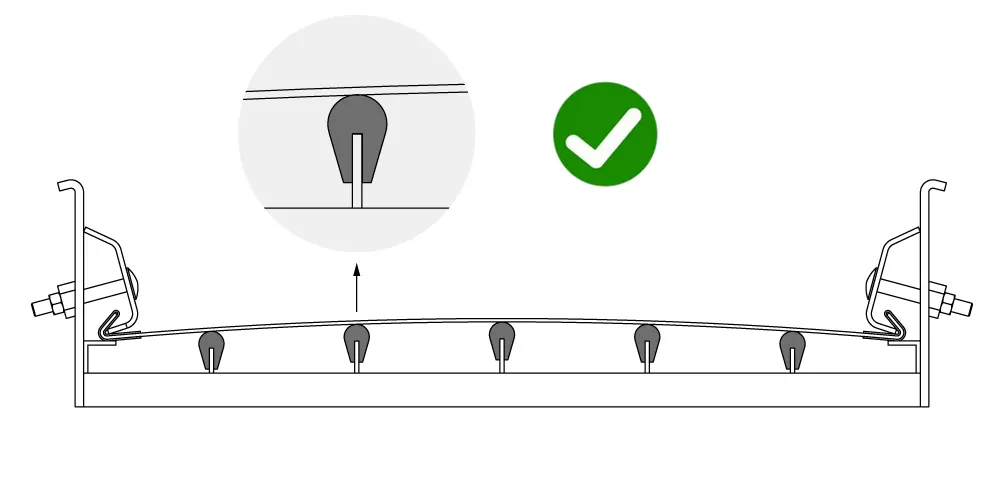
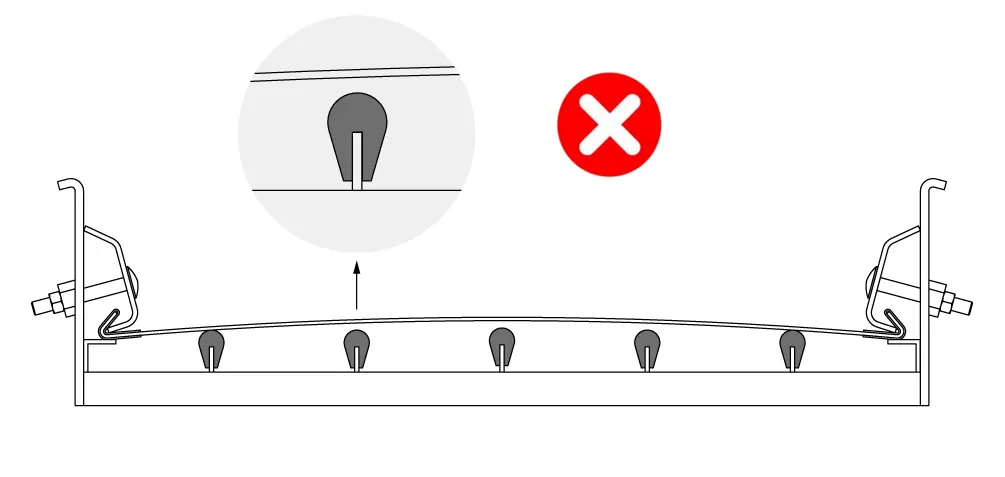
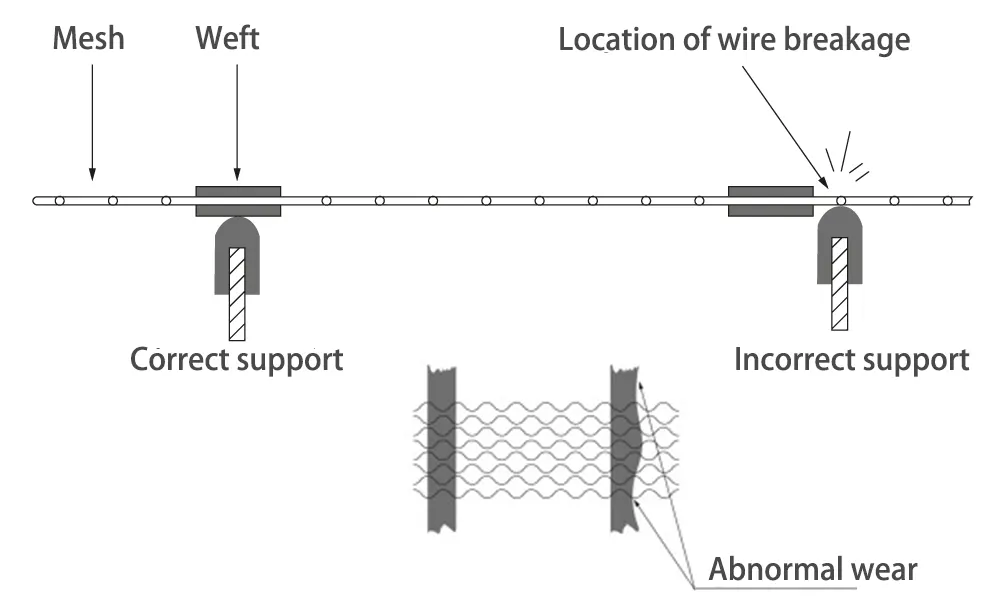
It’s essential to regularly check that the mesh tension is correctly set. Incorrect tension is a major cause of premature damage to screening surfaces. If the mesh is not properly tensioned, the screen’s vibrations will cause it to hit the support panels, creating micro-fractures that can eventually lead to mesh breakage.

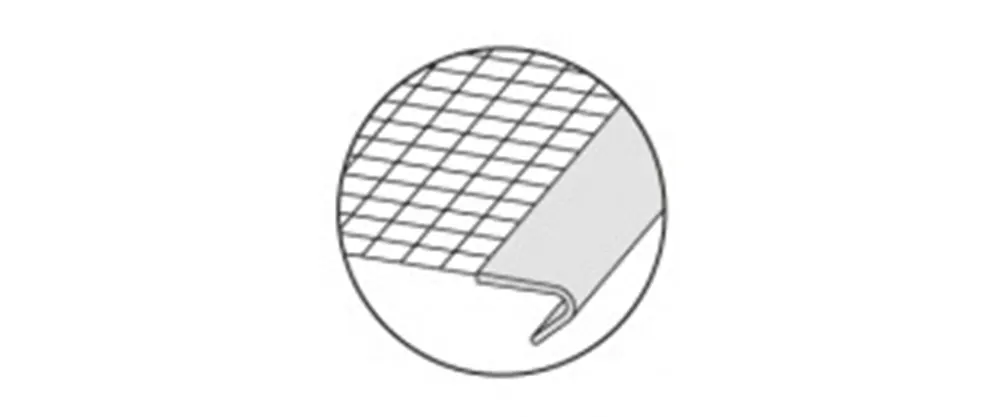
For transverse tensioned meshes, make sure there is adequate clearance (H) between the mesh and the drawer walls. The mesh should never come into contact with the walls, as this can cause unnecessary wear and potential damage.
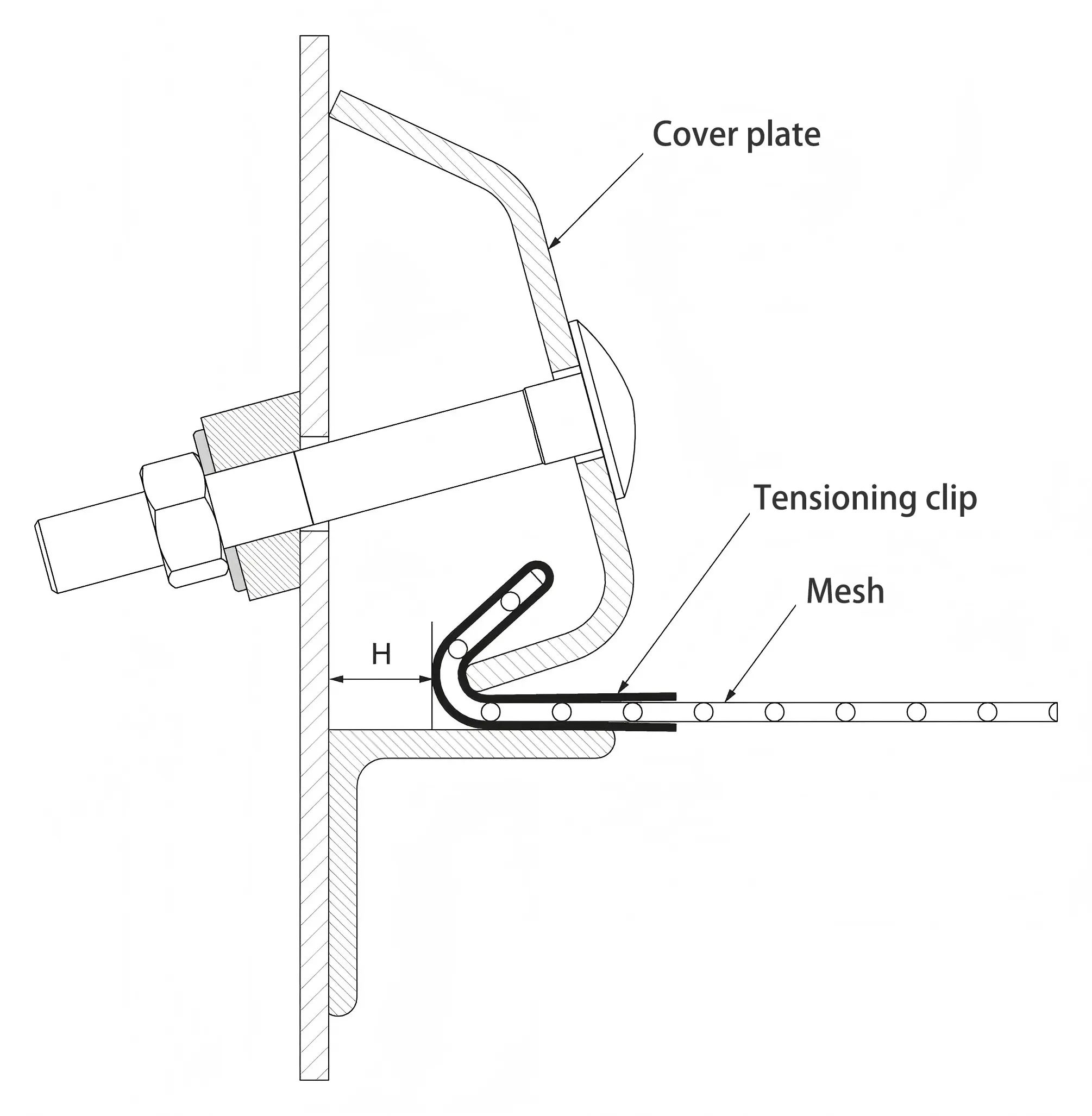
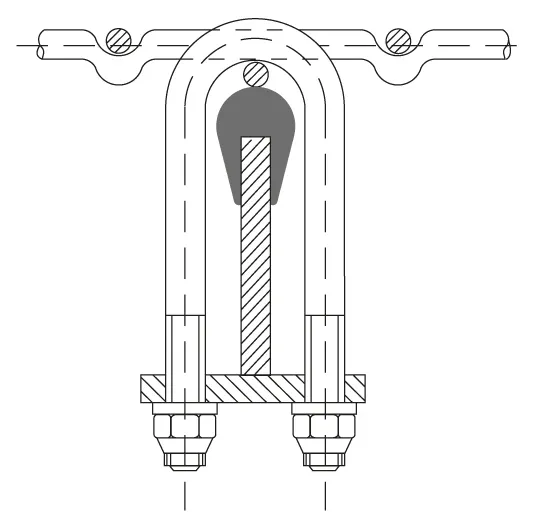
vibrating screen mesh tensioning clip cross section
1

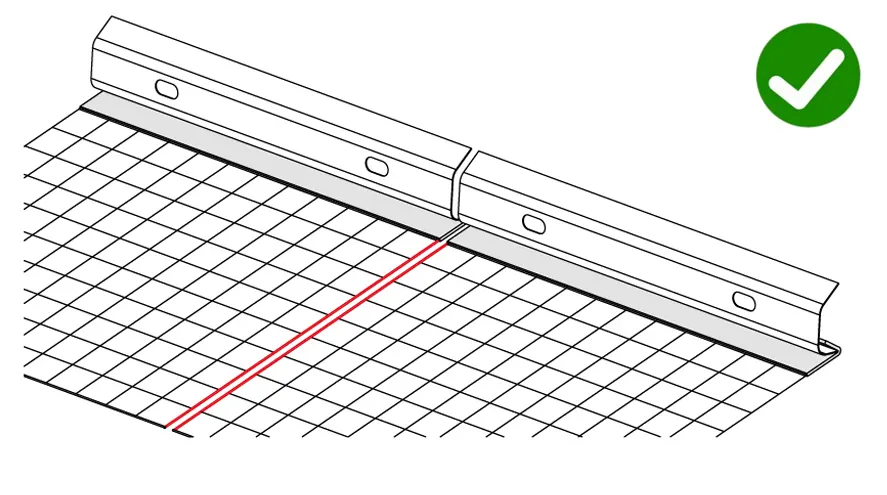
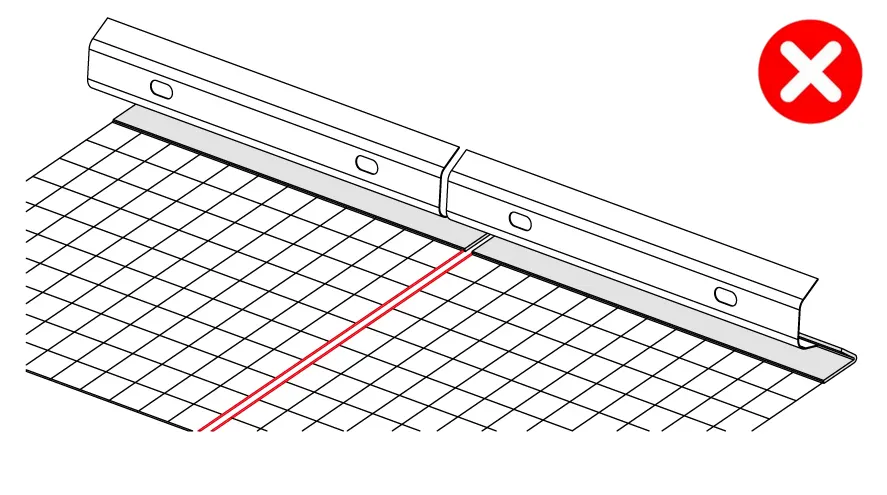
3. If it tears at the edge of the cloth fold

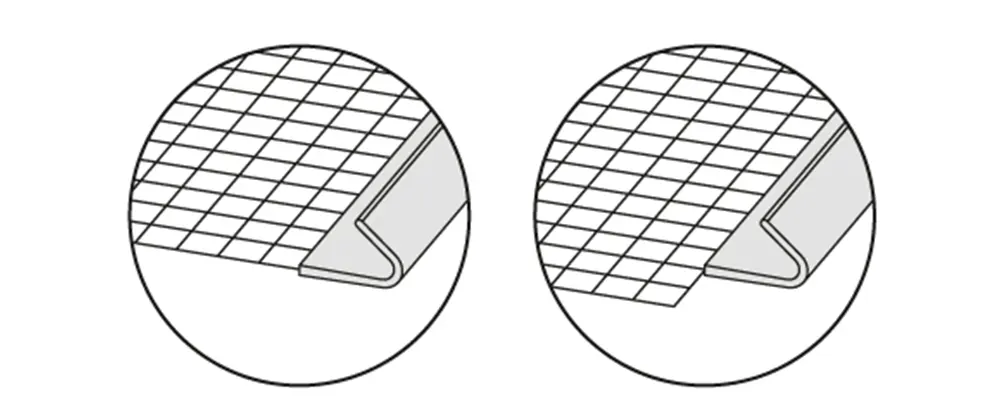
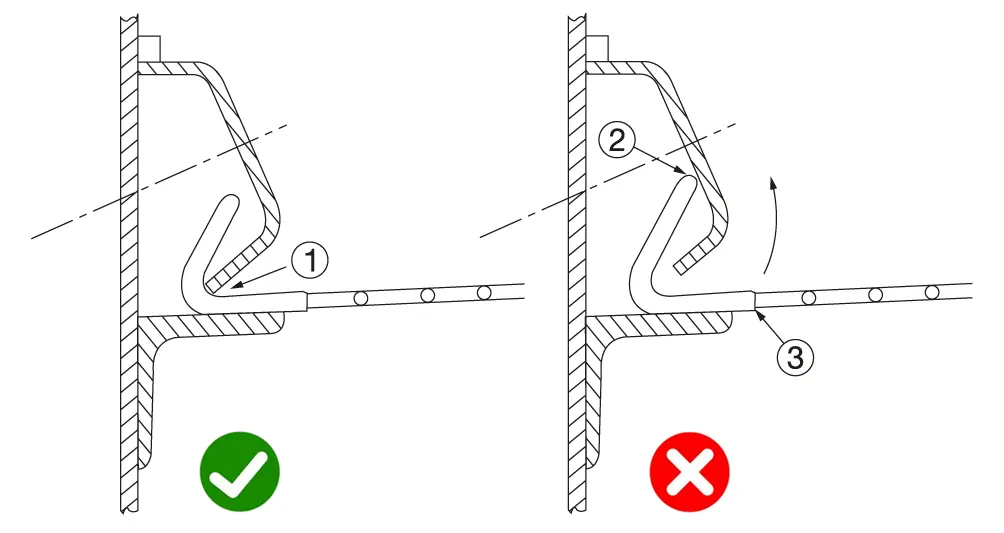
To ensure the correct positioning of the tile on the mesh fold, focus on point 1. If the tile touches point 2, it will cause a twist at the corner of the fold, leading to mesh breakage at point 3.

For proper tension on the screening surfaces, each mesh panel must have its own individual tension tile on each side of the box. When a tile is mounted on two mesh panels, it is impossible for it to exert equal tension on both, so one mesh will be loose.

Correcto
Correcto
Incorrecto
Incorrecto

The tensioning systems (tiles) must ensure that the mesh forms a single unit with the box; otherwise, the mesh will hit the screen frame and eventually break.

1
Correcto
2
Incorrecto

With thick wire mesh – greater than 6,3 mm – it is difficult, due to its rigidity, for the entire surface of the mesh to rest evenly on the support plates. Therefore, plates with clamps (clamps) must be placed at different points along the mesh.

DM 20260107172900 001

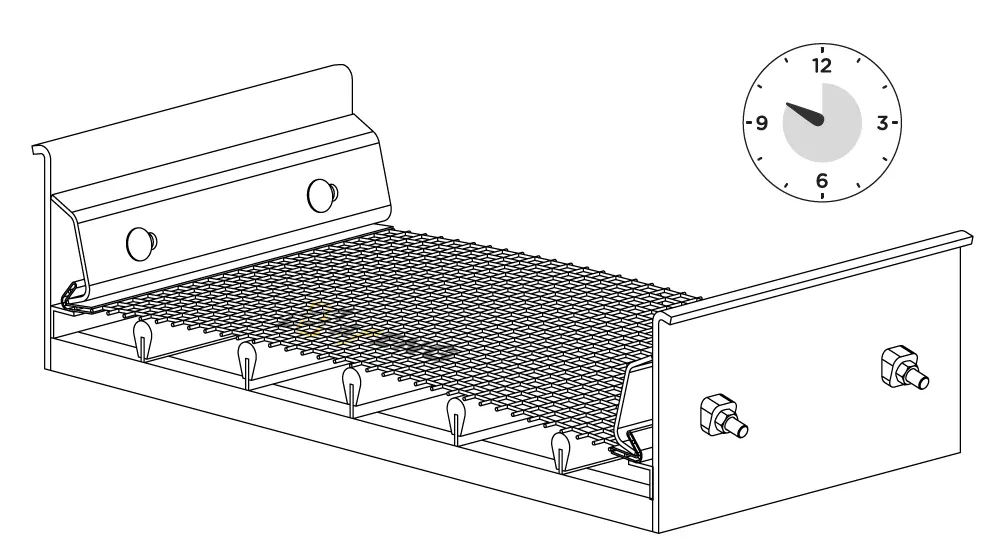
In meshes that have thick wires, greater than 6,3 mm, the tiles can easily loosen even if the screws have been tightened well, so it is necessary to retighten them after about ten hours of work.

reset

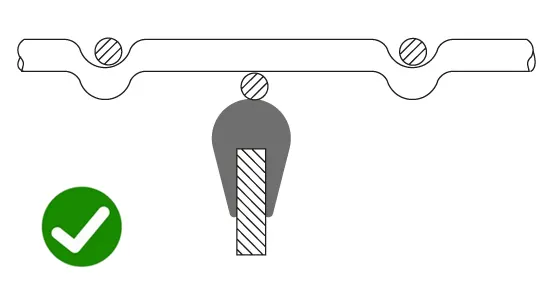
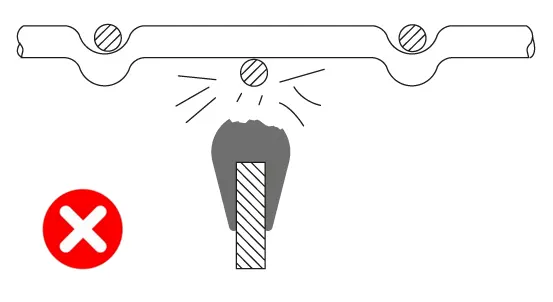
Always ensure that the rubber covering the support plates is in good condition when installing mesh. When the rubber is worn, it creates a gap between the mesh and the support, increasing the risk of breakage from impact. Furthermore, over time the rubber hardens and can damage the mesh.

1
2

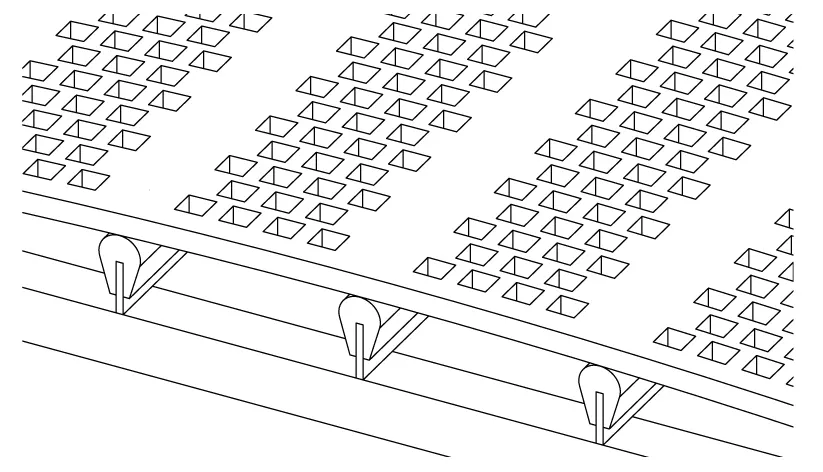
The polyurethane weaves on the anti-clogging meshes must match the rubber support profiles of the screen; otherwise, in addition to losing screening surface, we can accelerate the breakage of the mesh.

1

If the mesh is made of polyurethane or rubber, check that the Blind areas coincide with the support ribs of the sieve.

1

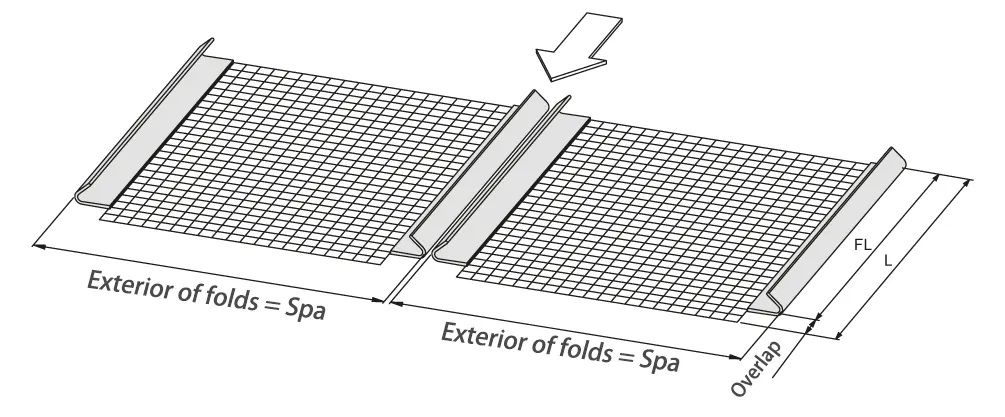
Types of overlap

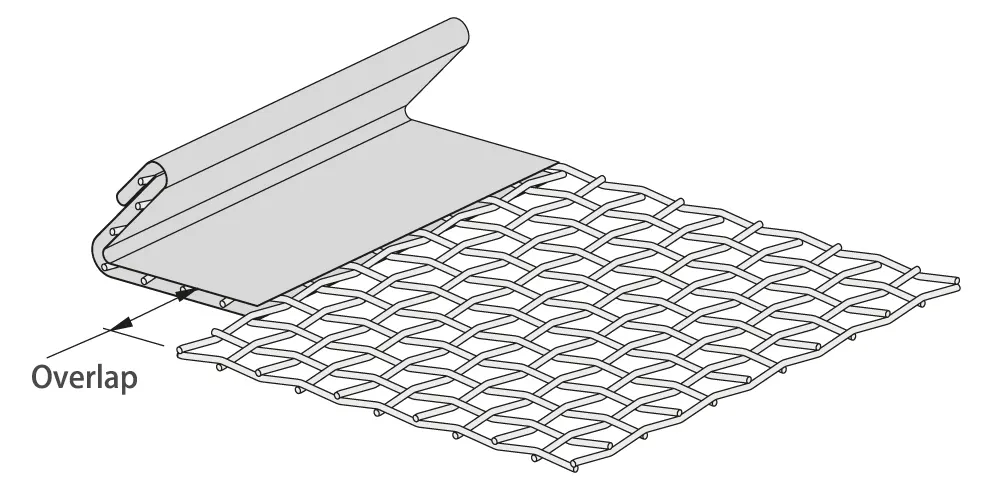
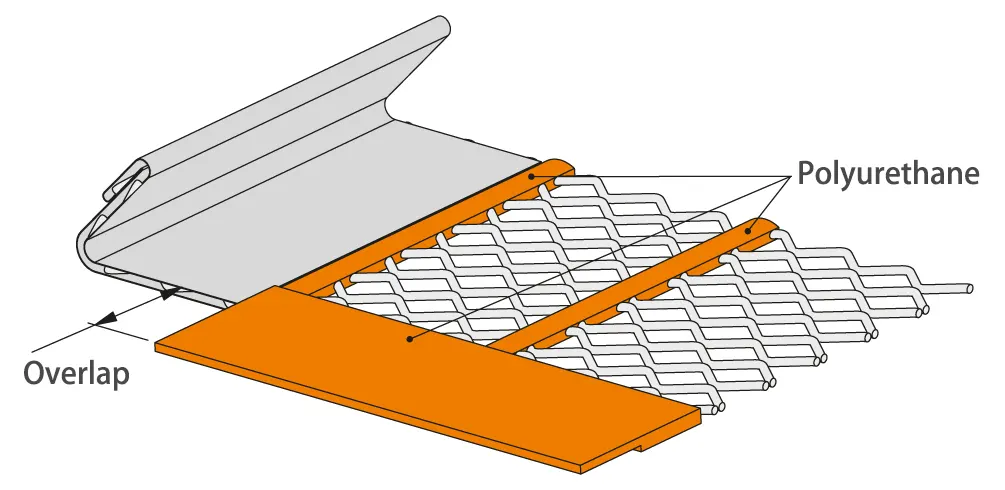
It is recommended that ight meshes smaller than 14 mm be provided with an overlap to prevent contamination between panels.

1
Metal overlap
2
Polyurethane overlap

Types of voltage

1
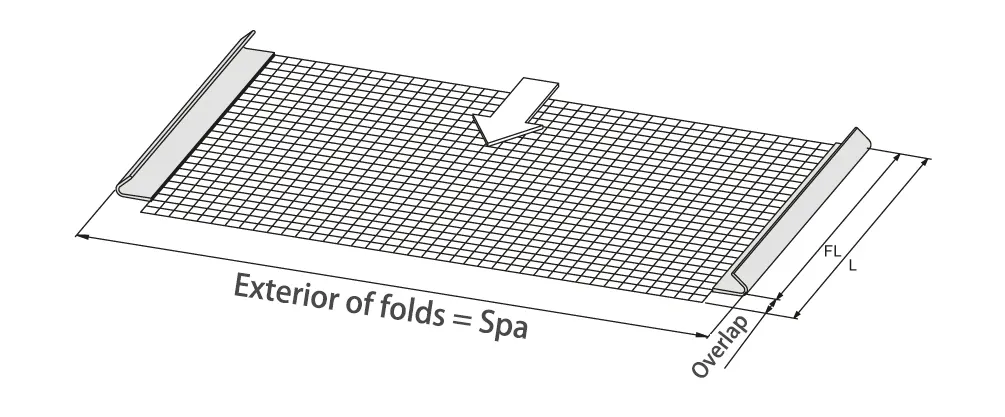
Transverse tension
2
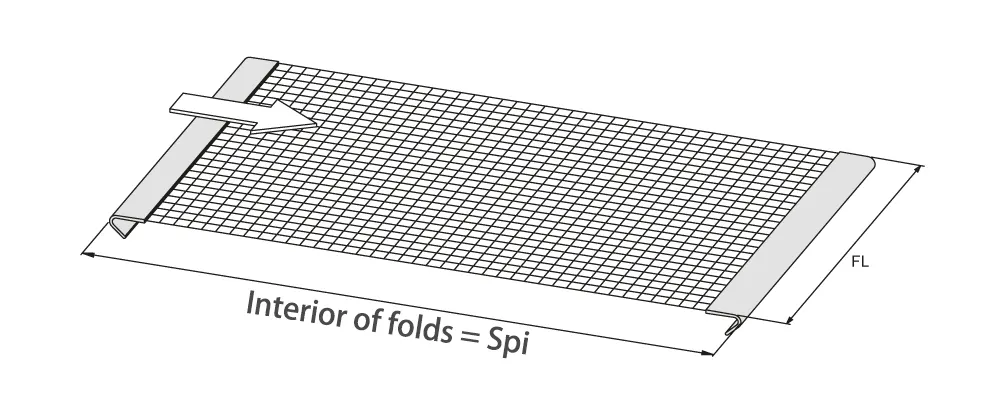
Longitudinal tension
3
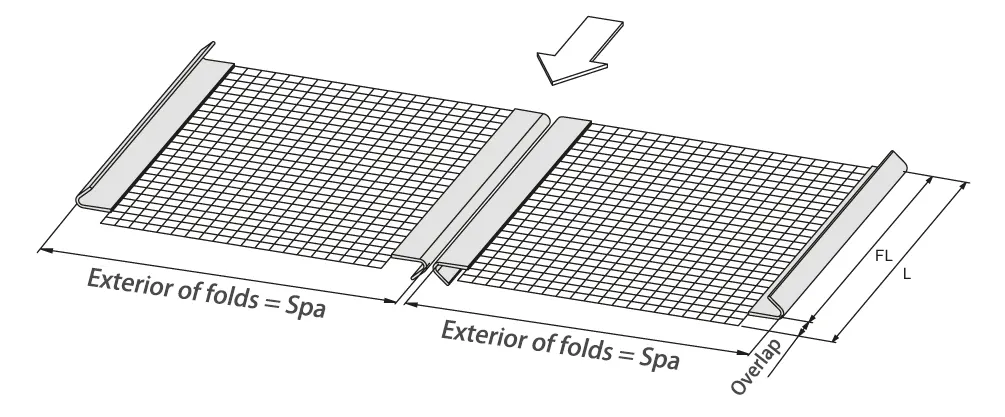
Split transverse tension – Type 1
4
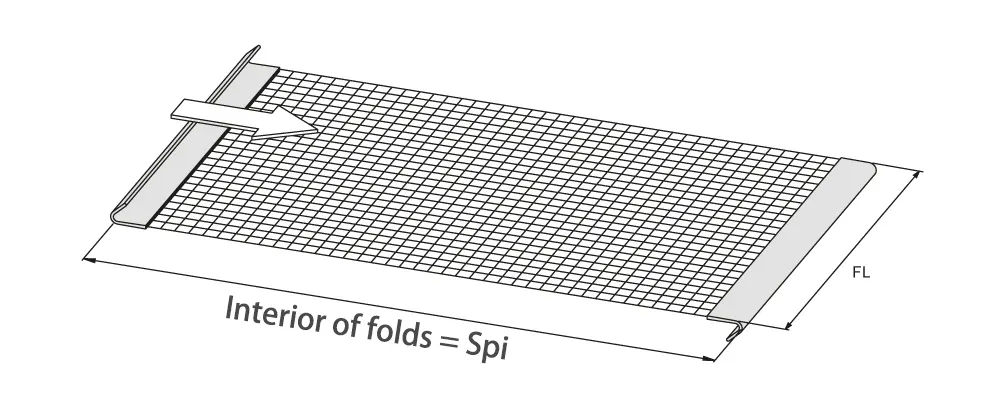
Reverse longitudinal tension
5
Split transverse tension – Type 2
1
Transverse tension: with / without overlap
2
Longitudinal tension: without overlap
CLASSIFICATION – Approximate correspondence between CUT and MESH SIZE
mm cut Wire Mesh Double Mesh PU mesh Rubber Mesh
Natural Crushed Natural Crushed Natural Crushed Natural Crushed
11,121,2511,2
1,251,41,61,31,5
1,61,821,752
22,242,52,22,5
2,52,83,152,53
3,53,5543,33,5
44,554,24,555,65,56,3
55,66,35,566,37,16,57,5
6,57,1877,57,18,57,58,5
7,1897,588,59,58,59,5
89109109,510,59,510,5
91011,2101110,511,51112
1011,212,51112121312,513,5
11,212,514121313,514,514,515,5
12,61415141514,5161617
141617151616,5181819
161819181918,5202021
182021202120232324
202223222322,4252526
22,42425242525282729
25272827282831,531,533,5
283031,53031,531,535,53537
31,53435,53435,535,5383840
35,53840384038404345
404345434542455052
45485048505557
50535653566062
63657065687476
808590859098100
100105112105112115120
120135140
150170175
Contact ANPENG Engineering Team

Tell us your material, moisture, target cut size, throughput, and screen model. We will suggest the best media type (wire / self-cleaning / PU / rubber / plate), aperture, wire diameter, and a segmented deck layout.

Contact Us

For general inquiries, please fill out the form below and we will have someone from our team contact you as soon as possible.