Aggregates are the “everyday” materials—sand, gravel, crushed stone, and recycled particles—that make up most of what goes into concrete, asphalt, and road base. If you’re searching types of aggregates, you’re probably trying to answer a simple question: which material should I use, and why does it matter?
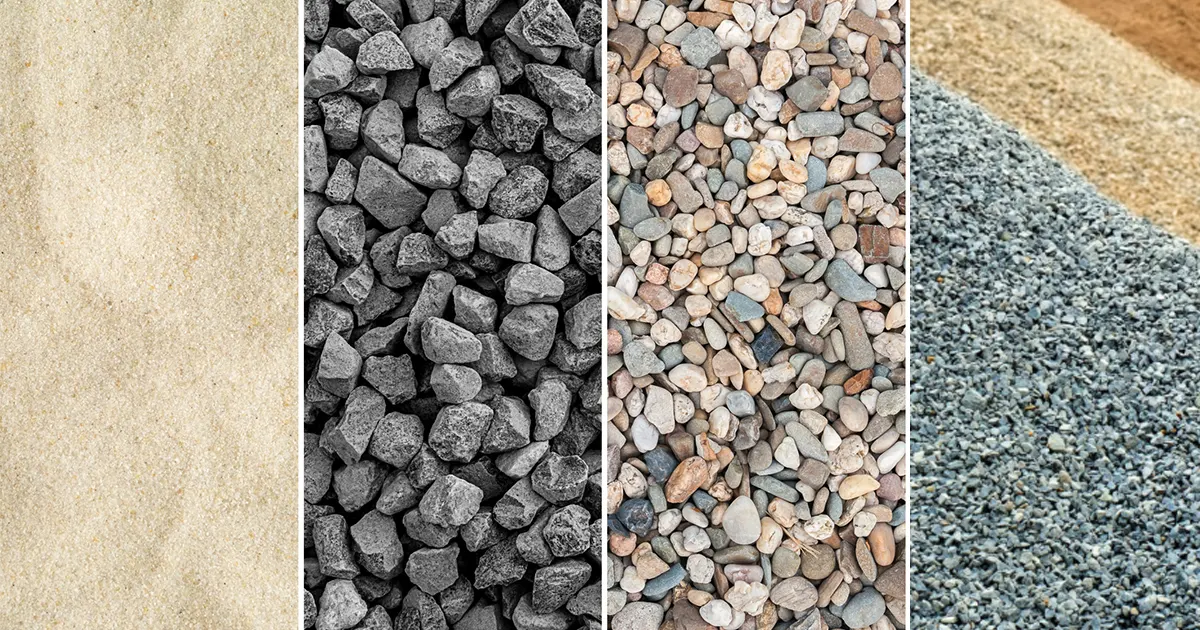
It matters because aggregate choice affects almost everything downstream: strength, workability, compaction, drainage, durability, and even how consistent your finished product looks and performs. Pick the right type and your job is smoother. Pick the wrong type and you can end up fighting segregation, unstable grading, higher water demand, or unexpected wear.
Types of Aggregates by Size
Size is the most common way people talk about aggregate because it connects directly to performance.
Fine aggregate is basically sand-sized material. It fills gaps between larger stones and plays a big role in concrete workability and asphalt mix behavior. If the fine portion is dirty (too much clay/silt), it can cause trouble fast—higher water demand, weaker bonding, and inconsistent results.
Coarse aggregate is the bigger stuff: gravel or crushed stone. It gives structure to concrete and stability to base layers. In many applications, the coarse fraction is what carries the load.
You’ll also hear combined (all-in) aggregates, which are blends of fine and coarse fractions. They can work well (and simplify supply), but they need good process control. If the blend drifts, performance drifts.
Table 1: Quick overview of aggregate classifications
| Classification Method | Type | What It Includes | Common Uses | Practical Notes |
|---|---|---|---|---|
| By size | Fine aggregate | Natural sand, manufactured sand (M-sand), screenings | Concrete workability, mortar, bedding, asphalt mixes | Sensitive to clay/silt; grading consistency is key |
| By size | Coarse aggregate | Gravel, crushed stone, processed rock | Concrete strength, base/subbase, drainage layers | Angularity and toughness affect compaction and wear |
| By size | Combined aggregate | Blended fine + coarse fractions | Road base, general construction mixes | Convenient, but needs stable screening and blending |
| By source | Natural aggregate | River sand, natural gravel | Concrete, drainage, landscaping | Often rounded; quality varies by deposit |
| By source | Manufactured aggregate | Crushed stone, M-sand | Concrete, asphalt, high-stability base | Angular and controllable, but fines must be managed |
| By source | Recycled aggregate | RCA, reclaimed asphalt particles | Base layers, some asphalt, some concrete uses | Watch contamination and absorption variability |
| By density | Lightweight aggregate | Expanded clay/shale/slate, select byproducts | Lightweight concrete, insulation fills | Lower density; absorption and strength can vary |
Types of Aggregates by Source
When people say “source,” they’re usually talking about where the aggregate comes from and how it’s made. That matters because it affects particle shape, cleanliness, and consistency.
Natural aggregates come from rivers, pits, or deposits that don’t need heavy processing beyond washing and screening. Natural gravel is often rounded, which can make material easier to work with—but it may not “lock in” as strongly as angular crushed stone in base layers.
Manufactured aggregates are made by crushing rock and then screening it into products. This gives you more control over shape and gradation. It’s one reason crushed stone is the go-to in many demanding applications. The flip side is you need to keep fines under control and avoid gradation drift.
Recycled aggregates reuse construction materials, like recycled concrete aggregate (RCA). These can be great for base and many non-structural uses, but they tend to be more variable. You need to pay attention to contamination, absorption, and consistent grading.
Lightweight aggregates are used when weight matters—like lightweight concrete or specific fill applications. They’re not “better” in general, just better for that goal.
Types of Aggregates by Material
Material (rock type) gives you a clue about hardness, wear resistance, and long-term durability.
Limestone is widely used because it’s available and typically easy to crush and grade. In many regions it performs well in concrete and base applications, as long as the source quality is solid and grading is controlled.
Granite and basalt are often tougher and more abrasion resistant. If you’re dealing with high wear, heavy traffic, or harsh handling, these materials can offer better durability.
Sandstone is a “depends” category. Some sandstone sources are excellent; others can be weaker or more absorbent. It’s one of those materials where local testing and real performance history really matter.
Quartz-rich river gravel tends to be hard and durable, and the rounded shape can help with drainage and workability—though again, rounded shapes may reduce interlock in base layers compared with angular crushed products.
Types of Aggregates by Shape and Surface Texture
This is the part people underestimate. Two aggregates can be the same size and still behave very differently because of shape and texture.
Rounded particles move past each other easily. That can help workability and placement, and it often supports drainage. But rounded material doesn’t “bite” together like angular stone, so base stability may suffer if grading and fines balance aren’t right.
Angular particles interlock better. That’s great for stable base layers and often helpful for asphalt performance. But angular fines can increase water demand and reduce workability if the fine fraction is not controlled.
Flaky and elongated particles are usually not your friend. They can break more easily, reduce stability, and make compaction less predictable. Keeping those particles within reasonable limits is one of those “quiet” quality checks that prevents a lot of headaches later.
Texture matters too. Rougher surfaces tend to bond better in concrete and asphalt, while smoother surfaces may improve workability but reduce bonding strength.
Common Uses of Different Types of Aggregates
Most selection mistakes happen when people pick by price or availability first, and application second. It’s usually smarter to start with the job requirement, then pick the aggregate type that meets it consistently.
Concrete needs clean, well-graded fine and coarse aggregates. Coarse aggregate provides the skeleton and helps strength; fine aggregate fills voids and affects finish and workability. Dirty fines (clay/silt) are a common cause of inconsistent slump and strength issues.
Asphalt cares a lot about durability, shape, and gradation stability. Angular particles and crushed faces help with interlock and rut resistance. Consistent grading helps prevent segregation during transport and paving.
Road base and subbase need interlock and compaction stability. Too many fines can reduce drainage and create pumping issues; too few fines can make compaction difficult and reduce stability.
Drainage and backfill usually want clean material with low fines so water can move through. If fines creep in, drainage performance can drop and clogging risk goes up.
Railway ballast needs hard, angular, consistently sized stone that resists abrasion and doesn’t quickly break down into fines.
Landscaping is often a mix of function and look. Rounded gravel is popular visually; angular crushed stone is better when you need the material to stay put.
How to Choose the Right Type of Aggregate
If you want a simple way to think about selection, try this: start with what the material must do, then check what it must avoid.
First, focus on the application. Is the priority strength, drainage, compaction stability, surface finish, or abrasion resistance? That single decision narrows your options quickly.
Then look at gradation and cleanliness. Even a great rock type can cause problems if the grading shifts or the fines carry clay. Gradation drift is one of the most common reasons jobs behave differently week to week, even when “it’s the same material.”
After that, consider shape. Rounded versus angular can change workability and compaction behavior more than people expect.
Finally, think in total cost, not just price per ton. A cheaper aggregate that forces you into extra cement, rework, higher waste, or downtime is usually not a bargain.
Table 2: Matching aggregate types to typical applications
| Application | Best-Fit Aggregate Types | Why They Work | What to Watch |
|---|---|---|---|
| Structural concrete | Clean, well-graded coarse + fine (often crushed stone + quality sand) | Strength, bonding, stable workability | Clay/silt in fines, absorption variability, flaky particles |
| Asphalt surface | Durable, angular manufactured aggregates with controlled fines | Interlock, rut resistance, grading stability | Polishing resistance, segregation risk, binder compatibility |
| Road base/subbase | Crushed, angular material with balanced gradation | Compaction stability and load transfer | Too many fines reduces drainage; too few fines reduces stability |
| Drainage layers | Clean coarse aggregate with minimal fines | High permeability, lower clogging risk | Contamination, fines migration, poor filter compatibility |
| Backfill | Depends on goal: drainage-focused vs support-focused | Flexible to site needs | Moisture control and compaction consistency |
| Landscaping | Rounded gravel (look/comfort) or angular stone (stability) | Aesthetic or lock-in behavior | Dust, sharp edges, movement without edging |
Quality Control: Why Screening and Grading Matter
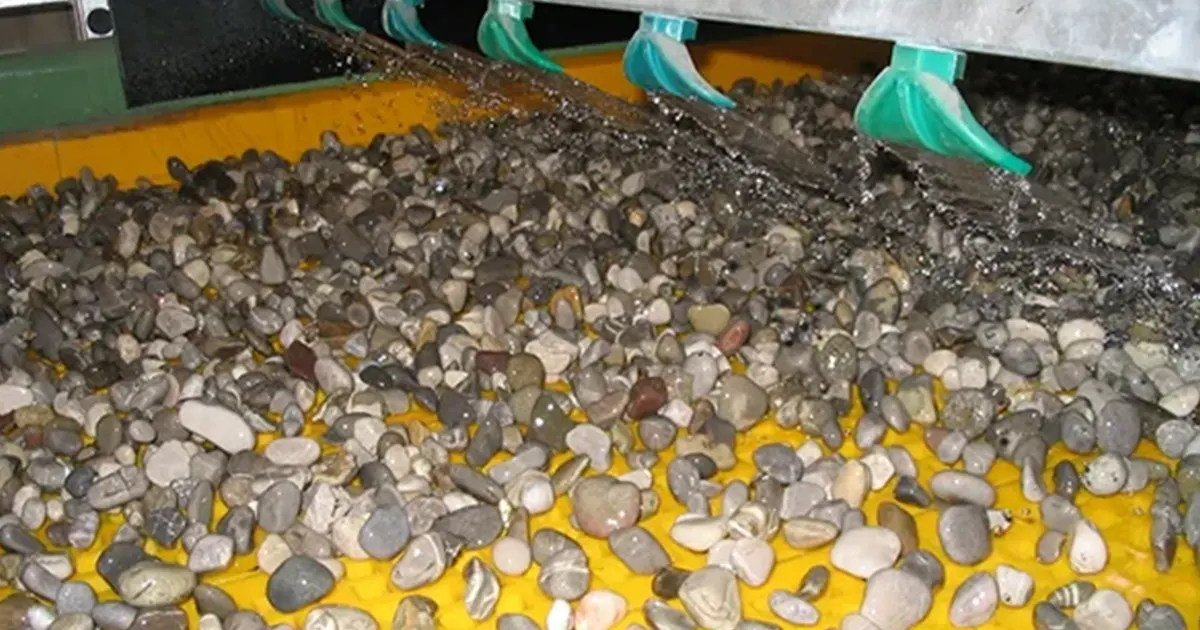
Here’s the reality: you can choose the right “type” of aggregate, but if grading isn’t stable, performance won’t be stable either.
Screening and sizing are what keep products on spec. If screens wear unevenly, if blinding happens, or if feed conditions swing too much, the gradation can quietly drift. Then you start seeing symptoms: concrete that needs more water, asphalt that segregates, base that won’t compact the same way, or customers complaining that “it doesn’t match last month’s load.”
That’s why quality control isn’t only lab testing. It’s also process control—stable feed, proper bed depth, correct screen openings, and routine checks.
If you’re running an aggregate plant and need reliable grading, screen media matters a lot. Anpeng is a screening media manufacturer supplying woven wire screens, polyurethane screen panels, and anti-clogging screen media, helping producers keep sizing consistent, reduce downtime, and maintain throughput.
Conclusion
When you talk about types of aggregates, you’re really talking about a few big ideas: size, source, material, and shape. Those categories help you predict how an aggregate will behave in concrete, asphalt, base layers, drainage, or landscaping. The practical takeaway is simple: match the aggregate type to the job, then protect consistency with good gradation and cleanliness control.
That “consistency” piece is where quality control earns its value. Reliable screening and sizing help keep products on spec, reduce waste, and avoid downstream problems. If you’re unsure which aggregate type or gradation fits your target application, it’s worth talking to experienced suppliers and technical experts. And if you need stable sizing control in production, Anpeng, as a screening media manufacturer, provides woven wire screens, polyurethane screen panels, and anti-clogging screen media to help you keep grading consistent and operations efficient.
FAQ
What are the main types of aggregates?
Most people group aggregates by size (fine, coarse, combined), by source (natural, manufactured, recycled), by density (normal-weight vs lightweight), and by material (limestone, granite, basalt, and more). Which classification matters most depends on your job. Concrete people usually care about fine vs coarse, cleanliness, and gradation. Base course selection often cares more about angularity and grading stability. Sustainability-driven projects might focus on recycled aggregates and performance limits.
What’s the difference between gravel and crushed stone?
Gravel is usually natural and often rounded because it’s been worn down by water and movement over time. Crushed stone is manufactured by crushing rock and is usually angular with rougher surfaces. Rounded gravel can be easier to place and may improve workability in some situations, but crushed stone generally provides better interlock in base layers and can support higher stability. The best choice depends on your application and how consistent your grading and cleanliness are.
What is manufactured sand (M-sand)?
Manufactured sand is produced by crushing rock and then controlling particle size through screening (and sometimes shaping). It can be very consistent when produced correctly, which is helpful for concrete and asphalt operations that need stable results. The main thing to manage is the fine fraction. If the fines are too high or the material carries clay-like dust, water demand can rise and performance can suffer. Good processing and quality control make the difference.
Which aggregate type is best for concrete?
There isn’t one universal “best,” but concrete typically performs best with clean, durable aggregates and stable gradation. Coarse aggregate provides structure and helps strength; fine aggregate affects workability and finish. The biggest performance killers are usually inconsistent grading, dirty fines (clay/silt), and unmanaged absorption/moisture changes. If your supply is stable and your screening and stockpiling are controlled, you’ll usually see much more consistent concrete performance.
Can recycled aggregate be used in concrete?
It can, but it depends on the application and local standards. Recycled concrete aggregate often has higher absorption because of adhered mortar, and that can affect water demand and strength consistency. It’s widely used in base layers and many non-structural applications. For structural concrete, tighter controls and approvals are typically required, and many producers use blends or limit the percentage depending on specs and performance requirements.
How does gradation affect compaction and strength?
Gradation controls how particles pack together. A well-graded material fills voids efficiently, compacts more consistently, and tends to produce more stable performance. If grading shifts toward too many fines, drainage can suffer and base materials can pump under load. If grading shifts toward too few fines, compaction can become harder and stability can drop. In concrete, grading shifts often show up as changing slump and changing water demand. That’s why stable screening and regular sampling matter.
Rounded vs angular aggregate—how do I choose?
Rounded material generally improves workability and can help with drainage, but it may not provide the same interlock and stability as angular crushed products in bases. Angular materials usually give better interlock and can improve stability and asphalt performance, but they can be harsher to work with and may increase water demand if fines aren’t controlled. Many good designs blend or balance these effects by focusing on gradation, cleanliness, and the end-use requirements.