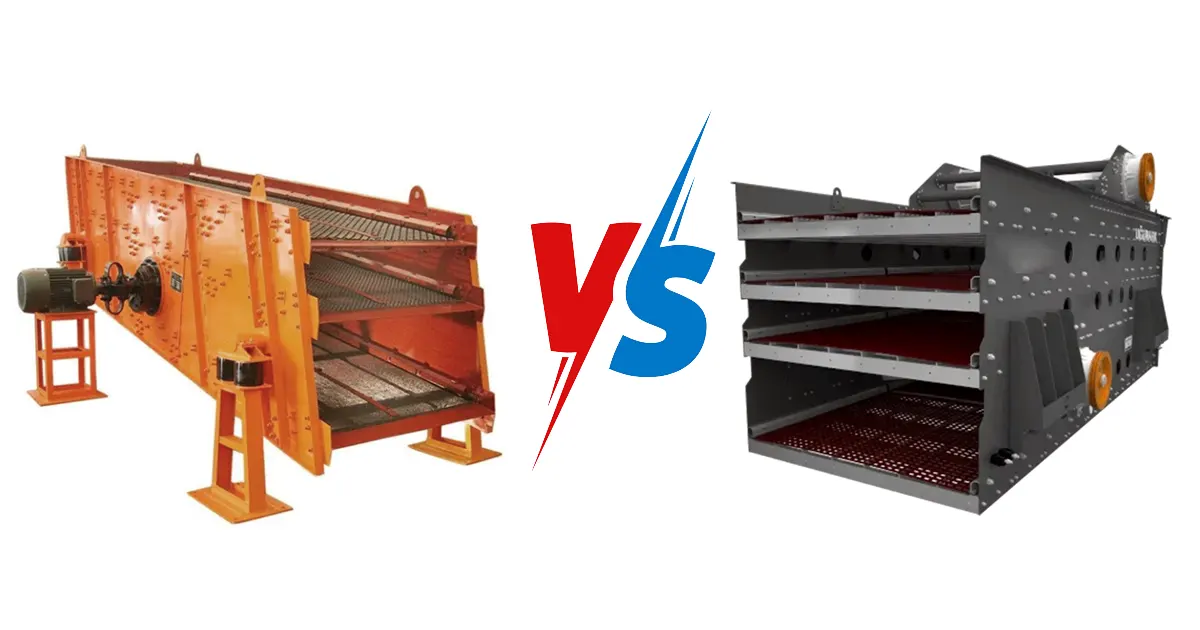
When you compare 3 Deck vs 4 Deck Vibrating Screens, you notice three main differences. First, the number of product fractions varies between the two options. Second, the space utilized in your plant differs based on whether you choose a 3 Deck or 4 Deck model. Third, the maintenance requirements can be easier or harder depending on your choice. If you are involved in standard aggregate production, vibrating screens are typically the best choice as they excel in separating sizes. For fine sizing or specialized products, roller screens are more effective, providing more precise separation. Your decision between a 3 Deck vs 4 Deck Vibrating Screen significantly impacts the efficiency of your screening process, as well as your costs and maintenance needs. This guide is designed to help you select the best screen for your specific job.
- Vibrating screens: Best for standard aggregate production and size separation.
- Roller screens: Great for fine sizing or specialized products with precise separation.
Key Takeaways
- A 3 Deck Vibrating Screen gives four product sizes. It works well for regular aggregate jobs.
- A 4 Deck Vibrating Screen gives five product sizes. It helps separate products better and handles special products.
- Pick a 3 Deck screen if you want lower costs. It is easier to install and maintain. It fits well in small spaces.
- Pick a 4 Deck screen if you need fine sizing or many grades. It costs more at first and to maintain.
- Maintenance is easier with a 3 Deck screen. It has fewer parts and better access. This means less downtime.
- Think about your plant layout before choosing. A 3 Deck screen fits in small spaces. A 4 Deck screen needs more vertical space.
- Look at your production goals. A 3 Deck screen saves money for regular needs. A 4 Deck screen helps with growth and more product choices.
- Always check the material you process. Fine or sticky materials may need a 4 Deck screen for best results.
3 Deck vs 4 Deck Vibrating Screen: Quick Comparison
Output Fractions
When you look at a vibrating screen, the number of decks tells you how many different sizes you can separate in one pass. A 3 deck screen gives you three layers of separation. You get four product fractions—one from each deck and one from the bottom. This setup works well for most standard aggregate jobs. You can sort material into coarse, medium, and fine sizes, plus a bottom oversize or undersize.
A 4 deck screen adds another layer. Now you get five product fractions. This means you can make more precise cuts and handle specialty products. If you need to separate fine sand, specialty aggregates, or several grades at once, a 4 deck screen gives you that flexibility.
Tip: If your plant needs more than four product sizes at once, a 4 deck vibrating screen is the way to go.
Here’s a quick table to help you compare:
| Screen Type | Number of Decks | Product Fractions | Best For |
|---|---|---|---|
| 3 Deck | 3 | 4 | Standard aggregates |
| 4 Deck | 4 | 5 | Fine/specialty products |
Space & Footprint
Space matters in every plant. A 3 deck vibrating screen usually stands shorter and takes up less room. You can fit it into tighter layouts or older plants with low headroom. This makes installation easier and can save you money on structural changes.
A 4 deck screen stands taller and needs more vertical space. You also need to think about access for maintenance. If your plant has limited height or tight walkways, a 4 deck screen might be harder to fit.
- 3 Deck: Lower height, smaller footprint, easier to install.
- 4 Deck: Taller, needs more space, may require extra supports.
Note: Always measure your available space before you choose between a 3 Deck vs 4 Deck Vibrating Screen.
Cost Overview
Cost is always a big factor. A 3 deck vibrating screen usually costs less up front. You pay for fewer decks, less steel, and simpler installation. Maintenance costs also stay lower because you have fewer parts to check and replace.
A 4 deck vibrating screen costs more. You pay for the extra deck, more structure, and sometimes extra supports. Maintenance can cost more, too, because you have more screen media and more wear points.
Here’s a simple cost comparison:
| Screen Type | Initial Cost | Maintenance Cost | Installation Cost |
|---|---|---|---|
| 3 Deck | Lower | Lower | Lower |
| 4 Deck | Higher | Higher | Higher |
If you only need four product sizes, a 3 deck screen saves you money. If you need five or want more flexibility, a 4 deck screen is worth the investment.
Maintenance Complexity
When you look at maintenance, the difference between a 3 deck and a 4 deck vibrating screen really stands out. You want to keep your plant running smoothly, so it’s smart to think about how much work each screen needs.
A 3 deck vibrating screen is easier to maintain. You have fewer decks to check. You can reach most parts without much trouble. Changing screen media or fixing a problem takes less time. You spend less time climbing or squeezing into tight spots. This means you get less downtime and your crew stays safer.
A 4 deck vibrating screen adds another layer. That extra deck means more screen panels, more bolts, and more wear parts. You might need special tools or extra hands to reach the bottom deck. Sometimes, you have to remove upper decks to get to the lowest one. This can slow you down and increase your maintenance costs.
Here’s what you should consider when comparing maintenance complexity:
- Access: Can you reach all decks easily? A 3 deck screen usually lets you get in and out fast. A 4 deck screen can be crowded, especially at the bottom.
- Number of Parts: More decks mean more screen panels, clamps, and bolts to check and replace.
- Downtime: The more complex the screen, the longer it takes to swap out worn parts or fix problems.
- Safety: Less climbing and fewer tight spaces make maintenance safer for your team.
Tip: If you want to keep maintenance simple and fast, a 3 deck screen is your best bet. If you need the extra fraction from a 4 deck screen, plan for longer maintenance windows and consider high-wear-life screen media.
When you compare 3 Deck vs 4 Deck Vibrating Screen options, always think about your crew’s time and safety. The right choice can save you hours every month and keep your plant running strong.
3 Deck Screen Pros & Uses
Key Advantages
Lower Height
You want equipment that fits your plant easily. A 3 deck vibrating screen is shorter than a 4 deck model. This lower height makes it easier to install. It helps if your plant has low ceilings. You can avoid spending money on big changes. The lower height lets you reach the screen safely and quickly.
Easier Maintenance
Keeping downtime low is important. With a 3 deck screen, you spend less time fixing things. Fewer decks mean fewer parts to check and replace. You can reach all areas without crawling into tight spaces. This setup keeps your crew safer and your plant working longer.
Lower Cost
If you want to save money, a 3 deck vibrating screen helps. You pay less at first because you buy fewer decks and less steel. You also spend less on installation and maintenance. Lower costs make a big difference over time.
Here’s what experts say about 3 deck vibrating screens:
| Advantage | Description |
|---|---|
| Lower Operating Expenses | Saves money because it uses less energy and is built strong. |
| Requires Much Lower Upkeep | Needs less maintenance since vibration focuses on the screening surface. |
| Enhanced Materials Processing | Separates coarse and fine particles for better product recovery. |
| Improved Screening Efficiency | Handles heavy feed well and lasts a long time. |
Tip: If you want a screen that is easy to use and maintain, a 3 deck model is a smart choice.
Typical Applications
Aggregates
You see 3 deck vibrating screens in many aggregate plants. They separate sand, gravel, and crushed stone into different sizes. You can use them for sand and gravel jobs or to sort recycled materials from demolition.
Mining
In mining, you need to sort ores and minerals quickly. A 3 deck screen helps you classify ore sizes, remove water, and filter slurries. You get better recovery and cleaner products.
Industrial Uses
You can use these screens in recycling plants to sort waste or compost. They help you recover valuable materials and keep your operation running well.
Here’s a table showing common uses:
| Sector | Application Description |
|---|---|
| Mining | Sorting ore, removing water, screening slurry |
| Construction | Processing sand and gravel, recycling construction waste |
| Recycling | Sorting waste, screening compost |
When to Choose 3 Deck
Pick a 3 deck vibrating screen when you need four product sizes and want things simple. If your plant has limited space or you want to save money, this screen is a good fit. You get reliable performance for most aggregate, mining, and industrial jobs. When you compare the 3 Deck vs 4 Deck Vibrating Screen, you’ll see the 3 deck model gives you the best balance of cost, efficiency, and ease of use for standard jobs.
Still not sure? Think about your space, your budget, and how many product sizes you need. If you want a simple solution, the 3 deck screen is hard to beat.
4 Deck Screen Pros & Uses
Key Advantages
More Fractions
You want to control your products better. A 4 deck vibrating screen gives you five fractions at once. This means you can sort material into more exact sizes. You can meet strict rules for customers who need different grades. If your plant handles many products, this extra fraction helps a lot.
Fine Sizing
You need to catch fine material. A 4 deck screen helps with that. The extra deck lets you separate the smallest particles. You do not have to throw them away. You can save more good product and waste less. This is important if you work with sand or specialty aggregates. It also matters for any job where fine sizing is needed.
Product Flexibility
You want to stay ready for changes. Markets change, and customers want new things. With a 4 deck vibrating screen, you can change your setup to make new products. You can switch between grades or add a special product line. This flexibility helps you stay ahead of others.
If you need more than four product sizes or want to offer special grades, a 4 deck screen gives you an advantage.
Typical Applications
You see 4 deck vibrating screens in plants that need high performance and careful separation. Here are some common uses:
- Drying and cleaning aggregate, like dewatering, desliming, degritting, and rinsing
- Sand and sand slurry processing, sometimes instead of sand screws
- Getting solids back from dirty water or wastewater
- Lowering sediment in settling ponds
- Dewatering solids from dredging jobs
- Frac sand processing and recovery, especially when you need sand without clays
Frac Sand
You need clean, even sand for hydraulic fracturing. A 4 deck screen helps you remove clays and fines. You get the right size every time. This keeps your customers happy and your plant working well.
Specialty Aggregates
You work with materials that need special sizing. Specialty aggregates often have strict rules. A 4 deck screen lets you reach those targets. You can make products for fancy concrete, roofing, or pretty stone.
High-Volume Lines
You run a busy plant. High-volume lines need equipment that works fast. A 4 deck vibrating screen handles big loads and sorts them quickly. You keep production moving and stop bottlenecks.
When to Choose 4 Deck
Pick a 4 deck vibrating screen when you need five product sizes or want to offer special grades. If your plant handles fine materials or you want more flexibility, this screen is a smart buy. When you compare the 3 Deck vs 4 Deck Vibrating Screen, you see the 4 deck model is best for tough, busy jobs. You get more choices, better sizing, and a way to grow your business.
Performance & Capacity
Screening Efficiency
You want your vibrating screen to separate material fast and clean. Screening efficiency tells you how well your screen does this job. A 3 deck screen works great for most standard jobs. It handles big and medium pieces with ease. You get good separation and less waste.
A 4 deck screen steps up the game. You can catch even the smallest particles. This means you waste less good material. You also meet strict specs for special products. If you need to hit tight size targets, a 4 deck screen gives you more control.
Tip: If you see too much good material in your waste pile, you may need a screen with higher efficiency or an extra deck.
Throughput
Throughput means how much material your screen can handle in a set time. You want to keep your plant moving and avoid bottlenecks. A 3 deck screen usually has a higher open area per deck. This lets material move fast. You can run big loads without slowing down.
A 4 deck screen splits the flow into more layers. Each deck handles less material, but you get more product sizes. Sometimes, the extra deck can slow things down if you push too much at once. You need to balance speed and accuracy.
Here’s a quick look:
| Screen Type | Throughput (Tons/Hour) | Best Use Case |
|---|---|---|
| 3 Deck | Higher per deck | Bulk, standard sizing |
| 4 Deck | Slightly lower | Fine, specialty sizing |
If you need to move a lot of material fast, a 3 deck screen is a solid choice. If you need more product sizes, a 4 deck screen still keeps up but may need careful tuning.
Product Quality
You want your final products to meet customer needs. Product quality depends on how well your screen separates each size. A 3 deck screen gives you clean cuts for four sizes. You get less mixing and more usable product.
A 4 deck screen lets you fine-tune your output. You can make specialty grades and hit tight specs. This is key for jobs like frac sand or decorative stone. You can also switch setups fast if your customer changes their order.
- 3 Deck: Great for standard jobs, strong and reliable.
- 4 Deck: Best for high-quality, specialty, or fine products.
Remember, the right screen boosts your product quality and keeps your customers happy.
Application Suitability
Aggregate Plants
You run an aggregate plant. You want to sort sand, gravel, or crushed stone. Both 3 deck and 4 deck vibrating screens work well here, but your choice depends on your goals.
If you need four product sizes, a 3 deck screen fits most jobs. You can separate coarse, medium, and fine materials. You also get a bottom fraction for the smallest pieces. This setup works for road base, concrete, and asphalt mixes.
If your customers ask for more grades or special blends, a 4 deck screen gives you more options. You can make five different sizes in one pass. This helps when you supply specialty concrete, decorative stone, or custom blends.
Tip: Check your product list. If you only need four sizes, stick with a 3 deck screen. If you want to offer more, go with a 4 deck.
Here’s a quick look:
| Plant Need | Best Screen Type |
|---|---|
| Standard aggregate mixes | 3 Deck |
| Specialty or extra grades | 4 Deck |
Mining Operations
Mining sites need tough equipment. You deal with heavy rocks, ores, and sometimes wet material. You want a screen that keeps up with your production.
A 3 deck vibrating screen handles most mining jobs. You can sort ore into three main sizes and catch fines at the bottom. This setup works for gold, copper, iron, and other minerals. You get reliable performance and easy maintenance.
If you mine materials that need fine sizing, like some precious metals or industrial minerals, a 4 deck screen helps. You can separate more grades and recover more valuable fines. This means less waste and more profit.
- 3 Deck: Great for bulk sorting and easy upkeep.
- 4 Deck: Best for fine recovery and specialty minerals.
Mining tip: If you want less downtime, choose a 3 deck screen. If you need more product grades, a 4 deck screen pays off.
Specialty Industries
Some industries need special sizing. You might work in recycling, glass, chemicals, or food processing. Each job has its own needs.
A 3 deck screen works for basic sorting. You can separate three main sizes and catch fines. This setup fits recycling plants, compost facilities, and some food jobs.
A 4 deck screen shines when you need tight specs. You can make five grades at once. This helps in glass recycling, frac sand, or chemical processing. You get more control and less waste.
Note: Specialty jobs often need custom solutions. Talk to a screen expert before you choose.
In summary:
- Use a 3 deck screen for standard jobs and easy maintenance.
- Pick a 4 deck screen for more grades, fine sizing, or specialty products.
You know your plant best. Match your screen to your products and your goals.
Case Examples
You might wonder how other plants choose between a 3 deck and a 4 deck vibrating screen. Let’s look at some real-world examples. These stories can help you picture what works best for your own operation.
1. Small Aggregate Plant Upgrade
You run a small quarry. You want to boost your output but keep costs low. Your plant has low ceilings and not much extra space. You need four product sizes for local road projects. You pick a 3 deck vibrating screen. It fits your building. You save money on installation. Your crew finds it easy to maintain. You keep your customers happy with clean, sorted stone.
Tip: If you have a tight space and standard products, a 3 deck screen is a smart move.
2. Frac Sand Producer
You work at a frac sand plant. Your customers want sand in five different sizes. They need tight specs for each grade. You choose a 4 deck vibrating screen. Now, you can make all five grades in one pass. You cut down on handling and re-screening. Your plant runs faster. You meet every order with the right size and quality.
3. High-Volume Mining Operation
You manage a busy mining site. You process tons of ore every hour. You need to sort material into three main sizes and catch fines. You go with a 3 deck vibrating screen. It handles big loads. Your team spends less time on maintenance. You keep downtime low and profits high.
4. Specialty Aggregate Supplier
You supply decorative stone for landscaping. Your customers want special colors and sizes. You need to offer more than four grades. You install a 4 deck vibrating screen. Now, you can fill custom orders without extra steps. You stand out from other suppliers.
Here’s a quick table to sum up these cases:
| Case | Screen Chosen | Why It Worked Well |
|---|---|---|
| Small Aggregate Plant | 3 Deck | Fits space, easy upkeep, cost savings |
| Frac Sand Producer | 4 Deck | Five grades, meets strict specs |
| High-Volume Mining | 3 Deck | Handles bulk, less downtime |
| Specialty Aggregate Supplier | 4 Deck | More grades, flexible for custom orders |
Note: Your plant is unique. Think about your space, your products, and your goals. These examples show how the right screen can make your job easier.
You can always talk to a screen expert if you need help. The right choice keeps your plant running strong and your customers coming back.
Cost & Investment
Initial Cost
You want to know how much you will spend at the start. The initial cost is the price you pay to buy and install your vibrating screen. A 3 deck vibrating screen usually costs less. You pay for fewer decks, less steel, and a smaller frame. You also save money on installation because the screen is shorter and lighter. You do not need as many supports or changes to your plant.
A 4 deck vibrating screen costs more. You pay for the extra deck, more steel, and a bigger frame. You might need to change your plant to fit the taller screen. This can add to your bill. If you want more product sizes or need fine sizing, the higher price can make sense.
Here’s a quick table to help you compare:
| Screen Type | Purchase Price | Installation Cost | Plant Changes Needed |
|---|---|---|---|
| 3 Deck | Lower | Lower | Rarely |
| 4 Deck | Higher | Higher | Sometimes |
Tip: If you want to keep your project under budget, a 3 deck screen is a smart choice.
Operating Expenses
You care about what you spend each month. Operating expenses include energy, labor, and parts. A 3 deck screen uses less power because it has fewer decks to shake. You also spend less on screen panels and bolts. Your crew spends less time on maintenance, so you save on labor.
A 4 deck screen uses more energy. You have more decks to keep moving. You also need more screen panels and parts. Maintenance takes longer, so labor costs go up. If you run a busy plant, these costs can add up fast.
Here’s what you should watch:
- Energy bills: More decks mean higher power use.
- Parts: More decks need more panels and bolts.
- Labor: More time for checks and repairs.
If you want to keep your monthly bills low, a 3 deck screen helps you save.
Long-Term Value
You want your investment to last. Long-term value means how much you get back over the years. A 3 deck screen gives you steady performance and low upkeep. You spend less on repairs and downtime. If you only need four product sizes, you get great value for your money.
A 4 deck screen gives you more options. You can make more products and change your setup as your business grows. You might pay more at first, but you can earn more by selling specialty grades. If you need to meet strict specs or want to grow, a 4 deck screen can pay off in the long run.
Note: Think about your future plans. If you want to expand or offer more products, the extra cost of a 4 deck screen can bring bigger rewards.
In the end, you need to balance your budget, your needs, and your goals. The right screen helps you save money and grow your business.
Maintenance & Operation
Routine Maintenance
You want your vibrating screen to last and run smoothly. Routine maintenance keeps your equipment in top shape. Here’s what you should do on a regular basis:
- Inspect and Replace the Screen Mesh
Check the mesh for wear or damage. Swap it out right away if you see holes or tears. - Clean the Screen
Remove any buildup or blockages. Clean screens let material flow better and prevent clogs. - Lubricate Moving Parts
Use the right grease or oil for motors, shafts, and bearings. Lubrication stops parts from wearing out too soon. - Tighten and Adjust Components
Go over bolts and fasteners. Tighten anything that feels loose. This keeps your screen working efficiently.
If you stick to these steps, you’ll cut down on breakdowns and keep your plant running strong.
Tip: Set a regular schedule for these checks. A little time spent now saves you big headaches later.
Downtime
Downtime can cost you money and slow your whole operation. You want to keep it as short as possible. With a 3 deck screen, you usually get back to work faster. Fewer decks mean fewer parts to check and replace. You can reach everything more easily, so repairs go quickly.
A 4 deck screen takes more time. You have more layers to inspect and more panels to change. Sometimes, you need to remove upper decks just to reach the bottom one. This adds extra steps and can stretch out your downtime.
You can reduce downtime by using quick-change systems. Some screens let you swap panels without tools. Modular decks also help you get back online faster. If you use wear-resistant materials like polyurethane panels, you won’t need to change them as often.
Note: Plan for longer maintenance windows if you use a 4 deck screen. Always keep spare parts on hand to speed up repairs.
Operational Complexity
Operating a vibrating screen isn’t just about turning it on. You need to adjust settings and keep an eye on many details. Here’s a quick look at what you’ll manage:
| Aspect | Details |
|---|---|
| Deck Configuration | Top deck removes big pieces. Middle deck sorts mid-size. Bottom deck catches fines. |
| Mesh Size & Open Area | Small holes give you cleaner products but may slow things down. Big holes move more material but can miss small pieces. |
| Vibration Settings | You can adjust amplitude and frequency. This helps move material evenly and stops clogging. |
| Maintenance & Costs | Reliable screens with low upkeep save you money and time. |
| Wear-Resistant Materials | Polyurethane panels last longer, especially with rough material. |
| Quick-Change Systems | Tool-less decks let you swap screens fast and cut labor time. |
| Sealed Bearings | Labyrinth seals and central lubrication keep dust out and parts running longer. |
| Frame Integrity | Strong, welded frames handle constant shaking without cracking. |
You don’t have to be an expert, but knowing these basics helps you get the most from your screen. If you want less hassle, choose features that make maintenance and operation easier.
Tip: Talk to your crew about what works best. Simple changes can make your job much easier.
Bottom Deck Maintenance Challenge
Access Issues
You know the bottom deck on a vibrating screen can be tough to reach. This gets even harder when you use a 4 deck screen. The extra height and layers make it feel like you need to be a contortionist just to check the panels. You might have to remove upper decks or squeeze through tight spaces. That slows you down and makes every maintenance job a bigger deal.
If you work in a busy plant, you want to keep things simple. But with more decks, you get less room to move. You might need special tools or even extra hands to get the job done. Safety matters, too. The more you climb and crawl, the higher the risk for slips or bumps. You want your crew to stay safe and finish fast.
Tip: Always plan your maintenance schedule around the hardest-to-reach spots. The bottom deck will take the most time.
Downtime Impact
Every minute your screen sits idle, you lose money. When you need to fix or swap out the bottom deck, you often have to stop the whole line. That means no material moves, and your orders pile up. With a 3 deck screen, you can get back to work faster. But with a 4 deck screen, downtime stretches longer because you have more layers to open and close.
You want to avoid long shutdowns. If you use the wrong screen media, you might need to change panels more often. That adds even more downtime. Your crew gets frustrated, and your customers wait longer for their products.
Here’s what you can do:
- Keep spare panels ready for quick swaps.
- Use tools that make panel changes faster.
- Train your team to work safely and quickly in tight spots.
Note: The right planning and the right screen media can cut your downtime in half.
Screen Media Solutions
You don’t have to struggle with bottom deck maintenance. The right screen media can make your life much easier. High-wear-life panels last longer, so you don’t need to change them as often. Self-cleaning options help stop clogging and blinding, especially if you screen wet or sticky material.
Anpeng offers several smart choices for bottom decks. You can pick from woven wire mesh for strong capacity, polyurethane panels for abrasion resistance, rubber panels for heavy-duty zones, or anti-blinding media for tough, sticky jobs.
Here’s a quick guide to help you choose:
| Screening Media Type | Best For |
|---|---|
| Woven Wire Screen Mesh | High open area, strong capacity, general aggregate screening |
| Polyurethane Screen Panels | Abrasion resistance, fine screening, consistent apertures |
| Rubber Screen Panels | Impact absorption, noise reduction, heavy-duty applications |
| Anti-Blinding / Self-Cleaning Media | Wet screening, sticky material, clay contamination |
You can find more details on each type at Anpeng website. When you use the right media, you spend less time fixing and more time running your plant. You also keep your crew safer and your customers happier.
Tip: For the bottom deck, always choose the toughest and easiest-to-clean panels you can get. That way, you cut down on both downtime and headaches.
How to Choose
Project Size
You need to look at the size of your project before you pick a screen. Small plants or jobs with lower output usually do well with a 3 deck screen. You get enough product sizes without making things too complicated. If you run a large plant or handle big contracts, you might need more options. A 4 deck screen gives you more product fractions and helps you keep up with demand.
Think about how much material you move every day. If you process hundreds of tons each hour, you want a screen that can keep up. A 3 deck screen works fast for most standard jobs. If your customers ask for more grades or you want to grow your business, a 4 deck screen gives you room to expand.
Tip: Write down your daily and monthly production goals. This helps you see if you need the extra capacity or fractions from a 4 deck screen.
Material Type
The type of material you process makes a big difference. If you work with standard aggregates like sand, gravel, or crushed stone, a 3 deck screen usually does the job. You get clean separation for most road, concrete, or asphalt mixes.
If you handle fine materials, sticky clay, or specialty products, you might need a 4 deck screen. The extra deck helps you catch smaller particles and make more precise cuts. This is important for jobs like frac sand, glass, or chemical processing. You want to avoid waste and meet strict specs.
Here’s a quick table to help you match your material to the right screen:
| Material Type | Best Screen Choice |
|---|---|
| Standard Aggregates | 3 Deck |
| Fine Sand/Frac Sand | 4 Deck |
| Sticky/Clay Material | 4 Deck (with special media) |
| Specialty Products | 4 Deck |
If you see a lot of fines in your waste pile, you may need the extra separation from a 4 deck screen.
Plant Layout
Your plant layout can limit your choices. Measure your space before you decide. A 3 deck screen stands shorter and fits in tight spots. You can install it in older plants or places with low ceilings. You save money because you don’t need to change your building.
A 4 deck screen stands taller and needs more room. You need enough height for the extra deck and space for maintenance. If your plant has narrow walkways or low roofs, a 4 deck screen might not fit. You may need to add supports or make changes to your structure.
- 3 Deck: Fits most layouts, easy to install, less structural work.
- 4 Deck: Needs more height, may require plant changes, harder to access for maintenance.
Note: Always check your blueprints and measure twice before you choose. The right fit saves you time and money.
When you compare a 3 Deck vs 4 Deck Vibrating Screen, think about your project size, the material you process, and your plant layout. These three factors help you make the best choice for your operation.
Cost vs Output
You want to get the most value for your money. When you choose between a 3 deck and a 4 deck vibrating screen, you need to balance what you spend with what you get back. Let’s break it down.
Upfront Cost vs. Product Flexibility
A 3 deck screen costs less to buy and install. You pay for fewer decks, less steel, and a smaller frame. You also save on installation because the screen fits into most plants without big changes. If you only need four product sizes, this option gives you solid value.
A 4 deck screen costs more at the start. You pay for the extra deck and a bigger frame. You might need to change your plant to fit the taller screen. But you get more product fractions. You can offer five sizes at once. This helps if your customers want special grades or if you want to grow your business.
Monthly Expenses vs. Output
A 3 deck screen uses less energy. You have fewer decks to shake. You also spend less on screen panels and bolts. Maintenance takes less time, so you save on labor. If you run a standard plant, these savings add up.
A 4 deck screen uses more power. You have more decks to keep moving. You spend more on parts and labor. But you can sell more products. You can meet strict specs and fill more orders.
Here’s a quick table to help you compare:
| Screen Type | Upfront Cost | Monthly Cost | Output Flexibility | Best For |
|---|---|---|---|---|
| 3 Deck | Lower | Lower | Standard | Bulk, standard jobs |
| 4 Deck | Higher | Higher | High | Specialty, fine sizing |
Questions to Ask Yourself
- Do you need more than four product sizes?
- Will your customers pay more for special grades?
- Can your plant handle a taller, heavier screen?
- Do you want to keep monthly bills low?
Tip: If you want to keep costs down and only need four sizes, stick with a 3 deck screen. If you want to offer more products and grow your business, a 4 deck screen can pay off in the long run.
Think About the Future
You might only need four sizes now. But what about next year? If you plan to expand or take on new contracts, a 4 deck screen gives you more options. You can switch between products and meet new demands without buying new equipment.
Bottom Line:
You need to match your budget with your goals. A 3 deck screen saves you money and keeps things simple. A 4 deck screen costs more but gives you more ways to win new business. Write down your needs and see which screen fits best.
Further Reading
What is a 3 Deck Vibrating Screen
You might wonder what makes a 3 deck vibrating screen special. This machine uses three stacked screening surfaces, or “decks,” to sort material into four different sizes. Each deck has its own screen mesh. Material enters at the top and moves down through each layer. The biggest pieces stay on top, while the smallest fall to the bottom.
Here’s a quick look at how it works:
- Feed material enters the top deck.
- Oversized pieces stay on the top deck.
- Mid-size material passes to the second deck.
- Finer material drops to the third deck.
- The smallest particles fall through to the bottom.
You get four product fractions in one pass. This setup works well for most aggregate, mining, and recycling jobs. You can use different screen meshes on each deck to match your needs.
Tip: If you want a simple, reliable way to separate material into four sizes, a 3 deck vibrating screen is a great choice.
Here’s a table to help you remember:
| Deck Number | Main Job | Typical Mesh Size |
|---|---|---|
| Top | Remove big pieces | Large openings |
| Middle | Sort mid-size pieces | Medium openings |
| Bottom | Catch fines | Small openings |
4 Deck Vibrating Screen Setup
A 4 deck vibrating screen gives you even more options. You get five product fractions in one run. This setup uses four stacked decks, each with its own screen mesh. You can sort material into very precise sizes. This is perfect for jobs like frac sand, specialty aggregates, or any job where you need tight specs.
Setting up a 4 deck screen takes a bit more planning. You need to pick the right mesh for each deck. You also need to make sure your plant has enough height and space for the taller machine.
Here’s how you can set up your 4 deck screen:
- Choose your mesh sizes: Start with the largest openings on top and get smaller as you go down.
- Check your plant layout: Make sure you have enough room for installation and maintenance.
- Plan for maintenance: The bottom deck is harder to reach, so use high-wear-life or self-cleaning panels.
- Test your setup: Run a small batch first to make sure you get the right product sizes.
Note: If you want to offer more grades or need fine sizing, a 4 deck vibrating screen gives you the flexibility you need.
You can always talk to a screen expert if you have questions. The right setup helps you get the best results for your plant.
Conclusion
When you compare 3 Deck vs 4 Deck Vibrating Screen options, you see clear differences in product sizes, cost, and maintenance. You might pick a 3 deck for standard jobs or a 4 deck for fine or specialty products. Always choose the right screen media, especially for the bottom deck. Need help? Reach out to Anpeng for expert advice, custom sizing, and top-quality screen media. Want to learn more? Check out our other guides!
FAQ
What is the main difference between a 3 deck and a 4 deck vibrating screen?
You get four product sizes with a 3 deck screen. A 4 deck screen gives you five. The extra deck means more sorting options and a taller machine.
Which screen is easier to maintain?
You will find the 3 deck screen much easier to maintain. It has fewer layers, so you can reach parts quickly. You spend less time on repairs.
Can I upgrade my 3 deck screen to a 4 deck later?
Most times, you cannot just add a deck. The frame and supports are different. You may need a new screen if you want more decks.
Which screen should I pick for fine sand?
You should choose a 4 deck vibrating screen. The extra deck helps you catch smaller particles and make cleaner cuts for fine sand.
Does a 4 deck screen cost a lot more?
Yes, you will pay more for a 4 deck screen. It costs more to buy, install, and maintain. You get more product sizes, though.
How do I know which screen fits my plant?
Measure your space first. Check your ceiling height and layout. A 3 deck screen fits in most plants. A 4 deck screen needs more room.
What screen media works best for the bottom deck?
You should use high-wear-life or self-cleaning panels. These last longer and help you avoid clogs. Anpeng offers great options for tough jobs.
Who can help me choose the right screen?
You can talk to an expert at Anpeng. They help you pick the best size, setup, and screen media for your plant.