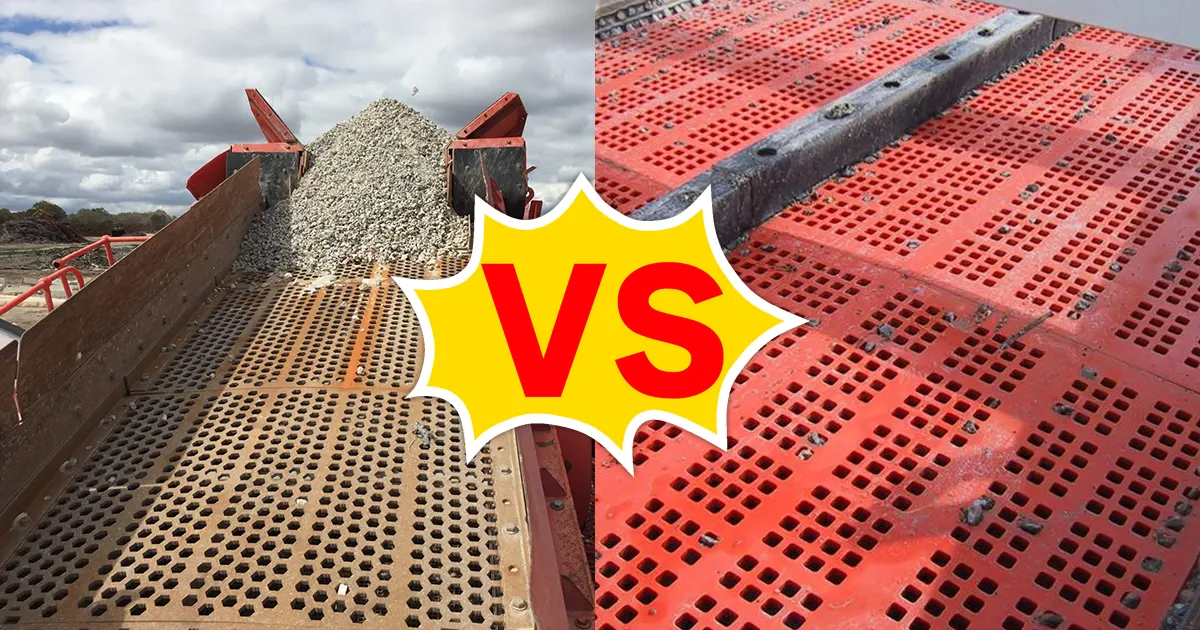
Choosing the right screen media is very important. It can help your operation succeed or fail. You want your screen media to help you work faster. It should last longer and save you money. Good screen media keeps your screens working well. It also helps you reach your production goals. If you work with tough, rough, or heavy materials, perforated plate screens are usually best. On the other hand, polyurethane screen panels are good for stopping wear, making less noise, and sorting small pieces. Your choice between perforated plate vs polyurethane screen panels depends on the type of material, the size of what you feed in, how wet it is, and the screening step.
- The right screen media can help you get more product and have less downtime. This saves you money.
- Screen media helps you control sizes and get the most product.
- Changing screen media can help your screens last longer. It can also help you work faster by moving material better and making less waste.
If you are not sure about perforated plate vs polyurethane screen panels, look at the comparison and tips. This will help you choose the best one for your job.
Key Takeaways
- Picking the right screen media helps your work run better and saves money.
- Perforated plate screens are good for heavy and rough materials. They work well for hard jobs.
- Polyurethane screens are best for fine, wet, or sticky materials. They last longer and make less noise.
- Think about the material type and size before you pick a screen. This helps stop clogs and keeps work fast.
- Screens with tapered openings and self-cleaning features cut down on downtime and maintenance.
- Good screens may cost more at first, but you save money later on replacements and repairs.
- Reducing noise matters; polyurethane screens make the work area quieter.
- Always choose a screen that fits your job needs for best results and efficiency.
What Are Perforated Plate Screens
Construction and Materials
Perforated plate screens are used for tough jobs. These screens are made from strong metal plates. The plates have holes punched or cut out. The holes let small pieces fall through. Bigger pieces stay on top of the screen. You can choose different materials for these screens. Each material is good for certain jobs.
Here’s a quick look at common materials and what they offer:
| Material | Best For | Wear Resistance | Corrosion Resistance | Average Lifespan |
|---|---|---|---|---|
| Stainless Steel | High-temperature, corrosive, or sanitary environments | High | Excellent | 12–24 months |
| Galvanized Steel | Outdoor, wet, or abrasive conditions (budget-friendly) | Moderate | Good | 6–12 months |
| Polyurethane | High-abrasion, sticky, or high-impact applications | Very High | Excellent (chemicals) | 12–18 months |
| Rubber | Heavy-impact screening with large particles | High (impact) | Good | 8–14 months |
| Mild Steel | Short-term or low-moisture applications | Low | Poor (without coating) | 3–6 months |
Stainless steel and polyurethane last the longest. They also fight off rust the best. Galvanized steel is a good choice if you want to save money. It works well outside. Mild steel is best for short jobs.
Key Features
Perforated plate screens are very strong. They can handle heavy loads and rough stuff. The solid plate does not bend or warp much. You can pick the shape and size of the holes. This helps you control what falls through.
Some key features are:
- Very strong for big jobs
- Custom holes for your needs
- Works for dry and wet jobs
- Easy to clean and take care of
You can use these screens in many places. They are used in mining, quarrying, and recycling.
Types and Abrasion Resistance
There are different types of perforated plate screens. Flat panels are the most common. Some screens are curved or have hooks for special machines. The type you need depends on your machine and what you want to screen.
These screens can take a lot of wear and tear. If you work with sharp rocks or heavy stuff, they last longer than wire mesh. Picking the right material makes them last even longer. Stainless steel and polyurethane are the best if you want your screens to last. Thicker plates also last longer.
Tip: To make your screens last, pick the right material for your job. Also, check the size and shape of the holes. This helps your perforated plate screens work their best.
Tapered Openings and Efficiency
You want your screen to work fast and stay clean. Tapered openings can help you do both. These are holes that get wider as they go down through the plate. When you use tapered openings, small pieces can slide out easily. This stops them from getting stuck. You spend less time cleaning and more time working.
Let’s look at some smart design features that boost your screening efficiency:
| Design Feature | Benefit |
|---|---|
| Tapered openings | Help stop pegging by letting particles slide out. |
| Lateral wedge deflectors | Prevent material from shifting sideways, so you get better screening. |
| Staggered fingers | Let particles move and clear themselves, which reduces blinding. |
| Self-cleaning features | Keep holes open and improve how much you can screen. |
You might wonder why these features matter. Here’s how they help you every day:
- Tapered openings let rocks and sand fall through without getting stuck. You get smoother flow and less downtime.
- Lateral wedge deflectors keep material moving in the right direction. You see fewer hang-ups and better results.
- Staggered fingers give particles room to move. This means less clogging and more product.
- Self-cleaning features save you time. You do not have to stop and clear out blocked holes.
When you pick a perforated plate screen with these features, you get more out of your equipment. You can handle wet, sticky, or fine materials with less trouble. Your screen stays open and works longer. You do not waste time fixing problems.
Tip: If you deal with sticky or wet material, ask for screens with tapered openings and self-cleaning designs. You will see less blinding and more steady production.
Tapered openings and smart design features make your screening job easier. You get better results, less downtime, and more profit.
What Are Polyurethane Screens
Structure and Material Properties
Polyurethane screens are made from a special plastic. These panels are strong and last a long time. You can use them in many places like mines or sand plants. The screens are flexible but also tough. They can handle rocks and sharp things without breaking fast. The surface is smooth, so material moves across easily. Wet or sticky stuff does not clog the panels. Polyurethane screens work well with chemicals and water. You can use them for wet or dry jobs. Their structure gives both strength and flexibility. This helps your screens last longer and need fewer repairs.
Thermoset vs Thermoplastic Polyurethane
Not all polyurethane screens are the same. There are two main types. One is thermoset and the other is thermoplastic. Each type has its own good points.
Here’s a quick table to show the differences:
| Property | Thermoset Polyurethane | Thermoplastic Polyurethane |
|---|---|---|
| Melting/Reforming | Cannot be melted or remolded; chars when reheated | Can be melted and reformed multiple times |
| Durability | More durable; suitable for high-heat applications | Less durable; used in lower stress applications |
| Cost | More complex and expensive to produce | Generally less expensive due to simpler manufacturing |
| Molding Flexibility | Less flexible in molding complex shapes | More flexible and manageable for complex shapes |
Thermoset polyurethane changes when it gets hot. You cannot melt or shape it again. This makes it very tough for hot or rough jobs. Thermoplastic polyurethane can be melted and shaped again. It works for easier jobs and costs less to make. Thermoplastic is better for special shapes. Thermoset lasts longer and is stronger.
Tip: If you need screens for tough, hot, or rough jobs, pick thermoset polyurethane. For lighter jobs or special shapes, thermoplastic might be better.
Modular Design and Installation
Polyurethane screens often come in small panels. This design makes things easier for you. You do not need special tools to put them in. Many systems use click-on or snap-on setups. You can change a worn panel in just a few minutes. You do not have to change the whole screen or stop work for long.
Here is what you get with modular polyurethane screens:
- Fast, tool-free installation
- Easy to swap out broken panels
- Up to 60% less time spent changing screens
- Less training needed for your team
You save time and money with this setup. If one panel wears out, you just change that piece. You do not have to take out the whole screen. This keeps your work going and helps your equipment last longer.
Polyurethane screens give you a smart mix of strength, flexibility, and easy care. You get more work time, less trouble, and longer life from your screens.
Wear Resistance and Service Life
You want your screens to last as long as possible. Polyurethane screens stand out because they fight off wear better than many other types. The secret is in the material. Polyurethane is tough and flexible. It bounces back from hits and scrapes. You can use these screens in places where rocks, sand, or sharp materials move across the surface all day.
Let’s look at why polyurethane screens last longer:
- High elasticity: The panels bend instead of breaking. This means fewer cracks and chips.
- Abrasion resistance: Polyurethane handles rough, gritty material without wearing down fast.
- Impact absorption: The material soaks up shocks from heavy or sharp objects. You see less damage over time.
- Chemical resistance: Polyurethane does not break down when it touches water, oil, or chemicals.
You might wonder how long these screens really last. In most cases, polyurethane screens outlast steel or rubber screens. You can expect them to work two to five times longer, depending on your job. If you screen sharp or abrasive material, you will notice the difference right away.
Here’s a quick table to compare average service life:
| Screen Type | Average Service Life (months) | Best For |
|---|---|---|
| Polyurethane Panel | 12–36 | High-wear, wet, or sticky jobs |
| Rubber Panel | 8–14 | Heavy impact, large particles |
| Steel Plate | 6–18 | Dry, coarse, or high-impact |
| Wire Mesh | 3–9 | Light, dry, or fine screening |
Tip: If you want to cut down on downtime and save money on replacements, try polyurethane screens. You will spend less time changing panels and more time running your plant.
Polyurethane screens also resist blinding and clogging. The smooth surface and flexible openings let material move through without getting stuck. You do not have to stop as often to clean the screens. This keeps your operation moving and helps you hit your production targets.
You can use polyurethane screens in many places. They work well in wet, sticky, or high-wear jobs. You will see them in mining, sand plants, and recycling centers. If you need a screen that lasts and keeps working, polyurethane is a smart choice.
Note: We are a screen media manufacturer. We know how important it is for you to get the most out of your equipment. If you have questions about wear resistance or service life, reach out to us for advice.
Perforated Plate vs Polyurethane Screen Panels: Performance
Impact and Wear Resistance
When you look at perforated plate vs polyurethane screen panels, you want to know which one stands up better to tough jobs. Perforated plate screens use strong metals. They handle heavy rocks, sharp edges, and big impacts every day. If you work in mining or with large, rough material, you will see these screens last longer. They do not crack or break easily. You can count on them for high impact and abrasion resistance.
Polyurethane screen panels also fight off wear. They bend and flex when hit. This helps them last longer in places with lots of small, sharp material. Polyurethane does not rust or corrode. It works well with wet or sticky material. If you need a screen for high-wear jobs, polyurethane is a smart pick. It absorbs shocks and keeps working.
So, which one should you choose? If you need the strongest screen for big, rough jobs, go with perforated plate. If you want a screen that handles lots of small hits and resists chemicals, try polyurethane. Both types give you good resistance, but each shines in different places.
Open Area and Throughput
You want your screen to move as much material as possible. Open area means the part of the screen that lets material pass through. This number matters for your plant’s speed and output.
Let’s compare perforated plate vs polyurethane screen panels:
| Screen Type | Open Area Percentage | Effect on Throughput |
|---|---|---|
| Perforated Plate Screens | 20% – 40% | Higher open area lets more material pass, boosting throughput. |
| Polyurethane Screens | Lower than perforated | Lower open area means less material moves through at one time. |
Perforated plate screens give you more open area. This means you can move more rock, sand, or gravel in less time. You get higher throughput and better bottom-deck capacity. Polyurethane screens have smaller holes and thicker walls. This lowers the open area. You may see less material pass through each hour.
Here’s what you need to remember:
- More open area means more material moves through.
- Perforated plate screens help you reach your production goals faster.
- Polyurethane screens trade some speed for longer life and less noise.
If you need top speed and high output, perforated plate screens are your best bet. If you want less noise and longer wear, polyurethane screens work well, but you may need to slow down your feed.
Screening Efficiency
Screening efficiency tells you how well your screen sorts material. You want to get the right size product with as little waste as possible. When you compare perforated plate vs polyurethane screen panels, you see some big differences in efficiency.
Perforated plate screens give you sharp, clean cuts. The holes stay the same size and shape. You get steady results, even with heavy or rough material. These screens do not clog as much, so you keep working without stopping to clean.
Polyurethane screens also offer good efficiency, but in a different way. The flexible panels move and shake. This helps keep holes open and stops blinding. You see better results with wet, sticky, or fine material. Polyurethane screens can sort small pieces with less trouble. They also make less noise, which helps in busy plants.
Let’s break down the efficiency points:
- Perforated plate screens give you high efficiency with big, rough, or dry material.
- Polyurethane screens boost efficiency with wet, sticky, or fine material.
- Both types help you get the right size product, but each works best in different jobs.
If you want the best efficiency for your job, think about your material and your plant’s needs. Perforated plate vs polyurethane screen panels each have their own strengths. Pick the one that matches your work for the best results.
Tip: For top efficiency, match your screen to your material and your plant’s speed. The right choice keeps your operation running smooth and steady.
Blinding and Pegging Resistance
You want your screens to keep working without getting clogged. Blinding happens when fine or sticky material covers the holes. Pegging means bigger pieces get stuck in the openings. Both problems slow you down and make you stop for cleaning.
Perforated plate screens have straight, sharp-edged holes. These holes can trap wet or sticky material. If you work with clay, damp sand, or fine particles, you might see more blinding and pegging. You will need to clean the screens more often.
Polyurethane screens fight blinding and pegging better. The panels flex and move when material hits them. This shakes loose anything that tries to stick. The holes often have a tapered shape. This helps small pieces fall through and keeps bigger pieces from getting stuck. You spend less time cleaning and more time running your plant.
Here’s a quick list to help you remember:
- Perforated plate screens: More blinding and pegging with wet or sticky material.
- Polyurethane screens: Less blinding and pegging, even with tough material.
Tip: If you screen wet, sticky, or fine material, polyurethane panels will save you time and trouble.
Noise Reduction
Noise can be a big problem in screening plants. Loud machines make it hard to talk and can hurt your ears. You want a screen that keeps the noise down.
Perforated plate screens use metal. When rocks hit the metal, you hear a loud, sharp sound. This can make your plant noisy. Workers may need ear protection.
Polyurethane screens are much quieter. The panels are soft and flexible. When material hits them, the sound is softer. You hear less banging and more of a dull thud. This makes your plant a better place to work. You can talk to your team without shouting.
Let’s compare:
| Screen Type | Noise Level | Worker Comfort |
|---|---|---|
| Perforated Plate | High (loud bangs) | Lower, needs earplugs |
| Polyurethane Panel | Low (soft thuds) | Higher, easier to talk |
Note: If you want a quieter plant, choose polyurethane screens. Your team will thank you.
Service Life and Maintenance
You want your screens to last a long time and need little care. Both perforated plate and polyurethane screens offer good service life, but they shine in different ways.
Perforated plate screens are tough. They handle heavy loads and rough material. You do not need to fix them often. They work well in high-impact jobs. You can count on them for steady performance.
Polyurethane panels last even longer in many cases. They resist wear from sharp and abrasive material. The panels do not rust or corrode. You change them less often than woven wire screens. Maintenance is quick and easy. You can swap out a single panel without stopping the whole plant.
Here’s a table to show how they compare:
| Screen Type | Average Service Life | Maintenance Interval |
|---|---|---|
| Polyurethane Panels | Longer than woven wire screens | Less frequent changes |
| Perforated Plates | High durability under heavy loads | Requires minimal maintenance |
You save time and money with both types. Polyurethane panels give you the longest life and the least downtime. Perforated plates give you strength and steady work with little care.
Tip: For the longest service life and easy maintenance, try polyurethane panels. For heavy-duty jobs, perforated plates will not let you down.
Cost and Long-Term Value
You want your screen media to give you the best value for your money. It is not just about the price you pay at the start. You need to think about how long the screen lasts, how often you need to change it, and how much work it takes to keep it running.
Let’s look at the numbers. Here is a simple table to help you compare:
| Screen Type | Initial Cost (per sq ft) | Wear Life Comparison | Maintenance Considerations |
|---|---|---|---|
| Basic Woven Wire Mesh | $50–$100 | Shorter lifespan, frequent replacements | Higher long-term costs due to replacements |
| Polyurethane Screen Panels | $150–$300 | Lasts 2–3 times longer | Reduced labor expenses for changeouts |
| Perforated Plate Screens | Varies | Very long wear life in suitable applications | Maintenance depends on application and impact loads |
You might notice that polyurethane screen panels cost more at the start. You pay more per square foot. But these panels last two to three times longer than basic wire mesh. You do not need to change them as often. You also spend less time and money on labor because swapping out panels is quick and easy.
Perforated plate screens have a different story. The price can change a lot, depending on the metal you pick. If you choose stainless steel, you pay more up front. If you go with mild steel, you save money at first but may need to replace it sooner. Perforated plates shine in tough jobs. They last a long time when you use them for the right material. You get strong wear life, especially in coarse scalping or heavy-duty work.
Here are some things to keep in mind when you think about long-term value:
- Polyurethane panels cost more at first but save you money over time. You change them less often and spend less on repairs.
- Perforated plate screens give you great value in rough, high-impact jobs. They last long and handle big loads.
- Wire mesh screens look cheap at first. But you may end up spending more because you need to replace them often.
You also need to think about downtime. Every time you stop your plant to change a screen, you lose money. Polyurethane panels help you cut downtime because they are easy to swap out. Perforated plates need more time and effort to change, but you do not need to do it as often if you pick the right type.
Tip: Do not just look at the price tag. Think about how long your screen will last, how much work it takes to keep it running, and how much downtime you can afford. The right choice saves you money in the long run and keeps your plant running strong.
When you add up all the costs—buying, changing, and maintaining your screens—you see that both polyurethane and perforated plate screens can give you good value. The best pick depends on your material, your plant, and your goals.
Where Perforated Plate Screens Work Best
Heavy-Duty and High-Impact Applications
You want a screen that can take a beating. Perforated plate screens shine in places where the work is tough and the material hits hard. These screens handle heavy-duty applications every day. You see them in mining, recycling, and big construction jobs. When you need something that will not bend or break, this is your best choice.
Punched Plate, or Perforated Plate screens are an excellent, heavy duty screening option. Available in Mild, Stainless or Hardox Steel they are ideal for high impact applications where durability is essential making them a great choice in primary screening and scalping operations.
You do not have to worry about sharp rocks or big chunks. These screens stand up to the hardest jobs. If your plant deals with high-impact applications, you will notice fewer cracks and less downtime. You get more work done with less trouble.
Large Particle and Primary Screening
Do you need to sort out big rocks or chunks before the next step? Perforated plate screens work best for large particle screening. You can use them at the start of your process, where the material is still rough and unbroken. These screens catch the big stuff and let the smaller pieces fall through.
Here’s why you might pick perforated plate screens for primary screening:
- They handle large feed sizes without bending.
- The holes stay the same size, so you get steady results.
- You can choose the hole shape and size for your job.
You see these screens in the first stage of many plants. They help you get rid of oversize material early. This keeps your machines safe and your process smooth.
Dry and Abrasive Materials
Dry and abrasive materials can wear out screens fast. You want something that lasts. Perforated plate screens are made for this kind of work. They do not rust or wear down quickly. If you screen sand, gravel, or crushed stone, you will see these screens last longer than wire mesh.
Let’s look at some reasons why they work well with dry and abrasive materials:
| Material Type | Why Perforated Plate Works Well |
|---|---|
| Crushed stone | Handles sharp edges and heavy loads |
| Sand and gravel | Resists wear from constant movement |
| Ores and minerals | Stays strong under rough conditions |
You spend less time changing screens and more time running your plant. You also save money because you do not need to buy new screens as often.
If you want a screen that stands up to tough jobs, large particles, and rough materials, perforated plate screens are a smart pick.
Where Polyurethane Screens Work Best
Fine and Medium Particle Screening
You need screens that sort small and medium particles easily. Polyurethane screens are good at this job. They help you separate tiny pieces without problems. In places like mineral processing or recycling, you must catch fine material. Polyurethane screens can screen down to 45 microns. This means you get the right size every time.
Here are reasons why polyurethane screens are a great choice:
| Advantage | Description |
|---|---|
| Durability and Resistance | Polyurethane screens last much longer than steel. They fight off rust, wear, and damage. |
| Fine Mesh Capabilities | You can screen very small sizes, like 45 microns. This helps you get exact results in your work. |
| Self-Cleaning Design | These screens stop clogging and buildup. You spend less time cleaning and more time working. |
| Enhanced Flow and Reduced Dust | More open area means better flow and less dust. Your workplace stays safer and cleaner. |
You will find these screens in places where lots of material moves fast. Polyurethane screens help you get more product and less downtime.
Wet, Corrosive, and High-Wear Environments
Wet or harsh conditions can ruin many screens. Polyurethane screens handle tough jobs well. They do not rust or break when they touch water, chemicals, or oils. You can use them where other screens fail.
Here’s how different screen materials work in harsh places:
| Material | Performance in Harsh Conditions |
|---|---|
| Polyurethane | Polyurethane screens are strong and flexible. They resist damage from wear and weather. |
| Rubber | Rubber breaks down fast with oils or bad weather. |
| Plastics | Plastics can crack and do not bounce back well. |
| Metals | Metals are heavy and rust easily. They need coatings to fight chemicals. |
Polyurethane screens keep working even when weather changes or chemicals are present. You do not need to replace them often. With the right choice, these screens last much longer than metal screens in tough places. You save time and money because you do not stop for repairs as much. These screens also resist tearing and wear, so they fit well in many hard jobs.
Tip: If you work with wet, sticky, or chemical-filled material, polyurethane screens will help you a lot.
Noise-Sensitive and Secondary/Tertiary Stages
Noise is a big problem in screening plants. You want a quieter workplace, especially in cities or inside buildings. Polyurethane screens help lower noise. The panels absorb shocks and vibrations. You hear less banging and more soft sounds.
Here is what you get with polyurethane screens in noisy places:
- Polyurethane mesh screen plates make less noise during screening.
- The panels soak up vibrations and impact energy.
- You get a quieter work area than with metal screens.
- These screens work well in crushing plants, aggregate jobs, and city sites.
You also see polyurethane screens in later screening stages. These stages need gentle handling and careful sorting. Polyurethane screens give you both. They keep your plant running smoothly and your team comfortable.
Note: If you want less noise and better working conditions, polyurethane screens are a smart choice for many jobs.
Choosing Based on Application
When you pick a screen for your plant, you need to match it to your material, your process, and your budget. Every job is different. You need an easy way to choose the best screen for your needs. Let’s go through the steps together.
Material Type and Feed Size
First, look at what you need to screen. The kind of material and the size of what you feed in matter a lot. Are you working with dry powder, wet slurry, or big rocks? Do you need to sort fine sand or large gravel? Each material acts differently on a screen.
Here’s a simple table to help you compare:
| Selection Criteria | What to Check For | Best Screen Choice |
|---|---|---|
| Material Characteristics | Dry, wet, sticky, abrasive, corrosive | Polyurethane for wet/sticky; Perforated plate for dry/abrasive |
| Bulk Density | Heavy or light material | Both work, but heavy loads favor perforated plate |
| Particle Size Distribution | Fine, medium, or large particles | Polyurethane for fine/medium; Perforated plate for large |
| Throughput | How much you need to process | Perforated plate for high volume; Polyurethane for steady flow |
| Special Properties | Sharp, sticky, or chemical-laden material | Polyurethane for sticky/chemical; Perforated plate for sharp/abrasive |
If you handle big, rough material, perforated plate screens are strong and last longer. For fine or medium particles, polyurethane screens sort better and stay good for more time. Always match your screen to your material and what you want to do.
Tip: When picking screen media, check your material’s size and shape first. This helps you avoid trouble and get the best results.
Moisture and Screening Stage
Moisture can change how your screen works. Wet or sticky material often sticks to screens and causes clogging. You want a screen that keeps working, even when things get messy.
Think about where you are in your process. Are you at the start, sorting big chunks? Or are you finishing up, looking for clean, fine product? The screening stage matters.
Here’s a quick checklist:
- Wet or sticky material? Polyurethane screens flex and resist clogging.
- Dry, abrasive material? Perforated plate screens handle the wear and tear.
- Primary screening (first step)? Perforated plate screens catch big pieces and protect your equipment.
- Secondary or tertiary screening (later steps)? Polyurethane screens give you better accuracy and less noise.
You can use this checklist for most jobs. If you see a lot of moisture, polyurethane screens will save you time and cleaning. For dry, tough jobs, perforated plate screens keep working without breaking down.
Cost, Maintenance, and Downtime
You want to get the most value for your money. Think about more than just the price tag. Look at how long the screen lasts, how often you need to change it, and how much time you lose during maintenance.
Here’s what you need to know:
- Perforated plate screens usually cost less to buy and install. They work well when you need high flow rates and don’t need super-fine sorting.
- Polyurethane screens cost more up front, but you change them less often. They need less maintenance and last longer, especially in tough environments.
- Polyurethane panels are easy to swap out. You can change one panel at a time, which means less downtime and more production.
- If you want to keep costs low and your plant running, think about how much time you spend changing screens. Less downtime means more profit.
Note: For continuous operations, polyurethane screens often give you lower long-term costs because you spend less time and money on maintenance.
Decision Matrix for Selecting Your Screen
You can use this simple table to help you decide which screen fits your job:
| Factor | Perforated Plate Screens | Polyurethane Screens |
|---|---|---|
| Large, abrasive material | ✅ Best choice | Possible, but less durable |
| Fine or sticky material | Possible, but may clog | ✅ Best choice |
| High throughput needed | ✅ Best choice | Good, but lower open area |
| Wet or corrosive jobs | Possible, but may rust | ✅ Best choice |
| Low upfront cost | ✅ Best choice | Higher initial cost |
| Low maintenance | Good, but needs more attention | ✅ Best choice |
| Noise reduction needed | Noisy | ✅ Quiet operation |
| Fast panel changes | Slower, more labor | ✅ Quick and easy |
Just follow the factors that match your plant. You’ll find the right screen for your applications every time.
Quick Checklist:
- What’s your material type and size?
- Is your material wet, sticky, or abrasive?
- How much product do you need to move?
- What’s your budget for maintenance and downtime?
- Where in the process will you use the screen?
If you answer these questions, you’ll have no trouble picking the best screen for your screening purpose.
Common Mistakes in Screen Selection
Overlooking Material and Application Needs
You might think all screens work the same way. That is not true. If you skip checking your material and how you use your screen, you can run into big problems. Many people make this mistake. They pick a screen without looking at what they need to process. This can hurt your plant and your wallet.
Here is what can happen when you overlook material and application needs:
- You see more breakdowns and higher costs.
- Your equipment might fail sooner than you expect.
- Your plant does not run as fast or as smooth.
- The quality of your product drops.
- You lose time and money fixing problems.
You need to know your material. Is it wet, sticky, sharp, or heavy? You also need to check your machine’s specs. If you do not, your system can slow down. You might get uneven flow and less product. This mistake can cost you a lot in the long run.
Tip: Always match your screen to your material and your job. This helps you get the best results and saves you money.
Ignoring Wear Life and Maintenance
Some people forget to think about how long a screen will last or how much work it takes to keep it running. This can lead to big bills and lost time. If you do not plan for wear life and maintenance, you might spend more than you save.
Let’s look at some numbers:
| Metric | Value |
|---|---|
| Average Annual Cost Per Machine | $185,000 |
| Fleet Impact (20 Machines) | $4.2 million |
| Emergency Repair Prevention | 78% |
| Companies Using Reactive Maintenance | 68% |
You can see that ignoring maintenance adds up fast. Most emergency repairs could be avoided. If you wait until something breaks, you pay more. You also lose time while your plant is down. Regular checks and picking screens with long wear life help you avoid these problems.
Note: Plan for maintenance and choose screens that last. This keeps your costs down and your plant running.
Focusing Only on Upfront Cost
It is easy to look at the price tag and pick the cheapest screen. This can be a costly mistake. Low-cost screens might wear out fast or need more repairs. You end up spending more over time.
When you focus only on upfront cost, you might:
- Change screens more often.
- Pay more for labor and downtime.
- Lose money from lower production.
You need to think about the total cost. A screen that lasts longer and needs less care can save you money, even if it costs more at first. Look at the big picture. Your goal is to keep your plant running and your costs low.
Tip: Invest in quality screens. You will see better results and save money in the long run.
We are a screen media manufacturer. We want to help you avoid these mistakes. If you have questions, reach out to us for advice.
Neglecting Noise and Blinding Issues
You might think noise and blinding are small problems. They can actually cause big headaches in your screening plant. If you ignore these issues, you could face lower productivity, unhappy workers, and even safety risks.
Let’s talk about noise first. Screening machines can get loud, especially when you use metal screens. The banging and clanging can make it hard for your team to talk. Loud noise can also hurt your ears over time. You might need to buy ear protection for everyone. If your plant sits near homes or offices, noise can lead to complaints or even fines.
Polyurethane screens help you lower noise. These panels absorb shocks and make a softer sound. Your plant feels calmer. Your team can talk without shouting. You also create a safer workplace.
Now, let’s look at blinding. Blinding happens when material covers the holes in your screen. This stops material from passing through. You see less product and more waste. Wet, sticky, or fine material causes blinding the most. If you do not fix it, you spend more time cleaning and less time running your plant.
Here’s a quick table to show what happens if you neglect noise and blinding:
| Problem | What You Might See | How It Hurts Your Plant |
|---|---|---|
| High Noise | Hard to talk, ear pain, complaints | Lower safety, more stress |
| Blinding | Clogged screens, less throughput | More downtime, lost profits |
You can avoid these problems. Choose the right screen for your job. Polyurethane screens cut down on noise and resist blinding. Perforated plate screens work well for dry, rough jobs but may get noisy and clog with sticky material.
Tip: Always think about noise and blinding before you pick a screen. A quiet, clean-running plant keeps your team happy and your production high.
If you want help picking the best screen, just ask us. We are a screen media manufacturer. We know how to solve noise and blinding problems. Let us help you keep your plant running smooth and quiet.
Real-World Examples
Mining Case Study
Picture yourself running a busy iron ore mine. You need screens that last and keep your operation moving. In South Africa, a major mine switched to NexGen polyurethane screens. The results surprised everyone. These screens lasted at least six times longer than the old thermoplastic panels. You can imagine how much time and money this saved. Workers spent less time changing screens and more time getting the job done. In a coal plant, the same type of polyurethane panels lasted ten weeks. The old panels only made it five weeks before wearing out. When you use screens that last longer, you cut down on maintenance. You also make your workplace safer and more productive.
Quarrying Example
You might work in a quarry where weather changes fast. Rain, sun, and dust can wear out your equipment. Polyurethane screens handle these tough conditions with ease. They do not break down in the sun or get weak when wet. You can trust them to keep their shape and strength, even after months outside. These screens are light, so you can move and install them without much effort. You do not need a big team or special tools. When you use polyurethane screens, you spend less time fixing problems. You also save money because you do not need to replace them as often.
Here are some reasons why quarry operators choose polyurethane screens:
- They resist UV rays and moisture, so they last longer outdoors.
- The panels are lightweight, making installation quick and easy.
- You do not need much maintenance, which means less downtime.
- Self-cleaning features stop clogging, so your material keeps moving.
- You get steady screening and better accuracy, even when the weather changes.
You want your plant to run smoothly. Polyurethane screens help you reach that goal.
Aggregate Screening Scenario
Think about screening sand, gravel, or crushed stone. You need a screen that keeps up with high demand. Polyurethane screens work well for fine and medium particles. They do not clog easily, so you get a steady flow of material. The panels flex and shake, which helps clear out sticky bits. You spend less time cleaning and more time producing. When you use polyurethane screens, you also notice less dust and noise. Your team can work in a safer, quieter place. You get more product and less waste. That means more profit for your business.
Industrial Application
You might think screens only work in mines or quarries. That’s not true. You can find perforated plate and polyurethane screens in many industries. Let’s look at how these screens help in factories, recycling plants, and even food processing.
Imagine you run a recycling center. You need to sort plastic, glass, and metal. Polyurethane screens make your job easier. They handle sharp edges and sticky labels. The panels flex and shake, so you see less clogging. You spend less time cleaning and more time sorting. Your team stays safe because the screens do not make loud noises.
Now, picture a food processing plant. You want to keep your product clean and safe. Stainless steel perforated plate screens are a top pick here. They do not rust. You can clean them fast. These screens help you sort grains, beans, or even sugar. You get the right size every time. Your food stays pure, and your customers stay happy.
In chemical plants, you deal with harsh liquids and powders. Polyurethane screens resist chemicals. They do not break down when they touch acids or oils. You can use them for wet or dry jobs. The panels last longer, so you do not stop your line as often. You save money on repairs and replacements.
Here’s a quick table to show where each screen shines:
| Industry | Best Screen Type | Why It Works Well |
|---|---|---|
| Recycling | Polyurethane | Handles sharp, sticky, or mixed material |
| Food Processing | Perforated Plate (SS) | Easy to clean, resists rust |
| Chemical Production | Polyurethane | Resists chemicals, lasts longer |
| Fertilizer Plants | Perforated Plate | Handles abrasive powders |
Tip: Always check what you need to screen. Pick the right material and design for your job. You’ll see better results and fewer problems.
You can see that both screen types help in many industries. You just need to match the screen to your job. If you want advice, ask the experts.
We are a screen media manufacturer. We know how to help you pick the best screen for your plant. Reach out to us if you have questions. We want your operation to run smooth and strong.
Pros and Cons Summary
Perforated Plate Screens: Pros and Cons
You might wonder why people pick perforated plate screens. Let’s look at what’s good and bad about them.
Pros:
- They can handle heavy loads and big hits easily.
- These screens work well with sharp or rough material.
- You get fast work because they have lots of open space.
- You can pick the hole shapes and sizes you need.
- They last a long time in dry and rough jobs.
Cons:
- They can be loud when you use them.
- Wet or sticky material can clog or block the holes.
- These screens are heavier and harder to move than plastic ones.
- If you use the wrong metal, they can rust in wet jobs.
- It takes more time to fix or change them.
Tip: If you need strong screens for tough jobs, perforated plate screens are a great choice.
Polyurethane Screens: Pros and Cons
Polyurethane screens have many good points. Let’s see what’s good and what’s not so good.
| Advantages | Limitations |
|---|---|
| They last longer than steel or rubber screens | You pay more for each panel than mild steel |
| They don’t clog easily because they bounce back | They can break down in sunlight unless protected |
| They are quiet, so your plant is less noisy | They don’t work well in high heat—keep them cool |
| They resist water and chemicals | If you don’t install them right, they won’t work as well |
| You can pick the shape, thickness, and hole pattern |
Here are some things you will like:
- Polyurethane screens last longer, so you change them less.
- They are quiet, making your plant nicer to work in.
- The panels don’t clog, so you spend less time cleaning.
- They stand up to water and chemicals.
But remember these points:
- You pay more for each panel at first.
- Some panels can crack if left in the sun too long.
- They don’t like high heat, so keep them cool.
- If you don’t install them right, they may not work well.
People say they like how long these screens last and how quiet they are. Many also like how they handle sticky material. Some users say cheap panels are hard to remove and can crack if left outside.
Note: Polyurethane screens are best for wet, noisy, or tough jobs. Make sure you pick good panels and install them right.
Side-by-Side Comparison Table
Here’s a simple table to help you see the main differences:
| Feature | Perforated Plate Screens | Polyurethane Screens |
|---|---|---|
| Material | Steel, stainless, or rubber | Tough polyurethane |
| Durability | High for heavy, dry jobs | Lasts longer in wet, sticky jobs |
| Noise Level | Loud | Quiet |
| Maintenance | Takes more time and effort | Quick and easy panel changes |
| Weight | Heavy | Light and easy to handle |
| Chemical Resistance | Good (stainless), poor (mild) | Excellent |
| Open Area | High | Lower, but resists blinding |
| Upfront Cost | Lower (mild steel), higher (SS) | Higher, but saves money over time |
| Best For | Large, abrasive, dry material | Fine, wet, sticky, or noisy jobs |
We make screen media. If you need help picking the right screen, just ask. We want your plant to run smooth and strong.
Conclusion
Picking between perforated plate and polyurethane screens depends on what you need for your job. Perforated plates are good for heavy and rough material. Polyurethane panels are better for fine, wet, or sticky stuff. You should always match your screen to your material, the size you feed in, and where you are in the screening process. If you need help, we are a screen manufacturer. You can ask us for advice. The right screen helps you work better, have less downtime, and save money.
FAQ
What is the main difference between perforated plate and polyurethane screens?
You get more strength and open area with perforated plate screens. Polyurethane screens give you better wear resistance and less noise. Your choice depends on your material and job needs.
Can I use polyurethane screens for large rocks?
No, you should not. Polyurethane screens work best for fine or medium particles. For large rocks or heavy loads, you want perforated plate screens.
Do polyurethane screens cost more than steel screens?
Yes, you pay more up front for polyurethane screens. You save money over time because they last longer and need less maintenance.
How do I stop my screens from clogging?
You can pick screens with tapered holes or self-cleaning designs. Polyurethane screens resist blinding and pegging better than metal screens.
Which screen is quieter during operation?
Polyurethane screens are much quieter. They absorb sound and vibration. You hear less banging and more soft thuds.
Can I change just one panel if it wears out?
Yes! With modular polyurethane screens, you can swap out a single panel. You do not need to replace the whole screen.
Who can help me choose the right screen for my plant?
We are a screen media manufacturer. You can ask us for advice. We help you pick the best screen for your material and process.