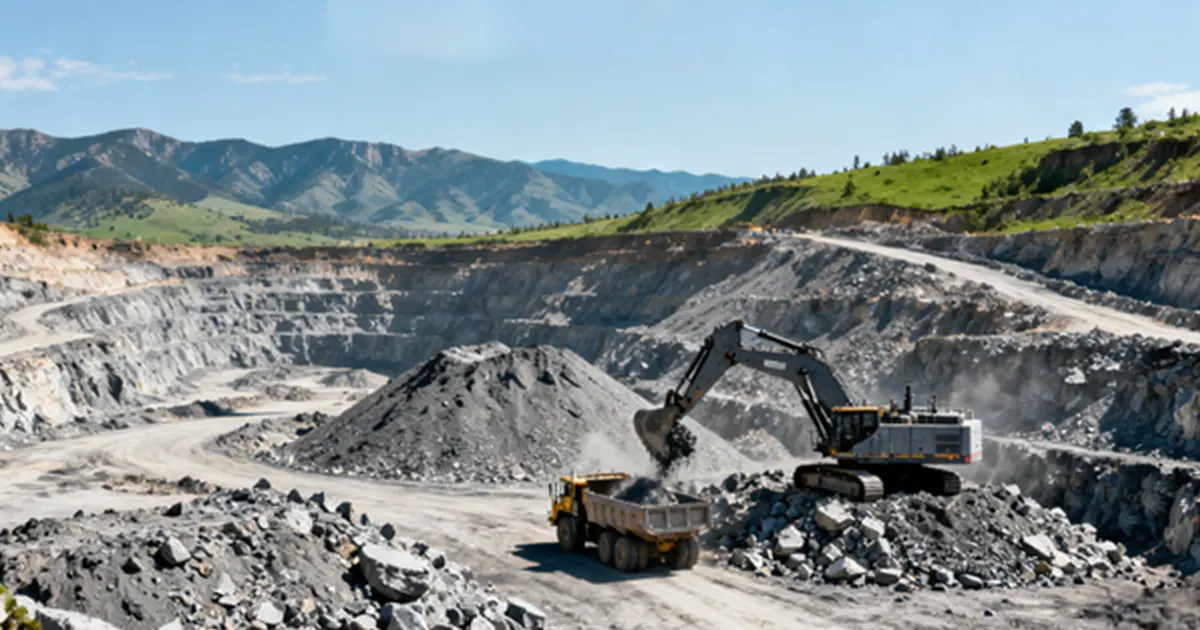
Antimony Mining has big problems today. Stibnite is the main antimony ore. It is soft and breaks easily. This makes it hard to process. China made stricter environmental rules. Antimony ore output dropped from 60,000 tonnes in 2020 to 40,000 tonnes in 2023. In 2024, export controls cut ingot shipments by 45%. Prices went up from $11,000 to $22,000 per tonne. Prices almost reached $30,000. China owns about one fifth of the world’s reserves. It also supplies almost a quarter of exports. These changes make it hard for the world to get enough antimony.
- China’s stricter rules closed many mines, mostly in Hunan and Guizhou.
- The antimony market now has a 10,000-ton shortage.
Key Takeaways
- Antimony is important for many things. It is used in flame-retardants. This helps keep electronics and buildings safe.
- China has most of the world’s antimony. This can make prices and supply unstable.
- China now has stricter environmental rules. This means less antimony is made there. So, there is less antimony worldwide and prices go up.
- Recycling antimony from old items can help. It keeps the supply steady and is better for the environment. This is an important plan for the future.
- Using better screening tools, like self-cleaning screens, helps get more antimony. It also makes processing faster and easier.
- Ores with less antimony are more common now. New ways to process these ores are needed to keep making enough antimony.
- Working with local suppliers can help the supply chain. It makes sure materials keep coming, even if there are problems.
- Using eco-friendly methods protects nature. It also helps companies follow rules and keep working.
Antimony Mining and Global Importance
Uses of Antimony
Antimony is a special mineral. You might not notice it, but it is important in our lives. Most antimony is used to make flame-retardant materials. These materials help stop fires in electronics, furniture, and building supplies. Look at the table below to see how antimony is used:
| Application | Percentage of Consumption |
|---|---|
| Flame-retardant materials | 39% |
| Lead-acid batteries | N/A |
| Alloying agent (lead and tin) | N/A |
| Semiconductors and electronics | N/A |
| Other applications (explosives, glass, etc.) | N/A |
Antimony is also in batteries, alloys, and electronics. It makes lead stronger for car batteries and bullets. You can find it in glass, explosives, and some electronics too.
Strategic Value
Antimony Mining is more than just digging rocks. This mineral is important for security and technology. Countries like the U.S. and Canada call antimony a critical mineral. Why is that? It is needed for defense, energy storage, and electronics. Here are some reasons why antimony is important:
- Antimony makes lead alloys harder for bullets.
- Its flame-retardant power protects military vehicles.
- Antimony compounds are used in military electronics.
Antimony is needed for defense technology. It helps make night-vision goggles and infrared sensors better. As conflicts grow, more people want these technologies. This puts more stress on supply chains.
Check out this table for more information:
| Key Point | Description |
|---|---|
| Strategic Importance | Antimony is needed for defense, electronics, and energy storage. |
| Market Growth | The market could double by 2035 as demand rises. |
| Supply Chain Vulnerability | The U.S. depends a lot on imports, mostly from China. |
Supply and Demand
It is getting harder to find enough antimony. Prices are going up, and the market is changing quickly. In the last ten years, China’s control over antimony has faced problems. New rules and political issues make it harder to get antimony from China. Other countries are searching for new sources.
Most demand comes from flame retardants and photovoltaic glass. These uses are important for supply and prices. Right now, there is a shortage of about 10,000 tonnes. Antimony ingot prices are over $22,000 per tonne. Problems in Myanmar and China have made it even harder to get antimony.
The world needs more antimony, but it is not easy to get. That is why Antimony Mining matters for the future.
Ore Processing Overview
Antimony Mining is more than just digging rocks. The real work starts after miners get the ore. Let’s look at the main steps that turn stibnite into antimony products.
Main Steps
Extraction
First, miners take ore from the ground. They use drills, explosives, or hand tools. The goal is to get as much stibnite as they can. They try not to break it into tiny pieces.
Crushing & Screening
Next, machines crush the ore into smaller pieces. Then, the ore goes over screens. These screens sort the pieces by size. This step helps separate stibnite from waste rock.
Concentration
Now, the ore must be concentrated. This means getting stibnite away from other minerals. There are two main ways to do this: gravity separation and flotation. Gravity separation works because stibnite is heavier than other rocks. Flotation uses bubbles and chemicals. Stibnite floats to the top and can be collected.
Refining
The last step is refining. This step removes any leftover impurities. The result is pure antimony. It is ready for batteries, flame retardants, and other uses.
Here’s a quick look at the main steps in a table:
| Step | Description |
|---|---|
| Size Reduction | Crushing and grinding the ore to make it smaller. |
| Beneficiation | Concentrating antimony minerals with flotation or gravity methods. |
| Extraction | Getting crude antimony or oxide by smelting or leaching. |
| Refining | Cleaning the product to meet quality standards. |
Stibnite Properties
Stibnite is the main ore for antimony. It has special features that make processing hard. Here are some key properties:
| Property | Description |
|---|---|
| Hardness | Stibnite is very soft (Mohs hardness 2). It breaks into tiny pieces when ground. |
| Density | Stibnite is heavy. This helps with gravity separation. |
| Chemical Sensitivity | Needs careful control of chemicals and pH (7-9) for good flotation. |
| Depressants | Special chemicals keep stibnite away from minerals like pyrite. |
These properties mean every step needs special care. Too much grinding can turn stibnite into dust. This makes it hard to recover.
Screening Media Role
Screens used in ore processing are called screening media. Picking the right screening media is important. Here’s why:
- The right screening media separates stibnite from waste rock.
- Good screens help recover more antimony and lower costs.
- The best screen type makes gravity separation and flotation work better.
Screening media comes in types like woven wire mesh, polyurethane panels, and self-cleaning screens. Each type works best for certain ore sizes and conditions. Using the right one keeps things running smoothly. It helps get the most antimony from each ton of ore.
Ore Processing Challenges
Declining Grades
Antimony Mining has a big problem with ore quality. High-grade ores are hard to find now. Miners must use lower-grade ores instead. This means they get less antimony from each ton of rock. When ore grades go down, several things happen: More rock must be processed to get the same amount of antimony. This uses more energy and chemicals, so costs go up. Recovery rates can drop, so less antimony is collected from each batch. Prices for antimony have increased because of these problems. When high-grade ores run out, companies pay more to get the metal. This makes Antimony Mining cost more and work less well.
Note: Geopolitical risks, like export rules from China, make things even harder. When supply drops, prices rise, and the world feels the effects.
Complex Mineralogy
Antimony ores are not simple. They often have many different minerals mixed together. This makes extraction and refining tricky. Each mineral acts in its own way during processing.
Sulfide vs. Oxide
Stibnite is the main sulfide mineral in antimony ores. Sometimes, miners find oxide minerals too. Sulfide ores need different processing steps than oxide ores. If both types are mixed, the plant must change methods. This slows things down and can lower recovery.
Impurities
Many antimony ores have impurities like arsenic and gold. These extra elements can cause problems: Impurity-rich feeds make hydrometallurgical processing harder. Arsenic can dissolve during leaching, making purification tough. Some separation methods do not work well for long periods. A good processing plant needs to know what minerals are in the ore. This helps pick the right methods and keeps costs down.
Screening Difficulties
Screening is a key step in Antimony Mining. It separates valuable stibnite from waste rock. But stibnite is soft and breaks easily. This creates special problems.
Blinding & Wear
Screens can get clogged, or “blinded,” by fine particles. Stibnite breaks into tiny pieces, which stick to the screen. This slows down the process. Also, the soft ore can wear out screens quickly. Plants must replace screens often, which costs time and money.
Screening Solutions
There are ways to handle these screening problems: Woven wire mesh works well for bigger pieces. Polyurethane panels last longer and resist wear. Self-cleaning screens help stop blinding by shaking off fine particles. Perforated plate screens are strong and good for tough jobs. Picking the right screening media is important. It helps recover more antimony and keeps the plant running well.
Environmental Regulations
Antimony Mining must follow strict rules in many places. These rules protect the land, water, and air from mining harm. They also make companies clean up after mining is done.
Waste Management
Mining makes a lot of waste. This waste can be leftover rock, chemicals, or water from processing. Good waste management stops bad stuff from getting into rivers and dirt. In the United States, laws like the Idaho Mined Land Reclamation Act and 36 CFR Part 228 Subpart A make companies plan for waste and cleanup. These rules make sure land gets fixed when mining ends.
Pollution Controls
Pollution controls help keep mining safe. Companies must stop dust, water pollution, and chemical spills. The EPA checks if companies have enough money to fix any damage. Many countries follow the Minamata Convention. This sets limits on mercury and other pollution. These rules can cost more, but they protect people and nature.
Here’s a quick look at some key rules:
| Regulation | Description | Region |
|---|---|---|
| 36 CFR Part 228 Subpart A | Mining on National Forest lands must cause little harm and plan for cleanup. | United States |
| Idaho Mined Land Reclamation Act | State law for safe mining and fixing land. | Idaho, USA |
| EPA Financial Assurance Requirements | Companies must show they can pay for cleanup and follow safe rules. | United States |
Note: Following these rules can make mining cost more. Companies must use cleaner machines and tell what they do. This can help them stay in business and keep working.
Process Efficiency
Mining companies want to get the most antimony with the least waste. Process efficiency means using less energy, saving money, and getting more metal from each ton of ore.
Energy Use
Processing antimony ore uses a lot of energy. Crushing, grinding, and separating the ore all need power. If the ore is low grade or mixed with other minerals, energy use goes up. Plants try to use modern machines and better methods to save energy.
Recovery Rates
Recovery rate means how much antimony is taken out of the ore. High recovery rates are good. Soft stibnite can break into dust, making it hard to collect. Over-grinding can lower recovery. Plants use special screens and careful grinding to keep recovery rates high.
Many things affect process efficiency. Here’s a table to show some key factors:
| Factor | Description |
|---|---|
| Mine Location and Geology | Where the mine is and what the rocks are made of can change ore quality. |
| Miner Expertise | Skilled workers can find better ore and avoid waste. |
| Ore Handling Practices | Clean tools and sorting help keep valuable ore separate from waste. |
| Separation Techniques | Good methods for separating ore from waste save money and improve results. |
Tip: Plants that use the right screening media—like woven wire mesh, polyurethane panels, or self-cleaning screens—can work better and keep recovery rates high.
Equipment Supply Limits
Antimony Mining needs special machines for crushing, screening, and refining. Not many companies make this equipment. Sometimes, plants must wait a long time for new screens or parts. This can slow down production. If a plant uses the wrong type of screen, it may wear out fast or get clogged. That means more downtime and higher costs.
Some screening media, like self-cleaning screens and polyurethane panels, last longer and work better with soft, brittle stibnite. Picking the right equipment helps plants run well, even when supplies are hard to get.
Supply Chain Risks
China’s Control
China has been the main antimony producer for a long time. Most of the world’s antimony comes from Chinese mines and factories. From 2011 to 2015, China gave the world about 83% of its raw antimony. By 2020, this number dropped to 53%. In 2022, China still made almost half of all antimony. China also runs most of the plants that process antimony. This means other countries need China for their antimony.
- China is the leader in mining and refining.
- Other countries depend on China for antimony.
- China’s choices change prices everywhere.
Export Restrictions
China started limiting how much antimony it sends out. These new rules began in 2024. On August 14, China made new export rules for antimony products. By September 15, six antimony products had export controls. In December, China stopped sending antimony to the U.S. This made prices double very fast.
China said that starting September 15, 2024, six antimony products will have export limits. These include antimony ore, metals, and oxide. China wants to control important minerals. This will make antimony harder to get and more expensive. Prices are now $22,000 per ton. Some people think prices could go up to $30,000 per ton because buyers are trying to buy more and save it.
Here’s a quick look at recent events:
| Date | Event | Consequence |
|---|---|---|
| Aug 14, 2024 | China announced export licensing for antimony | More control, prices went up |
| Dec 2024 | Ban on exports to the U.S. | Prices doubled, U.S. had less supply |
China’s export rules make it tough for other countries to get antimony. Buyers hurry to buy more, and prices keep going up.
Global Vulnerabilities
It is risky when one country controls most of the supply. Antimony Mining depends on just a few places. About 70% of antimony comes as a by-product from other mines. Only 25% comes from recycling. If China stops exports, many companies have problems.
- Companies that make flame retardant plastics and electronics may pay more or run out.
- Problems like the Ukraine conflict can stop Russian supply.
- The U.S. wants to make its own antimony, but this takes time.
Here’s a table showing the main risks:
| Evidence Description | Impact on Antimony Supply Chain |
|---|---|
| China’s export restrictions on antimony | Prices go up and shortages happen, prices hit $55,000/ton |
| Ukraine conflict disrupts Russian supply | Western countries have less antimony |
| U.S. builds domestic production | Might help, but supply chains can still break |
When supply chains break, companies must pay more or find new places to buy antimony. This can slow down work and make things cost more for everyone.Antimony Mining shows why it is important to have a steady supply. Countries and companies need to plan for problems and find new ways to get antimony.
Secondary Production & Recycling
Recycling Importance
Recycling is very important for keeping antimony supplies steady. Instead of just mining new ore, companies can get antimony from old things and waste. This helps the environment and makes the process better for nature.
Here are some main places where antimony can be recycled:
- Lead-acid batteries use antimony to make lead grids stronger.
- Some plastics have antimony trioxide to stop fires.
- Old electronics like computers and phones have antimony parts.
- Leftover bits from making alloys and glass can have antimony too.
Did you know? About 25% of the world’s antimony now comes from recycling metal alloys and other products. This means recycling makes the supply chain stronger and less likely to break if mining has problems.
Recycling antimony uses less energy and makes less pollution than mining new ore. It also helps keep the planet safe for the future.
Recovery Methods
How do companies get antimony out of old things? There are a few smart ways to do this. Some work better than others, depending on the waste.
- Matte smelting can get up to 95.48% of the antimony back.
- Vacuum volatilization works even better, with a rate of 99.97%.
- Direct recovery can reach 97.05% efficiency.
- Leaching with strong chemicals like sodium hydroxide or acids can get 85–87% of the antimony.
- Electrolysis is another way, with purity as high as 97% in basic solutions.
Here’s a table to show how well these methods work:
| Method | Typical Recovery Rate |
|---|---|
| Matte Smelting | 95.48% |
| Vacuum Volatilization | 99.97% |
| Direct Recovery | 97.05% |
| Acidic Leaching | 87% |
| Basic Electrolysis | 97% |
These high rates mean recycling is not just good for the earth—it also gets a lot of antimony back for use.
Mitigating Challenges
Recycling helps fix many problems that come with mining antimony. When companies recycle, they do not have to depend only on new ore. This lowers the risk of running out if mines close or if there are export rules.
- Recycling uses less energy and makes less pollution.
- It makes the supply chain stronger, especially when there are shortages.
- Using waste from batteries, plastics, and electronics means less mining is needed.
Tip: If people support recycling, antimony mining can be cleaner and safer. It also means more antimony is ready for batteries, electronics, and fire-safe things.
In the end, secondary production and recycling are very important for meeting the world’s antimony needs. They help protect nature, lower costs, and keep supplies steady—even when mining has big problems.
Industry Innovations
Processing Advances
Antimony mining has changed a lot in recent years. New ways help miners get more metal from hard-to-process ores. One important method is alkaline sulfide treatment. This step helps miners get up to 85% of the antimony. After this, miners use cyanidation to get more gold and silver. Gold recovery goes up by 20 to 30 percent. Silver recovery can reach 90 percent. These steps make the whole process easier and better.
Check out this table to compare the methods:
| Method | Extraction Rate | Notes |
|---|---|---|
| Cyanide Leaching | 49% Au, 18% Ag | Works best on easy ores |
| Alkaline Sulfide Treatment | Up to 85% Sb | Helps get more antimony |
| Subsequent Cyanidation | 90% Ag, +20-30% Au | Works better after pretreatment |
Another cool method is vacuum-thermal processing. This way, miners get gold and antimony at the same time. It makes very pure antimony metal and antimony sulfide. Scientists also use eco-friendly electrochemical methods. These can recover gold at rates between 82% and 90%. These new ideas help miners get more value from each ton of ore.
New ways to process ore mean less waste and more metal. This is good for miners and the earth.
Screening Media Improvements
Screens are important in antimony mining. When stibnite breaks into small pieces, screens must handle lots of tiny bits. Old screens clogged up or wore out quickly. Now, miners use better screening media like self-cleaning screens and polyurethane panels. These screens shake off sticky dust and last longer.
Here are some ways screening media got better:
- Self-cleaning screens: These keep working even with soft, dusty ore.
- Polyurethane panels: These are tough and bendy, so they last longer and sort ore faster.
- Woven wire mesh: Good for sorting bigger pieces of stibnite.
- Perforated plate screens: Strong and good for heavy jobs.
Miners in China and Canada started using self-cleaning screens. They had fewer shutdowns and got more antimony back. Polyurethane panels helped plants process more ore without changing screens as much. These upgrades make mining smoother and save money.
Tip: The right screen helps miners get more antimony and have less downtime. That means more metal for everyone.
Environmental Solutions
Mining can hurt nature, but new solutions help protect it. Closed-loop recycling systems now catch and reuse waste antimonial lead. This keeps bad metals out of rivers and dirt. Zero liquid discharge systems stop lead and antimony from leaking into water. Real-time emission controls warn workers if heavy metal levels get too high.
Here are some smart ways to help the environment:
| Environmental Solution | Description |
|---|---|
| Closed-loop recycling systems | Reuses waste, lowers contamination |
| Zero liquid discharge | Stops leaks into water |
| Emission controls & monitoring | Warns workers about dangerous levels |
| Eco-friendly alloy formulations | Reduces lead, keeps performance strong |
Scientists are making safer alloys with less lead. These new alloys work well and help keep people safe. Miners use these ideas to follow rules and protect the planet.
Cleaner mining means safer places to live and a healthier world.
Supply Chain Strategies
Antimony mining has big risks in getting supplies. Companies need smart ways to keep antimony moving, even if rules change or supplies get low. There are some good strategies that help miners and factories stay ready.
One way is to work with local partners. Mining companies join with nearby suppliers and businesses. This makes the supply chain stronger. If one supplier has trouble, another can help. For example, Canadian antimony companies work with local transport groups and screen mesh makers. This helps them get tools faster and keeps ore moving.
Another idea is to change products. Companies make new products for what people need. When antimony prices rise, some factories use alloys with less antimony. Others use recycled antimony from old batteries and electronics. This saves money and helps nature. Mining plants also use new screening media, like self-cleaning screens and polyurethane panels, to handle soft stibnite and get more antimony.
Following rules is very important. Companies follow strict laws to avoid fines or being shut down. They check shipments, use safe machines, and tell what they do. This helps buyers and governments trust them. For example, mines in Idaho follow the Mined Land Reclamation Act. They plan for cleanup and show they can pay for it. This makes their antimony more wanted by buyers who want safe and steady supplies.
Here is a quick list of supply chain strategies:
- Work with local suppliers and transport groups.
- Make new products using recycled antimony and new alloys.
- Use better screening media to help process ore.
- Follow rules to keep work safe and legal.
Tip: Companies that use these ideas can handle shortages and price jumps better. They keep their plants working and customers happy.
Let’s see how these ideas work in real life. In China, some mining companies used local mesh suppliers when export rules changed. This helped them keep making antimony. In Canada, mines used self-cleaning screens to process more ore with fewer stops. These changes made their supply chains stronger and more flexible.
Here is a table that shows how each idea helps:
| Strategy | Benefit | Example |
|---|---|---|
| Local Partnerships | Faster supply, less downtime | Canadian mines & mesh suppliers |
| Product Innovation | Lower costs, greener products | Recycled antimony alloys |
| Regulatory Compliance | Safer, trusted supply | Idaho mines follow rules |
| Advanced Screening Media | Higher recovery, less maintenance | Self-cleaning screens in Canada |
Supply chain strategies are not just about moving metal. They help companies stay strong when things get hard. By working together, trying new ideas, and following rules, antimony miners can keep the world supplied, even when there are problems.
Future Outlook
Emerging Trends
Antimony Mining is changing quickly. New ideas and tools make mining safer and smarter. Companies want to get more antimony from lower-grade deposits. They use technology to find the best places to mine. Digital tools like AI and satellite data help miners look underground without digging. 3D mapping shows where the richest ore is. More companies work with local people to keep mining safe and fair. Governments want antimony to come from local sources, not just far away. Recycling is getting more popular, so less waste ends up in the ground.
Here’s a table showing some of the biggest trends:
| Trend | Description |
|---|---|
| Exploitation of Lower-Grade Deposits | New tech helps miners use lower-grade ore and cut waste. |
| Digital Transformation | AI and satellite data make exploration faster and smarter. |
| 3D Mineral Prospectivity Mapping | Advanced mapping finds high-potential deposits more accurately. |
| Sustainability Practices | Stricter environmental rules guide mining companies. |
| Supply Chain Localization | Governments push for local production to reduce dependence on foreign sources. |
| Circular Economy | Recycling efforts stabilize supply and protect nature. |
| Community Engagement | Local partnerships help keep mining safe and accepted. |
Sustainable Solutions
Mining can hurt the planet, but new solutions are helping. Many companies now use zero-discharge and low-emission methods. This means less pollution and cleaner water. More old batteries and electronics are being recycled for antimony. Companies invest in local workers and build better roads and schools. These steps help communities grow and stay healthy.
- Zero-discharge and low-emission operations are becoming normal.
- Recycling antimony keeps supply steady and cuts down on waste.
- Investing in local skills and buildings helps communities.
Tip: Sustainable solutions make mining safer for people and nature. They also help companies follow rules and keep their license to operate.
Screening Media Role
Screens are important for the future of mining. Better screening media means more antimony is recovered and plants have less downtime. Self-cleaning screens and polyurethane panels work well with soft stibnite. They last longer and do not need to be replaced as often. Woven wire mesh sorts bigger pieces, and perforated plate screens are good for tough jobs. As ore grades drop and mining gets harder, the right screens help companies stay efficient. New designs make it easier to process tricky ores and keep recovery rates high.
Smart screening media keeps mining plants running well. It helps miners get more antimony and protects their equipment.
Antimony Mining will keep changing as new trends and solutions appear. Companies that use better screens and sustainable practices will lead the way.
Conclusion
Antimony Mining has many problems to solve. Stibnite is soft and can break fast, so miners must be careful. Getting enough ore is hard because of supply chain risks and strict rules for the environment. New ideas and recycling make mining better and stronger. Using special screens, like woven wire mesh, polyurethane panels, self-cleaning screens, and perforated plate, helps process ore well. Our company makes these screens for mining. The future can be good if companies help each other and change when needed.
Want to know more? Contact us to see how better screens can help your mine!
FAQ
What is antimony used for?
Antimony is used to make things that do not burn easily. It is also in batteries and alloys. You can find it in electronics, glass, and bullets. Antimony helps make products safer and stronger.
Why is stibnite hard to process?
Stibnite is very soft and breaks apart easily. When miners grind it, it turns into tiny pieces. This makes it hard to collect and sort. Special screens are needed to fix this problem.
How does China affect antimony supply?
China does most of the mining and refining for antimony. If China changes its export rules, prices can rise fast. Other countries need China to get enough antimony.
What are screening media?
Screening media are tools that sort ore by size. Some types are woven wire mesh, polyurethane panels, self-cleaning screens, and perforated plate. Using the right screen helps miners get more antimony.
Can antimony be recycled?
Yes! Antimony can come from old batteries, electronics, and plastics. Recycling saves energy and keeps the supply steady.
Are there environmental risks in antimony mining?
Mining can make pollution and waste. Companies use special systems to handle waste and protect water. Following rules helps keep people and nature safe.
How do miners improve recovery rates?
Miners use better machines and careful grinding. They also use advanced screens. New methods like alkaline sulfide treatment help get more antimony from each ton of ore.
What makes your screens special?
Our screens last longer and work well with soft stibnite. We have woven wire mesh, polyurethane panels, self-cleaning screens, and perforated plate. These screens help plants run better and get more antimony.