If you’re asking can you spray paint metal mesh, the answer is yes—but only when you use the right prep, the right coating system, and the right technique. Metal mesh is different from flat metal. The openings that make mesh useful can also get clogged, bridged, or partially sealed if you spray too heavy. And in high-wear jobs, paint can wear off faster than you expect.
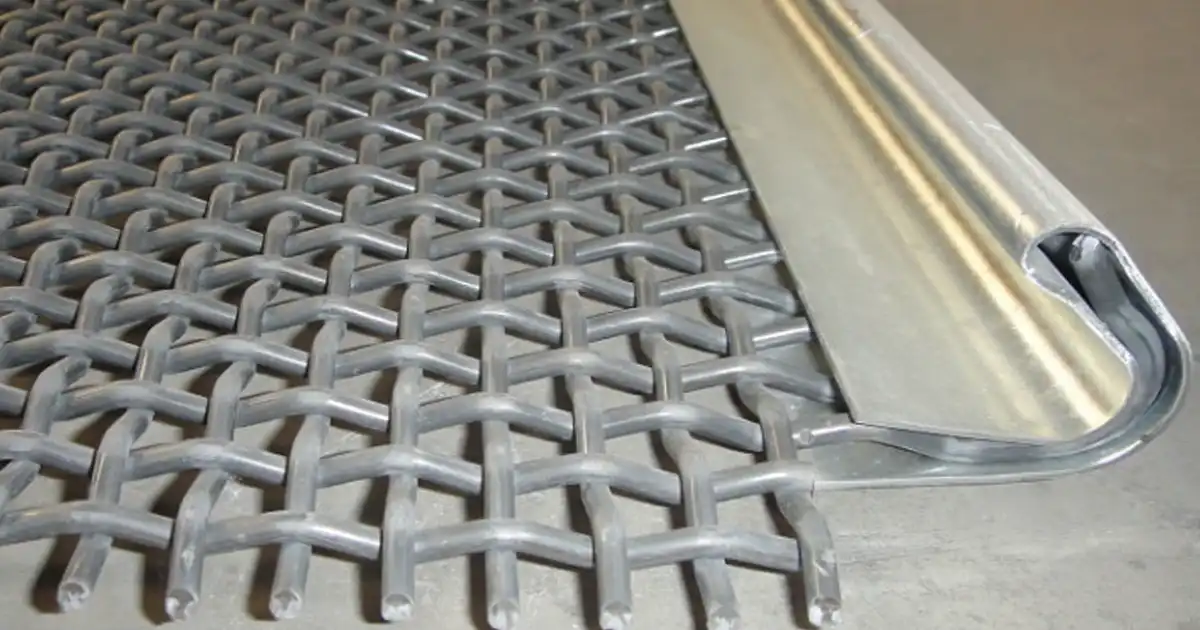
This guide keeps it practical: when spray painting makes sense, when it doesn’t, and how to get a clean finish without ruining airflow, drainage, or screening performance.
Can You Spray Paint Metal Mesh?
Yes, you can spray paint metal mesh. But success depends on three things:
- Opening size (aperture): Fine mesh clogs easily. Larger openings are more forgiving.
- Wire diameter: Thicker wire tolerates coating buildup better than thin wire.
- Service conditions: Abrasion, impact, chemicals, UV, and moisture decide how long the coating lasts.
If the mesh is part of a process where “open area” matters—like screening, draining, or ventilation—you must control film thickness. If the mesh is in a high-abrasion environment (like many heavy-duty screening applications), spray paint may be a short-term solution, not a long-term one.
When Spray Painting Metal Mesh Makes Sense
Spray painting is a good fit when you want basic protection or identification without needing extreme wear resistance.
Common “good” use cases include:
- Light-duty corrosion protection for indoor or sheltered areas
- Safety guarding, barriers, and equipment covers where openings must stay open
- Color coding for maintenance (zone marking, part identification)
- Low-abrasion handling where the mesh isn’t constantly rubbing against material
It’s also useful when you need a fast on-site touch-up and can’t send parts out for coating.
When You Should Not Spray Paint Metal Mesh
Spray painting is often the wrong choice in these cases:
- Very fine openings: Paint easily bridges across holes and blocks flow.
- High-wear screening: Abrasive rock, sand, and sharp aggregate can strip paint quickly.
- High-impact vibration: Coatings can crack or chip if the mesh flexes heavily.
- Hot or chemical environments: Many aerosol coatings can soften, discolor, or fail early.
If your goal is long service life under abrasion, consider tougher coating systems—or choose a mesh material and finish that doesn’t rely on paint for protection.
Pros and Cons of Spray Painting Metal Mesh
Pros
Spray painting can be convenient and effective when done correctly.
It’s fast, accessible, and easy to apply on-site. You can refresh a finish without special equipment. It can also help reduce early rust on carbon steel mesh used in low-stress environments, and it’s helpful for color coding.
Cons
Mesh punishes sloppy technique. The biggest downside is clogging or partially sealing openings, which reduces open area and changes performance. Spray paint can also peel if the surface isn’t clean or if the wrong primer is used. In abrasive service, paint wears off quickly and needs frequent touch-ups.
Paint & Coating Options for Metal Mesh
Choosing a coating isn’t just about color—it’s about corrosion risk, abrasion, and whether you can tolerate any loss of open area.
| Option | Best for | Pros | Cons | Clogging risk | Notes |
|---|---|---|---|---|---|
| Aerosol spray paint (single coat) | Quick touch-ups, light-duty indoor | Fast, simple | Lower durability, chips easier | Medium–High | Best on larger openings with light coats |
| Primer + topcoat (spray) | Better adhesion and rust control | More durable than single coat | More steps, longer cure | Medium–High | Thin coats and proper flash time matter |
| Zinc-rich primer + topcoat | Higher corrosion exposure | Strong rust resistance | Can be thicker | Medium | Great for outdoor/moist areas if applied lightly |
| Epoxy coating (sprayed) | Industrial corrosion protection | Tough, chemical resistant | More complex mixing/application | Medium–High | Often better for panels than fine mesh |
| Powder coating | Durable finish, consistent coverage | Stronger than most aerosols | Requires equipment and heat cure | Medium | Can still bridge fine openings if over-applied |
| Galvanized mesh (material finish) | Long-term corrosion resistance | No paint needed, durable | Not a color finish | None | Often best for rust prevention without clogging |
If you’re dealing with fine mesh openings, even “good” paint can cause problems simply because the film builds at the edges. In those cases, selecting the right base material (like stainless steel) or a finish like galvanizing can be more reliable than painting.
Prep Work That Makes or Breaks the Result
Most paint failures on metal mesh happen before you even start spraying. Mesh has lots of surface area and many edges, so dirt and oil hide easily.
Clean and Degrease
Start with a degreaser that removes oil, wax, and fingerprints. If the mesh has cutting fluid residue, packing oil, or shipping wax, paint won’t bond well.
After degreasing, rinse (if required) and let it dry fully. Any trapped moisture in corners or overlaps can cause early rust under the coating.
Remove Rust and Scale
If there is surface rust or mill scale, paint will only stick to the rust temporarily. Use a wire brush, sanding, or light abrasive cleaning. For heavy-duty corrosion control, blasting is best—but even a thorough mechanical clean is a big improvement.
Focus on edges, cut ends, and intersections. Those spots are where coatings fail first.
Drying and Masking
Dry the mesh completely before priming. Mask areas that must remain uncoated, such as electrical grounding contact points, tight-fit mounting surfaces, or areas where thickness could interfere with installation.
Primer Selection: What to Use and When
Primer is the bridge between metal and paint. On mesh, it also helps prevent peeling at edges.
Standard Metal Primer
For indoor or low-corrosion use, a standard metal primer improves adhesion and reduces rust bleed. It’s a good “general” choice when you want the paint to stay put.
Keep the primer coat thin. Thick primer is one of the fastest ways to clog openings.
Zinc-Rich Primer
If moisture, salt, or outdoor exposure is expected, zinc-rich primer can improve corrosion resistance. It’s commonly used when you want stronger rust protection on carbon steel mesh.
Zinc-rich primers can be heavier. Use light passes and check openings often.
When You Can Skip Primer
Skipping primer is usually only reasonable when:
- The mesh is stainless steel and you’re doing light-duty color coding, or
- The coating is truly temporary and performance isn’t critical
Even then, adhesion on stainless can be tricky without proper prep, and paint may scratch off more easily.
How to Spray Paint Metal Mesh Without Clogging Holes
This is where mesh differs from metal furniture. Your goal is coverage without building a thick film that bridges openings.
Technique That Protects Openings
Use multiple light coats instead of one heavy coat. Start your spray off the mesh, then sweep across it, and stop spraying after you pass the edge. This avoids thick “start/stop blobs” that clog holes.
Hold a consistent distance and keep moving. If you slow down, you thicken the film at the intersections.
A simple pattern works best:
- Spray in one direction with a light coat
- Let it flash (short dry time between coats)
- Spray a second light coat at a slight cross angle (crosshatch)
This gives more even coverage without flooding any area.
Spray Both Sides (But Don’t Overdo It)
Mesh has many “shadowed” surfaces. Spraying only one side can leave bare edges. Spraying both sides helps, but it doubles your chance of clogging if you go too heavy.
Do a light coat on side A, let it flash, then flip and do a light coat on side B. If you need more coverage, repeat lightly rather than trying to finish in one pass.
Do a Quick Test Before You Commit
If the mesh opening is small or performance matters, test on a corner or a sample piece. After it dries, hold it to the light. If the openings look partially sealed or the edges look “rounded over,” you sprayed too heavy.
For screening or airflow applications, it’s better to accept a thinner-looking finish than to lose open area.
Drying, Curing, and Durability Expectations
Paint that feels dry is not always cured. Mesh is easy to handle too soon because it “seems” dry. That’s when fingerprints, scuffs, and early peeling start.
Dry to Touch vs Full Cure
Most coatings have a “dry to touch” time and a longer full cure time. Treat the piece gently until it fully cures. If you stack painted mesh too soon, contact points can stick and tear the coating.
If the mesh is going outdoors, curing matters even more. A coating that hasn’t cured can absorb moisture and fail early.
A Reality Check on Abrasion
Even a well-applied paint system has limits. If your mesh is constantly sliding against abrasive material, paint will wear away. In heavy-duty screening environments, coatings are often a short-term protection, not a lifetime solution.
If durability is the priority, consider alternative finishes or materials rather than expecting spray paint to behave like an industrial coating line.
Maintenance and Touch-Ups
Painted mesh needs inspections, especially at edges and wire intersections.
Look for:
- Chips at cut ends
- Rust “freckles” starting under the film
- Areas where openings are clogging from paint buildup plus dust
When touching up, avoid layering paint over paint repeatedly. Too many touch-ups can gradually reduce open area.
A clean touch-up workflow is:
- Lightly abrade the damaged spot
- Degrease and dry
- Apply primer if bare metal is exposed
- Apply a thin topcoat
If the mesh is performance-critical and openings are getting restricted, replacement may be smarter than repeated recoating.
Spray Paint vs Powder Coat vs Galvanized: Quick Comparison
If you need a basic finish fast, spray paint is the simplest. But it’s not always the best for durability.
Powder coating is usually tougher than aerosol paint and provides more consistent coverage, but it can still bridge fine openings if applied too thick. It also requires curing equipment and may not be practical for on-site work.
Galvanized mesh is often the strongest option for rust prevention without risking clogged openings, because the corrosion protection is part of the material finish rather than a film sitting on top. If corrosion is your main issue, choosing galvanized or stainless mesh can be more reliable than painting.
Spray Painting Checklist for Metal Mesh
Use this checklist to keep results consistent—especially if multiple people are doing the work.
| Step | Why it matters | Quick tip |
|---|---|---|
| Confirm opening size and use case | Fine mesh clogs easily | If openings are small, test first |
| Degrease thoroughly | Oil causes peeling | Clean until water sheets, not beads |
| Remove rust/scale | Paint won’t bond to rust long | Focus on edges and intersections |
| Dry completely | Trapped moisture causes rust | Let it air dry longer than you think |
| Choose the right primer | Improves adhesion and protection | Use zinc-rich for higher corrosion risk |
| Apply light coats | Prevents bridging/clogging | Multiple passes beat one heavy coat |
| Use crosshatch technique | Evens coverage on mesh geometry | Spray at slight angles, keep moving |
| Spray both sides lightly | Reduces shadowed bare metal | Light coat A → flash → light coat B |
| Allow proper cure time | Prevents scuffs and early failure | Don’t stack parts too soon |
| Inspect openings after coating | Performance depends on open area | Hold to light and check for bridging |
Conclusion
Spray painting metal mesh can work well when you keep coats thin, prep the surface properly, and protect the openings from clogging and bridging. For high-wear or performance-critical mesh, consider tougher coating systems—or choose a material/finish that doesn’t depend on paint.
Anpeng designs and manufactures durable screening solutions for heavy-duty industries. We produce Woven Wire Screens, Self-Cleaning Screens, and PU-Mesh Screens, widely used in Aggregate, Mining, Concrete, and Recycling operations.
If you need custom options or technical support, share your mesh opening size, wire diameter, and application requirements—our team can help you select the right solution.
FAQ
Can you spray paint metal mesh without clogging the holes?
Yes, but you must use very light coats, keep the can moving, and allow flash time between passes. Testing a small section first is the safest way to confirm openings stay clear.
What spray paint works best on metal mesh?
A coating designed for metal with good adhesion and corrosion resistance is usually best. The “best” choice still depends on your environment (indoor vs outdoor) and how much wear the mesh will see.
Do I need primer on stainless steel mesh?
Not always, but paint adhesion on stainless can be poor without proper surface prep. If the coating must last, a suitable primer (and careful cleaning) improves results.
How do I prevent rust after painting wire mesh?
Clean off all oils, remove rust fully, use a primer appropriate for corrosion risk (often zinc-rich outdoors), and apply thin coats with proper curing time. Touch up chips early.
Can painted mesh be used for vibrating screen applications?
Sometimes for light-duty or temporary use, but paint usually wears quickly under abrasive screening. If performance and wear life matter, consider material/finish choices better suited for that service.
Is powder coating better than spray paint for mesh?
Often yes for durability, but it can still bridge fine openings if applied too heavily. It also requires curing equipment and may not fit on-site needs.
How long should the paint cure before installation?
Follow the coating guidance for full cure, not just “dry to touch.” Installing too soon can scuff edges and reduce adhesion, especially at intersections.