Mesh wire is widely used for fencing, gardening, construction, animal enclosures, security barriers, and industrial screening. However, prices can vary greatly between products. Understanding the factors behind mesh wire costs helps buyers compare options accurately, avoid unnecessary spending, and select a material that meets the project’s performance requirements.
The final price of mesh wire depends on more than roll dimensions. Material type, wire gauge, opening size, protective coating, manufacturing quality, and order volume all influence the total cost. This guide explains these factors clearly, helping homeowners, contractors, and distributors make confident, practical purchasing decisions for every application.
Wire Mesh Cost
Wire mesh cost depends on the material, wire thickness, opening size, protective finish, and quantity ordered. Rather than comparing rolls by price alone, review the full specification and expected service life. This approach helps homeowners, contractors, and distributors choose mesh that provides reliable performance without paying for unnecessary features. Wire mesh should match the demands of its intended application.
- Material type: Standard carbon-steel mesh is generally the most economical choice, while galvanized steel costs more because its zinc coating improves resistance to rust. Stainless steel is usually a premium option, but it can be worthwhile in wet, coastal, food-processing, or corrosive environments where long-term durability is essential.
- Wire gauge: Gauge indicates wire thickness; lower gauge numbers normally mean thicker, stronger wire. Heavy-gauge mesh uses more metal and therefore costs more, but it is better suited to security, animal containment, reinforcement, and industrial projects. Lighter-gauge mesh can reduce material cost for gardens, temporary barriers, or low-impact screening.
- Mesh opening size: Smaller openings require more wire within the same area and often involve more precise manufacturing, increasing the price. Fine mesh is appropriate for pest control, filtration, and small-animal enclosures. Larger openings can be more economical for general fencing, boundary marking, and projects where visibility and airflow matter.
- Coating and finish: Galvanizing, PVC coating, powder coating, and other finishes add to the initial purchase price, but they may reduce corrosion, maintenance, and replacement costs. For example, galvanized welded mesh has been estimated at about $0.60–$2.00 per square foot, versus $0.30–$1.00 for standard welded mesh.
- Roll size and order volume: Larger rolls and wholesale orders may lower the price per square foot or per meter, although freight, packaging, and storage requirements can affect total delivered cost. Request quotes using the same specifications—material, gauge, opening, dimensions, coating, and quantity—to compare suppliers fairly and avoid unexpected charges.
How Much Is Mesh Wire?
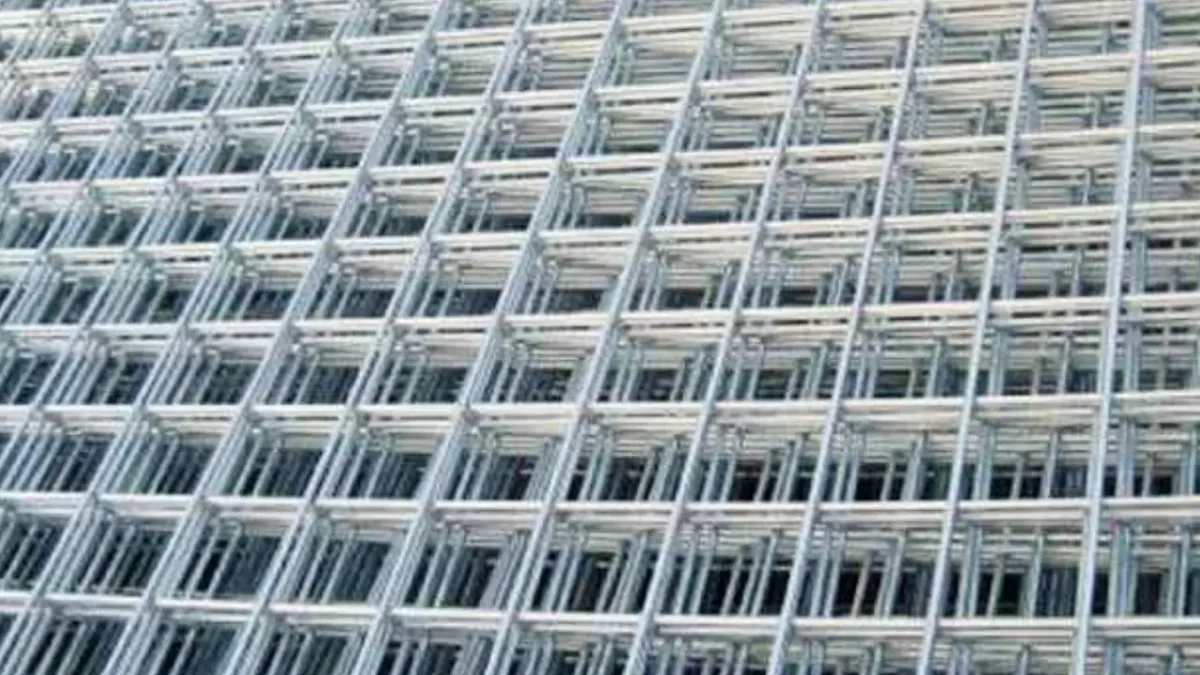
How much mesh wire costs depends on the wire material, thickness, opening size, coating, roll dimensions, and order quantity. Basic mesh for light-duty garden or temporary uses is usually less expensive, while galvanized, PVC-coated, heavy-gauge, and stainless-steel products cost more because they provide greater strength and corrosion resistance. Compare matching specifications—not just roll prices—to make a useful decision.
- Material selection: Carbon steel is generally the entry-level option for indoor or temporary applications. Galvanized steel adds rust resistance for outdoor fencing, while PVC-coated mesh improves weather protection and appearance. Stainless steel is typically the highest-cost choice, designed for demanding wet, food-processing, chemical, or coastal environments.
- Wire gauge and thickness: Thicker wire requires more raw material, increases mesh weight, and raises the final cost. However, it also delivers better rigidity, impact resistance, and security. Use light-gauge mesh for basic screening or garden protection, and select heavier wire for animal enclosures, boundary fencing, construction, or commercial applications.
- Mesh opening size: Smaller openings use more wire and, for welded mesh, require more weld points. This can increase manufacturing cost. Fine openings suit insect protection, filtration, and small-animal cages, while larger openings are often more affordable and practical for general fencing, plant support, partitions, and airflow-focused barriers.
- Coating and corrosion protection: Electro-galvanized mesh is commonly a lower-cost coated option. Hot-dip galvanizing provides a more robust zinc layer and generally costs more. PVC-coated wire adds an extra protective layer and color choice, while stainless steel offers strong corrosion resistance with minimal maintenance in harsh operating conditions.
- Roll size, quantity, and delivery: Larger orders often reduce the cost per square foot, square meter, or roll because suppliers can manufacture, pack, and ship more efficiently. Still, freight can materially affect the delivered price, particularly for bulky rolls. Ask suppliers to quote material, dimensions, coating, quantity, packaging, and delivery terms.
Mesh Wire Price Chart
| Mesh type | Typical reference price | Best suited for | Main cost driver |
|---|---|---|---|
| Basic carbon-steel welded mesh | $1–$3 per m² in bulk | Temporary fencing and simple partitions | Basic material and light specifications |
| Electro-galvanized mesh | $2.80–$6.50 per m² | General fencing and light outdoor projects | Zinc coating plus wire diameter |
| Hot-dip galvanized mesh | $3.50–$7.50 per m² | Outdoor structures and long-term use | Thicker protective zinc coating |
| PVC-coated welded mesh | $4.50–$9.00 per m² | Garden fencing and agricultural applications | Galvanized core, PVC layer, and color |
| Stainless-steel welded mesh | $8–$15 per m² | Wet, corrosive, and hygienic settings | Stainless grade and corrosion resistance |
| Typical welded mesh roll | $30–$280 per roll | Projects requiring roll-form material | Size, material, gauge, and coating |
Wire Mesh Cost per Square Foot
Wire mesh cost per square foot can range from about $0.50 for light-duty welded mesh to $1.80 or more for heavy-gauge products before delivery, hardware, and installation. Material, gauge, mesh opening, coating, dimensions, quantity, and freight all affect the final amount.
Compare equivalent specifications to ensure the lowest listed price provides suitable durability and strength.
- Light-duty welded mesh: Lightweight 14–16 gauge mesh with 1/2-inch to 1-inch openings is often used for garden screening, plant support, and small barriers. Typical material costs range from $0.50 to $0.95 per square foot.
- Medium-duty galvanized mesh: For general fencing, animal enclosures, and property partitions, 12–13 gauge galvanized mesh commonly costs $0.80 to $1.25 per square foot. It balances outdoor corrosion resistance, practical rigidity, and manageable project budgets.
- Heavy-duty wire mesh: Stronger 9–11 gauge mesh with larger openings often costs $1.00 to $1.80 per square foot. It is appropriate for security fencing, livestock containment, reinforced enclosures, and demanding commercial applications requiring increased durability.
- Coating costs: Galvanized or vinyl-coated finishes add to the material price but help protect against corrosion. Coatings may add approximately $0.10 to $0.60 per square foot, with premium vinyl finishes adding roughly $0.15 to $0.40.
- Material choice: Standard galvanized steel is generally more affordable than stainless steel. Stainless products can cost significantly more because they resist corrosion in wet, coastal, chemical, and hygienic environments, which may lower maintenance and replacement expenses long term.
- Delivered project cost: The mesh-only rate does not include posts, fasteners, gates, cutting, shipping, taxes, or labor. Larger rolls and wholesale quantities can lower material cost per square foot, although shipping bulky rolls can increase the delivered total.
Cost Per Square Foot Chart
| Mesh category | Typical specification | Estimated material cost per sq. ft. | Common use |
|---|---|---|---|
| Light-duty welded mesh | 14–16 gauge; 1/2–1 in. openings | $0.50–$0.95 | Gardens, screening, light barriers |
| Medium-duty welded mesh | 12–13 gauge; 1–1.5 in. openings | $0.80–$1.25 | General fencing and enclosures |
| Heavy-duty welded mesh | 9–11 gauge; 2 in. openings | $1.00–$1.80 | Livestock, security, commercial use |
| Standard galvanized mesh | 10–12 gauge; 6 × 6 in. mesh | $0.40–$1.50 | Outdoor fencing and construction |
| Typical residential roll | 4 ft. × 50 ft. roll | $0.60–$2.50 | Home fencing and cages |
| Premium coated or stainless mesh | Varies by grade and coating | Up to $4.50 or more | Corrosive or specialty settings |
Wire Mesh Price Factors
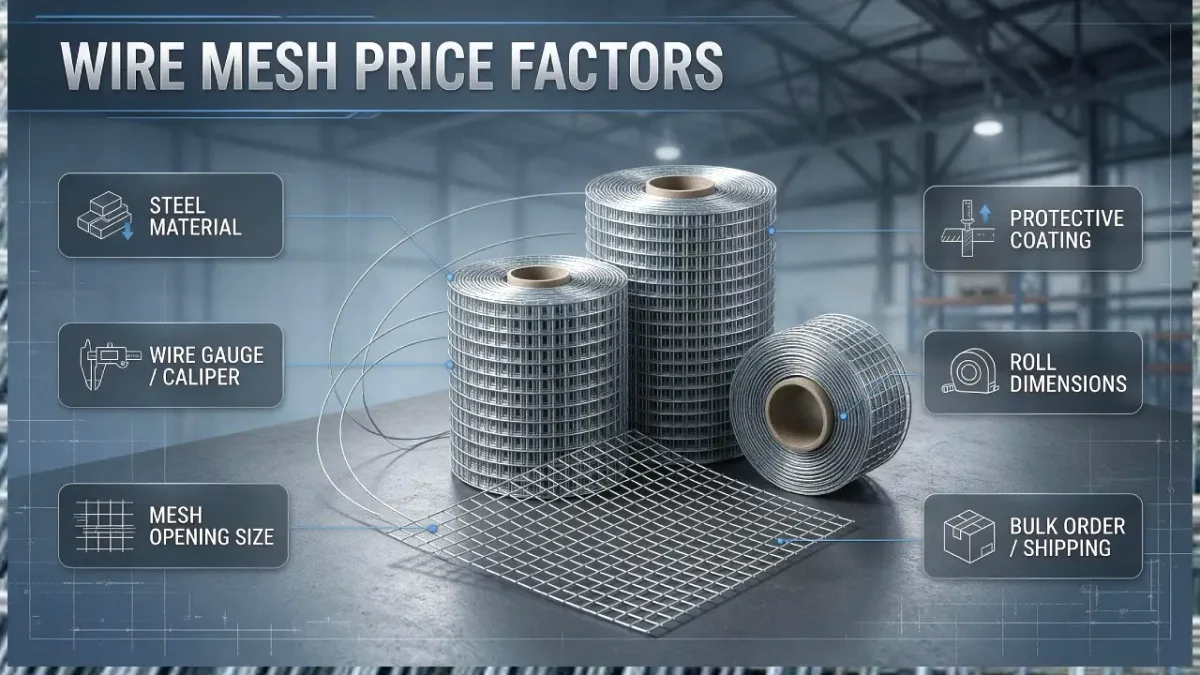
Wire mesh price factors determine why two products that look similar can have very different costs. The final quote is shaped by the base metal, wire diameter, opening size, finish, product dimensions, fabrication method, order volume, and transportation.
Understanding each factor helps buyers compare supplier quotes accurately and select mesh that delivers the needed strength, lifespan, and value.
- Base material: Mild or carbon steel is usually the most economical material for standard indoor and temporary applications. Galvanized steel costs more because of its zinc protection, while stainless steel commands a premium for corrosion resistance in coastal, wet, hygienic, chemical, or food-processing environments.
- Wire gauge: Wire diameter is one of the largest cost drivers because thicker wire uses more metal and increases roll weight. Lower gauge numbers generally indicate thicker wire. Heavy-gauge mesh costs more but offers stronger resistance to bending, cutting, pressure, and impact in fencing, security, construction, and animal containment.
- Mesh opening size: Smaller apertures require more wire per square meter and create more weld points in welded mesh. As a result, fine mesh usually costs more than large-opening mesh. Small openings work well for pest control, filtration, and cages, while larger openings suit economical fencing and general boundary applications.
- Surface treatment: Finishes increase the purchase price but can lower lifetime ownership costs by reducing rust, maintenance, and early replacement. Pre-galvanized mesh is commonly less expensive, while hot-dip galvanizing after welding provides more durable protection. PVC coating adds another protective layer, color options, and improved outdoor appearance.
- Roll dimensions and weight: Width, length, and total roll weight directly affect the amount of wire used, packaging requirements, and freight charges. Typical welded-mesh rolls can range from 1 to 2 meters wide and 10 to 50 meters long. Larger rolls may lower unit cost but require higher upfront spending.
- Order quantity and logistics: Wholesale or container-sized purchases can reduce the cost per roll because production and handling are more efficient. However, buyers should include freight, duties, taxes, packaging, and delivery distance in the comparison. Request quotes with identical specifications and delivery terms to identify the true landed cost.
Conclusion
Mesh wire pricing reflects the balance between upfront cost, durability, strength, and suitability for a specific application. A lightweight mesh may be economical for garden protection, while welded or heavy-gauge galvanized mesh can provide greater value for fencing, security, and demanding commercial environments. Comparing specifications—not only roll prices—leads to smarter purchasing decisions.
Before ordering, define the intended use, required dimensions, expected exposure to weather, and level of strength needed. Check wire diameter, aperture size, coating quality, and roll length carefully. These details determine whether the product will perform reliably over time and prevent replacement costs that can make a low-priced mesh more expensive overall.
For dependable supply and competitive wholesale options, source mesh wire from Apscreens. Whether you need mesh for landscaping, construction, agriculture, filtration, or protective enclosures, buying in wholesale quantities can improve unit pricing and simplify procurement. Work with Apscreens to select suitable specifications, request product details, and secure mesh wire designed for your project needs.