In the aggregate and sand washing industry, processing dry material is straightforward. However, the moment moisture is introduced—whether from natural quarry conditions, rain, or high-pressure wash systems—screening becomes the most frustrating bottleneck in the plant.
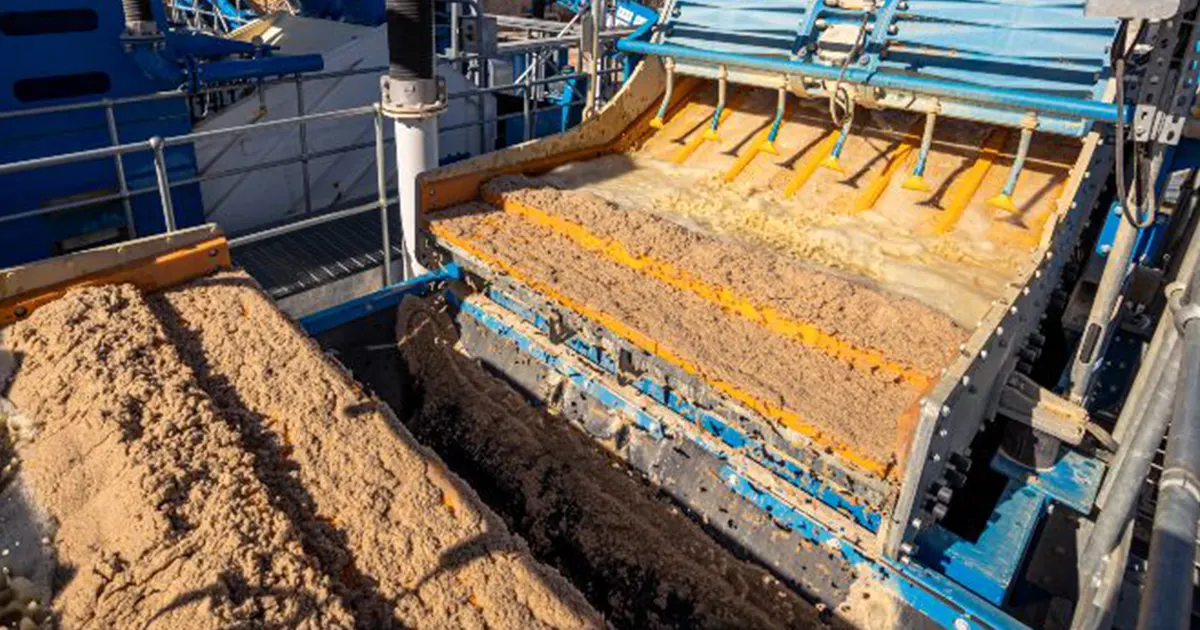
When processing wet or sticky sand, plant managers face a constant nightmare: screen blinding. Once the screen mesh blinds, your effective open area drops to zero, Tons Per Hour (TPH) plummets, and good sand is lost to the oversize chute.
Key Takeaways
- The Physics of the Problem: Moisture creates surface tension, turning fine sand and clay into a glue-like paste that rapidly coats rigid screen wires and seals off apertures.
- The High Cost of Standard Wire: Traditional rigid square mesh cannot handle sticky sand. It forces operators into a cycle of costly downtime to manually clear the decks with mallets.
- The Engineered Solution: Upgrading to active, flexible media—such as Anpeng’s Self-Cleaning Screens or slotted Polyurethane (PU) dewatering panels—is the most effective way to eliminate blinding and maximize plant throughput.
The Challenge: Why Wet Sand Causes Screen Blinding
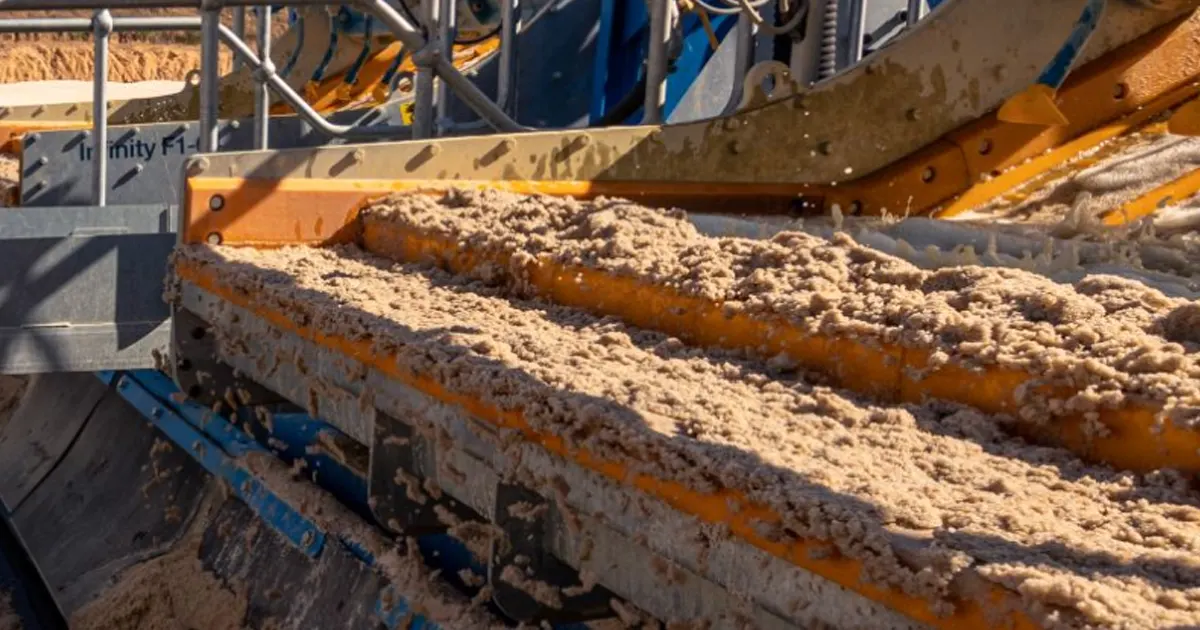
To solve the problem of screening wet sand, you must first understand the physics behind it. The core issue is surface tension.
When sand contains a moisture level typically between 3% and 10%, capillary action occurs. The water acts as a binding agent, causing fine sand particles and clay to stick together and adhere to the steel wires of the screen deck. This leads to two distinct but equally destructive problems:
- Blinding: Fine, sticky material gradually coats the wire mesh, bridging across the openings until the entire screen is sealed shut like a solid steel plate.
- Pegging: Near-size particles get tightly wedged into the rigid holes of the screen. Because wet sand lacks the dry, abrasive flow needed to push these particles through, they become permanently stuck.
Why Standard Square Woven Wire Fails
Many aggregate plants attempt to screen wet sand using standard, heavy-duty square woven wire mesh. While this media is excellent for dry, coarse rock, it is the worst possible choice for damp fines.
Standard woven wire is extremely rigid. The wires are locked tightly at their intersections. When wet sand hits a rigid surface, it sticks. Because the mesh has no flexibility to “shake” the sticky material loose, blinding accelerates rapidly.
Once the deck is blinded, the only option is to shut down the plant. Operators must climb into the machine and manually beat the blinded mesh with mallets or wire brushes. This manual labor destroys the screen media prematurely, causes massive production downtime, and severely inflates the cost per ton of your final sand product.
Solution 1: Defeat Moisture with Self-Cleaning Screens
If your plant is screening damp, sticky sand that does not require a full wet-wash system, the definitive solution is to replace rigid mesh with active screening media.
Anpeng Self-Cleaning Screens are engineered specifically to defeat surface tension and eliminate blinding. Unlike standard woven wire, self-cleaning screens are manufactured with straight or crimped wires that are kept completely independent from one another between the cross-binding supports.
How it works: Because the individual wires are not locked tightly together, they vibrate independently at different frequencies as the screen machine operates. This intense, secondary vibration actively breaks the surface tension of the damp sand, continuously slicing through the material and preventing fines from bridging over the apertures.
By installing Anpeng Self-Cleaning Screens, your deck remains constantly clear. You restore 100% of your effective open area, eliminate the need for manual cleaning, and keep your production line running continuously.
Solution 2: Polyurethane (PU) Panels for Wash Plants and Dewatering
If your operation is processing heavily saturated sand slurry, using high-pressure wash water, or recovering fine sand on a high-frequency dewatering screen, metal wire mesh will often corrode and wear out far too quickly.
In these aggressive, highly abrasive wet environments, Anpeng High-Frequency Polyurethane (PU) Screen Panels are the industry standard for maximum efficiency and wear life.
For wet sand applications, Anpeng engineers PU panels with highly precise slotted openings rather than square holes. These slotted apertures feature a distinct “tapered” design (wider at the bottom than at the top). If a grain of sand enters the top of the hole, the widening relief angle ensures it passes straight through, making pegging virtually impossible.
Furthermore, Anpeng’s specialized polyurethane compounds offer exceptional resistance to the sliding abrasion of sand slurry, lasting significantly longer than standard steel wire while completely resisting water corrosion.
3 Pro Tips for Efficient Wet Sand Screening
Beyond upgrading your screen media, optimizing your machine setup is crucial for handling wet sand:
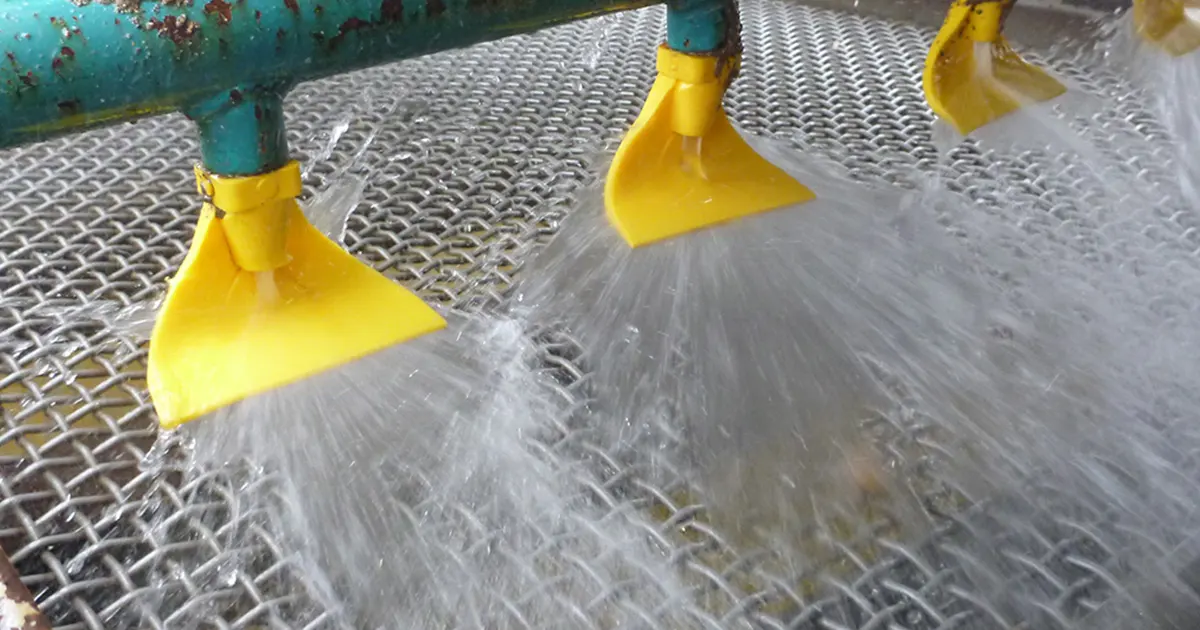
- Optimize Water Spray Placement: If you are using a wet wash system, ensure your spray bars are angled to hit the material bed, not directly blasting the screen mesh. The goal is to create a fluid slurry that carries the fines through the openings, not to hammer sand into the holes.
- Adjust Deck Incline: Wet sand tends to travel slower than dry rock. If your bed depth is too thick, fines will never reach the screen surface. Adjusting the incline of the vibrating screen can help thin out the material bed, allowing the water and fine sand to stratify properly and find an aperture.
- Utilize Flexible PU Tension Mats: For certain light-duty fine sand applications where extreme deck flexing is required to prevent blinding, consider installing flexible PU tension mats. These provide the wear life of polyurethane with the active, “trampoline-like” vibration needed to throw sticky fines off the deck.
Conclusion
Screening wet sand does not have to be the bottleneck of your operation. Plant managers no longer need to accept frequent downtime, reduced throughput, and destroyed mesh as a normal part of processing damp aggregate.
The key to efficient wet sand screening lies entirely in selecting the correct screen media. Anpeng Wire Mesh is a direct manufacturer of advanced industrial screening solutions. We engineer premium Self-Cleaning Screens to actively reject sticky fines, and high-performance Polyurethane (PU) dewatering panels built to outlast extreme abrasive slurry.
FAQ
What is the difference between blinding and pegging in sand screening?
Blinding occurs when sticky, wet fines coat the wires and bridge over the holes, sealing the screen. Pegging happens when a specific rock or sand particle gets firmly wedged inside the aperture, blocking it. Both reduce your effective open area and plant capacity.
Are slotted openings better than square openings for wet sand?
Yes. Slotted openings (whether in wire or PU) provide more open area and allow elongated or damp particles to pass through much easier than rigid square holes, drastically reducing the chances of pegging and blinding.
Should I use polyurethane or wire mesh for my sand wash plant?
If the sand is merely damp and sticky, Anpeng Self-Cleaning wire screens are highly effective. However, if you are operating a true wash plant with high-pressure water or slurry, Anpeng Polyurethane (PU) panels are recommended for their superior corrosion resistance, anti-pegging tapered holes, and extreme wear life.