Wire mesh is a versatile material made by weaving, welding, or forming metal wires into a regular pattern. It is available in different materials, openings, wire diameters, and finishes. From industrial filtration to construction, agriculture, security, and decoration, wire mesh provides practical solutions for many applications and project requirements.
Choosing the right wire mesh depends on several factors, including material, mesh size, wire diameter, strength, corrosion resistance, and application conditions. In this ultimate guide, we will explain what wire mesh is, explore common types and materials, and help you understand how to select the right mesh for your project.
What is Wire Mesh?
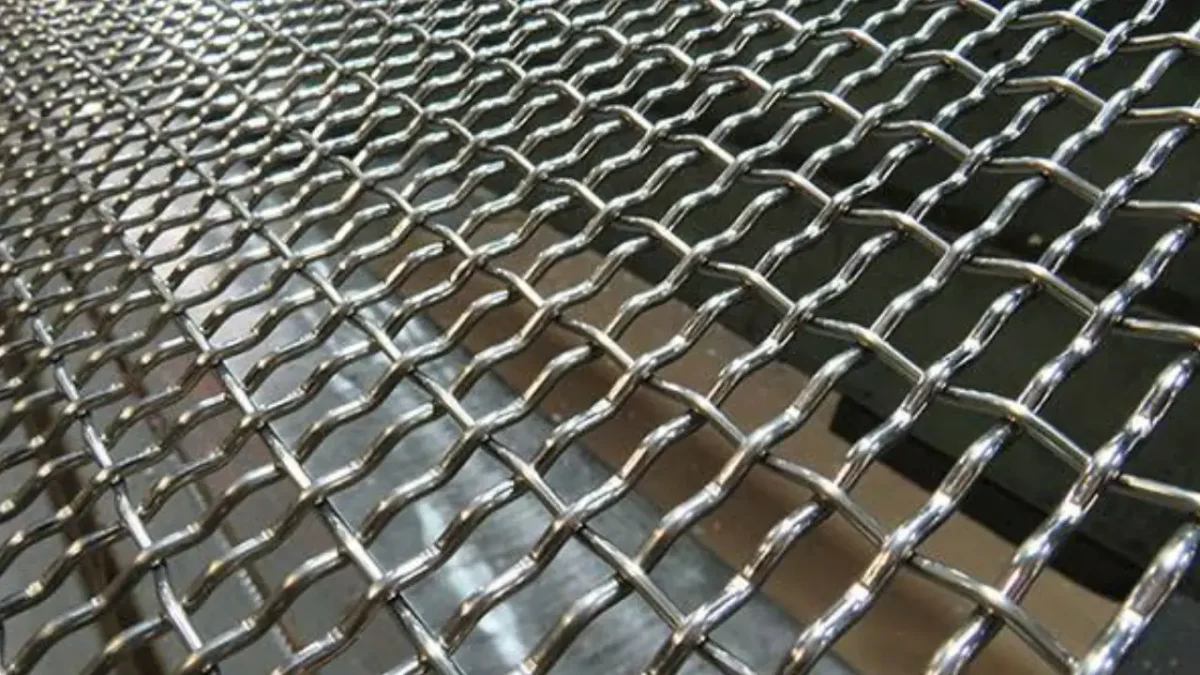
Wire mesh is a metal material made by connecting wires into a regular grid or patterned structure. Depending on the manufacturing method, wires can be woven, welded, or formed into different openings and shapes. It is available in materials such as stainless steel, aluminum, brass, copper, bronze, and galvanized steel.
Features of Wire Mesh
- Strength and Durability: Wire mesh provides reliable mechanical strength for demanding applications. The wire diameter, material, and manufacturing method affect its load-bearing performance, making different mesh options suitable for structural, protective, and industrial uses.
- Corrosion Resistance: Materials such as stainless steel, aluminum, and bronze can provide good corrosion resistance. With the right material and finish, wire mesh can perform effectively in humid, outdoor, chemical, or other challenging environments.
- Various Mesh Sizes: Wire mesh comes with different opening sizes to control the passage of particles, air, liquids, or light. This flexibility makes it useful for filtration, screening, ventilation, separation, and decorative applications.
- Flexible Designs: Woven and welded wire mesh can be manufactured in various patterns, shapes, and specifications. Customers can select suitable wire diameters, openings, materials, and finishes according to their specific project requirements.
- Good Airflow and Visibility: The open structure of wire mesh allows air and light to pass through while providing physical separation. It can therefore be used for ventilation, guards, screens, partitions, and architectural applications.
- Wide Range of Applications: Wire mesh is used across many industries, including construction, agriculture, mining, filtration, food processing, architecture, and manufacturing. Its combination of strength, openings, and material options supports many different applications.
Purpose of Wire Mesh
Wire mesh is a versatile material made from intersecting metal wires arranged into consistent openings. Its main purpose is to control what passes through, provide physical separation, reinforce surfaces, or create protective barriers. Depending on the wire diameter, opening size, material, and manufacturing method, wire mesh can serve industrial, construction, agricultural, security, and architectural needs.
Because it combines strength with open space, wire mesh can protect people and equipment without completely blocking visibility, airflow, drainage, or light. Woven mesh is often chosen for precise screening and filtration, while welded mesh is commonly used where stable shape, rigidity, fencing performance, or structural reinforcement are more important.
- Filtration and purification: Fine wire mesh acts as a filter medium that captures particles while allowing liquids or gases to pass through. It is used in water treatment, food and beverage production, chemical processing, hydraulic equipment, and other systems where reducing contamination helps protect product quality and machinery.
- Screening and separation: Wire mesh separates materials according to particle size. Mining, quarrying, recycling, agriculture, and construction operations use screens to grade sand, gravel, ores, grain, and other bulk materials, allowing appropriately sized particles through while retaining oversized material for additional processing or disposal.
- Fencing and containment: Welded or woven wire mesh can form perimeter fences, animal enclosures, garden barriers, storage cages, and property dividers. It establishes a visible boundary while maintaining airflow and sightlines, making it useful where solid walls would be unnecessary, costly, or visually restrictive.
- Security and access control: Strong wire mesh helps deter unauthorized entry and protect equipment, inventory, and restricted spaces. It is commonly used for warehouse partitions, security cages, window guards, high-security fencing, and construction-site barriers, offering protection while allowing supervisors and operators to see through the enclosure.
- Machine guarding and worker safety: Wire mesh protects workers from moving components, hot surfaces, sparks, and flying debris around industrial equipment. Because the openings preserve visibility and ventilation, operators can monitor machinery while maintaining a physical barrier that reduces accidental contact with hazardous areas.
- Concrete and structural reinforcement: Specified welded wire mesh can be embedded in concrete slabs, pavements, walls, and related elements to help distribute stresses and control cracking. It provides steel reinforcement across a wide area, although the correct wire size, spacing, and placement must follow project engineering requirements.
- Ventilation and equipment protection: Mesh covers protect fans, radiators, air intakes, vents, and HVAC components from debris and accidental contact. The open pattern supports airflow while helping prevent leaves, dust, tools, fingers, or other foreign objects from entering and damaging equipment.
- Agricultural applications: Farms use wire mesh for poultry cages, animal pens, crop protection, storage areas, and equipment enclosures. Appropriate mesh openings can keep livestock safely contained or exclude pests, while allowing natural airflow, visibility, drainage, and practical access for feeding, cleaning, and routine maintenance.
- Architectural and decorative design: Beyond industrial uses, wire mesh can function as an architectural material for façades, partitions, railings, ceiling features, and decorative panels. Designers use its textures, transparency, and metal finishes to add visual interest while retaining light transmission, airflow, and practical protection.
What Does Wire Mesh Look Like?
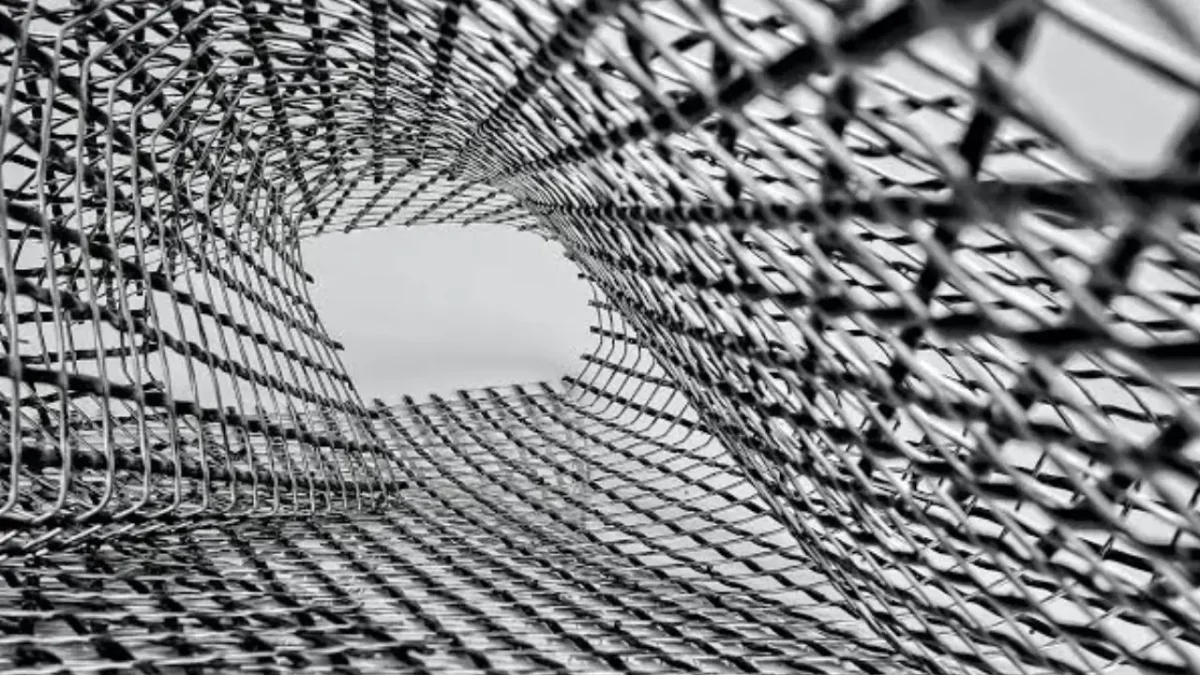
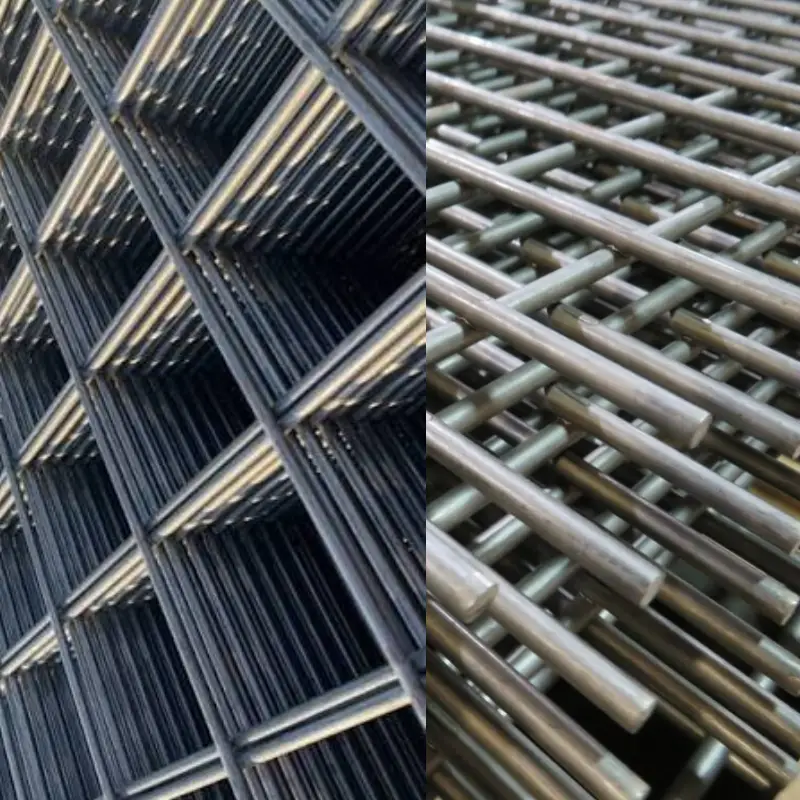
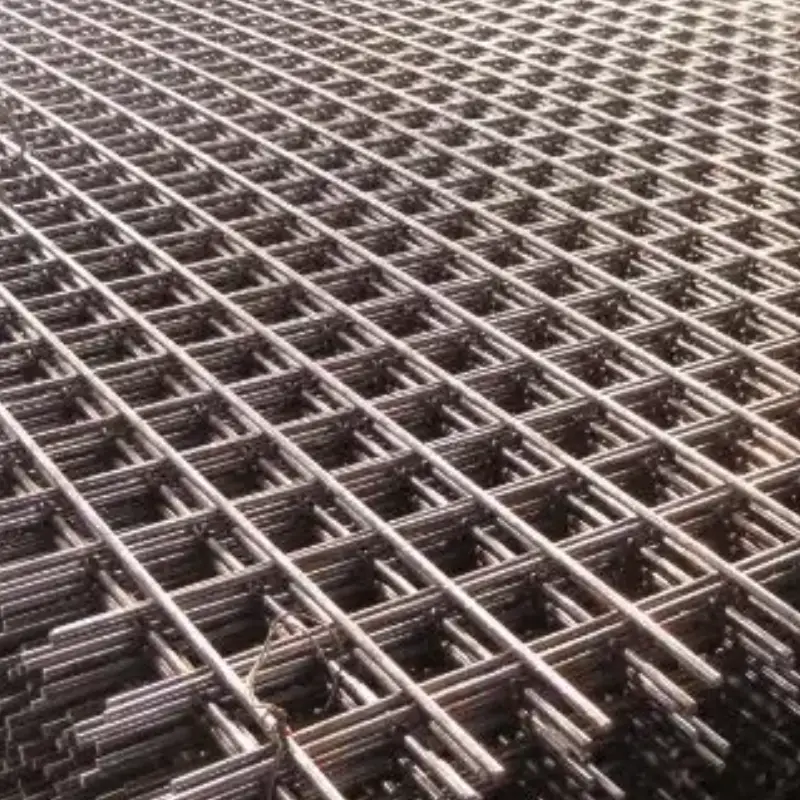
Wire mesh looks like a grid or patterned sheet made from connected metal wires. Its appearance depends on how the wires are manufactured and arranged. Some mesh has square openings, while others feature rectangular, diamond, or decorative patterns. Wire diameter, opening size, material, and surface finish can also change its overall appearance and texture.
Wire mesh can look open and lightweight or dense and solid, depending on its specifications. Woven mesh usually has an orderly interlaced appearance, while welded mesh has wires joined at fixed intersections. Decorative mesh can have more complex patterns, making it suitable for both functional and architectural applications.
Common Wire Mesh Appearances
- Square Wire Mesh: Square wire mesh has evenly spaced horizontal and vertical wires that create uniform square openings. This simple appearance provides a clean and organized structure, making it common for filtration, screening, fencing, machine guards, and other applications requiring consistent openings and reliable separation.
- Rectangular Wire Mesh: Rectangular wire mesh features openings that are longer in one direction than the other. This design can provide specific screening and separation characteristics while maintaining a structured appearance. It is available in various materials, wire diameters, and opening sizes for industrial applications.
- Diamond Wire Mesh: Diamond wire mesh has openings shaped like diamonds, creating a distinctive pattern. It is commonly associated with chain-link fencing and protective barriers. The diamond structure provides flexibility and visibility while forming a practical enclosure for residential, commercial, agricultural, and industrial applications.
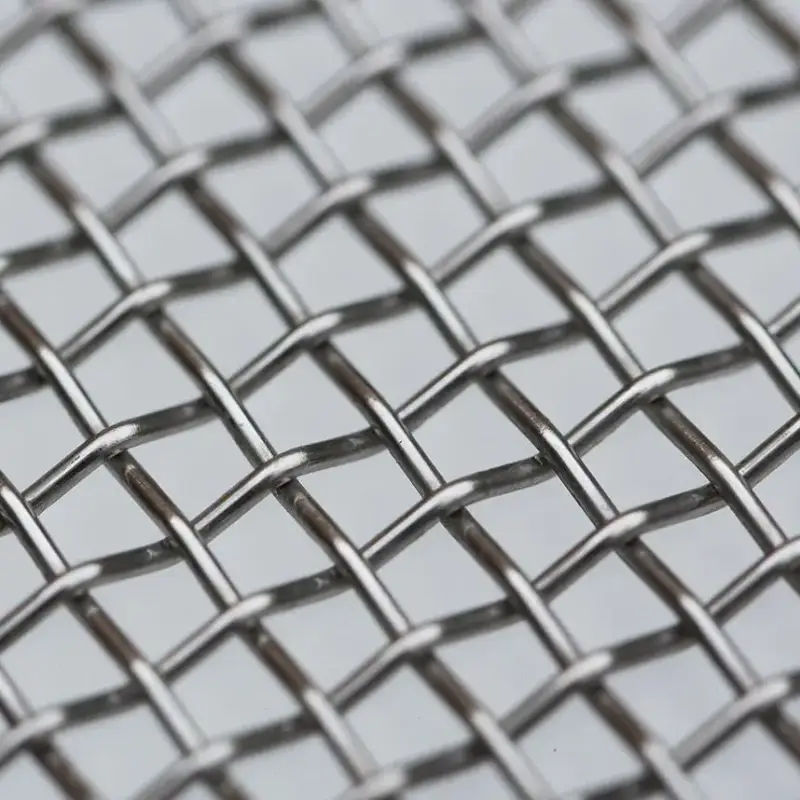
- Woven Wire Mesh: Woven wire mesh looks similar to fabric because individual wires pass over and under one another. Depending on the weave pattern, it can have square, rectangular, or other openings. Its precise structure makes it suitable for filtration, screening, sieving, and separation.
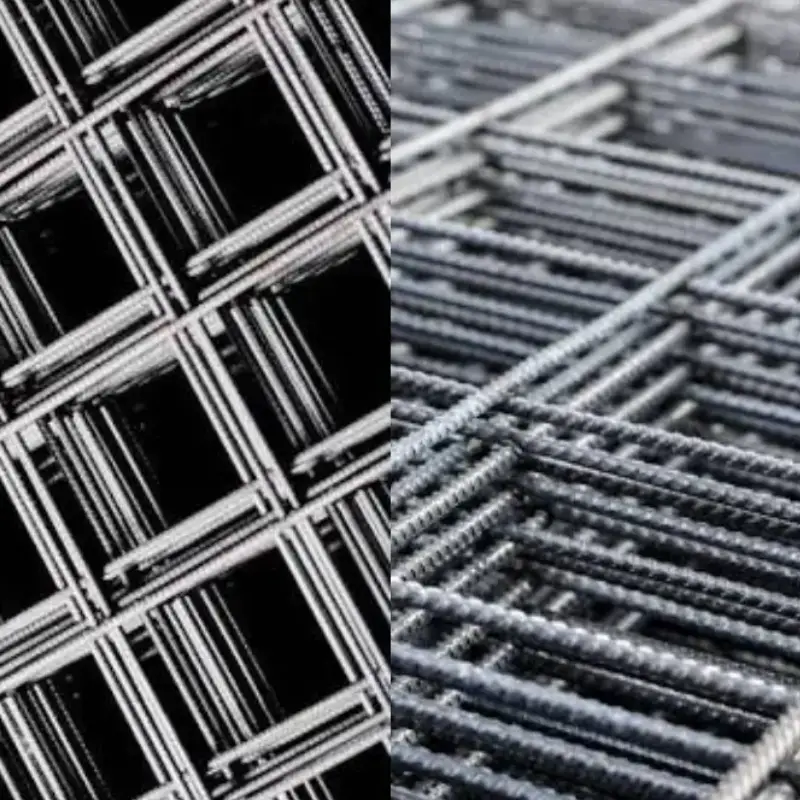
- Welded Wire Mesh: Welded wire mesh has straight wires joined together at their intersections, creating a regular grid. The welded points give the mesh a rigid and uniform appearance. It is frequently used for fencing, cages, construction reinforcement, partitions, safety barriers, and protective enclosures.
- Decorative Wire Mesh: Decorative wire mesh can feature unique patterns, textures, and finishes beyond traditional grid designs. It may have woven, expanded, or specially formed structures and can be used for interior partitions, ceilings, wall panels, facades, railings, and other architectural applications.
What Is Wire Mesh Made Of?
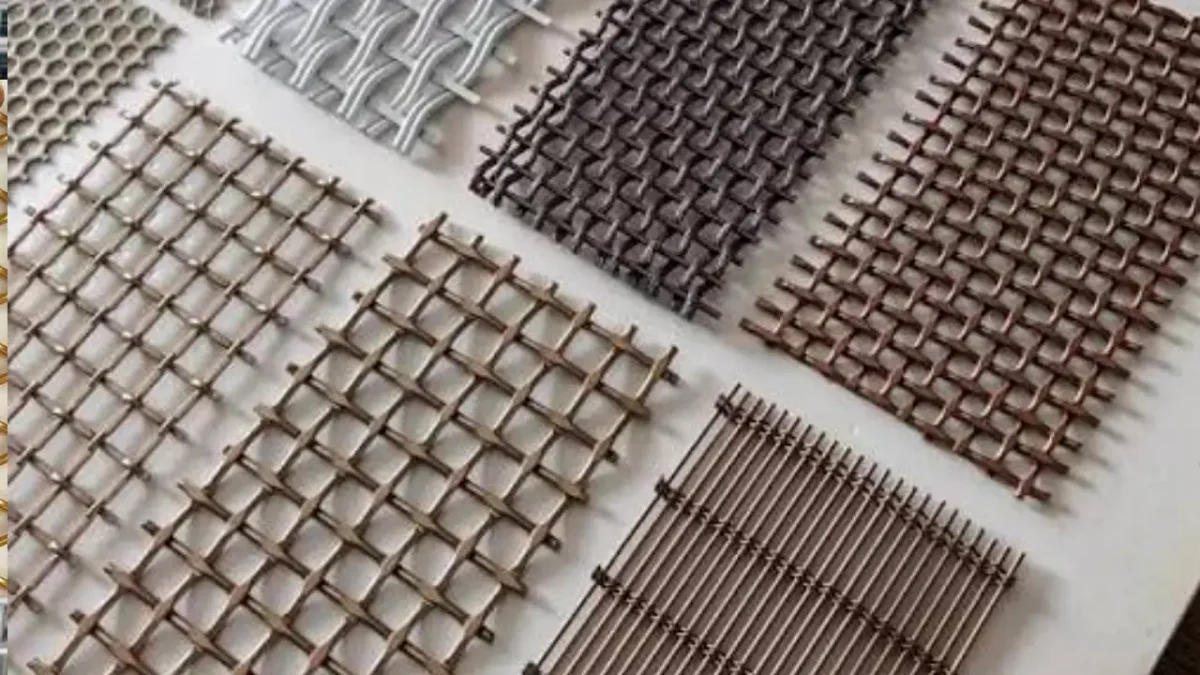
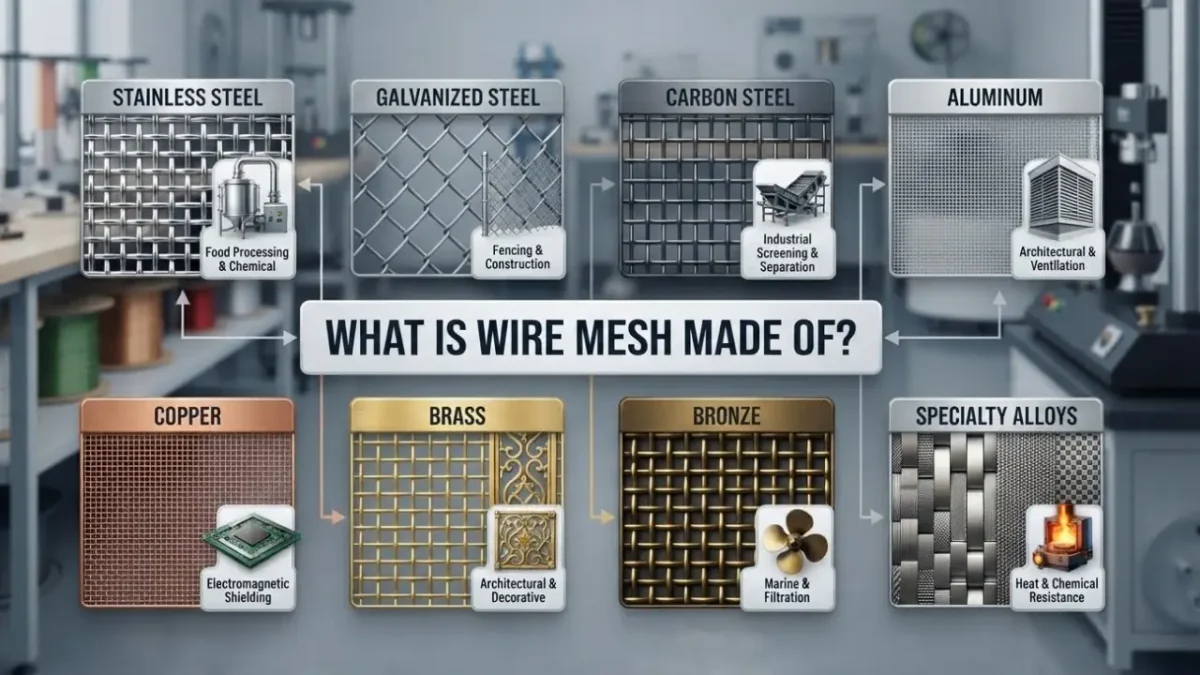
Wire mesh is mainly made from metal wires selected according to the application, required strength, corrosion resistance, and appearance. Common materials include stainless steel, aluminum, brass, copper, bronze, and galvanized steel.
Wire mesh manufacturers can weave, weld, or form these wires into different mesh patterns, opening sizes, and specifications for industrial, commercial, agricultural, construction, and decorative uses.
Common Wire Mesh Materials
- Stainless Steel: Stainless steel wire mesh offers excellent corrosion resistance, strength, and durability. It is commonly used in filtration, food processing, chemical processing, pharmaceutical equipment, construction, and marine environments. Different stainless steel grades can provide specific levels of resistance to heat, moisture, and chemicals.
- Aluminum: Aluminum wire mesh is lightweight, corrosion-resistant, and easy to handle. It is suitable for ventilation screens, architectural panels, insect screens, filtration, and decorative applications. Its low weight makes aluminum mesh a practical option when reducing overall structure weight is an important consideration.
- Brass: Brass wire mesh combines good corrosion resistance with an attractive golden appearance. It is often selected for decorative screens, architectural designs, filtration, and specialized industrial applications. Its appearance makes brass particularly useful when both functional performance and visual appeal are important project requirements.
- Copper: Copper wire mesh provides excellent electrical and thermal conductivity along with good corrosion resistance. It is commonly used for electromagnetic shielding, filtration, electrical applications, and decorative purposes. Copper can also develop a natural surface patina over time, creating a distinctive appearance.
- Bronze: Bronze wire mesh offers good strength, wear resistance, and corrosion resistance. It is often used in marine environments, architectural applications, filtration, and decorative projects. Its warm color and durable performance make bronze suitable for applications requiring both functional properties and an attractive finish.
- Galvanized Steel: Galvanized steel wire mesh is manufactured using steel wire with a protective zinc coating. This coating helps improve resistance to rust and moisture. It is widely used for fencing, construction, agriculture, animal enclosures, and industrial applications where cost-effective strength and outdoor durability are required.
Wire Mesh Types
Choosing the right type depends on what the mesh must do. Fine woven mesh supports filtration and screening, rigid welded mesh suits enclosures and reinforcement, and expanded metal provides durable security with ventilation. Material, wire diameter, opening size, finish, and installation environment should also guide the final selection.[metalsupermarkets][justdial]
- Woven wire mesh: Woven wire mesh is made by crossing wires over and under one another in a fabric-like pattern. It is flexible and available in precise apertures, making it a common choice for filtration, particle separation, screening, sieving, conveyor systems, and laboratory applications.
- Welded wire mesh: Welded wire mesh uses perpendicular wires electrically welded at each intersection. The fixed grid creates a rigid, dimensionally stable product suited to fencing, animal enclosures, storage cages, machine guards, partitions, security barriers, and specified concrete reinforcement applications.
- Expanded metal mesh: Expanded metal is produced by slitting and stretching a single metal sheet into diamond-shaped openings. Because it has no separate welded joints, it offers a continuous structure used for walkways, platforms, fencing, window guards, security screens, and architectural features.
- Perforated metal mesh: Perforated metal is created by punching round, square, slotted, or custom holes into a sheet. Although technically not woven wire mesh, it is often grouped with mesh products for screens, vents, filters, speaker grilles, decorative panels, lighting fixtures, and equipment covers.
- Chain link mesh: Chain link mesh is formed by interweaving steel wire into a diamond-shaped pattern. It is widely used for residential, commercial, industrial, and sports-area fencing because it balances visibility, airflow, perimeter security, durability, and relatively straightforward installation.
- Hexagonal wire mesh: Hexagonal wire mesh, often called chicken wire, is made from twisted wires that form hexagonal openings. Its flexible structure makes it practical for poultry enclosures, garden fencing, crop protection, lightweight containment, erosion-control projects, and some wire-based landscaping applications.
- Knitted wire mesh: Knitted wire mesh is manufactured by interlocking metal wires into loops, producing a highly flexible and compressible material. It is commonly used in gaskets, seals, vibration-control components, mist eliminators, filtration systems, and applications that require shaping around irregular surfaces.
- Crimped wire mesh: Crimped wire mesh uses pre-crimped wires that lock together during weaving. The crimp improves stability and preserves opening size, making this mesh useful for quarry screens, mining, aggregate sorting, vibrating equipment, heavy-duty screening, and other high-wear material-handling operations.
- Decorative wire mesh: Decorative wire mesh is designed for visual impact as well as practical performance. It may use distinctive weave patterns, colors, metals, or finishes for interior partitions, cabinet inserts, façades, railings, ceiling systems, and retail displays that retain light and airflow.
What Is a Wire Mesh Used For?
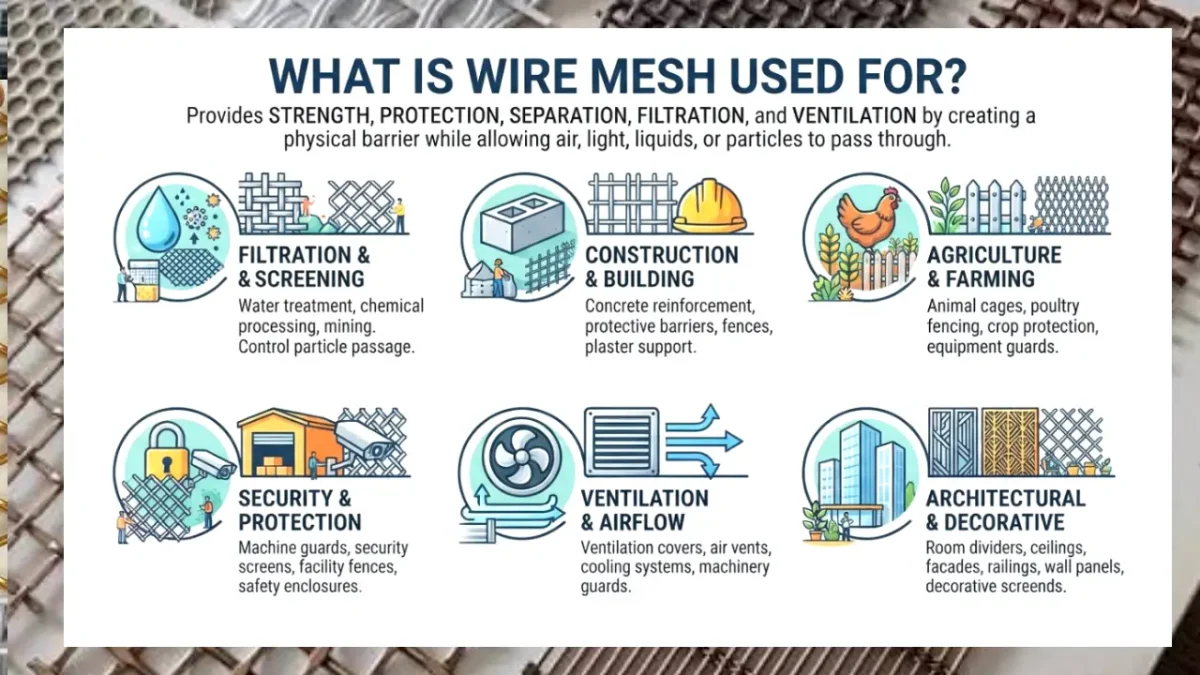
Wire mesh is used in many industries because it provides strength, protection, separation, filtration, and ventilation. Its open structure allows air, light, liquids, or particles to pass through while creating a physical barrier. Depending on the material, mesh size, wire diameter, and design, it can meet different industrial, commercial, agricultural, construction, and decorative requirements.
Common Uses of Wire Mesh
- Filtration and Screening: Wire mesh is commonly used to filter, screen, and separate materials by particle size. Different openings and wire diameters allow manufacturers to control what passes through, making it suitable for water treatment, chemical processing, food processing, mining, and industrial filtration applications.
- Construction and Building: In construction, wire mesh can reinforce concrete, create protective barriers, and support different building structures. Its strength and durability make it useful for fences, partitions, plaster reinforcement, safety guards, and other applications where reliable physical support or separation is required.
- Agriculture and Farming: Wire mesh helps protect crops, livestock, and agricultural facilities. It can be used for animal cages, poultry fencing, garden protection, storage areas, and equipment guards. Different mesh openings provide suitable levels of visibility, ventilation, and protection for various farming environments.
- Security and Protection: Wire mesh provides an effective physical barrier for industrial facilities, warehouses, machinery, windows, and restricted areas. Welded and woven mesh can offer strength while maintaining visibility, helping businesses create protective fences, machine guards, security screens, and safety enclosures.
- Ventilation and Airflow: The open structure of wire mesh allows air to move freely while preventing larger objects from entering protected areas. It is often used for ventilation covers, equipment guards, air vents, cooling systems, and enclosures that require both airflow and physical protection.
- Architectural and Decorative Applications: Decorative wire mesh can add texture and visual interest to interior and exterior spaces. Architects and designers use it for room dividers, ceilings, facades, railings, wall panels, and decorative screens while maintaining light transmission and partial visibility.
Conclusion
Wire mesh offers a wide range of options for industrial, commercial, agricultural, construction, and decorative applications. By understanding different mesh types, materials, openings, wire diameters, and manufacturing methods, you can make a more suitable choice based on your project’s performance, durability, and installation requirements.
When selecting wire mesh, consider where it will be used and the conditions it must withstand. Stainless steel, aluminum, brass, copper, bronze, galvanized steel, and other materials each provide different advantages. Mesh size, strength, corrosion resistance, appearance, and customization options should also be evaluated before placing an order.
At Apscreen, we provide wire mesh solutions for different applications and project requirements. We can help you choose suitable materials, mesh sizes, wire diameters, and finishes based on your needs. Contact us to discuss your requirements and get wholesale wire meshes from our Apscreen for your next project.