Woven wire mesh and welded wire mesh are two widely used materials across industrial, construction, agricultural, and architectural projects. While both provide reliable screening, protection, and support, their manufacturing methods create meaningful differences in flexibility, strength, appearance, and long-term performance under demanding conditions.
Choosing between these mesh types requires more than comparing opening size or wire diameter. Woven mesh is formed by interlacing wires, while welded mesh joins wires at their intersections. Understanding how these structures behave helps buyers select material that matches their load requirements, environment, fabrication needs, and budget.
What is Woven Wire Mesh?
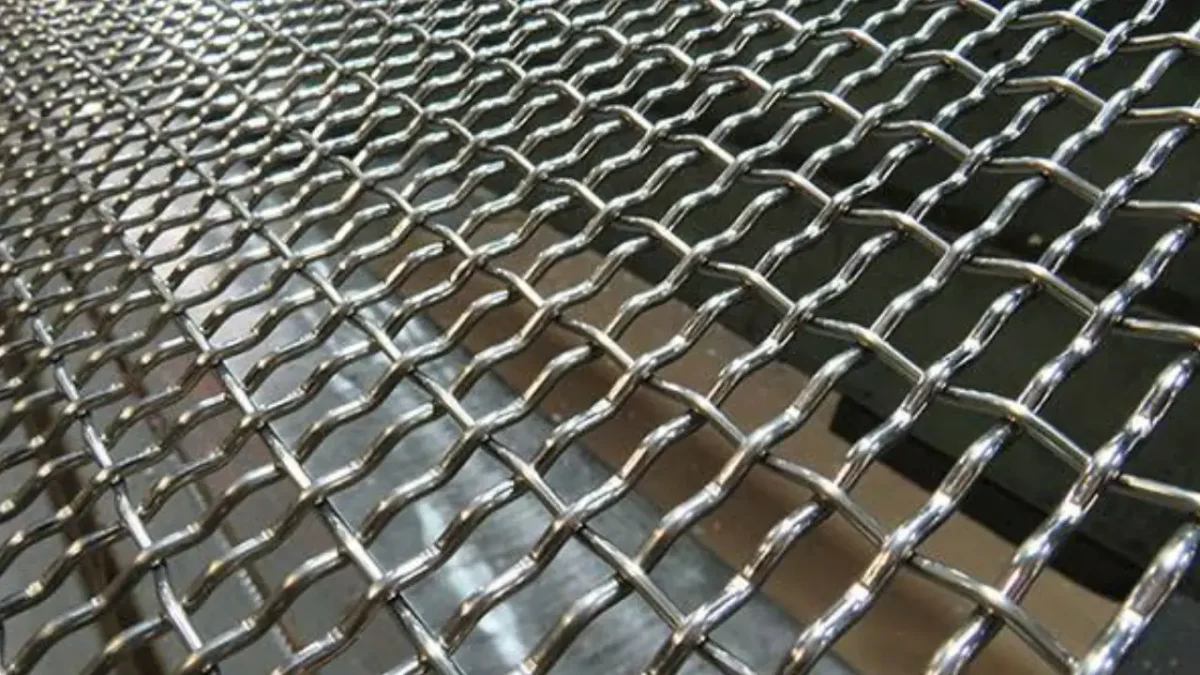
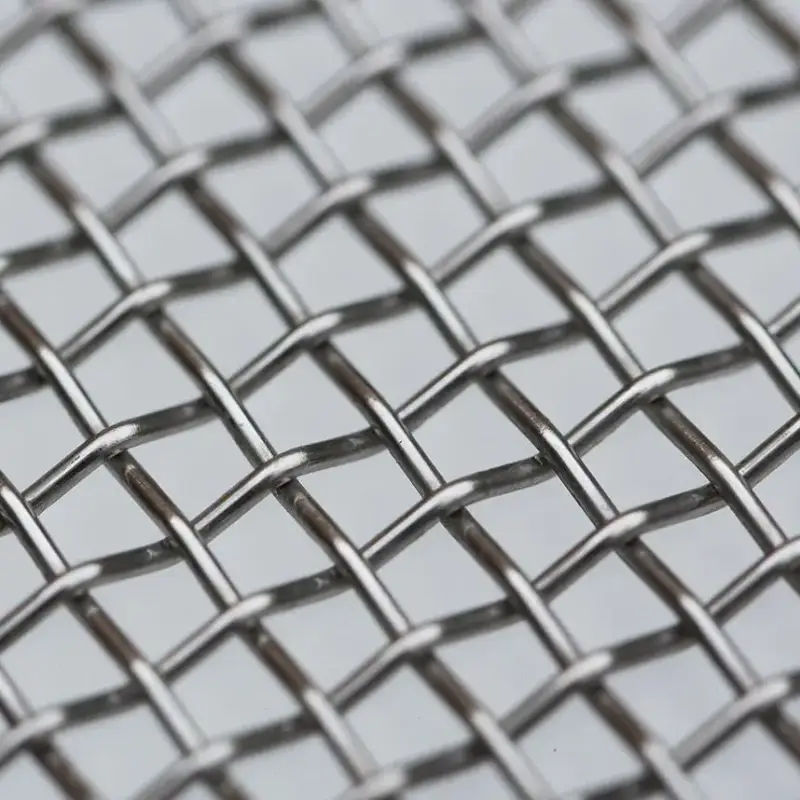
Woven wire mesh is a metal screen made by interlacing individual wires over and under one another on specialized looms, much like textile fabric. This process creates consistent openings and a durable, flexible structure. It is commonly supplied in rolls, sheets, or fabricated components for screening, filtering, separation, protection, and architectural applications.
Benefits of Woven Wire Mesh
- Precise aperture control: Woven wire mesh can be manufactured with highly consistent opening sizes, helping operators separate, grade, filter, or sieve materials more accurately. This precision is especially valuable in mining, aggregate processing, laboratory testing, food processing, and fine-particle filtration applications.
- Excellent flexibility: Because the wires are interlaced rather than welded at every crossing point, woven mesh can bend, curve, and conform to different surfaces. Its flexibility makes handling, rolling, cutting, and fitting easier for screens, guards, filters, and custom fabrications.
- Wide customization options: Buyers can specify wire diameter, mesh count, aperture size, weave pattern, material, roll width, and length to suit a particular operating requirement. This versatility allows woven mesh to support applications ranging from coarse quarry screens to extremely fine filtration media.
- Effective airflow and visibility: The open structure allows air, light, and visibility to pass through while still providing a physical barrier. This combination makes woven wire mesh useful for machine guards, security partitions, storage areas, ventilation covers, and equipment enclosures requiring cooling airflow.
- Durable material choices: Woven wire mesh is available in materials such as stainless steel, galvanized steel, and other metals selected for the operating environment. Choosing an appropriate material can provide reliable resistance to wear, moisture, corrosion, chemicals, or high-temperature conditions over a longer service life.
- Versatile industrial performance: From screening crushed stone to filtering liquids and gases, woven mesh performs numerous jobs with one adaptable product format. Fine woven openings are particularly suitable for filtration, particle analysis, and screen printing, while heavier meshes can handle demanding screening and protective uses.
What Is Welded Wire Mesh?
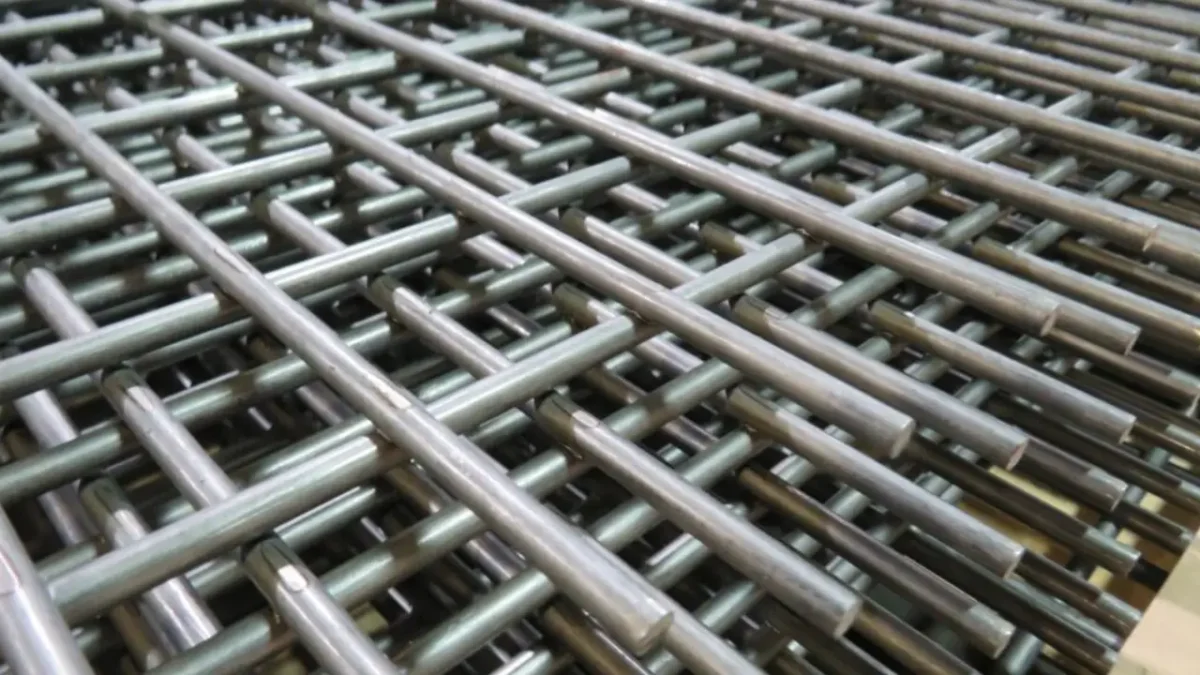
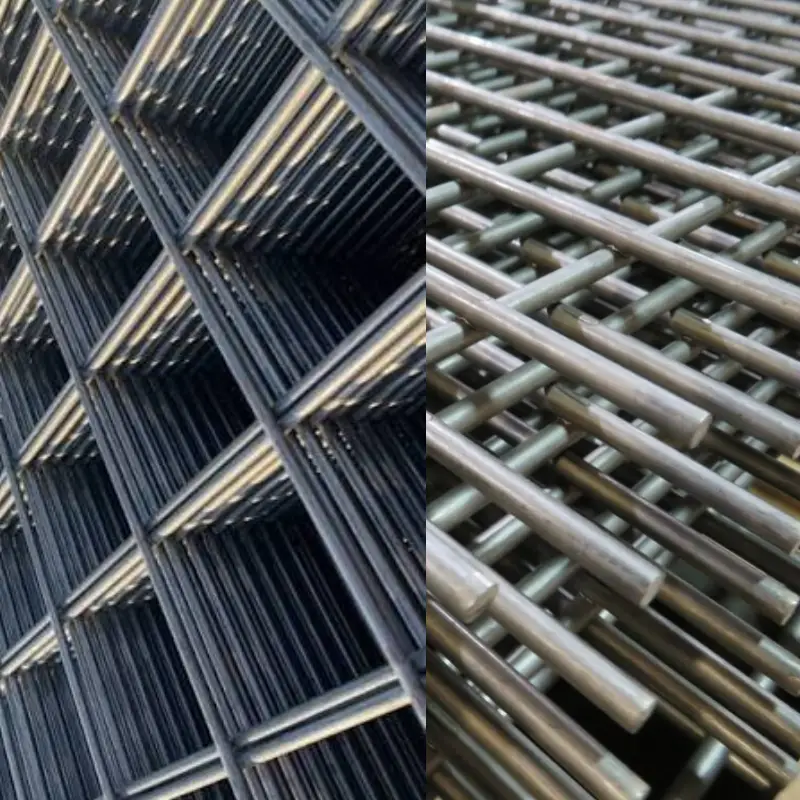
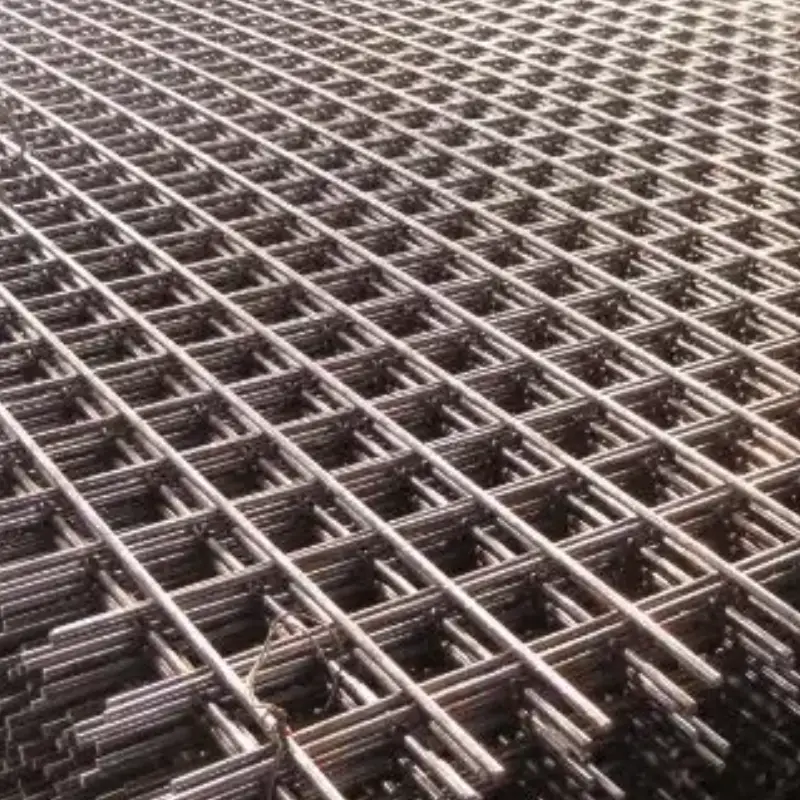
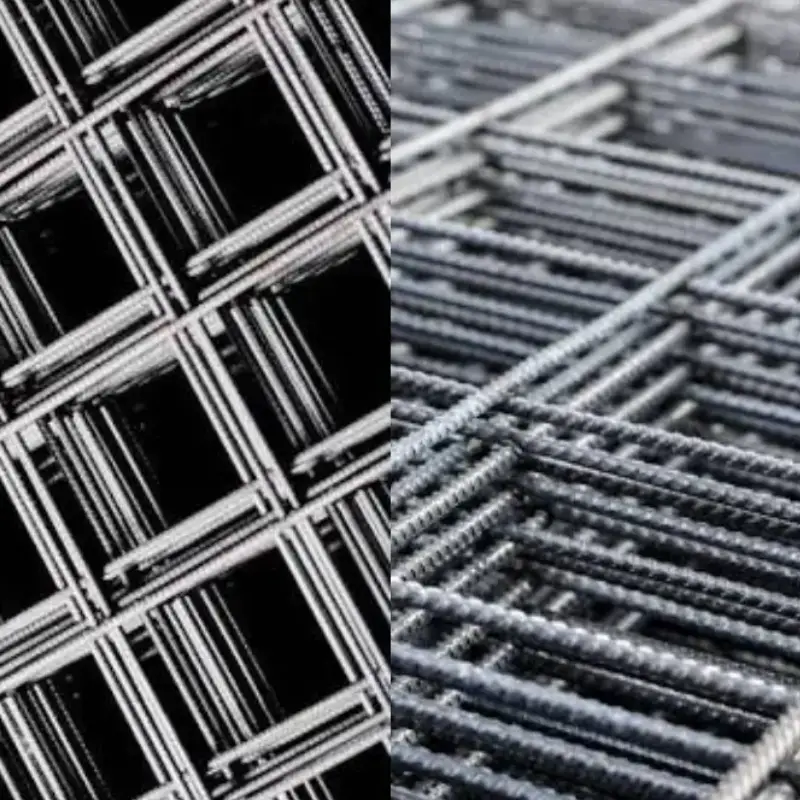
Welded wire mesh is a prefabricated metal grid made by arranging longitudinal and cross wires at regular intervals, then permanently joining each intersection through electric resistance welding. Unlike woven mesh, its wires do not move independently. The result is a rigid, uniform panel or roll designed for strength, stability, reinforcement, containment, protection, and fencing applications.
Benefits of Welded Wire Mesh
- High structural strength: Permanently welded intersections create a strong, unified grid that resists shifting, bending, and separation under load. This makes welded wire mesh a dependable choice for concrete reinforcement, security barriers, storage cages, animal enclosures, and heavy-duty industrial guarding.
- Dimensional stability: The fixed wire intersections hold the mesh’s square or rectangular openings in place, maintaining a consistent shape during transport, installation, and use. This stability is valuable where accurate spacing, flatness, alignment, and a rigid finished structure are required.
- Fast installation: Pre-manufactured sheets and rolls eliminate the need to individually position and tie separate wires or reinforcing bars on site. Contractors can cover large areas quickly, reducing installation time, labor requirements, and the opportunity for spacing errors in construction projects.
- Uniform load distribution: In concrete applications, the connected wire grid helps distribute stresses across a broader area rather than concentrating them in one location. Properly specified welded wire reinforcement can support crack control and contribute to more consistent structural performance in slabs and panels.
- Long-term durability: Welded mesh is commonly produced from carbon steel, galvanized steel, or stainless steel. Selecting the right material and protective finish helps the mesh withstand moisture, weathering, corrosion, wear, and demanding outdoor or industrial conditions for a longer service life.
- Enhanced security and visibility: Its rigid grid forms an effective physical boundary for fencing, machine guards, partitions, and cages, while the open design preserves airflow and sightlines. This balance helps facilities create secure areas without making workspaces feel enclosed or poorly ventilated.
- Cost-effective performance: Welded wire mesh can reduce total project costs through faster placement, lower labor needs, minimal maintenance, and durable service. Its standardized grid also helps limit material waste, particularly when buyers choose sheets, rolls, wire gauges, and opening sizes suited to their application.
Woven Wire Mesh vs Welded Wire Mesh
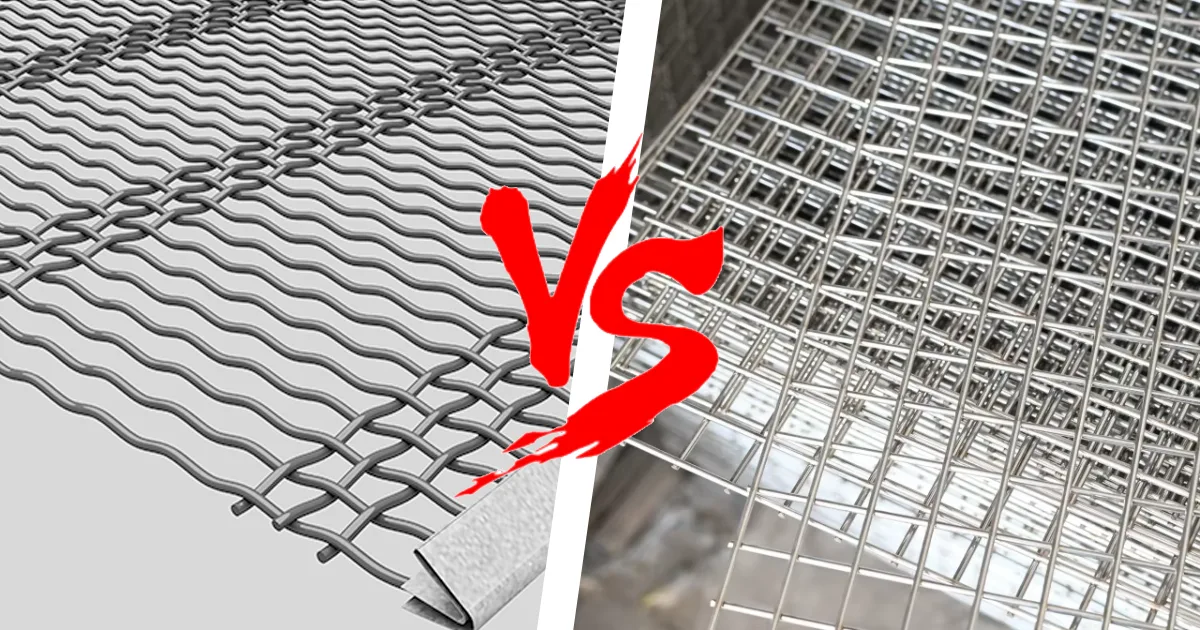
Woven wire mesh and welded wire mesh may look similar, but they perform differently because of how they are made. Woven mesh uses interlaced wires for flexibility and fine screening, while welded mesh fuses wires at each crossing for rigidity.
Comparing their construction, strength, openings, applications, and cost helps buyers select the suitable mesh.
Manufacturing Method
Woven wire mesh is produced by passing longitudinal and cross wires over and under one another, similar to fabric weaving. The interlocking process creates a mesh that can move slightly under pressure, giving it natural flexibility and allowing it to be rolled, shaped, or fitted around irregular surfaces.
Welded wire mesh is manufactured by positioning wires in a grid and using electric resistance welding to fuse intersections together. Each joint becomes fixed, producing a stable, flat mesh with a uniform pattern. This construction makes welded mesh especially suitable for panels, barriers, guards, cages, and structural uses.
Strength and Rigidity
Woven wire mesh offers reliable tensile performance and can absorb movement by flexing rather than remaining completely rigid. It works well in applications involving vibration, repeated screening, or materials that need to pass through controlled openings without requiring a permanently fixed panel shape.
Welded wire mesh is generally the better choice when a rigid grid, load support, and stable geometry are priorities. Welded intersections prevent the wires from shifting independently, helping the material retain its form under normal service loads in fencing, enclosures, reinforcement, and protective partitions.
Flexibility and Forming
Woven wire mesh is easier to bend, curve, cut, and form around uneven surfaces or customized equipment. It can be supplied in rolls and adapted on site, which is useful when installers need a mesh that follows contours, wraps around frames, or fits nonstandard dimensions.
Welded wire mesh is less flexible because every wire intersection is permanently joined. It is commonly supplied as rigid sheets or panels, although lighter gauges may be available in rolls. Its stiffness is beneficial where the installation must remain straight, flat, square, and self-supporting.
Opening Accuracy
Woven mesh is widely used for screening, sieving, and filtration because it can be made with fine mesh counts and controlled apertures. However, the wires can shift slightly depending on weave type, wire crimp, tension, handling, and the forces applied during use.
Welded mesh maintains fixed square or rectangular openings because the wire crossings are fused. This opening stability is useful when a panel must keep its shape after cutting or fabrication. However, welded mesh is typically less appropriate than fine woven cloth for precision particle separation and delicate filtration.
Common Applications
Woven wire mesh is commonly selected for quarry screens, aggregate grading, filtration, laboratory sieves, insect screens, ventilation, food-processing equipment, and decorative architectural surfaces. Its flexible structure and extensive range of mesh sizes make it appropriate for applications that prioritize controlled material separation or adaptable installation.
Welded wire mesh is commonly used for perimeter fencing, concrete reinforcement, storage cages, machine guards, animal enclosures, security partitions, shelves, trays, and industrial barriers. Its rigid construction supports applications requiring reliable containment, visibility, airflow, and stable dimensions without frequent reshaping or adjustment.
Cost and Selection
Pricing depends on material, wire diameter, opening size, finish, quantity, fabrication, and local supply conditions. Woven mesh may offer value when a project needs a flexible roll, a fine aperture, or specialized screening performance. The lowest initial price alone should not determine the final choice.
Choose welded wire mesh when the project requires a rigid panel, consistently fixed openings, strong containment, or structural reinforcement. Choose woven wire mesh when flexibility, fine screening, filtering, contouring, or vibration tolerance matters most. Confirm material grade and finish based on corrosion exposure, load requirements, and installation conditions.
Here is the table showing you the differences between woven and welded wire mesh.
| Aspect | Woven Wire Mesh | Welded Wire Mesh |
|---|---|---|
| Manufacturing method | Wires are interlaced over and under each other | Wires are resistance-welded at intersections |
| Structure | Flexible and adaptable | Rigid and dimensionally stable |
| Strength behavior | Flexes to accommodate movement and vibration | Holds a fixed form and supports containment applications |
| Opening stability | May shift slightly under tension or handling | Openings remain fixed after welding and cutting |
| Forming ability | Easy to roll, bend, curve, and fit around contours | Better for flat, straight panels and fixed installations |
| Typical format | Rolls, sheets, and custom cut pieces | Panels, sheets, rolls, cages, and fabricated guards |
| Best applications | Filtration, screening, sieving, ventilation, and irregular surfaces | Fencing, reinforcement, cages, guards, partitions, and barriers |
| Selection priority | Choose for flexibility and precise screening needs | Choose for rigidity, structural stability, and containment |
How to Choose Woven and Welded Wire Mesh?
Choosing woven or welded wire mesh starts with the job it must perform. Consider whether you need fine filtration, flexibility, rigidity, security, reinforcement, or airflow. Then compare opening size, wire diameter, material, finish, panel format, and environmental exposure.
A complete specification helps ensure the mesh delivers dependable performance without unnecessary material or replacement costs.
- Define the main application: Start by identifying whether the mesh will filter particles, screen aggregates, reinforce concrete, form fencing, protect machinery, contain animals, or improve ventilation. Woven mesh generally suits fine screening and adaptable installations, while welded mesh is often preferable for rigid barriers, cages, guards, and reinforcement.cawire+1
- Choose woven or welded construction: Select woven wire mesh when the material must bend, curve, roll, absorb vibration, or provide fine and controlled openings. Select welded wire mesh when you need a fixed grid that stays flat, maintains consistent spacing, and provides stable containment, support, or security performance.ansusmetal+1
- Specify the opening size: Match the clear opening to the item, particle, pest, or material the mesh must retain or allow through. Smaller openings suit filtration and exclusion of fine materials, while larger openings support airflow, visibility, drainage, fencing, and coarse screening applications.cawire+1
- Select a suitable wire diameter: Wire diameter affects strength, weight, open area, and expected service life. Thicker wire generally improves resistance to impact, wear, and load, but reduces the clear opening. Thinner wire can improve open area and fine screening capability but may not suit heavy-duty exposure.universalwirecloth+1
- Match the material to the environment: Choose galvanized steel for many outdoor and general-purpose projects requiring economical corrosion resistance. Use stainless steel where moisture, chemicals, hygiene requirements, or corrosion exposure are more demanding. Consider coated or specialty materials when the mesh will face aggressive weather, abrasion, or process conditions.cawire+1
- Assess load and impact requirements: For machine guards, security enclosures, livestock containment, concrete reinforcement, or heavy industrial use, prioritize welded mesh with an appropriate wire diameter and support design. For vibrating screens and material separation, woven mesh can provide the necessary resilience, flexibility, and screening capability.cawire+1
- Consider sheet, panel, or roll format: Rolls work well for long runs, curved surfaces, and projects that need flexible handling. Flat welded panels are easier to align for fences, partitions, cages, and frames. Confirm the required width, length, cut sizes, edge treatment, and amount of overlap before ordering.ansusmetal+1
- Review installation and lifecycle cost: Compare more than the purchase price. Include cutting, forming, fasteners, labor, freight, maintenance, corrosion protection, and replacement risk. A slightly higher-cost mesh that fits the environment and installation method may reduce total project costs and downtime over its service life.
Conclusion
Woven and welded wire mesh each offer distinct advantages, making the right choice dependent on the specific demands of your application. Woven mesh provides flexibility, precision, and dependable screening performance, whereas welded mesh delivers a rigid, stable structure suited to panels, barriers, reinforcement, and protective enclosures in industrial or commercial settings.
Before purchasing, consider the required opening size, wire gauge, material grade, corrosion exposure, expected loads, and whether the mesh must bend or remain flat. A well-matched specification can improve durability, reduce maintenance, and ensure consistent results. Selecting the cheapest option without reviewing these factors may create unnecessary replacement or installation costs later.
For dependable wholesale wire mesh, Apscreens can help source solutions tailored to your project’s technical requirements. Whether you need woven wire mesh for filtration and screening or welded wire mesh for fencing, guards, and structural applications, consult Apscreens for suitable materials, sizing options, and bulk purchasing support that keeps your supply reliable and cost-effective.