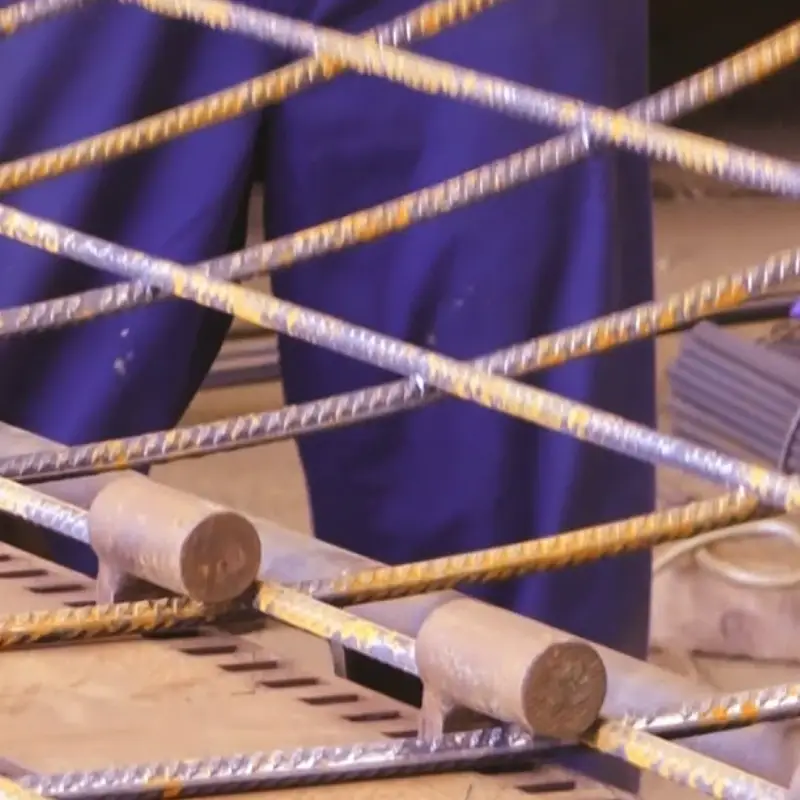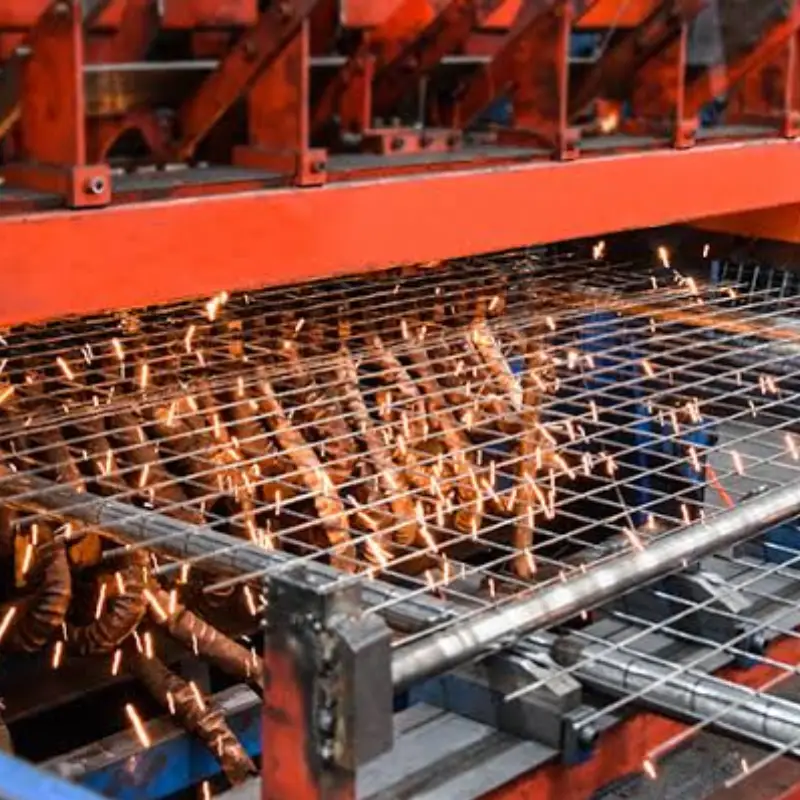
Rebar and wire mesh are two common reinforcement materials used in concrete construction, but they work differently and suit different project requirements. Understanding their differences in strength, placement, cost, flexibility, and applications can help contractors and buyers select the appropriate reinforcement for slabs, walls, foundations, and other concrete structures.
Choosing between rebar and wire mesh depends on factors such as concrete thickness, structural loads, reinforcement spacing, project size, and installation requirements. In this guide, we compare rebar vs wire mesh, explain their key features and benefits, and discuss when each option may be more suitable for specific construction applications.
What is Rebar?
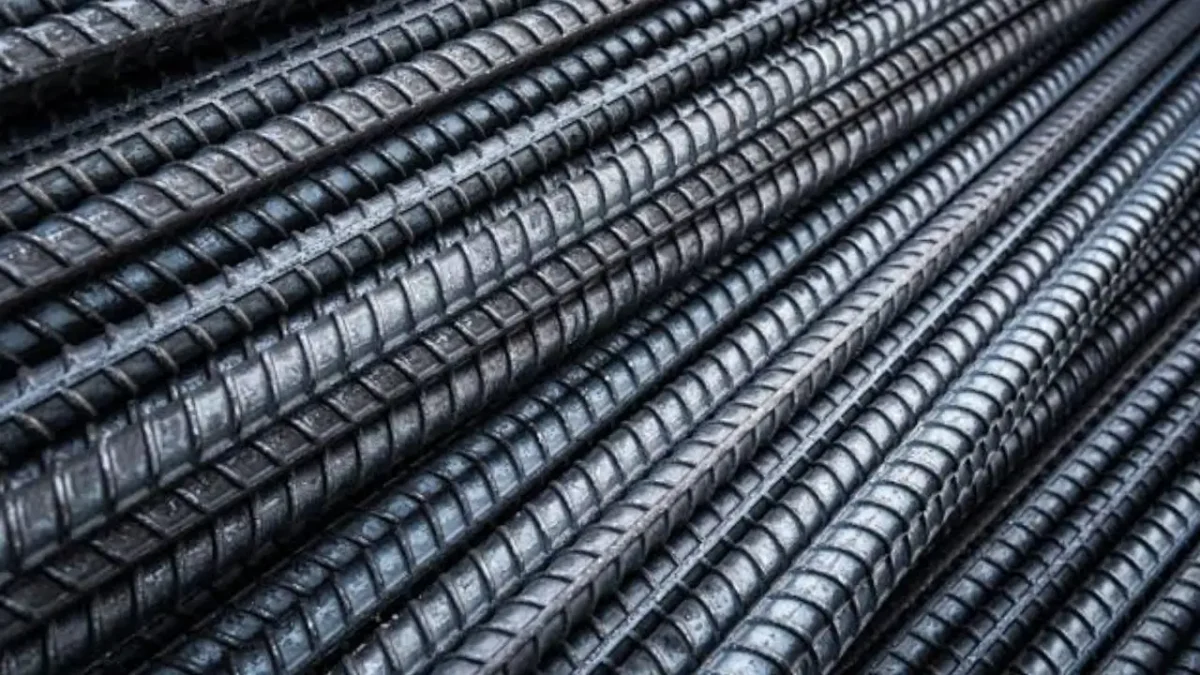
Rebar, short for reinforcing bar, is a steel bar embedded in concrete to improve its tensile strength. Concrete performs well under compression but is relatively weak under tension. Rebar works together with concrete to help resist tensile forces, control cracking, and improve the overall strength and durability of reinforced concrete structures.
Rebar is available in different diameters, lengths, grades, and surface patterns. Deformed rebar is commonly used because its ribs help create a stronger bond with surrounding concrete. Engineers select the appropriate size and spacing according to structural loads, concrete design, environmental conditions, and project requirements.
Uses of Rebar
- Building Foundations: Rebar reinforces concrete foundations by helping them withstand tensile stresses and structural loads. Proper placement can improve foundation stability and reduce cracking caused by loading, settlement, and other forces.
- Concrete Slabs: Rebar can be embedded within concrete slabs to provide reinforcement against tensile stresses. It is commonly used in floors, driveways, industrial slabs, and other structures exposed to significant loads.
- Columns and Beams: Rebar provides essential tensile reinforcement inside concrete columns and beams. It works with concrete to resist bending, tension, and other structural forces while helping maintain the designed load-bearing capacity.
- Bridges and Infrastructure: Rebar is widely used in bridges, tunnels, retaining structures, and other infrastructure projects. It helps reinforced concrete components withstand traffic loads, environmental stresses, vibration, and long-term structural demands.
- Walls: Rebar can reinforce concrete walls and improve their resistance to tensile and lateral forces. It is commonly incorporated into retaining walls, foundation walls, structural walls, and other reinforced concrete construction.
- Roads and Pavements: Rebar is used in certain concrete pavement and roadway applications to provide additional reinforcement. It can help control cracking and support concrete surfaces exposed to repeated traffic and environmental stresses.
What is Wire Mesh?
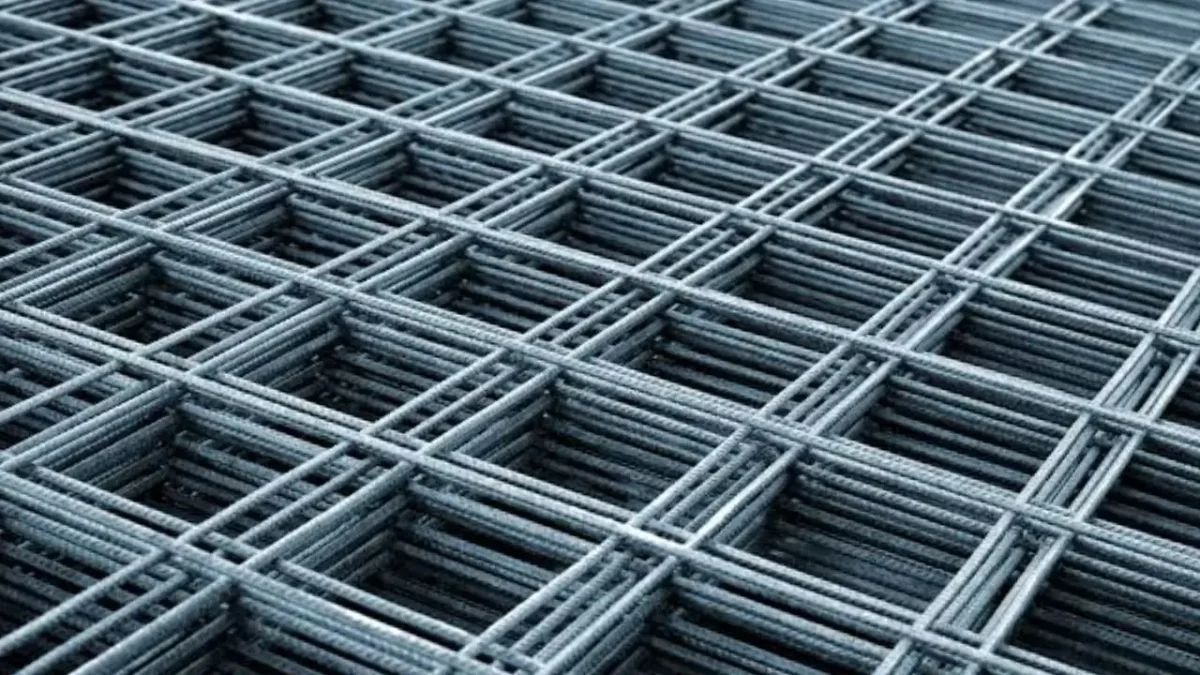
Wire mesh is a grid-like material made by joining or interweaving metal wires to create uniform openings. Depending on the manufacturing method, wire mesh can be welded, woven, or knitted. It is available in different wire diameters, opening sizes, materials, and surface finishes to meet construction, industrial, agricultural, and general reinforcement requirements.
Wire mesh can provide reinforcement, separation, screening, protection, and containment. Common materials include carbon steel, galvanized steel, stainless steel, aluminum, and other alloys. The right type depends on factors such as required strength, corrosion resistance, opening size, flexibility, installation method, and the environment where the mesh will be used.
Uses of Wire Mesh
- Concrete Reinforcement: Wire mesh is placed inside concrete slabs and other structures to help distribute tensile stresses and control cracking. Its regular grid provides consistent reinforcement spacing and can simplify installation compared with individually positioned bars.
- Fencing: Wire mesh is widely used for residential, commercial, agricultural, and industrial fencing. Welded, woven, and chain link mesh can create physical boundaries while maintaining airflow and visibility around enclosed areas.
- Animal Enclosures: Wire mesh provides practical containment for poultry, livestock, pets, and other animals. Different opening sizes and wire gauges can be selected according to animal size, required strength, ventilation, and protection needs.
- Filtration and Screening: Fine wire mesh is commonly used to separate particles, liquids, and other materials in industrial processes. Stainless steel and specialized woven mesh can provide controlled openings for filtration, sieving, and screening applications.
- Construction Protection: Wire mesh can be used for machine guards, safety barriers, partitions, vents, and protective covers. Its open structure allows airflow and visibility while creating a physical barrier around equipment or restricted areas.
- Agriculture and Landscaping: Wire mesh is useful for garden protection, crop support, soil stabilization, animal fencing, and landscaping projects. Galvanized or coated mesh can provide improved durability when exposed to outdoor conditions.
Rebar vs Wire Mesh
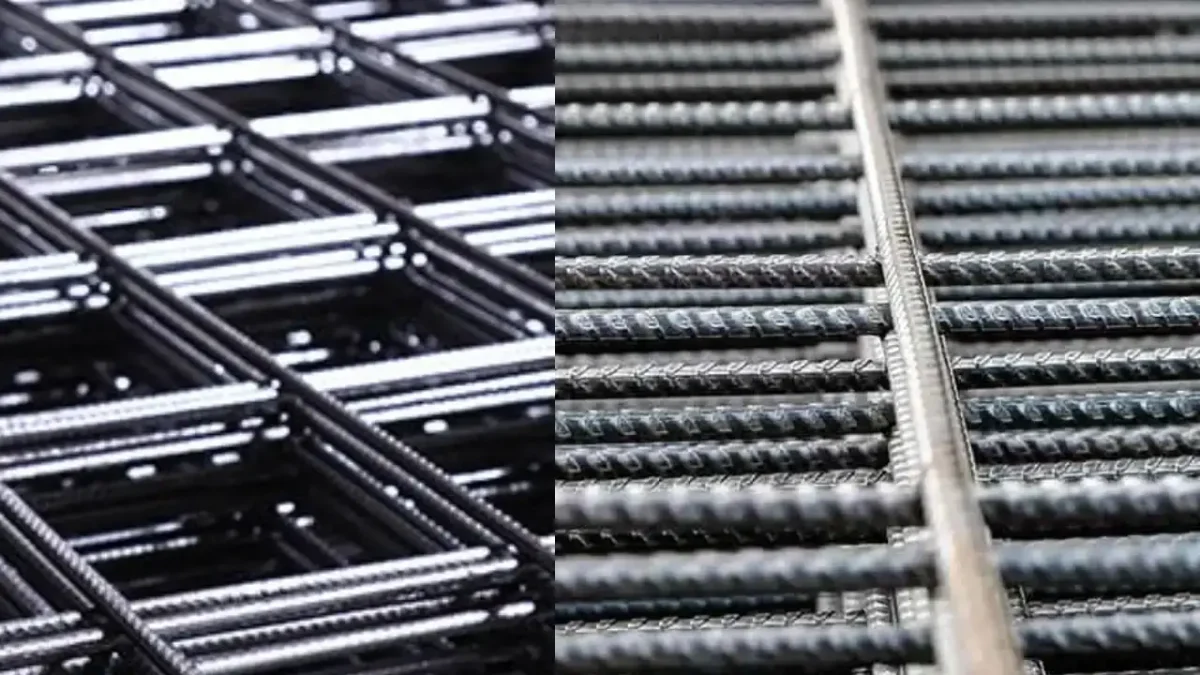
Rebar and wire mesh are both widely used to reinforce concrete, but they differ in their structure, placement, flexibility, and typical applications. Rebar consists of individual steel bars arranged according to a structural design, while wire mesh forms a prefabricated grid. Understanding these differences helps contractors select reinforcement based on project requirements, loads, concrete thickness, and installation conditions.
The comparison between rebar and wire mesh involves several factors, including material, strength, structure, flexibility, installation, cost, applications, and crack control. Neither product is universally suitable for every project. The appropriate choice depends on engineering requirements, reinforcement design, construction methods, and the expected loads and environmental conditions.
1. Material
Rebar is primarily manufactured from carbon steel and is available in different grades and diameters. Deformed surfaces are commonly used to improve the mechanical bond between the steel bar and surrounding concrete. Some projects may also require corrosion-resistant or specialized reinforcing materials.
Wire mesh is commonly made from carbon steel, galvanized steel, or stainless steel. It can be welded or woven depending on the intended application. The material and surface treatment can be selected according to strength, corrosion resistance, exposure conditions, and project requirements.
2. Structure
Rebar consists of separate steel bars that are positioned in specific directions and patterns. Bars can be arranged longitudinally, transversely, or in other configurations to meet the reinforcement requirements of a concrete structure.
Wire mesh consists of interconnected wires forming a regular grid. Welded wire mesh has welded intersections, while woven mesh uses interlaced wires. Its prefabricated structure provides relatively consistent spacing throughout the reinforcement area.
3. Strength
Rebar is designed to provide substantial tensile reinforcement and can be specified in different sizes and grades. Engineers can select bar diameter, spacing, and arrangement according to the structural loads expected by a project.
Wire mesh also reinforces concrete by distributing reinforcement throughout the concrete area. It is commonly used where uniform reinforcement and crack control are required, although the appropriate mesh specification depends on wire diameter, spacing, material, and design requirements.
4. Flexibility and Placement
Rebar offers considerable design flexibility because individual bars can be arranged, bent, overlapped, and tied into different reinforcement configurations. This makes it suitable for structural components with complex shapes or specific reinforcement layouts.
Wire mesh is supplied as sheets or rolls depending on the product. Its regular grid can make placement faster for suitable applications, particularly across large, relatively uniform concrete areas where consistent reinforcement spacing is desired.
5. Installation
Rebar installation generally involves measuring, cutting, bending, positioning, and tying individual bars. The process can require more labor, particularly when a project contains complicated reinforcement layouts or large quantities of different bar sizes.
Wire mesh can simplify installation because much of the grid arrangement is completed during manufacturing. Workers generally position the mesh within the concrete area and secure overlapping or connecting sections according to the project specifications.
6. Cost
The overall cost of rebar depends on steel grade, bar diameter, quantity, fabrication, transportation, and labor. Projects with complicated reinforcement designs may also require additional cutting, bending, tying, and installation work.
Wire mesh costs depend on wire diameter, opening size, material, coating, sheet or roll dimensions, and production volume. Its prefabricated structure may reduce some installation labor, but the final project cost should include material, transportation, cutting, overlapping, supports, and labor.
7. Crack Control
Rebar can help reinforce concrete and resist tensile stresses, but its effectiveness depends heavily on bar size, spacing, placement, concrete cover, and the structural design. Proper detailing is essential for achieving the intended reinforcement performance.
Wire mesh provides regularly distributed reinforcement across a concrete area, which can make it useful for controlling cracks caused by shrinkage and temperature changes. Its effectiveness depends on mesh specification, placement, concrete properties, and installation quality.
8. Applications
Rebar is commonly used in foundations, columns, beams, retaining walls, bridges, heavy-duty slabs, and other structural concrete components. These applications often require reinforcement designed specifically for substantial tensile, bending, or structural loads.
Wire mesh is frequently used in concrete slabs, floors, pavements, walls, sidewalks, precast products, fencing, screening, and other applications. Welded mesh can also serve purposes beyond concrete reinforcement, depending on its material and configuration.
9. Customization
Rebar provides extensive customization because engineers and fabricators can specify different diameters, lengths, grades, bends, spacing, and reinforcement arrangements. This makes it adaptable to projects with detailed structural reinforcement requirements.
Wire mesh can also be customized by changing wire diameter, opening size, sheet dimensions, material, coating, and mesh configuration. Custom mesh is useful when standard sizes do not match the required reinforcement or application specifications.
10. Handling and Transportation
Individual rebar pieces can be heavy, especially when large diameters and long lengths are involved. Handling may require more workers or lifting equipment depending on the quantity and dimensions of the bars.
Wire mesh sheets and rolls can also be heavy, but their prefabricated grid structure can make reinforcement handling more organized for suitable projects. The product format should be selected according to transportation, site access, storage space, and installation requirements.
11. Project Suitability
Rebar is generally considered when a project requires specifically designed structural reinforcement. Its individual-bar configuration allows engineers to create reinforcement layouts suited to beams, columns, foundations, walls, and heavily loaded concrete components.
Wire mesh is often convenient for applications requiring distributed reinforcement over relatively broad and regular areas. It can provide consistent spacing and straightforward placement, making it useful for slabs, pavements, and other suitable concrete applications.
Rebar vs Wire Mesh Comparison Table
| Aspect | Rebar | Wire Mesh |
|---|---|---|
| Material | Mainly carbon steel; various grades available | Carbon steel, galvanized steel, stainless steel, and others |
| Structure | Individual steel bars | Interconnected wire grid |
| Strength | High structural reinforcement capacity when properly designed | Distributed reinforcement with strength based on wire size and spacing |
| Flexibility | Highly customizable in layout and bending | More standardized grid structure |
| Installation | Cutting, bending, positioning, and tying may be required | Prefabricated sheets or rolls can simplify placement |
| Crack Control | Depends on bar size, spacing, and placement | Distributed grid can help control shrinkage and temperature cracking |
| Cost | Includes material, fabrication, and installation labor | Material and installation costs depend on mesh specification |
| Applications | Foundations, beams, columns, bridges, structural walls | Slabs, pavements, floors, walls, precast products |
| Customization | High | Moderate to high |
| Handling | Individual bars can require more handling | Sheets or rolls provide prefabricated reinforcement |
| Best-Suited Projects | Structural and heavily designed reinforcement | Broad, regular areas requiring distributed reinforcement |
Important: The choice between rebar and wire mesh should follow the project’s structural design and applicable construction standards. They are not automatically interchangeable, and reinforcement requirements should be determined by the project’s engineer or qualified professional.
Considerations to Choose Rebar and Wire Mesh?
Choosing between rebar and wire mesh depends on the structural requirements, concrete thickness, project size, and installation method. Rebar is often selected for heavier structural reinforcement, while wire mesh can provide distributed reinforcement across slabs and other concrete surfaces. Understanding the project conditions helps you select the suitable reinforcement material.
Consider these factors before making your choice:
- Load Requirements: Rebar is generally suitable for structures exposed to higher tensile and structural loads. Wire mesh works well for distributing lighter loads across concrete slabs and reducing cracking. Consider the expected load, span, and structural design before selecting either reinforcement option.
- Concrete Thickness: The thickness of the concrete affects reinforcement selection and placement. Thicker slabs or structural members may require rebar with specific diameters and spacing. Wire mesh is commonly used in thinner slabs where evenly distributed reinforcement is needed throughout the concrete.
- Project Application: Consider where the reinforcement will be used. Rebar is common in foundations, columns, beams, walls, and heavily loaded slabs. Wire mesh is often used in floors, driveways, sidewalks, pavements, and other concrete surfaces requiring distributed crack control.
- Reinforcement Spacing: Rebar allows engineers to specify individual bar diameters and spacing according to structural requirements. Wire mesh provides a prearranged grid with consistent spacing. Choose the option that gives you the required reinforcement pattern without unnecessary material or installation complexity.
- Installation Requirements: Wire mesh can be quicker to install because it arrives as a ready-made grid. Rebar may require cutting, bending, tying, and positioning on site. For projects with complex reinforcement layouts, however, rebar provides greater flexibility in creating customized reinforcement arrangements.
- Material and Corrosion Resistance: Steel reinforcement must match the project’s environmental conditions. Carbon steel, galvanized steel, epoxy-coated rebar, and stainless steel options provide different levels of corrosion protection. Choose suitable materials when concrete will be exposed to moisture, chemicals, salts, or other corrosive conditions.
- Cost and Project Budget: Compare both material and labor costs rather than looking only at the purchase price. Wire mesh may reduce installation time, while rebar can provide greater flexibility for structural applications. Your final choice should balance reinforcement performance, labor requirements, material costs, and project specifications.
Conclusion
Rebar and wire mesh both reinforce concrete, but their structures, installation methods, and typical applications are different. Rebar generally uses individual steel bars arranged according to engineering requirements, while wire mesh provides a prefabricated grid that can simplify reinforcement placement across larger concrete areas.
Wire mesh can be convenient for slabs, pavements, walls, and other applications where uniform reinforcement spacing is important. Rebar may be selected for projects requiring specific bar sizes, spacing, or reinforcement layouts. The final choice should always consider structural design, concrete specifications, loading conditions, and applicable construction standards.
If you need reliable reinforcement products for your construction projects, we can provide different wire mesh specifications according to your requirements. Contact us to discuss mesh size, wire diameter, material, surface finish, and packaging, and get wholesale wire mesh from our Apscreens for your projects.