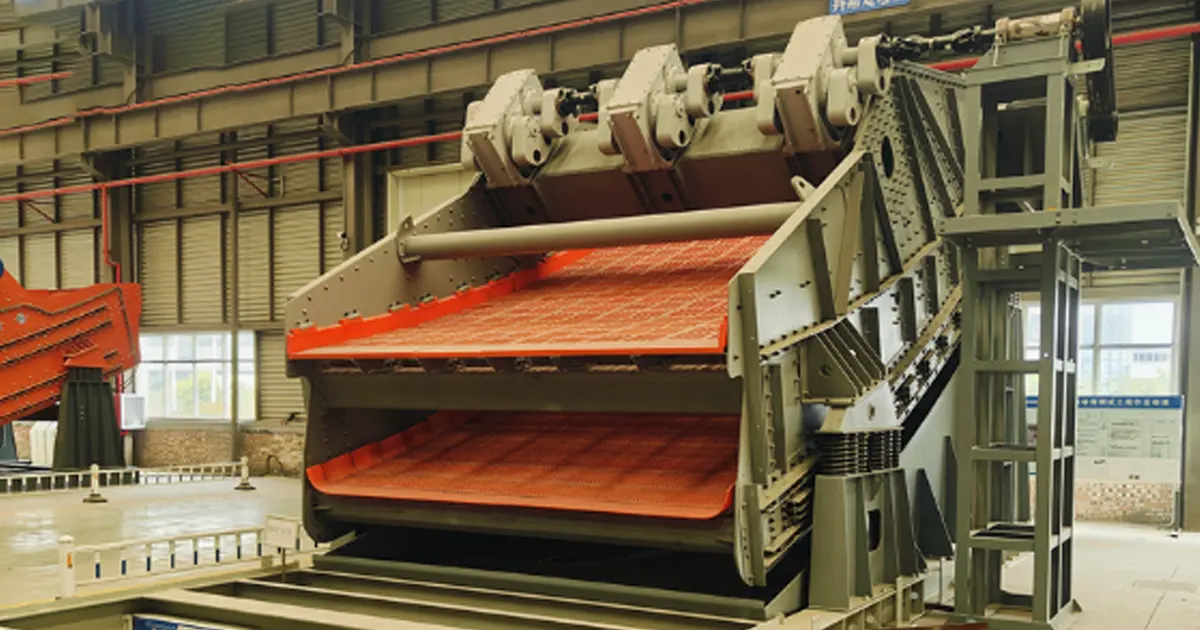
You may wonder what a double deck banana screen does. Imagine a machine with two layers. Each layer sorts materials by size. It uses strong vibrations and a sloped deck. You put in mixed materials. The screen quickly splits them into three sizes. This happens in one easy step. It helps you get cleaner and better results faster.
Key Takeaways
- A double deck banana screen can sort things into three sizes at the same time. This makes your job faster and easier.
- The special multi-slope design helps materials move fast. It also helps them separate well. This makes sorting better.
- Double deck screens can be used for many types of materials. They work with wet, dry, or sticky things.
- It is easy to take care of double deck screens. You can check them quickly and fix them less often. This saves time.
- Picking the right screen media, like woven wire mesh or polyurethane, can make the screen work better. It also helps your equipment last longer.
- These screens are great for jobs in mining, construction, and recycling. These jobs need good sorting.
- You can change the settings on the screen to fit different materials. This helps you work better and faster.
- Using a double deck banana screen can help your plant make more products. You can finish more work in less time.
What Is a Double Deck Banana Screen
Definition and Purpose
Think of a double deck screen as a machine with two layers. Each layer has its own screen plate. The top layer is usually smaller than the bottom one. Both layers work together to sort things by size. The double deck banana screen has a special design with different slopes. The decks are not flat. They are set at different angles. This helps materials move faster and separate better.
The main job of a double deck screen is to sort mixed materials into three sizes at once. You put in a mix of big, medium, and small pieces. The screen shakes the material with strong vibrations. The top deck catches the biggest pieces. The bottom deck catches the medium ones. The smallest pieces fall through both decks. This setup gives you clean, sorted material with less work.
Tip: If you want your plant to work faster, a double deck banana screen can help you finish more jobs in less time.
Here’s a quick way to see how a double deck screen is different from a single deck screen:
| Characteristic | Double Deck Screen | Single Deck Screen |
|---|---|---|
| Number of Decks | Two decks of screen plates | One deck of screen plates |
| Surface Area of Upper Deck | Usually smaller than the lower deck | N/A |
| Screening Capability | Can sort different materials at the same time | Only sorts one type of material |
| Suitability for Complex Tasks | Better for hard and tricky sorting jobs | Not as good for tough jobs |
How It Differs from Other Screens
You might wonder why a double deck banana screen is special. The answer is in its design and how it works. The double deck screen uses a multi-slope layout. Each deck has its own angle. This design helps materials move quickly and spread out. This means better sorting and higher efficiency.
Let’s see how the double deck banana screen is different from regular vibrating screens:
| Key Differences | Double Deck Banana Screens | Conventional Vibrating Screens |
|---|---|---|
| Screening Purpose | Made for sorting fine particles | Used for bigger and general sorting |
| Vibration Characteristics | High-frequency, low-amplitude motion | Lower-frequency, bigger movements |
| Deck Structure | Multi-deck design saves vertical space | Needs more horizontal space |
- Double deck banana screens are best for sorting fine particles very accurately.
- Regular vibrating screens are better for sorting large amounts of material.
The multi-slope design also changes how materials move. On the top deck, materials spread out and move fast. On the bottom deck, things slow down. This helps sort out the last small pieces. This setup makes the sorting work even better.
| Aspect | Description |
|---|---|
| Design | Multi-slope design with different angles helps materials move and sort better. |
| Flow Behavior | Different flow on each deck helps sort particles well. |
| Separation Performance | Each screen panel helps make sorting more efficient. |
| Particle Dynamics | The design helps particles move and take in energy during sorting. |
Typical Use Cases
You can find double deck screens in many industries. They are great for places that need to handle lots of material all day. Here are some common uses:
- Mining: You need a double deck screen for big jobs. These machines run all day and handle heavy loads.
- Aggregates: If you work with sand, gravel, or crushed stone, a double deck screen helps you sort things fast and accurately.
- Industrial Plants: You can use a double deck banana screen in recycling, chemical, or food plants where you need careful sorting.
| Industry | Characteristics |
|---|---|
| Mining | Handles lots of material, works all day, needs strong machines. |
| Aggregates | High capacity and keeps working well. |
Note: If you need a machine that can keep up with lots of work and give clean results, a double deck vibrating screen is a good choice.
You can trust a double-deck screen to give you accurate sorting, high output, and steady performance. Whether you call it a double deck banana screen, double deck vibrating screen, or double-deck vibrating screen, it helps you work easier and get better results.
Double Deck Screen Structure
When you look at a double deck banana screen, you see a smart design built for tough jobs. Let’s break down what makes up this machine and why each part matters for your operation.
Deck Arrangement
Top and Bottom Decks
You get two main decks stacked one above the other. The top deck sits at the highest point and takes the first hit from the material you feed in. This deck handles the largest pieces. The bottom deck sits just below and catches the medium-sized pieces that fall through the top. The smallest particles pass through both decks and exit at the bottom. This setup lets you sort three sizes at once, making your process faster and more efficient.
Mesh Size Differences
Each deck uses a different mesh size. The top deck has larger openings to let smaller pieces drop through. The bottom deck uses a finer mesh to catch medium particles and let only the smallest pass. This difference in mesh size is key. It helps you get clean, accurate sorting every time.
You’ll also notice the decks are not flat. They use a multi-slope design. At the feed end, the deck angle can be as steep as 40 degrees. As the material moves along, the angle drops to about 15 degrees at the discharge end. This clever design keeps material moving fast at first, then slows it down for better sorting. You get higher throughput—sometimes two to three times more than with regular screens.
Vibration Mechanism
The vibration mechanism is the heart of your double deck banana screen. It shakes the decks with high-frequency, low-amplitude motion. This action helps the material spread out and stratify, so each particle finds its way to the right spot. You’ll notice better screening efficiency, especially when you deal with a mix of easy and tough-to-screen particles. The double deck setup keeps the process stable and reduces the chance of clogging or uneven flow. With this vibration mechanism, you get more consistent results and less downtime.
- Improved screening efficiency, even with tricky particle mixes.
- More stable operation compared to single deck screens.
- Handles changes in particle size with ease.
Frame and Support
You want your screen to last, so the frame and support structure use tough materials and smart engineering. Here’s what you’ll find:
| Material/Component | Description |
|---|---|
| Side Plate | Made of high quality low alloy and high strength structural steel plate. |
| Cutting Process | High precision laser cutting machine used for feeding and drilling without splicing. |
| Reinforcement | Strengthening plates, protection plates, and angle steel are arranged to increase strength and prevent deformation. |
This strong frame keeps everything steady, even when the machine runs all day. You get less vibration transfer to the rest of your plant, and your equipment stays in good shape longer.
Tip: A solid frame and the right vibration mechanism mean fewer repairs and more uptime for your operation.
Double Deck Screen Working Principle
Material Feeding
You begin by putting material on the top deck. The double deck screen takes in big, medium, and small particles. You can use a conveyor belt, chute, or feeder to load it. The feed spreads out over the sloped surface. This helps the material move easily and covers the whole deck. You want the layer to be even so the machine works well. If you pile too much in one spot, separation may not be good. A steady feed keeps the double deck screen working smoothly.
Vibration and Movement
After you feed the material, the screen starts working. The machine shakes the decks with strong vibrations. These vibrations help the particles move and spread out. You can change how fast and how much the screen shakes. If you make the shaking bigger, the material moves faster and separates better. Changing how often it shakes lets you handle different materials.
The movement follows a plan. The double deck banana screen has a multi-slope design. At the start, the deck is steep. This makes the material move quickly. As it goes along, the deck gets less steep. The material slows down, so smaller pieces have more time to fall through. This step-by-step movement is important for sorting.
The vibration frequency and amplitude settings on double deck banana screens are very important. Changing the amplitude makes materials move faster and sort better. Changing the frequency helps the screen work with different materials.
Particle Separation on Each Deck
Now the sorting happens. The double deck screen uses two layers to separate by size. The top deck has bigger holes. Large pieces stay on top and move to the end. Medium and small pieces fall to the bottom deck. The bottom deck has smaller holes. Medium pieces stay here. The smallest particles drop through both decks and exit below.
The study uses the Discrete Element Method (DEM) to look at how the double deck banana screen separates material. It shows how material moves on the top and bottom decks.
The angle of the decks changes how well the banana-shaped vibrating screens sort. This is shown in tests using the Discrete Element Method (DEM).
You get three groups at the end: large, medium, and small. The double-deck screen sorts them all at once. The top deck handles the biggest pieces. The bottom deck catches the medium ones. The smallest particles pass through both decks. This working principle makes the double deck vibrating screen a smart choice for fast, accurate sorting.
If you want a screening machine that saves time and gives clean results, the double-deck screen is a great choice. You can trust this design to handle tough jobs and keep your work running well.
Discharge and Sizing
Now, let’s talk about what happens after your material passes through both decks. This is where you see the real results of the double deck banana screen’s working principle. You get three clear groups of material, each sorted by size. The machine sends each group to a different spot, so you can collect them easily.
Here’s how the discharge process works for you:
- Oversized Material: The largest pieces stay on the top deck. They move along the slope and slide off the end. You can collect these in a bin or send them back for more crushing.
- Middle Size: Medium particles fall through the top deck but stay on the bottom deck. These move to a separate discharge point. You get a clean batch of medium-sized material.
- Fines: The smallest particles pass through both decks. They drop down and exit at the bottom. You can use these fines right away or send them to another process.
Tip: You can set up chutes or conveyors at each discharge point. This keeps your operation smooth and helps you avoid mixing the different sizes.
The sizing accuracy depends on the mesh size of each deck and the vibration settings. If you choose the right mesh and adjust the vibration, you get very precise sorting. You can even change the mesh or vibration if your material changes. This flexibility is a big part of the working principle that makes double deck banana screens so useful.
Let’s look at a simple table to show how the discharge works:
| Deck Level | Particle Size | Discharge Location |
|---|---|---|
| Top Deck | Largest | Oversize chute/bin |
| Bottom Deck | Medium | Middle-size chute/bin |
| Under Deck | Smallest (fines) | Fines chute/bin |
You don’t have to worry about mixing or losing material. The screen’s design keeps each size separate. You get a steady flow of sorted material, which makes your next steps easier.
If you want to boost your plant’s output and keep your products consistent, focus on the discharge and sizing stage. This is where the double deck banana screen’s working principle really shines.
Design Features and Performance
Multi-Slope Decks
You might notice the banana screen looks different from other screens. The decks curve and slope in a special way. This multi-slope design gives you a big advantage. At the feed end, the deck sits at a steep angle. Materials rush onto the screen and spread out fast. As the material moves along, the slope gets gentler. This change slows down the flow and gives smaller particles more time to drop through the mesh.
Here’s what happens because of the multi-slope design:
- Materials stratify quickly. The big pieces rise to the top, and the small ones settle below.
- The steep angle at the start pushes material forward and helps it spread out.
- The gentle slope at the end lets fine particles pass through the screen more easily.
You get faster sorting and cleaner results. The banana shape isn’t just for looks—it helps you move more material and get better separation.
Screening Efficiency
You want your screen to work hard and give you the best results. The multi-slope deck boosts screening efficiency in several ways. When you feed material onto the steep end, it moves quickly and spreads out. This rapid movement helps particles stratify. As the slope flattens, the material slows down. Fine particles get more time to find the right holes and drop through.
Let’s break down how you can use deck angles to improve efficiency:
- Adjust the steep angle at the feed end to move material fast and start stratification.
- Set a gentler angle at the discharge end so fine particles have more time to pass through.
- Try different angles, like a 10° discharge slope with 5° increments, to match your material and get the best results.
You can experiment with these settings to find what works for your operation. The right angles help you sort more material in less time.
Tip: If you want to boost your plant’s output, play with the deck angles. Small changes can make a big difference in how well your screen works.
Adjustability
You don’t have to settle for one setup. Double deck banana screens let you adjust key features to fit your needs. You can change the stroke and speed of the vibration. You can also swap out screening panels for different types. These adjustments give you more control and flexibility.
Here’s a quick look at how adjustability helps you:
| Design Feature | Impact on Operational Flexibility |
|---|---|
| Adjustable stroke and speed | Optimizes performance and increases profitability |
| Various screening panel types | Improves performance through customization and upgrades |
You can fine-tune your screen to handle different materials or boost efficiency. If you need to upgrade or change your process, you can swap panels or tweak vibration settings. This flexibility keeps your operation running smoothly and helps you get the most out of your equipment.
If you want a screen that grows with your business, look for adjustability. You’ll save time and money by making quick changes instead of buying new machines.
Double-Deck Screen Benefits
High Throughput
You want your plant to work fast and handle more material. Double deck banana screens are great for this. They can process much more than single deck screens. You get two or three times the throughput of regular inclined screens. This means you finish jobs faster and keep things running well.
Here’s a simple table to show how much more you can handle:
| Screen Type | Throughput Capacity (relative) |
|---|---|
| Banana Screens | 2 to 3 times that of inclined screens |
| Single Deck Screens | Standard capacity |
Using a double deck banana screen saves you time. You also need fewer machines. This means you save space and energy. If you want to make more without making your plant bigger, this screen is a smart pick.
Tip: If you suddenly get lots of material, a double deck banana screen helps you keep up.
Versatility
You might work with wet, dry, fine, or sticky materials. Double deck banana screens can handle all of these. The special banana-shaped design uses different angles on each deck. This helps you screen many types of materials, even the hard ones.
Look at what makes these screens so useful:
| Feature | Description |
|---|---|
| Design | Unique banana-shaped screen deck with varying angles of inclination. |
| Efficiency | Enhances efficiency in screening fine and sticky materials. |
| Application | Suitable for high throughput and efficiency applications across various industries, including mining. |
| Processing Capacity | Large processing capacity, making it ideal for iron ore classification. |
| Separation Performance | Excellent separation performance due to multi-angle screening design. |
You can use these screens in mining, construction, or recycling. If your material changes, you do not need new equipment. The double deck banana screen adjusts to your needs. You get steady results, no matter what you put in.
Note: If you want one machine for many jobs, this screen gives you that choice.
Accurate Separation
You want your products sorted right every time. Double deck banana screens help you get good results. They use special methods to check how well they separate materials. For example, engineers use the Discrete Element Method (DEM) to study how particles move and separate on each deck. This helps them make the screen work better.
The top and bottom decks each have their own flow patterns. This means you can sort materials more exactly. You get clean groups of large, medium, and small particles. The screen’s design makes sure each size goes to the right place.
If you need to meet strict quality rules, you can trust a double deck banana screen to give you accurate separation every time.
Maintenance Advantages
You want your equipment to run smoothly with as little hassle as possible. Double deck banana screens make maintenance much easier for you. Their smart design helps you spend less time fixing problems and more time getting work done.
First, you get easy access to both decks. The screen’s layout lets you reach all the important parts without taking the whole machine apart. You can check the panels, clean the decks, or swap out worn screen media quickly. This means you do not need to stop your plant for long periods.
Here are some ways double deck banana screens help you with maintenance:
- Quick Panel Changes: You can remove and replace screen panels without special tools. This saves you time and keeps your team safe.
- Fewer Blockages: The strong vibration and multi-slope design help keep the decks clear. You do not have to stop often to clear jams or stuck material.
- Strong Frame: The tough frame resists bending and shaking. You get fewer cracks or breaks, so you do not need to weld or repair as often.
- Easy Cleaning: The open design lets you wash down the decks or brush off dust and fines. You keep your screen working at its best.
Tip: Set up a regular inspection schedule. Check the panels and bolts every week. This helps you catch small problems before they turn into big ones.
Let’s look at a quick table that shows how double deck banana screens make your life easier:
| Maintenance Feature | How It Helps You |
|---|---|
| Easy panel access | Faster checks and replacements |
| Fewer blockages | Less downtime and frustration |
| Strong construction | Fewer repairs and longer service |
| Simple cleaning | Keeps performance high |
You also save money. When you do not need to stop your plant for repairs, you make more product and lose less time. The screen’s design means you replace parts less often. You do not need a big team or special training to keep things running.
If you want a screening machine that works hard and does not slow you down, a double deck banana screen is a smart choice. You get more uptime, less stress, and a smoother operation every day.
Remember, good maintenance keeps your screen running longer. Take care of your equipment, and it will take care of your business.
Applications of Double Deck Banana Screens
You may ask where you use a double deck screen. Let’s look at the main industries and see how this machine helps you.
Mining and Minerals
Mining needs fast and accurate sorting. A double deck screen lets you handle lots of ore and rocks. You can sort ore, separate big pieces, and work with hard materials all day. The double deck banana screen keeps working without stopping. It gives you steady results.
Here’s what matters most in mining:
| Application | Performance Metrics |
|---|---|
| Ore classification | Processing capacity |
| Processing of large particle sizes | Screening efficiency |
| Handling high hardness materials | Ability to cope with continuous processing |
You get a double deck vibrating screen that works hard. It keeps your plant running smoothly. You can trust it to sort lots of material and do it well.
Aggregates and Construction
Construction uses many materials like sand, gravel, clay, and waste. A double deck screen sorts these fast. The banana shape lets you move more material quickly. You get neat piles of different sizes for your next job.
See how this works for you:
| Application Type | Description |
|---|---|
| Double Deck Banana Screen | Works faster and sorts more with a banana shape. |
| Typical Materials Handled | Sand, clay, gravel, construction waste, and more. |
You can use a double-deck screen to keep your plant busy. It works even when you change materials. You don’t need to worry about jams or slowdowns. The design helps with sticky or wet materials. You get steady output every day.
Recycling and Industry
Recycling plants have tough jobs. You deal with wet aggregates, sticky clays, leafy biomass, and other hard materials. A double deck screen helps you here. Standard screens have trouble with these jobs. Double deck screens handle them easily.
Let’s compare how screens perform:
| Feature | Standard Screens | Double Deck Banana Screens |
|---|---|---|
| Performance on Damp Aggregates | Struggles | Effective |
| Handling Sticky Clays | Struggles | Effective |
| Processing Leafy Biomass | Struggles | Effective |
| Separation of Challenging Materials | Limited | Highly Effective |
You can use a double deck screen to separate good material from waste. This is helpful in auto shredder residue. The technology helps you recover more useful material. This is good for the environment and your business. The double deck vibrating screen also helps with fuel recovery. It sorts what you need from what you don’t.
If you want a screening machine for tough jobs in mining, construction, or recycling, a double deck screen is your best choice. You will see better results, less downtime, and more value from every load.
Screen Media Options
Woven Wire Mesh
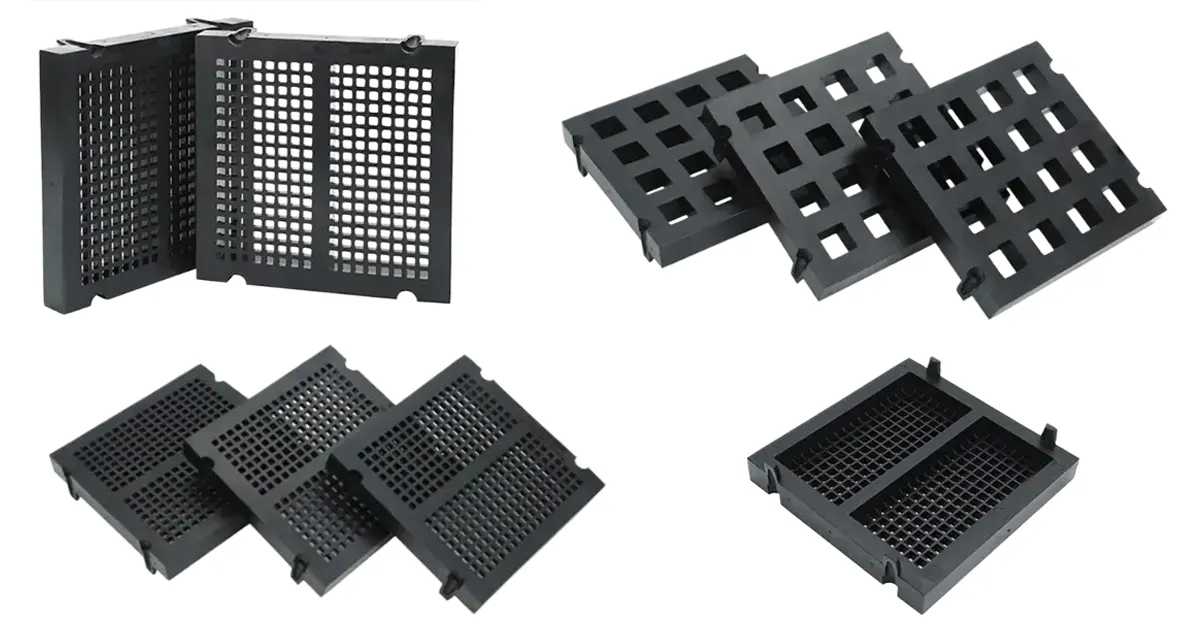
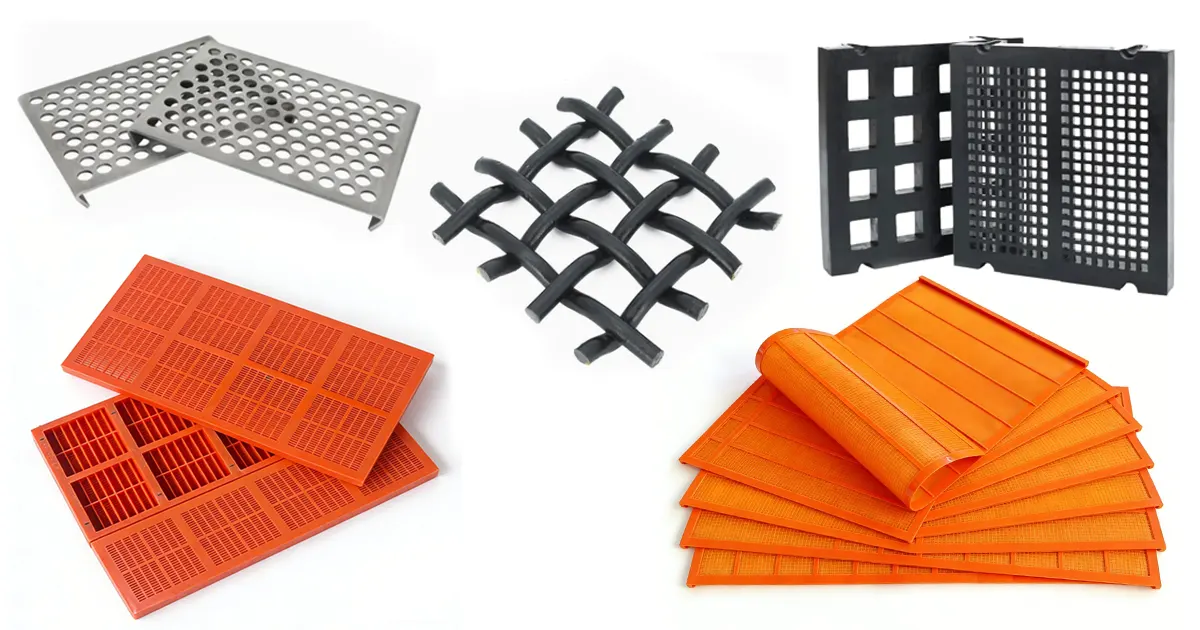
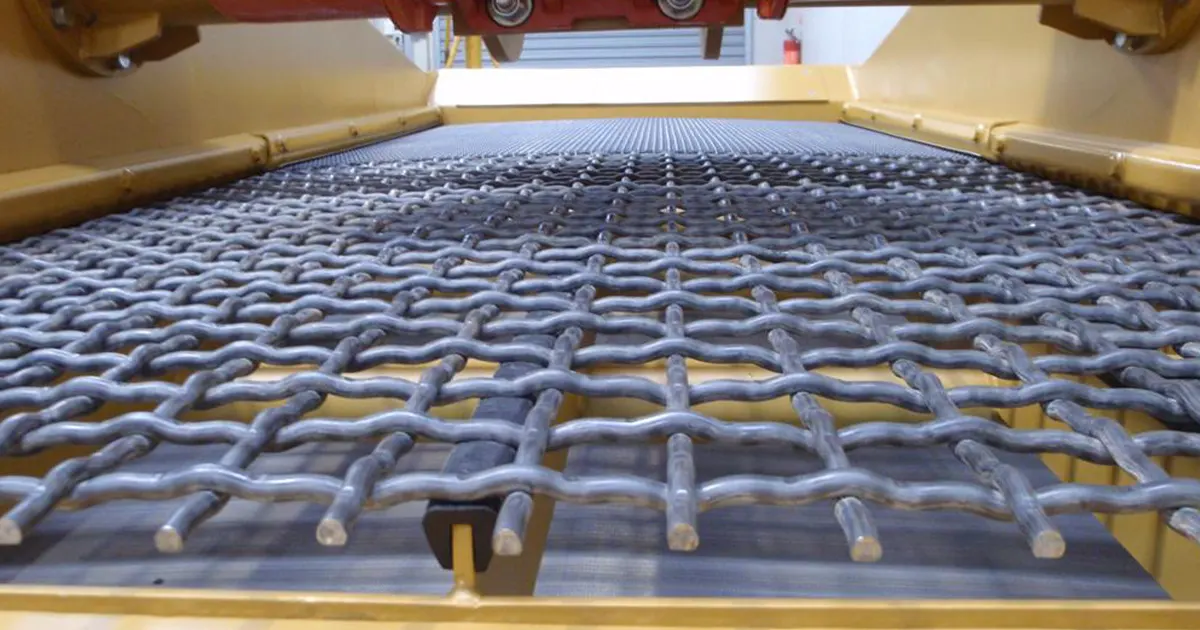
You might see woven wire mesh on many double deck banana screens. This type of screen media uses wires woven together to make a grid. You can pick from many different opening sizes, so you get the right fit for your job. Woven wire mesh comes in carbon steel or stainless steel. You choose the material based on what you need to screen.
Woven wire mesh works well for most materials. It gives you good accuracy and fast screening. You can swap out panels quickly if you need to change the size. But you need to watch for wear, especially with tough or sharp rocks. Here’s what you should know:
- Woven wire mesh can wear out in just 2 to 4 weeks if you screen high-silica or very abrasive minerals.
- You should check the mesh often for damage, loose bolts, or blocked holes.
- This mesh is flexible and easy to replace, so you can keep your screen running with little downtime.
- You can find woven wire mesh in many sizes and materials, so it fits almost any job.
Tip: If you want fast screening and easy changes, woven wire mesh is a solid choice. Just remember to check it often if you work with rough materials.
Polyurethane Panels
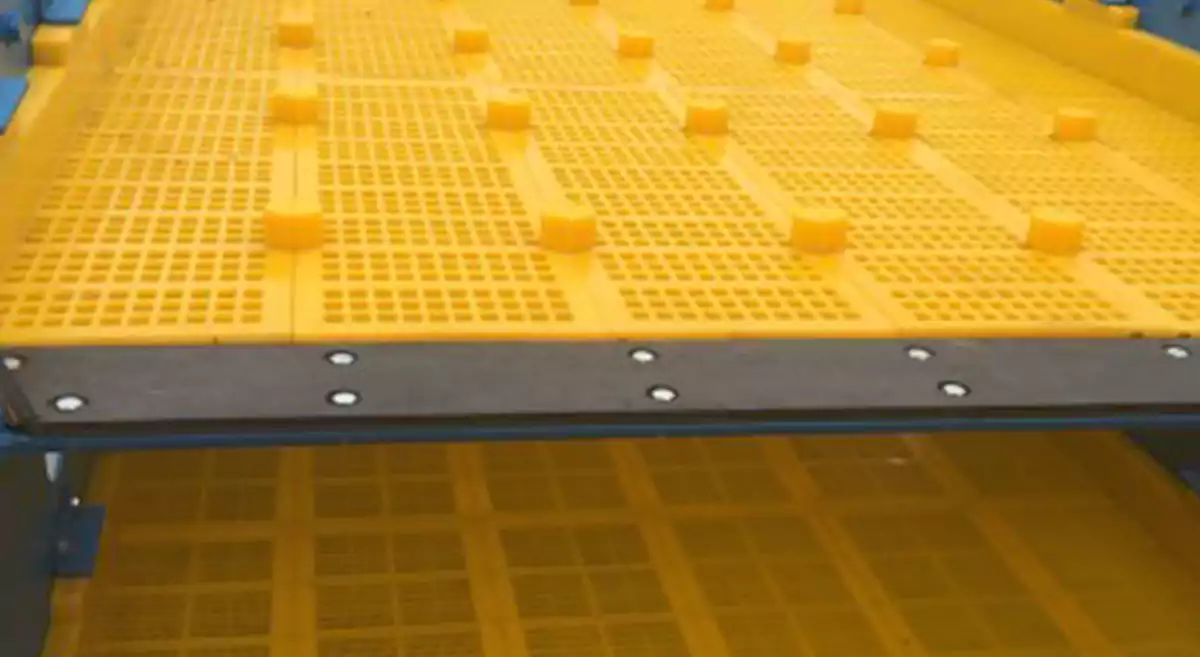
Polyurethane panels give you another option for your double deck banana screen. These panels use a tough, flexible plastic that stands up to hard work. Polyurethane resists pegging and blinding, so sticky or wet materials do not block the holes as easily. You get a longer service life compared to wire mesh.
Here’s what makes polyurethane panels stand out:
- Polyurethane panels last up to twice as long as regular wire mesh.
- They are flexible, so they shake off stuck particles and keep working.
- You get less open area than with wire mesh, which can slow down screening a bit.
- Some screens use a hybrid design, mixing wire and polyurethane strips. This gives you more open area and can last four to seven times longer than wire alone.
You might pick polyurethane if you want less maintenance and longer wear. It works well for tough jobs where you need your screen to last.
Rubber Screens
Rubber screens are another choice, especially if you deal with noisy or high-impact jobs. Rubber panels help quiet your plant and last longer when rocks hit hard. They also flex to shake off stuck material. But rubber has some limits, especially with small, sharp rocks.
| Advantages | Limitations |
|---|---|
| Sound reduction | Smaller rocks can wear down rubber panels |
| Longer wear life in high-impact applications | Sandpaper-like effect thins out the rubber over time |
| Flexibility helps dislodge particles |
You might use rubber screens if you want a quieter plant and need to handle big, heavy rocks. Just keep an eye on the panels if you screen lots of small, sharp material.
Note: The right screen media helps you get better results and spend less time on repairs. Think about your material and your goals before you choose.
Media Choice and Performance
You have a lot to think about when picking screen media for your double deck banana screen. The right choice can make your plant run smoother, help you get cleaner results, and save you money on repairs. Let’s break down how each media type affects your screen’s performance.
Woven wire mesh gives you fast screening and high accuracy. You can swap panels quickly if you need to change sizes. This mesh works well for most jobs, but it wears out faster with sharp or abrasive materials. You need to check it often and replace it when you see damage. If you want speed and flexibility, wire mesh is a solid pick.
Polyurethane panels last longer and handle tough jobs. These panels resist clogging and blinding, so sticky or wet materials don’t block the holes as easily. You get less open area, which can slow down screening a bit, but you spend less time on maintenance. Polyurethane is great if you want fewer repairs and longer service life.
Rubber screens help reduce noise and stand up to heavy impacts. They flex to shake off stuck material. Rubber works best with big, heavy rocks. If you screen lots of small, sharp material, rubber can wear down faster. You get a quieter plant and longer wear in high-impact jobs.
Here’s a quick table to help you compare:
| Media Type | Wear Resistance | Screening Accuracy | Maintenance Needs | Best For |
|---|---|---|---|---|
| Woven Wire Mesh | Low | High | Frequent checks | Fast, flexible screening |
| Polyurethane Panel | High | Medium | Less frequent | Tough, sticky materials |
| Rubber Screen | Medium | Medium | Moderate | High-impact, noisy jobs |
Tip: If you want to boost your plant’s uptime, match your screen media to your material. Don’t just pick the cheapest option. Think about how often you need to change panels and how much downtime costs you.
You can mix media types on your screen. Some plants use wire mesh on one deck and polyurethane on another. This helps balance speed and durability. You get the best of both worlds.
When you choose screen media, look at your material, your goals, and your maintenance plan. If you screen sharp rocks, wire mesh works but needs more care. If you handle sticky clay, polyurethane keeps your screen clear. If you want less noise, rubber is your friend.
You control your plant’s performance with your media choice. The right screen media helps you get accurate sorting, less downtime, and longer service life. Take time to pick what fits your job. Your double deck banana screen will thank you.
Choosing Screen Media
Factors to Consider
When you pick screen media, you want to make a good choice. The screen media you choose affects how well your machine works. It also changes how much time you spend fixing things. You need to think about a few important things before you decide. Here’s a table that shows what you should look at:
| Factor | Description |
|---|---|
| Type of Material | Think about what you are screening. Is it soft, hard, sticky, or abrasive? |
| Moisture Content | Wet materials can clog screens. Some media handle moisture better than others. |
| Desired Particle Size | The size you want to separate decides the opening size of your screen media. |
| Impact Stresses | Heavy, coarse material needs tough media that can take a hit. |
| Wire Thickness | Thinner wires give better performance but may not last as long. |
| Mesh Form | Some mesh patterns help stop clogging and keep things moving. |
| Material Properties | Different metals or plastics work better with certain materials. |
| Oscillation Effects | Rubber media can shake off stuck particles better than wire mesh, which helps with capacity. |
You should match your screen media to your material and working conditions. This helps your screen work its best.
Matching Media to Application
There are many types of screen media. Each one is good for a different job. If you have sticky or wet material, harp-wire types help stop blinding. They keep your machine working well. Polyurethane self-cleaning panels are good for tough jobs. They last longer and handle many particle sizes. Tensioned systems are easy to fix and stay tight when the machine shakes. Modular systems let you change only the worn parts. This saves you money and time. Wire cloth is best for decks that need strong tension. Gyratory systems are great for jobs that need very clean sorting.
Here’s a table to help you pick:
| Screen Media Type | Best For | Benefits |
|---|---|---|
| Harp-wire types | Sticky, wet materials | Less blinding, steady processing |
| Polyurethane self-cleaning | Tough, mixed feeds | Long wear, handles many particle sizes |
| Tensioned systems | High vibration setups | Easy to fix, stays tight |
| Modular systems | Frequent updates | Flexible, good for high-frequency motion |
| Wire cloth | Tensioned decks | Keeps shape, strong under stress |
| Gyratory systems | High-precision jobs | Very clean separation, few fines or oversize |
Tip: Always check if your screen media fits your material and your plant’s needs. The right match keeps your machine running well.
You also need to make sure your screen media fits your machine’s vibration and tension. If you get the tension right, your panels last longer. Good vibration fit means your screen can handle shaking without breaking.
Balancing Service Life and Downtime
You want your screen media to last a long time. But you also want your plant to keep working. If your media wears out fast, you spend more time fixing it. If it is too tough, you might lose sorting accuracy or slow down your work. You need to find a good balance.
Here are some tips to help you:
- Pick media that matches your material’s hardness and moisture.
- Choose mesh patterns that help stop clogging.
- Use modular panels if you want to change only the worn parts.
- Check your panels often and replace them before they break.
- Think about how easy it is to put in and take out your screen media.
If you balance service life and downtime, your double deck banana screen works better. You keep your plant moving and avoid long stops. The right screen media helps your machine sort well and keeps your line working smoothly.
Maintenance for Double Deck Screens
Keeping your double deck banana screen in top shape is easier than you might think. If you follow a few simple steps, you can avoid big problems and keep your plant running smoothly. Let’s break down what you need to do.
Routine Tasks
You should check your screen every day. Look for loose bolts, worn panels, or any signs of damage. Clean off dust and stuck material. If you see a panel with holes or tears, swap it out right away. A quick daily check can save you from bigger repairs later.
Here’s a simple checklist you can use:
- Inspect screen panels for wear or damage
- Tighten bolts and fasteners
- Remove any stuck rocks or debris
- Check vibration settings
- Listen for strange noises
Tip: Make this checklist part of your daily routine. You’ll catch small issues before they turn into big headaches.
Reducing Downtime
Nobody likes it when the plant stops. You can cut down on downtime by planning ahead. Keep spare panels and bolts on hand. Train your team to spot problems early. If you use modular screen media, you can change only the worn parts instead of the whole deck. This saves you time and money.
Try these ideas to keep things moving:
| Action | How It Helps You Stay Running |
|---|---|
| Keep spare parts handy | Quick fixes, less waiting |
| Use modular panels | Swap out only what’s worn |
| Train your team | Faster problem spotting |
| Schedule regular checks | Fewer surprise breakdowns |
If you want less downtime, stay prepared and act fast when you see a problem.
Extending Screen Life
You can make your screen last longer with smart choices. Pick the right screen media for your material. If you handle sharp rocks, use tougher panels like polyurethane. For sticky material, try self-cleaning panels. Adjust your vibration settings to match your feed. Too much shaking can wear out parts faster.
Here are some ways to help your screen go the distance:
- Match screen media to your material type
- Rotate or flip panels to even out wear
- Adjust vibration for your feed size and type
- Clean screens often to prevent buildup
Remember, the right screen media can double or even triple your service life. Don’t just pick the cheapest option—think about what will last.
If you follow these tips, your double deck banana screen will keep working hard for you. Good maintenance means more uptime, better results, and less stress for everyone.
Conclusion
You now know that a double deck banana screen sorts materials quickly. It gives you three neat sizes in just one step. You get lots of material sorted, easy care, and steady results. This works well in mining, construction, or recycling. If you pick the right screen media, your double deck vibrating screen lasts longer. This also helps you save time and work better.
Tip: If you want better sorting and less downtime, choose your screen media wisely!
FAQ
What is a double deck banana screen?
You get a machine with two sloped decks. Each deck sorts material by size. The screen uses vibration to separate big, medium, and small particles in one step.
How does the banana shape help?
The curved decks move material faster at first. Then, the slope slows down. This gives small particles more time to drop through. You see better sorting and higher capacity.
Can I use different screen media on each deck?
Yes, you can mix wire mesh, polyurethane, or rubber panels. This lets you match the media to your material and improve performance.
What materials can I screen?
You can screen rocks, sand, gravel, ore, clay, and even sticky or wet materials. The double deck banana screen works in mining, construction, and recycling.
How often should I check the screen panels?
Check panels every day. Look for wear, holes, or loose bolts. Quick checks help you catch problems early and keep your plant running.
Is it hard to change screen panels?
No, you can swap panels easily. Most screens let you remove and replace panels without special tools. This saves you time and reduces downtime.
What should I do if the screen clogs?
Try cleaning the panels and adjusting vibration settings. You can also use self-cleaning media like polyurethane to reduce clogging.
How do I choose the right screen media?
Look at your material type, moisture, and desired particle size. Pick media that fits your job. Ask your supplier for advice if you’re not sure.