Fiber concrete and wire mesh are two common reinforcement solutions used to improve concrete performance. Although both can help control cracking and improve durability, they work in different ways. Understanding their materials, features, applications, and benefits can help you select the right reinforcement method for your specific construction project.
The choice between fiber concrete and wire mesh depends on factors such as structural requirements, concrete thickness, installation methods, and project conditions. By comparing their strengths and limitations, you can better understand which option fits your application and how each reinforcement method can contribute to longer-lasting concrete performance.
What is Fiber Concrete?
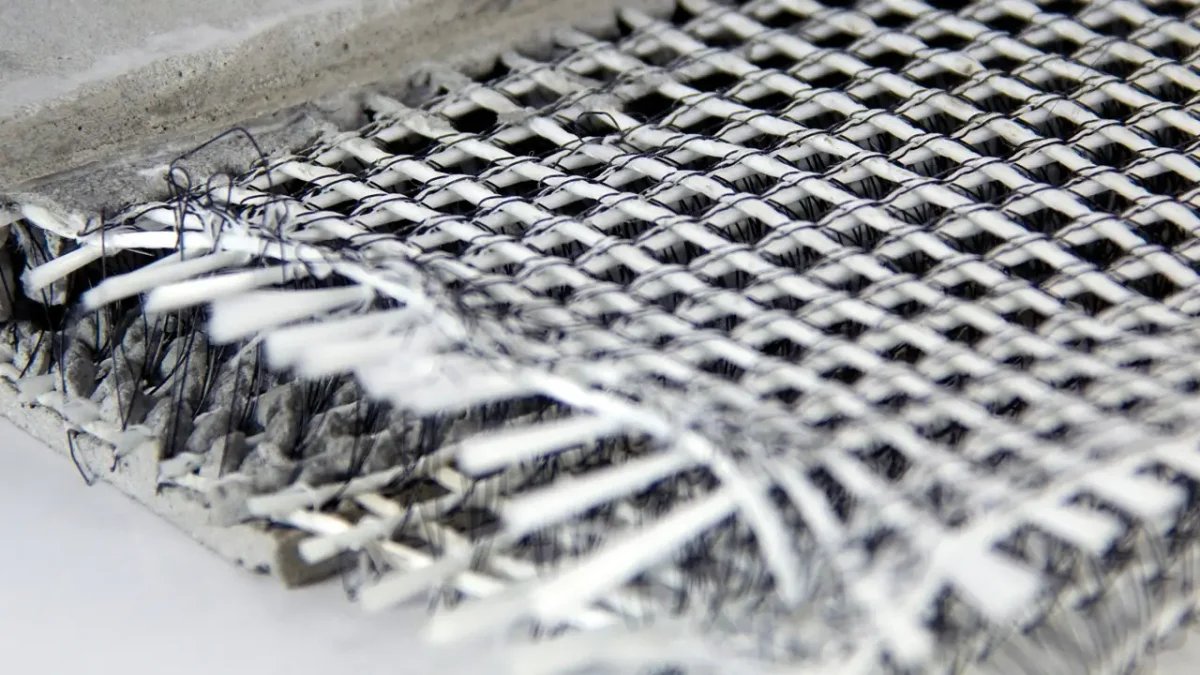
Fiber concrete is concrete mixed with short, discrete fibers to improve its performance after hardening. These fibers can be made from steel, polypropylene, glass, synthetic materials, or other materials. They are distributed throughout the concrete mixture and help control cracking, improve toughness, and provide additional reinforcement for various construction applications.
Common uses of fiber concrete include:
- Floor Slabs: Fiber concrete is widely used in industrial floors, warehouses, and commercial slabs to help control shrinkage cracks and improve resistance to repeated loads and surface wear.
- Roads and Pavements: It can reinforce concrete roads, parking areas, and pavements by helping distribute stresses and improving resistance to cracking caused by traffic and environmental conditions.
- Precast Concrete: Manufacturers use fiber concrete for precast panels, pipes, blocks, and other components where improved crack control and durability are required during production and service.
- Tunnel Construction: Fiber-reinforced concrete is commonly used for tunnel linings and shotcrete applications, helping improve toughness and resistance to cracking in underground construction environments.
- Industrial Structures: It can be applied to industrial floors, loading areas, and other structures exposed to heavy equipment, impact, or repeated mechanical stresses.
What Is Wire Mesh?
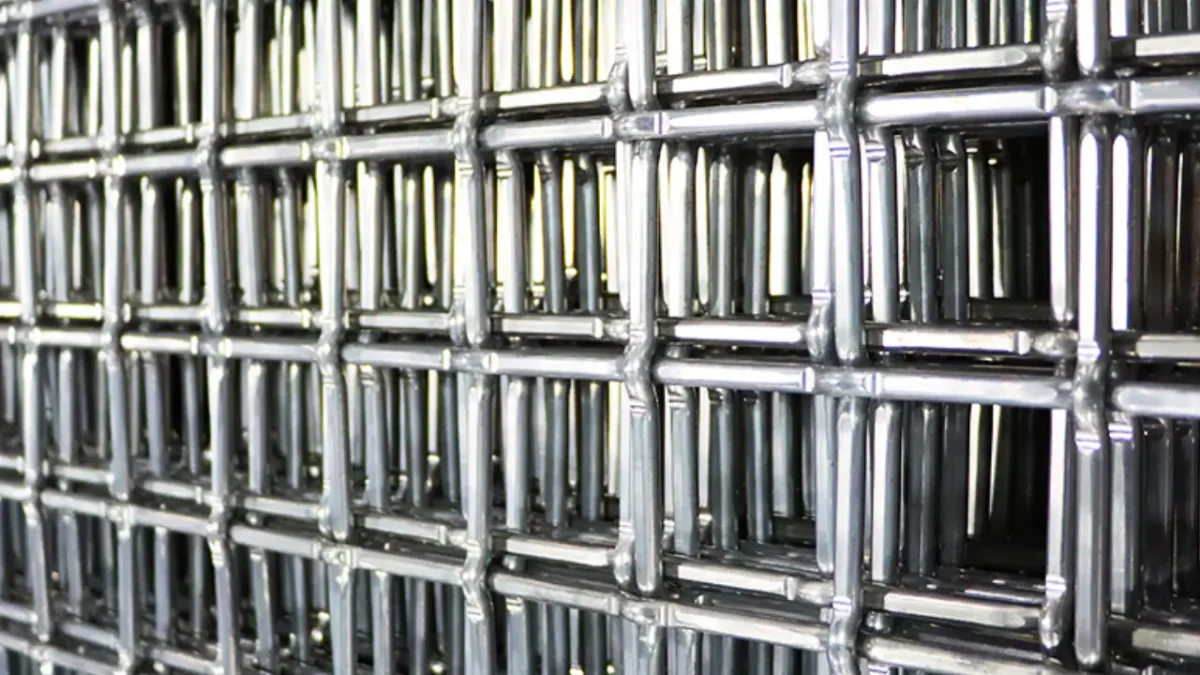
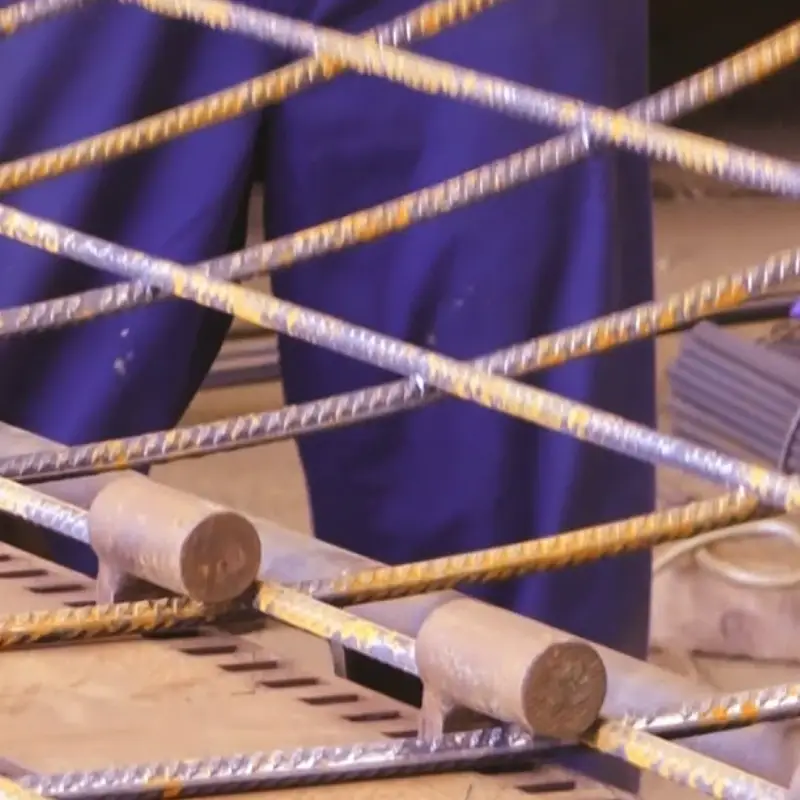
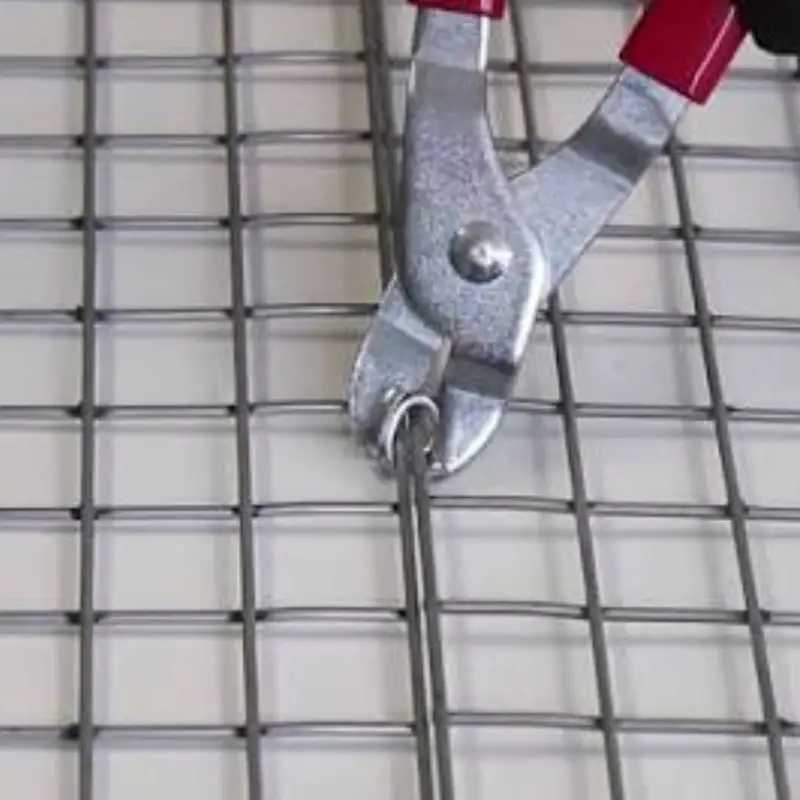
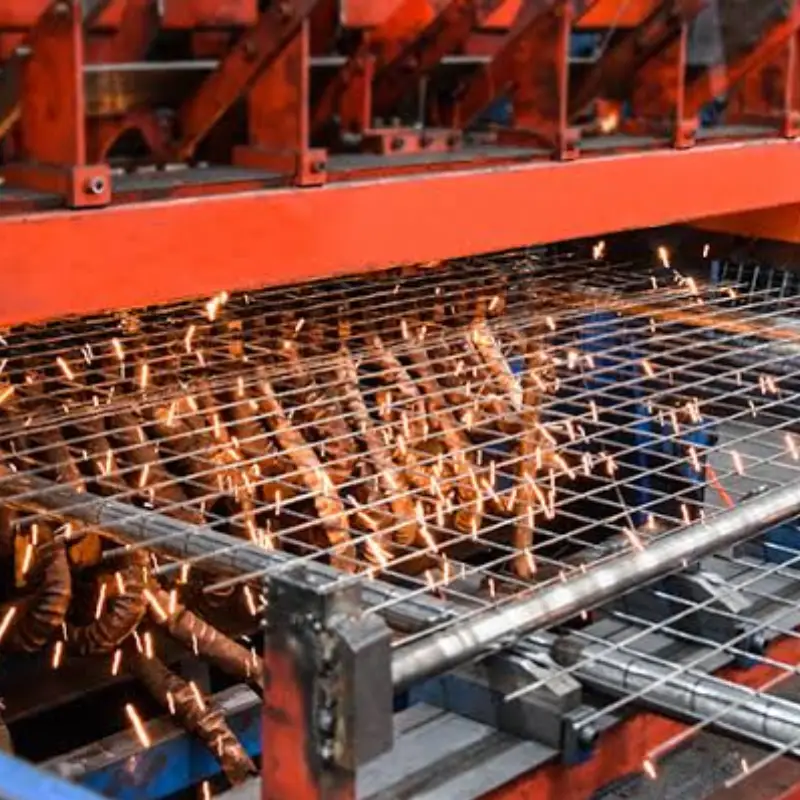
Wire mesh is a grid-like material made by joining metal wires through welding, weaving, or other manufacturing methods. It is available in different wire diameters, openings, materials, and finishes. Depending on its design, wire mesh can provide reinforcement, separation, filtration, protection, or support in construction, industrial, agricultural, and commercial applications.
Common uses of wire mesh include:
- Concrete Reinforcement: Welded wire mesh is placed within concrete slabs, walls, and pavements to help distribute loads and control cracking during service.
- Fencing: Wire mesh creates strong barriers for residential, commercial, industrial, and agricultural properties, providing security while maintaining visibility and airflow.
- Filtration: Fine woven wire mesh can separate particles, liquids, or gases in industrial filtration systems where controlled openings and consistent mesh sizes are required.
- Screening: Wire mesh is used for sorting and screening materials in mining, aggregate processing, food processing, and other industrial operations.
- Animal Enclosures: Wire mesh provides practical barriers for cages, livestock areas, poultry houses, and other enclosures while allowing ventilation and visibility.
Fiber Concrete vs Wire Mesh
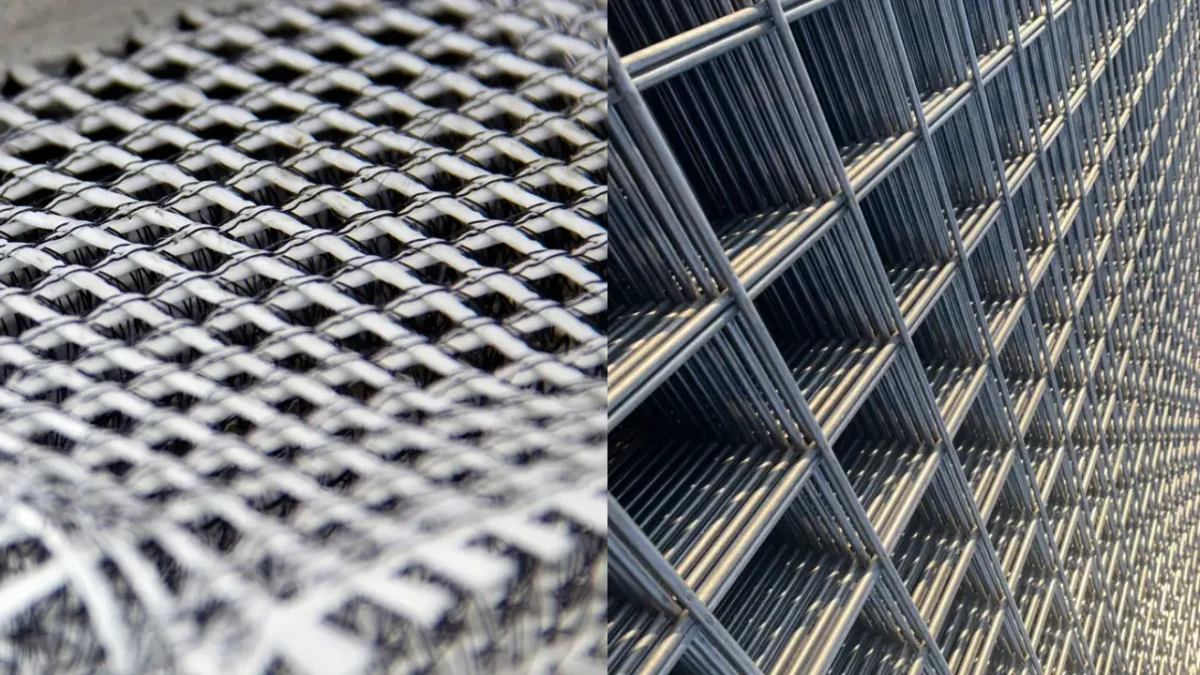
Fiber concrete uses short, discrete fibers mixed directly into the concrete. These fibers may include steel, synthetic, polypropylene, glass, or other materials. The fibers are distributed throughout the concrete matrix, creating reinforcement in multiple directions and helping improve the concrete’s overall toughness and crack-control performance.
Wire mesh consists of interconnected metal wires arranged in a regular grid. It can be welded or woven and is available in different wire diameters, opening sizes, and materials. Depending on the application, galvanized, stainless steel, carbon steel, or coated wire mesh can be selected for different performance and environmental requirements.
Reinforcement Features
A key feature of fiber concrete is its distributed reinforcement. Because fibers are spread throughout the concrete, they can help control cracks that develop in different areas of the concrete matrix. This makes fiber reinforcement useful where uniform crack control and improved toughness are important.
Wire mesh provides reinforcement through a clearly defined grid structure. Its wire diameter and spacing can be specified according to project requirements, allowing engineers to control the reinforcement arrangement. Wire mesh can also provide a physical framework within concrete, particularly when consistent reinforcement placement is required.
Crack Control
Fiber concrete can help control microcracks caused by shrinkage, temperature changes, and other stresses. As cracks begin to form, appropriately selected fibers can bridge the cracks and help limit their development. Its effectiveness depends on fiber type, dosage, concrete mix, and project conditions.
Wire mesh can also help control cracking by distributing tensile stresses across a concrete slab or other reinforced element. Proper placement and concrete cover are important for achieving the intended performance. If mesh is incorrectly positioned, its ability to provide effective reinforcement may be reduced.
Strength and Durability
Fiber concrete can improve post-cracking behavior, toughness, impact resistance, and resistance to certain forms of repeated loading. Different fibers provide different characteristics, so steel fibers may be selected for applications requiring greater mechanical reinforcement, while synthetic fibers are often used for crack control.
Wire mesh provides predictable reinforcement through its wire size and grid spacing. Steel mesh can contribute tensile reinforcement and help maintain structural integrity when properly designed and installed. Galvanized or stainless steel mesh may also be considered when greater resistance to corrosion is required in demanding environments.
Installation
Fiber concrete is generally incorporated into the concrete mixture before placement. This eliminates the need to manually position large sheets of mesh in some applications. The concrete can then be placed using conventional methods, although proper mixing is important to achieve an even distribution of fibers.
Wire mesh requires additional handling and positioning before or during concrete placement. Sheets or rolls need to be cut, overlapped, supported, and positioned at the required depth. This can require additional labor, but the grid structure makes reinforcement placement easier to define and inspect.
Construction Uses
Fiber concrete is used in concrete floors, pavements, precast components, tunnel linings, shotcrete, industrial slabs, and other applications. Its distributed fibers can be particularly useful for controlling cracking and improving toughness where conventional reinforcement may be difficult to install.
Wire mesh is commonly used in concrete slabs, floors, sidewalks, driveways, walls, fencing, screening, filtration, and industrial applications. Its wide range of wire sizes, opening patterns, and materials allows it to serve both reinforcement and general-purpose functions.
Benefits
One major benefit of fiber concrete is that reinforcement is distributed throughout the concrete rather than concentrated in a fixed grid. It can simplify certain installation processes, improve crack control, and provide additional toughness. Fiber reinforcement can also be useful in irregular areas where positioning traditional mesh is inconvenient.
Wire mesh offers a structured and measurable reinforcement system with consistent wire spacing. It is available in many specifications and can be selected for different applications. Beyond concrete reinforcement, wire mesh can provide benefits such as durability, ventilation, visibility, filtration, separation, and physical protection.
Cost and Project Requirements
The cost comparison depends on the concrete mix, fiber type and dosage, mesh specification, labor requirements, transportation, and installation conditions. Fiber concrete may reduce some handling and placement work, while wire mesh may be more practical when a specified reinforcement grid is already included in the structural design.
Project requirements should ultimately determine the choice. Consider load conditions, slab thickness, crack-control requirements, environmental exposure, reinforcement design, installation method, and applicable construction standards. In some projects, fibers and wire mesh may also be used together when their different reinforcement functions complement each other
Here are some differences between fiber concrete and wire mesh:
| Aspect | Fiber Concrete | Wire Mesh |
|---|---|---|
| Material | Concrete mixed with short reinforcing fibers | Interconnected metal wires |
| Reinforcement | Distributed throughout the concrete | Provided through a fixed grid |
| Crack Control | Helps control microcracks and post-cracking behavior | Helps distribute stresses and control cracking |
| Installation | Fibers are mixed into concrete | Mesh must be positioned before or during placement |
| Strength | Depends on fiber type, dosage, and concrete design | Depends on wire material, diameter, and spacing |
| Durability | Can improve toughness and crack resistance | Can provide durable reinforcement with suitable materials |
| Uses | Floors, pavements, precast concrete, tunnels, shotcrete | Concrete slabs, floors, walls, fencing, screening |
| Benefits | Distributed reinforcement and potentially simpler placement | Consistent grid, defined spacing, and versatile specifications |
| Best Considerations | Fiber type, dosage, mix design, and application | Wire diameter, opening size, material, and placement |
How to Choose Fiber Concrete and Wire Mesh?
Choosing between fiber concrete and wire mesh depends on your project’s reinforcement requirements, concrete design, application, and installation conditions. Fiber concrete provides distributed reinforcement throughout the concrete, while wire mesh creates a structured reinforcement grid. Consider the following factors to determine which solution fits your construction project and performance requirements.
- Project Application: Consider where the reinforcement will be used. Fiber concrete can suit floors, pavements, tunnels, and precast products, while wire mesh is commonly used in slabs, walls, sidewalks, and other concrete structures requiring structured reinforcement.
- Load Requirements: Evaluate the expected loads, impact, traffic, and repeated stresses. Fiber concrete can improve toughness and post-cracking behavior, while properly specified wire mesh can provide defined tensile reinforcement. The reinforcement method should match the structural requirements established for your project.
- Crack Control: Determine the type and extent of cracking you need to control. Fibers are distributed throughout the concrete and can help control microcracks, while wire mesh helps distribute stresses across a concrete section through its regular grid structure.
- Installation Method: Consider available labor, equipment, and installation time. Fiber concrete is mixed directly into the concrete, which can reduce some reinforcement handling. Wire mesh requires cutting, positioning, supporting, and overlapping, but its grid makes reinforcement placement easier to define.
- Concrete Thickness: Match the reinforcement solution to the thickness and design of the concrete element. Thicker or heavily loaded structural components may require specifically designed reinforcement. For thinner slabs and surfaces, the required reinforcement should be determined according to project specifications and engineering requirements.
- Environmental Conditions: Consider moisture, chemicals, temperature changes, abrasion, and corrosion exposure. Select suitable fiber types and wire mesh materials for the environment. Galvanized or stainless steel wire mesh may be appropriate for some corrosive conditions, while synthetic fibers can avoid steel corrosion concerns.
- Budget and Labor: Compare the complete project cost instead of only material prices. Consider concrete mixing, reinforcement handling, installation labor, transportation, equipment, and potential construction time. Fiber concrete may simplify placement in some projects, while wire mesh may be more practical for standardized reinforcement layouts.
Conclusion
Fiber concrete and wire mesh provide different approaches to concrete reinforcement. Fiber concrete distributes small reinforcing fibers throughout the concrete mixture, while wire mesh creates a structured reinforcement grid. Their performance can vary depending on concrete design, loading conditions, placement, and project requirements, so understanding these differences is important before selecting either reinforcement solution for your construction project.
When choosing between the two, consider the required reinforcement level, application, installation process, concrete thickness, material properties, and overall project budget. Fiber reinforcement can simplify placement in certain applications, while wire mesh provides a visible and structured reinforcement system. Proper design and installation are also essential for achieving reliable concrete performance and effective crack control.
If you are looking for dependable wire mesh for construction, industrial, or other reinforcement applications, we can provide different specifications to match your project requirements. We focus on consistent manufacturing and practical solutions for various applications. Contact us to discuss your needs and get wholesale wire mesh from our Apscreens for your next project.