Wire mesh and steel matting are both widely used for reinforcement, protection, and structural support, yet they serve different purposes across construction, industrial, agricultural, and security projects. Understanding how each product is made, performs, and is installed helps buyers choose materials that match their project’s strength, coverage, durability, and budget requirements.
Although the names are sometimes used interchangeably, wire mesh and steel matting differ in wire thickness, opening patterns, load capacity, flexibility, and typical applications. Wire mesh is often selected for screening, fencing, and light reinforcement, while steel matting provides heavier-duty support for concrete slabs, roads, foundations, and demanding structural work.
What is Wire Mesh?
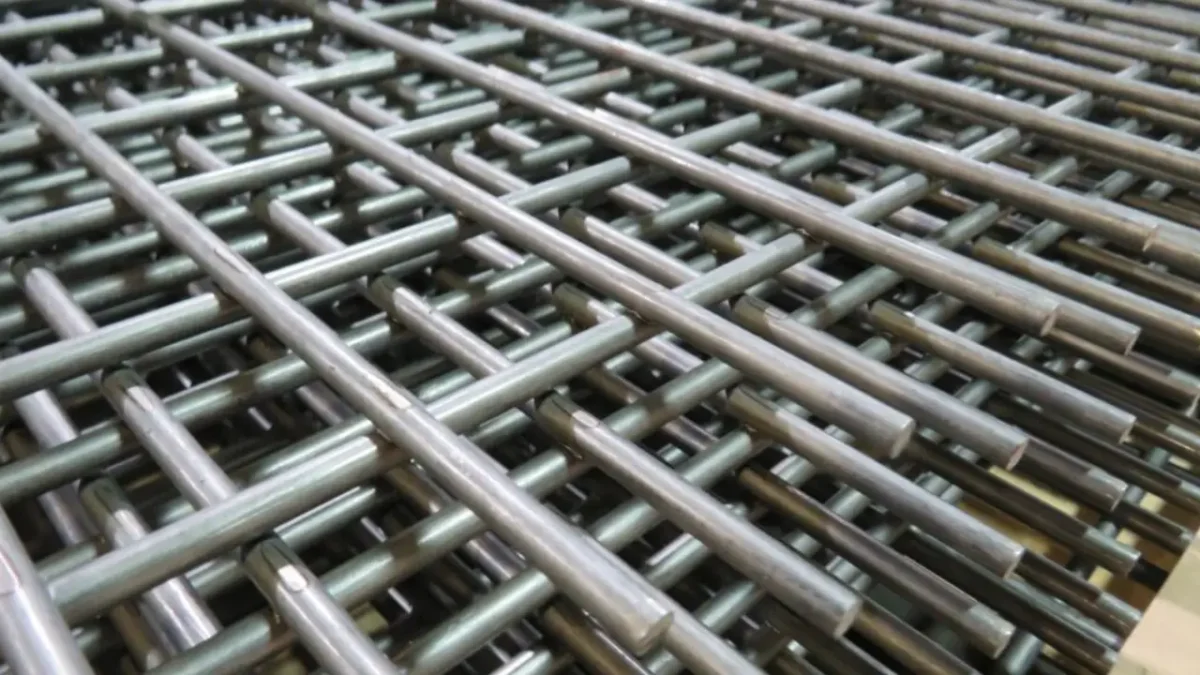
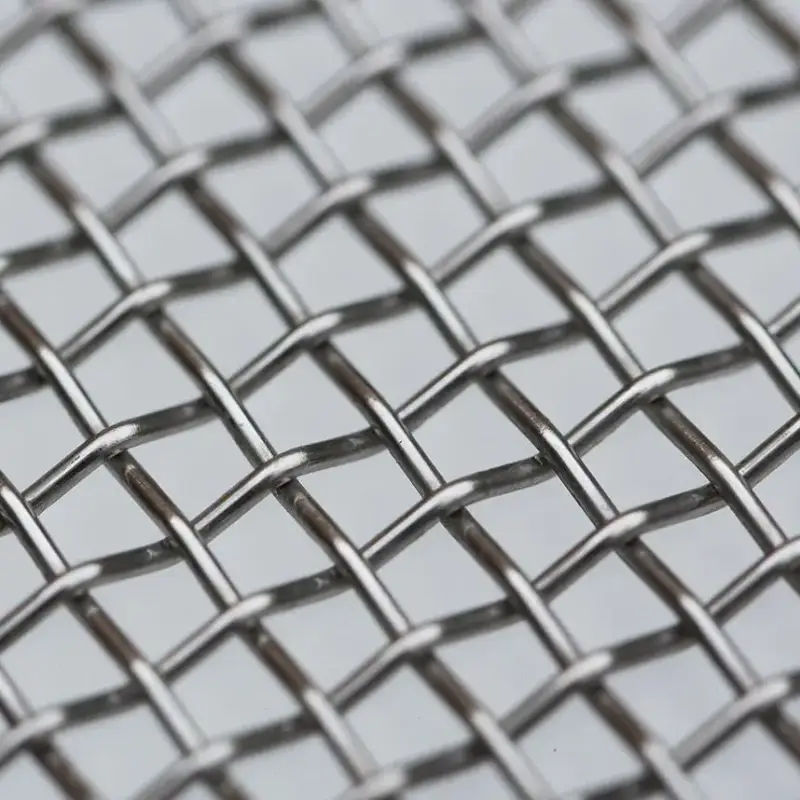
Wire mesh is a versatile grid-like material made by arranging metal wires into evenly spaced openings. Manufacturers typically create it by weaving wires together or welding them at intersections, producing sheets, rolls, or panels. Its strength, visibility, airflow, and adaptability make it suitable for construction, fencing, filtration, guarding, and reinforcement applications.
Key wire-mesh characteristics and common applications include:
- Material options: Wire mesh is commonly made from low-carbon steel, galvanized steel, stainless steel, or coated steel. Material choice affects corrosion resistance, strength, appearance, longevity, and suitability for indoor, outdoor, wet, food-processing, or corrosive industrial environments.
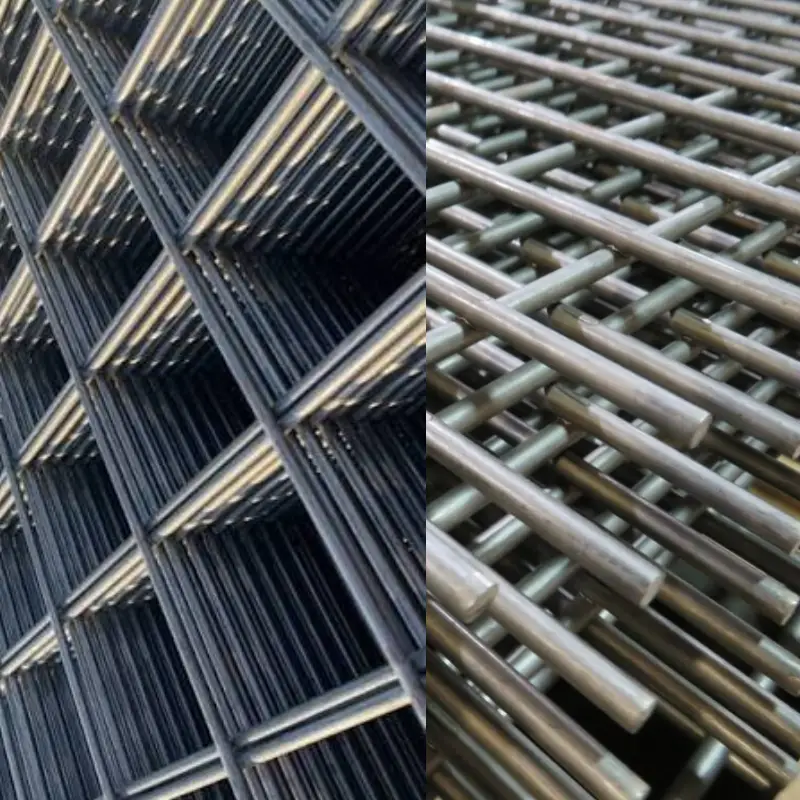
- Welded wire mesh: This type uses longitudinal and cross wires electrically welded at every intersection. The finished product is rigid, dimensionally stable, and consistently spaced, making it a practical choice for fencing, concrete reinforcement, partitions, storage cages, and machine guards.
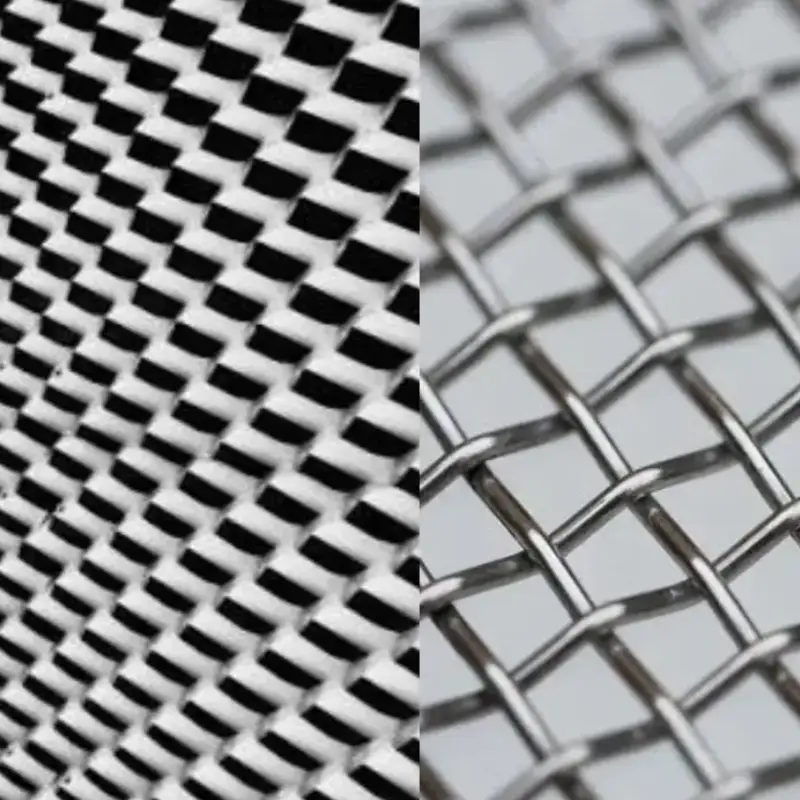
- Woven wire mesh: Woven mesh is produced by passing wires over and under one another, much like fabric. Because intersections are not permanently welded, it remains flexible and is particularly useful for screening, filtering, sifting, and irregular surfaces.
- Opening size and wire gauge: Mesh performance depends on opening dimensions and wire thickness. Smaller openings can retain finer particles or prevent access, while thicker wire increases durability and load capacity for demanding security, construction, and containment applications.
- Common uses: Wire mesh is used for garden and perimeter fencing, animal enclosures, concrete support, ventilation covers, industrial screens, filter systems, safety barriers, and protective equipment guards. The best option depends on required strength, flexibility, and environmental resistance.
What is Steel Matting?
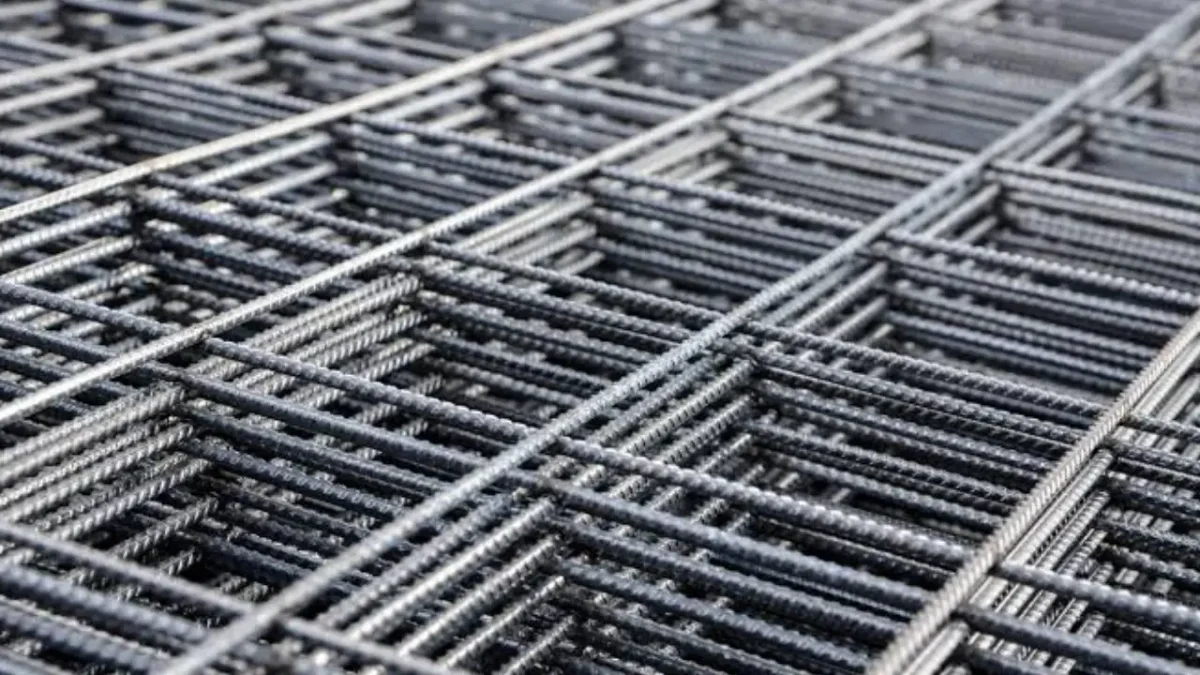
Steel matting is a prefabricated, rigid grid of steel wires or bars welded together at regular intersections. Often called welded wire reinforcement or reinforcing mesh, it is embedded in concrete to provide tensile support, distribute loads, and help control cracking in slabs, pavements, walls, and other structural elements.
Steel matting is valued because it delivers consistent spacing and reinforcement across large areas. Rather than tying individual reinforcing bars on-site, crews can place ready-made sheets or rolls, helping improve installation efficiency while maintaining a uniform reinforcement layout. Its required size and specification should always follow the project’s approved structural design.
Key characteristics and uses of steel matting include:
- Welded grid construction: Steel matting consists of longitudinal and cross wires arranged in square or rectangular patterns. Each intersection is resistance-welded, forming a stable, pre-engineered panel that retains its shape during handling, placement, and concrete pouring.
- Concrete reinforcement: It is commonly placed within concrete slabs, driveways, floors, pavements, walls, and precast elements. The steel provides tensile resistance where concrete alone is comparatively weak, helping distribute stresses across the reinforced area.
- Crack-control support: Properly specified and positioned matting can help manage shrinkage- and temperature-related cracking in concrete. It does not eliminate all cracking, but it can hold crack faces together and contribute to a more durable finished surface.
- Uniform spacing: Because the wires are welded in a fixed pattern at the factory, steel matting offers consistent spacing across a panel. This makes it useful for repetitive slab and pavement layouts where placement speed and coverage are important.
- Available formats and finishes: Steel matting may be supplied as sheets or rolls, with smooth or deformed wire surfaces. Depending on the environment and project requirements, options can include plain steel or galvanized products for improved corrosion resistance.
- Project-specific selection: Wire diameter, mesh opening, panel size, grade, cover depth, and overlap requirements must be selected for the specific design. For structural work, the engineer’s drawings and local code requirements—not a general rule of thumb—should govern the final specification.
Wire Mesh vs Steel Matting
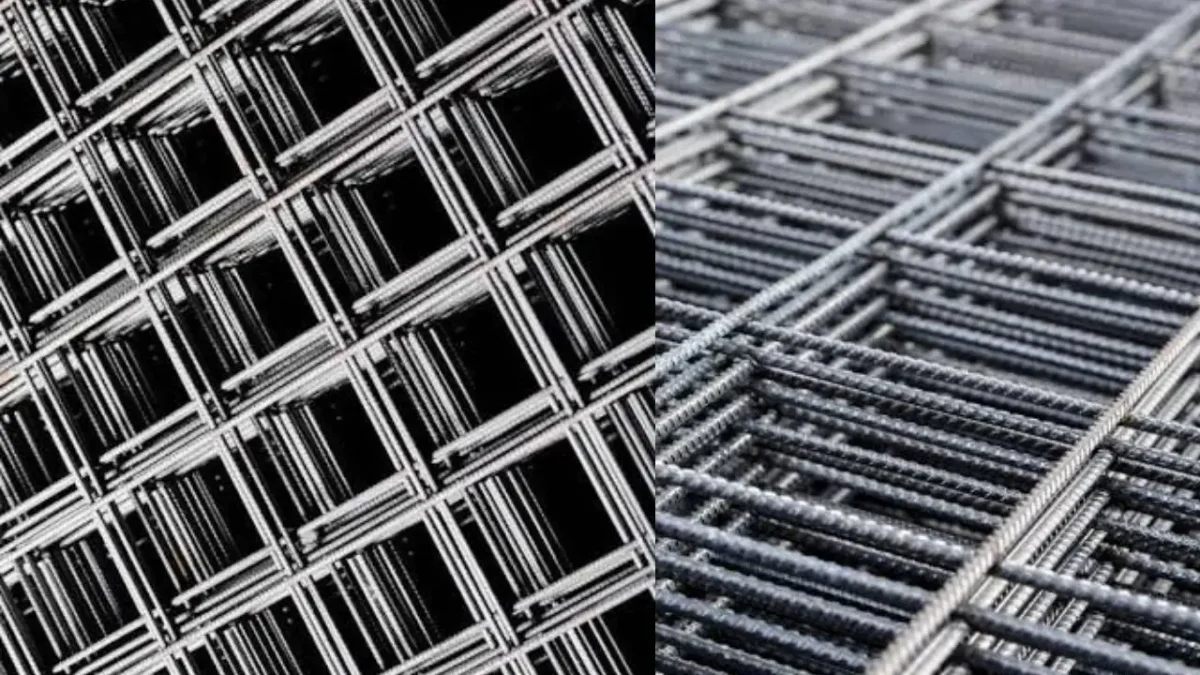
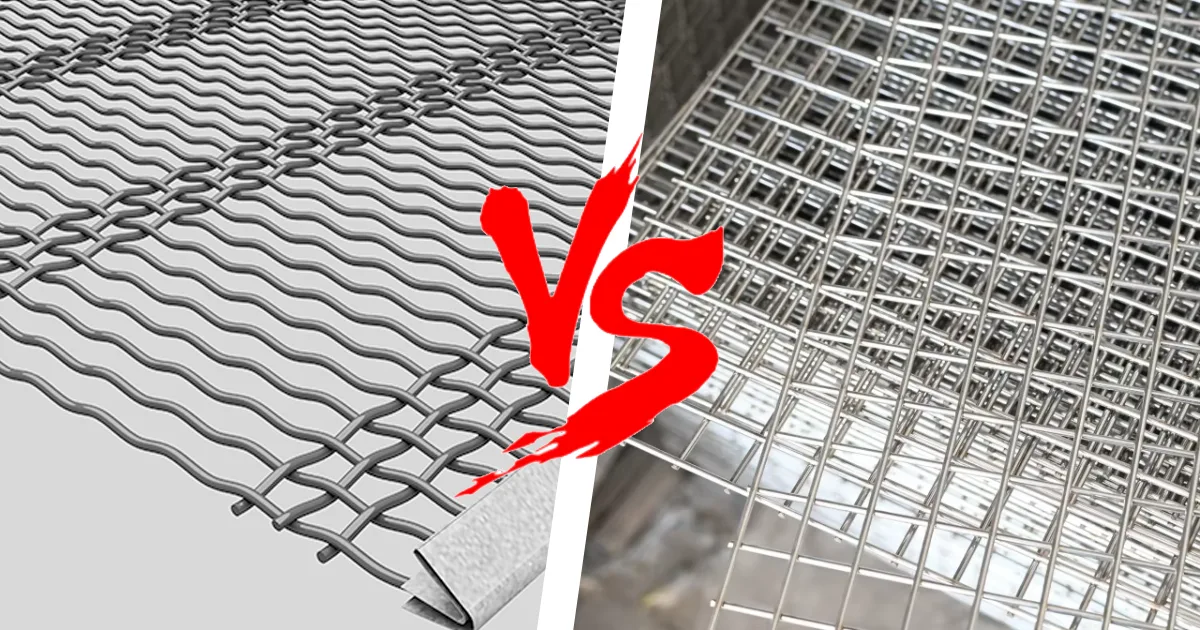
Wire mesh and steel matting are both grid-based metal products, but they are designed for different levels of performance and project demands. Wire mesh is a broad category used for screening, fencing, filtration, guarding, and light reinforcement, while steel matting is a rigid welded reinforcement product intended mainly for concrete construction.
Materials and Manufacturing
Wire mesh can be manufactured from stainless steel, galvanized steel, carbon steel, aluminum, and other metals. Its wires may be woven over and under each other, welded at intersections, or expanded from metal sheet, creating options with different strengths, flexibility levels, opening patterns, and finishes.
Steel matting is usually manufactured from steel wires or reinforcing bars placed in perpendicular lines and welded at every crossing point. This factory-made configuration creates a stable, uniform panel designed to retain its spacing and shape while workers position it inside a concrete pour.
Strength and Rigidity
Wire mesh strength varies significantly based on wire diameter, metal type, opening size, and manufacturing method. Woven products are generally more flexible, while welded products are more rigid. This range makes wire mesh adaptable for projects that require filtration, visibility, airflow, containment, or moderate protection.
Steel matting is generally more rigid because it is specifically manufactured as welded reinforcement. Its grid distributes stress over a broad area of concrete and provides tensile support where concrete is naturally weaker. The required wire size and spacing should always follow the engineered project design.
Typical Applications
Wire mesh has a wide range of uses beyond concrete work. It can be used for animal cages, garden fencing, window guards, machine enclosures, ventilation screens, aggregate screening, industrial filtration, and decorative architectural panels. Its wide material and opening-size selection supports many functional requirements.
Steel matting is primarily used in concrete slabs, driveways, sidewalks, pavements, floors, foundations, precast components, and similar construction elements. It is commonly selected where a large, flat concrete area requires consistent reinforcement and crack-control support across the surface.
Flexibility and Handling
Many wire-mesh products, particularly woven mesh and lighter-gauge rolls, can be cut, shaped, bent, and installed around curved or irregular surfaces. This flexibility is valuable for custom enclosures, screens, filters, and other applications where a rigid flat panel would be difficult to fit.
Steel matting is commonly supplied as sheets or panels that are heavier and less flexible than general-purpose mesh. Its rigidity helps preserve the reinforcement layout, but handling may require more planning, adequate staging space, and support chairs or spacers to maintain the specified elevation.
Concrete Performance
Wire mesh may be used in concrete where the selected product is specified as welded wire reinforcement. In these cases, it can assist with distributing loads and controlling shrinkage or temperature-related cracking, but it must be correctly sized and supported within the slab to be effective.
Steel matting is purpose-built for concrete reinforcement and is normally placed within the slab rather than resting on the subbase. Correct positioning is essential: guidance from the Wire Reinforcement Institute notes that welded wire reinforcement in 4- to 6-inch slabs is generally placed in the middle third of the slab.
Selection and Specifications
Choosing wire mesh begins with the purpose of the installation. Buyers should evaluate material grade, corrosion resistance, opening size, wire gauge, weave or weld method, visibility, airflow, and required lifespan. For example, stainless steel may suit damp or corrosive settings, while galvanized mesh can suit many outdoor projects.
Choosing steel matting requires closer coordination with construction drawings and engineering requirements. Important details include wire diameter, spacing, sheet dimensions, lap length, concrete cover, reinforcement elevation, exposure conditions, and applicable standards. It should be selected for the structure’s design needs—not simply by choosing the thickest available mat.
Here are some differences between wire mesh and steel matting:
| Aspect | Wire Mesh | Steel Matting |
|---|---|---|
| Primary purpose | Screening, fencing, filtration, guarding, containment, and selected reinforcement uses | Concrete reinforcement, load distribution, and crack-control support |
| Construction | May be woven, welded, expanded, or otherwise formed | Typically steel wires or bars welded at every grid intersection |
| Materials | Stainless steel, galvanized steel, carbon steel, aluminum, and more | Primarily reinforcing-grade steel wire or steel bars |
| Flexibility | Can range from flexible woven rolls to rigid welded panels | Generally rigid and supplied as stable sheets or panels |
| Strength level | Varies widely by wire gauge, opening size, material, and production method | Designed for consistent performance in concrete reinforcement applications |
| Common applications | Fences, cages, filters, screens, guards, partitions, and decorative features | Slabs, driveways, sidewalks, floors, pavements, foundations, and precast concrete |
| Installation | Often cut, bent, or fitted to suit the application | Positioned at the specified concrete depth using chairs, spacers, and required overlaps |
| Buying consideration | Select for opening size, corrosion resistance, flexibility, and intended use | Select according to engineering drawings, concrete design, wire size, spacing, and placement requirements |
How to Choose Wire Mesh and Steel Matting?
How to Choose Wire Mesh and Steel Matting
Selecting wire mesh or steel matting begins with the job it must perform. Wire mesh is chosen for functions such as screening, fencing, filtration, guarding, and containment, while steel matting is selected primarily for concrete reinforcement. Review load demands, environmental exposure, dimensions, installation conditions, and project specifications before placing an order.
The correct product is not always the thickest or smallest-opening option. A suitable selection balances strength, open area, corrosion resistance, flexibility, budget, and service life. For concrete work, the engineer’s drawings and local code requirements should determine steel matting size, wire area, location, laps, cover, and support method.
- Define the intended application: Start by identifying whether the material will filter particles, protect equipment, contain animals, form a fence, provide ventilation, reinforce concrete, or create a decorative feature. This decision determines the necessary mesh type, opening size, rigidity, material, and overall performance requirements.
- Select the right material: Choose material according to moisture, chemicals, temperature, and corrosion exposure. Stainless steel is commonly used where corrosion resistance is important, while galvanized steel suits many outdoor uses. Carbon steel may work in protected conditions where coating or corrosion resistance is less critical.
- Choose opening size carefully: Opening size controls what can pass through the mesh and what it can retain. Smaller openings are better for fine filtration, insect control, and particle screening; larger openings provide greater airflow, visibility, drainage, and lower material usage for fencing or guarding.
- Match wire diameter to performance: Wire diameter affects durability, rigidity, load capacity, and open area. Thicker wires generally increase strength but reduce the clear opening at a given mesh count. Select the diameter by balancing required support, expected wear, product flow, screening accuracy, and ease of handling.
- Choose woven or welded mesh: Woven wire mesh offers flexibility and is commonly selected for screening and filtration. Welded mesh provides fixed openings and greater rigidity, making it useful for fencing, cages, machine guards, and concrete reinforcement. Consider whether the project needs conformability or stable, flat panels.
- Confirm format and dimensions: Decide whether rolls, sheets, or rigid panels best suit the installation. Rolls can be convenient for curved fencing or broad coverage, whereas sheets and panels provide better flatness and control. Measure the installation area, allow for cuts or overlaps, and confirm manageable handling sizes.
- Follow engineered steel-matting specifications: For concrete slabs and structural work, select steel matting strictly from approved drawings or an engineer’s specification. Verify grid spacing, wire size, panel dimensions, lap length, concrete cover, and reinforcement elevation; these factors directly affect the matting’s intended crack-control or structural role.
- Plan correct placement and support: Steel matting must remain at its specified position during the concrete pour. Reinforcement left on the subbase can provide much less crack-control benefit. Use appropriate chairs, bolsters, or other approved supports so the mesh stays at the designed elevation rather than sinking under workers or concrete.
- Consider total lifecycle cost: Compare more than initial purchase price. Include cutting waste, installation labor, required coatings, corrosion risk, maintenance, replacement frequency, and expected service conditions. A product with stronger environmental resistance may cost more initially but can reduce long-term repair and replacement expenses.
Conclusion
Choosing between wire mesh and steel matting starts with the conditions your project must handle. Consider the required load capacity, exposure to moisture or corrosion, opening size, installation method, and relevant building specifications. A lighter mesh may be practical for containment or screening, whereas steel matting is generally better suited to robust concrete reinforcement and high-load environments.
The right material can improve structural performance, simplify installation, and reduce long-term maintenance costs. Before ordering, confirm dimensions, wire gauge, weld quality, coating requirements, and quantity calculations. Working with a dependable supplier also helps ensure consistent product quality and access to the specifications needed for a safe, efficient, and durable finished project.
For reliable material options and competitive bulk purchasing, get wholesale wire mesh from Apscreens. Its product range can support projects requiring screening, fencing, reinforcement, protection, and other industrial applications. By selecting the correct mesh or matting configuration before purchase, contractors and buyers can avoid unnecessary waste, delays, and costly adjustments during installation.