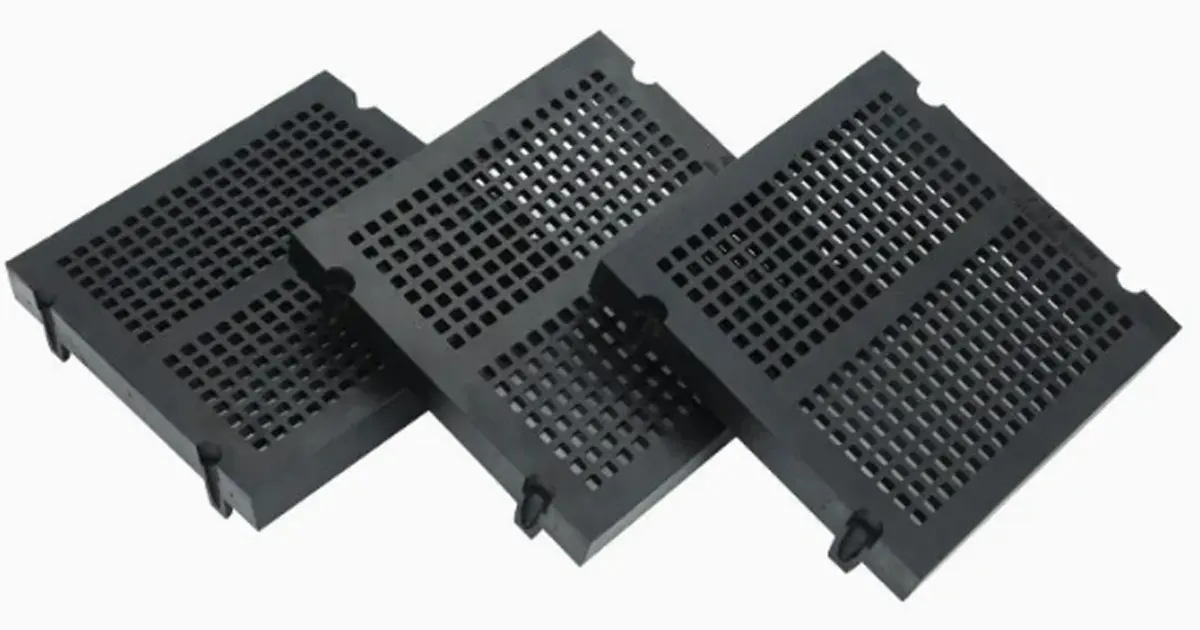
Want your rubber screen panels maintenance to be effective and ensure they last longer? You need to perform regular maintenance. Make sure you install them the right way and always follow the manufacturer’s guidelines. If you take care of rubber screen panels, you will experience less downtime. This also saves you money since you won’t need to purchase new panels as frequently.
A plant switched to modular screens, allowing one person to handle maintenance in just minutes instead of hours. This efficiency enables staff to focus on other important tasks.
Here is a quick look at how long panels last:
| Type of Screening Media | Average Wear Life |
|---|---|
| Competitor Screening Media | 5 months |
| Rubber Screening Media | > 12 months |
| Panels Changed After 1 Year | 14 out of 180 |
By prioritizing rubber screen panels maintenance, your operation will run smoothly, and you can avoid costly interruptions.
Key Takeaways
- Taking care of rubber screen panels helps them last longer and stops work from being interrupted.
- It is important to install panels the right way. Make sure panels fit well and follow the maker’s instructions for the best outcome.
- Checking panels often helps you find problems early. This stops expensive fixes and keeps the screens working well.
- Clean panels every day to stop dirt from piling up. Dirt can block holes and make the panels work less well.
- Use good rubber mesh that fits what you are working with. This makes the panels stronger and helps them work better.
- Watch how the panels are used, like how much they shake and how fast things go through. This helps the panels work well and last longer.
- Change panels that are worn out right away. This keeps work moving and makes sure the products stay good.
- Keep the screen room neat and tidy. This helps rubber screen panels work the way they should.
Why Rubber Screen Panels Maintenance Matters
Effects of Neglect
If you don’t take care of rubber screen panels, you will have problems. Panels wear out faster. Equipment can break down without warning. Screens might not separate materials well. This causes more waste and less good product. Here’s what happens if you skip regular care:
- Outputs are not consistent. This makes bad products.
- Scrap rates go up.
- More material gets wasted.
If you ignore equipment, utility bills get higher. It also hurts sustainability goals. Bad maintenance makes equipment last less time. Costs go up, and product quality drops.
You may have more downtime. When panels fail, everything stops. This wastes time and money. No one likes surprise shutdowns or costly repairs.
Common Maintenance Issues
If you don’t keep up with maintenance, you may face some problems. Loose panels can move and wear unevenly. Dirt and debris can block screen holes. This makes equipment work harder. Sometimes panels crack or tear if not checked often.
Here are main reasons why regular maintenance matters:
- Stops downtime.
- Keeps screening accurate.
- Makes equipment last longer.
- Lowers costs.
If you find these problems early, you can fix them fast. A quick check saves hours of repair later.
Benefits of Routine Maintenance
Doing maintenance often brings many benefits. Panels last longer. Equipment works better. You spend less on repairs and replacements. Routine checks help you find small problems early.
See how regular care helps your operation:
| Benefit | Improvement Percentage |
|---|---|
| Equipment lasts longer | 25–50% |
| Less unplanned downtime | up to 40% |
| Better screening accuracy | N/A |
| Lower maintenance costs | N/A |
You keep screening accurate. This means more good product and less waste. Your team works with fewer stops. The plant runs smoother. Spending a little time on maintenance saves money and gives better results.
Proper Installation and Panel Fit
Correct Panel Placement
You want your rubber screen panels to last longer. Start by placing them the right way. If you install panels correctly, they fit tight and work better. Use tension-type installation for high-frequency screens. This keeps the mesh close to the plate. Before installing, check the screen size. Use a laser rangefinder to make sure everything lines up. The tolerance should be ±1.5mm. Small details matter a lot.
Try the center-and-spoke method. Fix the center first, then move out along a 45° angle. This stops gaps and keeps panels steady. For best results, use an intelligent tensioning system. Set hydraulic pressure between 0.8 and 1.2 MPa. Follow a tightening order for even tension.
Here’s a quick table of best practices:
| Best Practice | Description |
|---|---|
| Tension-Type Installation | Keeps mesh tight for high-frequency screens |
| Pre-Installation Verification | Use laser rangefinder for precise alignment (±1.5mm tolerance) |
| Dynamic Positioning | Center-and-spoke method for stable placement |
| Intelligent Tensioning System | Hydraulic pressure 0.8–1.2 MPa, follow tightening sequence |
| Maintenance Plan | Inspect per shift, measure wear weekly, tighten connectors monthly |
Tip: Always check your measurements before you start. A few minutes now can save hours later.
Fastening and Security
You don’t want panels to come loose while working. Lock each modular panel with its special mechanism. This keeps panels tight and stops movement. Make sure you tension screens right when you install them. Check often to see if you need to re-tension. If you use side-tensioned synthetic decks, support them with bucker bar rubber. This gives extra stability.
- Lock each panel with its designed mechanism.
- Tension screens at installation and check often.
- Use bucker bar rubber for side-tensioned decks.
Note: Loose panels wear unevenly and can hurt your equipment. Stay ahead by checking fasteners every month.
Preventing Uneven Wear
You want panels to wear evenly. Use calibrated tensioning tools and follow a star-pattern order. This spreads force across the panel and avoids stress spots. Before installing, check the support structure. Replace worn parts so you have a strong surface. Install impact liners made of rubber or polyurethane. These protect panels from heavy hits. Keep scalping screens in good shape to remove big material before it reaches the main screen.
Store panels in cool, dry places. Teach your staff to handle panels carefully. This stops stress points and keeps panels in good shape.
- Use calibrated tensioning tools and star-pattern sequence.
- Inspect and maintain support structures.
- Install impact liners and maintain scalping screens.
- Store panels properly and train staff on handling.
Callout: Even wear means panels last longer and you get fewer surprises. Take these steps to keep your operation running smoothly.
Regular Inspection for Rubber Screen Panels Maintenance
You want your rubber screen panels to last longer. Checking them often helps you find problems early. This keeps your work running well. Let’s see what you should check and how often.
Inspection Checklist
You need a good checklist so you don’t miss anything. When you look for damage, focus on these main spots:
Cracks and Tears
Look for cracks or tears in the rubber. These show the panel is damaged. If you see them, change the panel right away. Small cracks can get bigger fast. Use a flashlight to check every corner. Remember to check the edges and mounting holes.
Loose Components
Loose bolts or fasteners can make panels move. This causes uneven wear and more damage. Tighten anything that feels loose. If you see movement while working, stop and fix it. Panels must stay tight all the time.
Gaps and Deformation
Check for gaps between panels or any bending. Gaps let material slip through and make screening worse. Bent panels show damage and may not fit right. If you see bulges or warped spots, change the panel. Keep panels tight and flat.
Here’s a simple table to help your inspection:
| Inspection Point | Description |
|---|---|
| Inspect Springs and Suspension | Check springs, coil springs, or rubber mounts. Replace damaged parts. |
| Monitor Motor and Vibration Mechanism | Look at motor and vibration parts for wear or damage. Fix problems fast. |
| Perform Vibration Analysis | Do vibration checks to find problems early. Watch vibration and bearing heat. |
| Document Maintenance Activities | Write down inspections, repairs, and changes to track panel health. |
Tip: Keep a logbook for every check. This helps you see patterns and plan repairs before things get worse.
Inspection Schedule
You need a routine to make checking easy. Look at panels at the start of each shift. Walk around and look for damage. Once a week, do a deeper check. Use your checklist and table to check everything. Every month, review your logbook and compare notes. If you see the same problems often, change your maintenance plan.
Don’t wait for panels to break. Stay ahead with a regular schedule. Your team will be happy, and your equipment will last longer.
Callout: Regular checks save money and stop downtime. Make it part of your daily routine and you’ll see good results.
Cleaning and Lubrication
Keeping your rubber screen panels clean and well-lubricated helps them last longer and work better. If you skip regular cleaning, you might see more wear, less screening efficiency, and even mold and mildew problems. Let’s break down the best ways to keep your panels in top shape.
Cleaning Methods
Removing Debris
You should remove debris from your panels every day. Use a soft brush or low-pressure air to clear away dust, rocks, and sticky material. If you let debris build up, it can block the screen holes and slow down your operation. For tough spots, try a gentle water spray. Avoid harsh chemicals because they can damage the rubber.
- Brush off loose dirt and stones after each shift.
- Use a hose or low-pressure washer for stubborn grime.
- Check for stuck material in the corners and edges.
Tip: Quick cleaning after each use helps with mold and mildew prevention. You stop moisture from sitting on the panels, which keeps them fresh and safe.
Preventing Buildup
You want to stop buildup before it starts. Panels with self-cleaning features work well in sticky or fine material jobs. These panels shake off fines and keep the holes open. If you notice material sticking, schedule a deep cleaning once a week. This keeps your screens clear and helps with mold and mildew prevention.
- Choose panels with self-cleaning designs for tough jobs.
- Do a deep cleaning every week to remove hidden dirt.
- Keep the area around your screens dry and tidy.
Callout: Regular cleaning not only keeps your panels working but also helps with mold and mildew prevention. Clean panels mean fewer problems and better results.
Lubrication Tips
You need to lubricate the tracks and moving parts to cut down on friction and wear. Use silicone spray or PTFE spray for the best results. These sprays last a long time and do not attract dust or dirt. They work well on rubber and metal parts. Here’s a quick look at why these sprays help:
| Feature | Description |
|---|---|
| Enhances Performance | Provides long-lasting lubrication. |
| Long-Lasting Lubrication | Eliminates wear from constant friction. |
| Won’t Accumulate Dust & Dirt | Safe and non-staining formula. |
Spray a light coat on bearings, bushings, and any moving joints. Don’t forget to check cables and pulleys too. If you keep these parts smooth, your panels will move freely and last longer.
- Use silicone or PTFE spray on all moving parts.
- Wipe away extra lubricant to avoid slippery spots.
- Check and lubricate every month or after a deep cleaning.
Note: Lubrication is quick and easy. It keeps your equipment running smoothly and helps you avoid costly repairs.
By following these cleaning and lubrication tips, you make sure your rubber screen panels stay strong and reliable. You also cut down on downtime and keep your plant running at its best.
Tensioning and Screen Room Maintenance
Tensioning Rubber Screen Media
You want your rubber screen panels to last as long as possible. One of the best ways to do this is by making sure you tension the screens correctly. When you get the tension right, your panels work better and last longer. If you leave the screens too loose, you will see problems fast.
Here’s what happens when you tension your screens the right way:
- The screen stays tight, almost like a drum. This stops the panel from flexing too much.
- Material moves smoothly across the surface. It almost “floats” as it flows, which means less impact on the wires.
- You avoid dips and peaks in the screen. These bumps can cause the material to hit hard, making kinks or even breaking the mesh.
- Proper tensioning keeps the panel from wearing out early. You spend less time fixing or replacing screens.
If you let the screen get slack, you will notice more damage. The wires take bigger hits, and the mesh can break. This leads to more downtime and higher costs. Always check the tension after installation and during regular maintenance. Use a tension meter if you have one. If not, tap the screen. It should sound tight, not dull.
Tip: Make tension checks part of your weekly routine. A few minutes now can save you hours later.
Maintaining Screen Room Conditions
You also need to think about the space where your screens work. Good screen room maintenance helps your panels last longer and keeps your operation running smoothly. Start by keeping the area clean. Dust, dirt, and moisture can all hurt your panels.
Here are some easy ways to keep your screen room in top shape:
- Sweep the floor every day. Remove rocks, dust, and spilled material.
- Check for leaks in the roof or walls. Water can cause rust and weaken the support structure.
- Make sure the room has good airflow. This helps keep moisture down and stops mold from growing.
- Keep tools and spare parts organized. This makes it easier to do quick repairs and inspections.
- Watch the temperature. Extreme heat or cold can make rubber panels wear out faster.
If you follow these steps, you will help your panels last longer. Your team will also work in a safer and cleaner space. Remember, a well-kept screen room means fewer problems and better results.
Callout: Clean, dry, and organized screen rooms help your panels work their best. Don’t skip this simple step!
Material Selection and Panel Design
Choosing High-Quality Rubber Mesh
You want your screen panels to last and work well. Picking the right rubber mesh makes a big difference. Not all mesh is the same. You need to look at a few key things before you choose. Check the aperture size. It should match the size of the material you want to separate. If the holes are too big or too small, you won’t get the results you want. Wire diameter matters, too. You need strength, but you also want enough open area for good screening.
Take a look at this table. It shows what you should check when picking rubber mesh:
| Criteria | What to Look For |
|---|---|
| Aperture Size | Match the particle size and your separation goal |
| Wire Diameter | Balance strength with open area for effective screening |
| Media Material | Pick based on moisture, abrasiveness, and impact of the materials |
| Clogging Solutions | Use self-cleaning options, ball trays, or heated decks to stop clogging |
You also want mesh that handles moisture and tough materials. If you deal with sticky material, try self-cleaning mesh. Ball trays or heated decks help keep holes clear. Don’t settle for low-quality mesh. It wears out fast and costs you more in the long run.
Tip: Always ask your supplier about the mesh’s resistance to wear and strain. High-quality mesh means fewer replacements and less downtime.
Matching Panel Design to Material
You need to match your panel design to the material you process. If you get this right, your panels last longer and work better. Start by checking if the panel fits your equipment. Compatibility is key. If the panel doesn’t fit, you waste time and money. Look for panels with uniform composition and a smooth finish. These panels screen more accurately and resist damage.
Think about thermal balance. If your panels get too hot, they can warp or crack. Proper spacing helps keep things cool and makes assembly easier. You want panels that resist fire, water, and abrasion. These features help your panels survive tough jobs.
- Pick panels from reputable brands for durability.
- Make sure the panel fits your equipment.
- Look for uniform composition and smooth finish.
- Check for resistance to wear, fire, and water.
- Use proper spacing to keep panels cool and easy to assemble.
Callout: Matching panel design to your material keeps your operation efficient and your panels in good shape.
Using Tougher Media for High-Impact Areas
Some parts of your screen take bigger hits. You need tougher media in these spots. The material you process decides how strong your panels need to be. If you work with heavy or abrasive material, use harder rubber. Harder rubbers, around 60 shore, last longer and absorb big impacts. Softer rubbers, around 40 shore, bend more and resist abrasion.
- Use tougher media for coarse screening and high-impact zones.
- Harder rubber gives long wear life and absorbs shocks.
- Softer rubber offers flexibility and abrasion resistance.
- Choose based on drop height, material size, and abrasiveness.
Reliable screening systems help you keep product quality high. Tough panels mean less downtime and more throughput. If you use the right media, your plant runs smoother and you spend less on repairs.
Note: Don’t ignore high-impact areas. Tougher panels protect your equipment and keep your screening operation strong.
Monitoring Operating Conditions
Watching how your equipment runs helps your rubber screen panels last longer. You can find problems early and fix them before things break. Let’s look at what you should check and how to make things better.
Vibration and Feed Rate
You want your panels to handle shaking without wearing out fast. Rubber panels soak up vibration from machines. This means less stress on your equipment and fewer broken parts.
Rubber screen panels help stop vibration from shaking machines. Rubber bends and takes in the shaking, so it does not pass all the movement to the machine frame. This lowers stress on your equipment and helps stop parts from breaking or getting tired.
Feed rate is important, too. If you put too much material on the screen, holes can get blocked. If you use too little, you waste time and energy. Change the feed rate so it fits what your screen can handle.
Controlled Feed Rate: Do not put too much or too little material on the screen. Too much can block holes. Too little makes screening slow and wastes energy. Change the feed rate to fit the screen and the type of material.
Check vibration every week. Listen for odd sounds or feel for extra shaking. Watch the feed rate during each shift. Make small changes if you see a problem.
Moisture and Material Size
Rubber panels work well with wet and dry materials. Their bendy surface helps with sticky or wet stuff and stops clogging. You get better screening and less downtime.
- Rubber’s stretchiness soaks up energy and lowers wear on the screen.
- The bendy surface stops clogging, even with sticky or wet material, so screening works better.
- Rubber panels are quieter than steel, making work safer.
- Rubber panels work with both wet and dry jobs.
- Their flexibility helps handle different materials, which keeps performance steady when moisture changes.
Material size matters, too. If you screen big rocks or heavy stuff, use panels with bigger holes and stronger rubber. For small material, use panels with smaller holes. Always check the material before each shift.
Adjusting for Optimal Performance
You can make simple changes to help your panels work better. Try different rubber types if you have tough materials or chemicals. Change hole size and pattern to fit your material flow. Modular panels let you swap out broken parts fast.
| Adjustment Type | Description |
|---|---|
| Material Optimization | Use special rubber for tough, wet, or chemical jobs. |
| Configurable Apertures | Change hole sizes and patterns for different material sizes. |
| Modular Assembly | Makes it easy to install or replace panels as needed. |
Write down changes in a logbook. Note what works and what does not. Ask your team for ideas. Small changes can help your panels last longer and keep your plant running well.
Tip: Watch for changes in vibration, feed rate, moisture, and material size. Change your setup often. This keeps your panels strong and your work smooth.
Timely Replacement and Manufacturer Guidelines
When to Replace Panels
You want your screening to work well and not break down. It is important to know when to change rubber screen panels. Watch for signs that show a panel needs replacing. Look for these problems:
- Holes or tears in the screen media.
- Thin or shiny spots on the screen surface.
- Loose or broken wires in woven wire cloth.
- Cracks or missing chunks from rubber or polyurethane panels.
- More material passing through than normal or poor separation.
If you see any of these signs, change the panel right away. Waiting can cause bigger problems and more downtime. Sometimes you can fix damage, but if the panel is too worn, replace it.
Tip: Keep a spare panel ready. Changing panels quickly helps you avoid long stops and keeps your plant running.
Following Manufacturer Instructions
You need to follow the manufacturer’s instructions to make your rubber screen panels last longer. These rules help you pick, install, and care for panels the right way. Here’s what you should do:
- Choose shaker screens based on mud properties and treating capacity.
- Clean screen panels after stopping the shaker to prevent blockages.
- Check the clamping system often to make sure it fits right.
- Store screens in dry places when not in use.
- Handle screens carefully to avoid damage from sharp tools.
- For surface brokenness, use repair plugs to stop more damage.
- Clean and dry the screen before putting rubber strips back if they are coming off.
- Replace the whole screen panel if the cloth comes off the frame.
You also need to follow these steps:
- Find out the feed particle size and the biggest lumps.
- Pick the right aperture size, usually 1.25×–2.5× the biggest particle.
- Choose the installation method based on the screen frame and maintenance plan.
- Decide on material hardness and thickness for impact load and feed type.
- Make a maintenance schedule to check panels, clean tension systems, and replace panels when they wear out.
Note: Manufacturer instructions help you avoid mistakes and keep your panels working longer.
Benefits of Prompt Replacement
Changing worn panels right away brings big benefits. You keep screening working well. When panels are good, you get more good product and less waste. Quick replacement also helps you save money. You spend less on emergency repairs and avoid expensive downtime.
If you wait too long, your throughput drops. You might see more blockages and poor separation. Acting fast keeps your plant running smoothly and saves money in the long run.
| Benefit | Result |
|---|---|
| Higher efficiency | More good product, less waste |
| Lower costs | Fewer repairs, less downtime |
| Better reliability | Smooth operation |
Callout: Don’t let worn panels slow you down. Change them fast and enjoy a more reliable screening process.
Conclusion
Rubber screen panels maintenance makes your screening work better. If you check panels often, you find problems early. Installing panels the right way helps them last longer. Cleaning panels on time keeps them working well.
- Checking every day stops breakdowns.
- Cleaning often keeps screening good.
As a rubber screen panel manufacturer, we can customize panels based on your vibrating screen model, material type, feed size, and working conditions. If you need durable rubber screen panels for mining, quarrying, aggregate, or sand screening, our team can help you choose the right solution for your plant.
FAQ
How often should you inspect rubber screen panels?
You should check your panels at the start of every shift. Do a deeper inspection once a week. This routine helps you spot damage early and keeps your equipment running smoothly.
What signs show you need to replace a panel?
Look for cracks, tears, or thin spots. If you see loose parts or poor screening, it’s time to swap out the panel. Quick replacement prevents bigger problems.
Can you clean rubber screen panels with chemicals?
Stick to water and mild soap. Harsh chemicals can damage the rubber. Use a soft brush or low-pressure spray for best results. This keeps your panels safe and clean.
How do you keep panels from wearing out unevenly?
Make sure you install panels correctly and tension them evenly. Rotate panels if possible. Check the support structure for damage. Good installation protects structural integrity and extends panel life.
What should you do if material keeps clogging the screens?
Try panels with self-cleaning features. Adjust the feed rate or use a gentle water spray. Keep the area dry and clean. These pest control strategies help stop buildup and keep screening efficient.
Do rubber screen panels work for wet materials?
Yes, rubber panels handle wet and sticky materials well. Their flexible surface helps prevent clogging. You get better screening and less downtime, even in tough conditions.
How can you make panels last longer in high-impact areas?
Use tougher rubber or thicker panels in spots that take heavy hits. Check these areas more often. Replace worn panels quickly to avoid damage to your equipment.
Can you repair a damaged rubber screen panel?
You can fix small cracks with repair plugs. For bigger damage, replace the whole panel. Quick repairs help you avoid longer downtime and keep your plant running.