Wet material can quickly turn a normal screening process into a problem. Particles start to stick together, screen openings become blocked, throughput drops, and the final product may no longer meet your required size.
This is a common issue in quarries, coal plants, and mineral processing operations. When moisture levels get too high, standard dry screening often becomes less efficient. The screen may still run, but the material does not move, separate, or pass through the openings as expected.
The good news is that moisture problems can be managed. In this guide, we will explain how moisture affects vibrating screen performance, what problems appear at different moisture levels, and which screening solutions can help you improve efficiency and reduce downtime.
Key Takeaways
- High moisture causes particles to stick together and block screen holes. Watch your moisture levels to stop clumping before it starts.
- Materials with over 8% moisture content can cause serious screening efficiency loss. Know your thresholds before you choose dry or wet screening.
- Screen blinding reduces your open area and cuts throughput fast. Fix it early or you will lose production time.
- Polyurethane panels and flip-flow screens handle wet, sticky feeds better than woven wire mesh. Pick the right screen media for your material.
- You can adjust aperture size to compensate for moisture-related agglomeration. Going slightly larger helps near-size particles pass through.
- Wet screening with water spray is the most effective fix for high-moisture feeds. Use it when dry screening stops working.
- Regular inspection every shift catches blinding before it causes downtime. A few minutes of checking saves hours of stoppage.
- Match your solution to your moisture level. There is no single fix that works for every wet material.
Why Moisture Makes Screening Difficult
How Moisture Changes Material Behavior
When dry material hits your screen, particles move freely. They spread across the deck, stratify by size, and pass through the openings at a steady rate. Add moisture, and everything changes.
Surface water acts like glue. Fine particles stick to each other and form clumps. Those clumps are bigger than individual particles, so they cannot pass through the same aperture. Instead, they pile up on the screen deck, slow down the flow, and reduce how much material actually gets screened.
You also lose open area. When wet particles press against the screen holes, they stick to the edges. Over time, more and more holes get coated or blocked. Your screen is still running, but it is working with a fraction of its normal capacity.
Here is what happens step by step:
- Surface water coats fine particles and makes them sticky
- Sticky particles clump together and increase in size
- Clumps cannot pass through normal apertures
- Clumps press against screen holes and cause blinding
- Effective screening area shrinks
- Throughput drops and product quality goes down
The faster you catch this chain of events, the less damage it does to your operation.
Three Types of Moisture in Feed Material
Not all moisture is the same. Understanding which type you are dealing with helps you choose the right solution.
Bound water is locked tightly inside the particle structure. It does not affect dry screening at all. You cannot remove it by drying under normal conditions.
Adsorbed water sits in the pores and cracks of the material. It has a small effect on screening at low levels. At high levels, it contributes to stickiness.
Surface water is the one you need to watch. It clings to the outside of each particle. This is the type that causes clumping, blinding, and all the problems described above. In dry screening operations, surface water is the main enemy.
Note: When operators talk about “moisture problems” in screening, they almost always mean surface water. Adsorbed and bound water rarely cause problems on their own.
Moisture Thresholds — When Does It Become a Problem?
You need to know your numbers. Moisture does not cause problems all at once. It gets worse in stages, and each stage needs a different response.
| Moisture Level | What You See | What You Should Do |
|---|---|---|
| Below 3% | Dry screening works normally | No changes needed |
| 3% – 5% | Slight reduction in efficiency | Monitor closely, check for early blinding |
| 5% – 8% | Blinding increases, throughput drops | Switch screen media, add water spray |
| Above 8% | Dry screening breaks down | Switch to wet screening |
These are general thresholds. Clay-heavy materials cause problems at lower moisture levels than clean sand or crushed stone. Know your material well.
Research comparing flip-flow screens and circular vibrating screens found that when external moisture content increased from 4.3% to 8.19%, circular vibrating screen efficiency dropped by 41.32% and flip-flow screen efficiency dropped by 33.85%. That is a massive efficiency loss from a relatively small change in moisture.
Tip: Measure your feed material moisture before you decide on a screening method. A simple moisture meter saves you a lot of guesswork and prevents you from running the wrong setup.
Common Problems Caused by Wet Material
Screen Blinding
Screen blinding is what happens when particles block the openings in your screen media. You still have a screen running, but the holes are sealed off. Material cannot pass through, so it rides over the deck and ends up in the oversize fraction.
Wet fine material causes blinding in two ways. First, individual particles wedge into the openings and get stuck. Second, wet particles coat the edges of each hole and build up layer by layer until the opening closes completely.
The materials most likely to cause severe blinding are:
- Clay — acts like a paste and coats everything it touches
- Fine coal — wet coal fines clump fast and stick hard
- Fine sand — surface water makes particles pack tightly together
- Near-size particles — any material where a large fraction is close to the aperture size
Tip: If you see throughput dropping slowly during a shift rather than all at once, blinding is almost always the cause. Check your screen deck first.
Material Agglomeration
Agglomeration happens when moisture bonds fine particles into larger clusters. A particle that was 2mm across can clump with neighbours and behave like a 6mm or 8mm particle.
This is a problem because your aperture size was chosen for the actual particle size, not the clumped size. The clumps cannot pass through, so your undersize product ends up with less material than it should. You miss your tonnage targets, and your product gradation goes out of spec.
Agglomeration is especially bad with:
- Clay minerals — they swell and bind when wet
- Fine limestone dust — surface moisture creates strong capillary bonds
- Fertilizer and chemical powders — highly hygroscopic materials clump at low moisture levels
Reduced Screening Efficiency
Even before blinding gets severe, moisture reduces your screening efficiency in ways you might not notice right away. You start seeing more undersize material in your oversize fraction. Your product gradation drifts. Customers start to notice.
The mechanism is simple. When particles clump and the screen surface gets coated, fewer particles reach the openings at all. Material sits on top of the clumped bed and rides straight to the discharge end without ever contacting an open hole.
Your screen is technically running fine. The problem is in how the material behaves, not in the equipment itself.
Increased Equipment Load
Wet material is heavier than dry material. A tonne of material at 8% moisture weighs noticeably more than the same material at 2% moisture. That extra weight adds load to the screen deck, the exciter, and the bearings.
You might see:
- Motor current increasing during the shift as moisture levels rise
- Vibration amplitude dropping as the load increases
- Uneven vibration as wet material accumulates in spots
- Faster bearing wear if the load stays elevated over time
If you see your motor drawing more current than usual without any change in feed rate, check your feed moisture. It is one of the most common causes of unexpected load increases on vibrating screens.
Solutions for High-Moisture Screening
Switch to Wet Screening
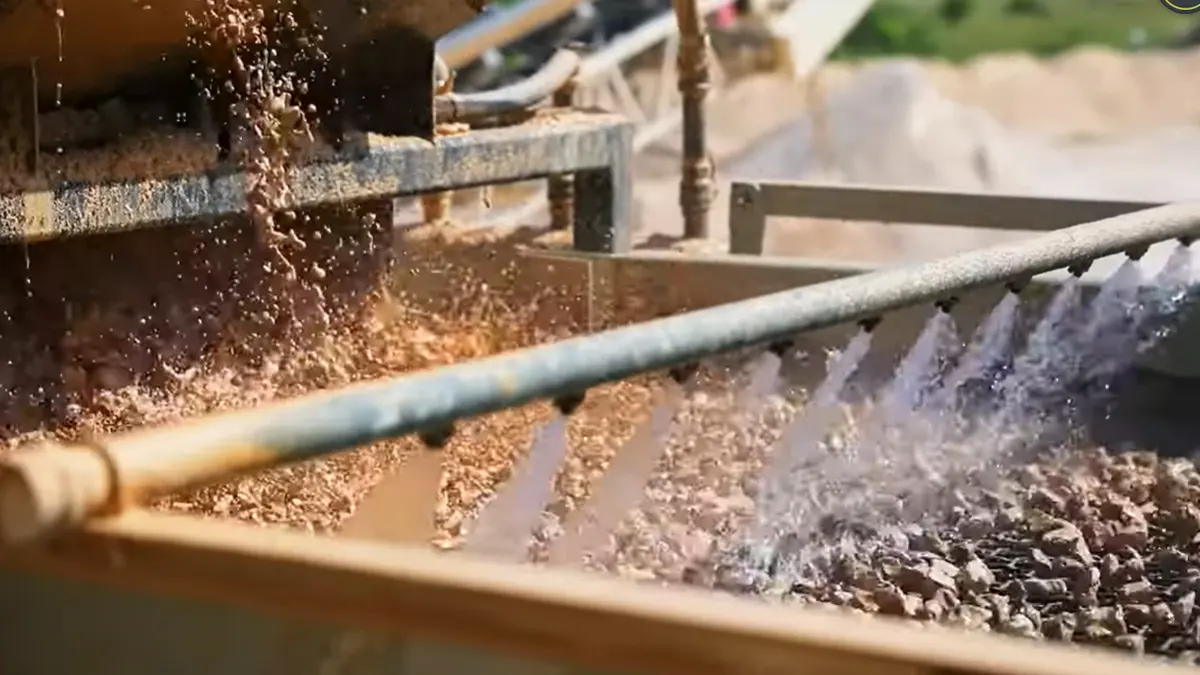
The most direct solution for high-moisture material is to stop fighting the moisture and work with it instead. Wet screening adds water deliberately — usually through spray bars positioned above the screen deck — so the water washes fine particles through the openings instead of letting them block them.
Wet screening works well when:
- Your feed moisture is consistently above 8%
- Your material contains significant clay or mud content
- You are processing iron ore, copper ore, or sand and gravel
- Your operation already has water management infrastructure
The main thing to plan for with wet screening is what happens to the water after the screen. You will need a sump, a pump, and some form of water treatment or recycling. In many quarry and mining operations, this infrastructure already exists. If it does not, the cost of adding it is usually offset by the improvement in screening performance.
Note: Wet screening is not always an option. Some materials — like fertilizers, certain industrial powders, and some coal products — cannot be exposed to water without damaging the final product. Know your product specification before switching.
Choose the Right Screen Media
Screen media is the single most important variable you can control in a wet material screening application. The right choice reduces blinding, extends panel life, and keeps your operation running without constant maintenance stops.
Here is a guide to the best screen media options for wet conditions:
| Screen Media Type | Best Wet Screening Application | Why It Works |
|---|---|---|
| Polyurethane panels | Wet fine material, dewatering | Flexible apertures resist blinding, highly wear-resistant |
| Flip-flow screen panels | High-moisture coal, potash, sticky ores | High-amplitude elastic deformation cleans itself continuously |
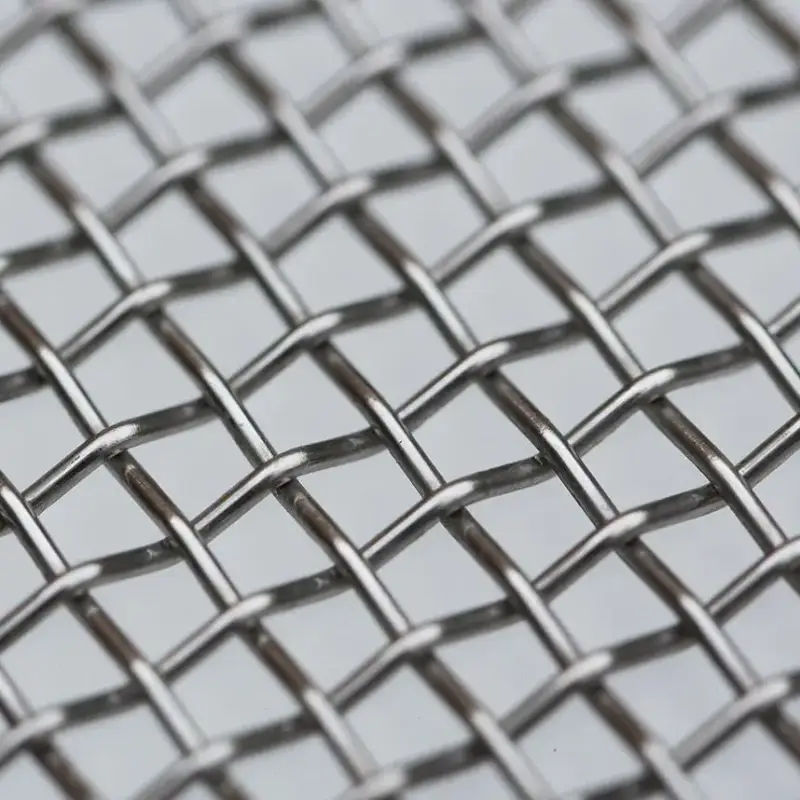
| Piano wire screens | Sticky or near-size material | Wire spacing prevents particles from bridging across openings |
| Rubber screen panels | High-impact wet feed | Absorbs energy, reduces noise, flexible under load |
| Self-cleaning screens | Wet material prone to pegging | Moving wires knock out stuck particles automatically |
Polyurethane panels are the most widely used choice for wet screening. The flexible nature of polyurethane means the aperture edges move slightly with each vibration cycle, which helps dislodge particles before they can build up. They also last significantly longer than woven wire mesh in abrasive wet conditions.
Flip-flow screens are the best option when moisture is very high and material is sticky. The elastic screen panels stretch and snap with each cycle, generating a high-G cleaning action that prevents blinding even in difficult coal and mineral applications.
Piano wire screens are a good choice when near-size particles are causing pegging. The individual wires flex independently, so particles that lodge in one opening can be dislodged without affecting adjacent openings.
Tip: Do not use standard woven wire mesh as your first choice for wet or sticky material. It works well in dry conditions, but in wet conditions it blinds quickly and wears faster. Switch to polyurethane or self-cleaning screens and you will see an immediate improvement.
Adjust Aperture Size
When moisture causes agglomeration, your effective particle size is larger than your actual particle size. This means an aperture that was correctly sized for dry material may be too small for the same material at high moisture.
You can compensate by opening up the aperture slightly. The rule of thumb used by many operators is:
- For every 3–5% increase in moisture above your baseline, consider increasing aperture size by 5–10%
- Always trial the new aperture on a small section before changing the whole deck
- Monitor your product gradation carefully — opening the aperture too much brings oversize into your undersize fraction
This adjustment is a practical compromise, not a permanent fix. It helps you maintain production while you implement a more complete solution like wet screening or a screen media change.
Optimize Vibration Parameters
Your vibration settings affect how well material moves across the screen deck and how effectively particles reach the openings. Adjusting these parameters can make a meaningful difference in wet material performance.
Amplitude — A higher amplitude helps break up clumps and lifts wet material off the screen surface. In wet conditions, slightly increasing amplitude helps material stratify better. Be careful not to go too high, or you risk damaging screen panels.
Screen angle — Increasing the deck angle causes material to move faster toward the discharge. This reduces the bed depth and gives wet particles less time to pack together and blind the screen. Most inclined vibrating screens operate between 15 and 20 degrees. For wet material, the upper end of this range often works better.
Vibration frequency — Higher frequencies work better for fine, wet material. The faster the screen cycles, the less time particles have to settle and stick.
Here is a quick reference table:
| Parameter | Standard Setting | Wet Material Adjustment | Effect |
|---|---|---|---|
| Amplitude | Medium | Slightly higher | Breaks up clumps, improves stratification |
| Screen angle | 15° | 18–20° | Faster material travel, thinner bed |
| Frequency | Standard | Higher for fine material | Less time for particles to settle and stick |
Note: Always make one adjustment at a time and observe the effect before changing another parameter. Changing multiple settings at once makes it hard to know what actually improved performance.
Use Water Spray at the Feed End
If you are not ready to switch fully to wet screening, adding a water spray at the feed end of your screen is a practical middle step. A small amount of water added at the right point can wash fine particles through the openings and reduce blinding significantly.
Position spray bars above the feed zone, approximately 150 to 300mm above the screen surface. Space nozzles every 150 to 200mm across the width. Use full-cone nozzles with a 60 to 90-degree spray angle to get even coverage.
Do not spray at the discharge end. Water added there gets absorbed into your product and increases its moisture content, which is usually the opposite of what you want.
Tip: Start with a low water flow rate and increase gradually. Too much water washes fine material through that should stay in the oversize fraction. Find the minimum flow rate that prevents blinding.
Pre-Treatment Options
Sometimes the best approach is to treat the material before it reaches the screen.
Pre-drying works well for industrial products like fertilizers, chemical powders, and some food-grade materials where moisture affects both screenability and product quality. A rotary drum dryer or fluid bed dryer upstream of the screen reduces surface moisture to a level where dry screening works normally.
Scrubbing and desliming is used in mining applications where the feed contains high clay content. A scrubber breaks up clay coatings and separates fine clay particles from the ore before screening. This removes the material most likely to cause blinding, so the screen sees a much cleaner feed.
Heating the screen deck is an option in cold-weather operations where moisture freezes on the screen surface. Heated decks are used in some coal and aggregate operations in cold climates.
Choosing the Right Equipment for Wet Conditions
The screen media matters, but so does the equipment it sits in. Some vibrating screen types handle wet conditions better than others.
Flip-flow screens are the top-performing equipment for high-moisture, sticky material. Research shows they retain more of their screening efficiency at high moisture levels than circular vibrating screens. The elastic screen panels flex continuously, which physically prevents blinding rather than just reducing it. Flip-flow screens are widely used in wet coal screening, potash processing, and other applications where conventional screens fail.
Circular vibrating screens work adequately at low to moderate moisture levels. They struggle at moisture above 8%, particularly with fine or clay-rich material. If you are running circular vibrating screens on wet material, switching to polyurethane panels is the most effective improvement you can make without replacing the machine.
Dewatering screens are designed specifically to handle wet material. They are not general-purpose classifying screens — their job is to remove water from a slurry and produce a discharge with controlled moisture content. If your goal is to produce a dry or semi-dry product from a wet feed, a dewatering screen is the right piece of equipment.
High-frequency screens are effective for very fine wet material, particularly below 1mm. The high vibration frequency prevents fine particles from forming stable beds on the screen surface. They are commonly used in iron ore fine screening and sand classification where fine cut points are needed in wet conditions.
| Equipment Type | Best For | Moisture Tolerance |
|---|---|---|
| Flip-flow screen | Sticky, high-moisture fine material | High — handles above 8% well |
| Circular vibrating screen | General classification | Moderate — up to around 6–7% |
| Dewatering screen | Removing water from slurry | Designed for very wet feeds |
| High-frequency screen | Fine material below 1mm | Good for wet fine classification |
| Linear vibrating screen | Dry to moderate moisture | Low — struggles above 5% with fines |
Operational Tips to Keep Wet Screening Running Well
Inspect Every Shift
Blinding builds up gradually. By the time you notice a big throughput drop, the problem has been developing for hours. Checking your screens at the start of every shift catches early-stage blinding before it becomes a production problem.
What to look for during an inspection:
- Patches of wet material sticking to the screen surface
- Discoloration or coating around aperture edges
- Uneven material distribution across the deck width
- Lower than normal throughput with the same feed rate
Clean Regularly
Waiting until a screen is fully blinded before cleaning costs you more time and production than cleaning it on a schedule. For wet material applications, clean screen panels at least once per shift.
Use a pressure washer, a stiff brush, or a rubber scraper depending on the material. For polyurethane panels, avoid metal tools that can damage the surface. For woven wire mesh, a pressure washer is the fastest method.
Tip: If you find yourself cleaning the same section of the screen every shift, that section has a different problem — check your feed distribution and make sure material is spreading evenly across the full deck width.
Watch Your Feed Distribution
Wet material is heavier than dry material and does not spread as easily when it lands on the deck. If your feed chute drops material onto one area of the screen, that area will blind faster, wear faster, and carry more load than the rest.
Adjust your feed box or chute so material spreads evenly from edge to edge. A well-distributed feed keeps bed depth uniform, which means better stratification and more consistent screening across the whole panel.
Quick Summary
| Problem | Cause | Best Solution |
|---|---|---|
| Screen blinding | Wet fine particles blocking holes | PU panels, flip-flow screens, piano wire screens |
| Material agglomeration | Surface water bonding particles | Wet screening, increase aperture size |
| Low screening efficiency | Reduced open area, poor stratification | Adjust amplitude and angle, change screen media |
| Equipment overload | Wet material is heavier | Reduce feed rate, check vibration parameters |
| Product out of spec | Clumps passing as oversize, fines in oversize | Combine screen media change with water spray |
Conclusion
Wet material screening is one of the most common challenges in mining and aggregate operations. You cannot always control how wet your feed is. But you can control how your screen handles it.
Start by knowing your moisture levels. Then match your screen media, equipment settings, and process to that moisture level. Polyurethane panels and flip-flow screens solve most wet screening problems without major equipment changes. For very high moisture, wet screening with water spray is the most reliable long-term fix.
Small adjustments make a big difference. Changing your screen media type, opening the aperture slightly, and adding a spray bar at the feed end can turn a consistently underperforming screen into one that hits its targets every shift.
If you are not sure which screen media is right for your wet material application, Anpeng Screens supplies polyurethane panels, flip-flow screen panels, piano wire screens, rubber panels, and woven wire mesh for mining and aggregate operations globally. Contact us with your material details and we will recommend the right solution.
FAQ
What moisture level causes screen blinding?
You start to see blinding at around 5% moisture, especially with fine or clay-rich material. Above 8%, screen blinding becomes severe and dry screening efficiency drops sharply. The exact threshold depends on your material — clay causes problems at lower moisture levels than clean crushed stone.
Which screen media is best for wet, sticky material?
Polyurethane panels are the most widely used choice for wet material. They resist blinding, last longer than woven wire, and work well for fine screening and dewatering. For very sticky material like wet coal or potash, flip-flow screen panels perform better because the elastic panels clean themselves continuously.
Can I use dry screening for high-moisture ore?
You can try, but once moisture goes above 8%, dry screening efficiency drops significantly. You will see blinding, agglomeration, and product quality issues. For consistently high-moisture feeds, switching to wet screening or changing your screen media type gives you better results than trying to make dry screening work.
How do I know when to switch from dry to wet screening?
If you are seeing persistent blinding that comes back within the same shift after cleaning, and your feed moisture is consistently above 7–8%, it is time to switch to wet screening or at minimum add water spray at the feed end. If your motor current is rising and throughput is falling at the same time, moisture overload is almost certainly the cause.
How does moisture affect screening efficiency percentage?
The drop in efficiency depends on your material and screen type. Research on coal screening found that efficiency dropped by 33–41% when moisture increased from 4.3% to 8.19%. For clay-heavy material, the drop can be even steeper. For clean aggregate, the effect is smaller but still significant above 8%.
Does screen angle affect wet material screening?
Yes. A steeper deck angle moves material faster, which reduces bed depth and gives wet particles less time to clump and blind the screen. If you are running an inclined vibrating screen, try increasing the angle to the upper end of the recommended range when you are processing wet material.