The construction and demolition (C&D) recycling market is expanding rapidly, turning waste materials into valuable resources. However, processing crushed concrete is notoriously demanding on plant infrastructure. Efficient screening is the critical step that transforms mixed demolition waste into high-quality, profitable recycled concrete aggregate (RCA).
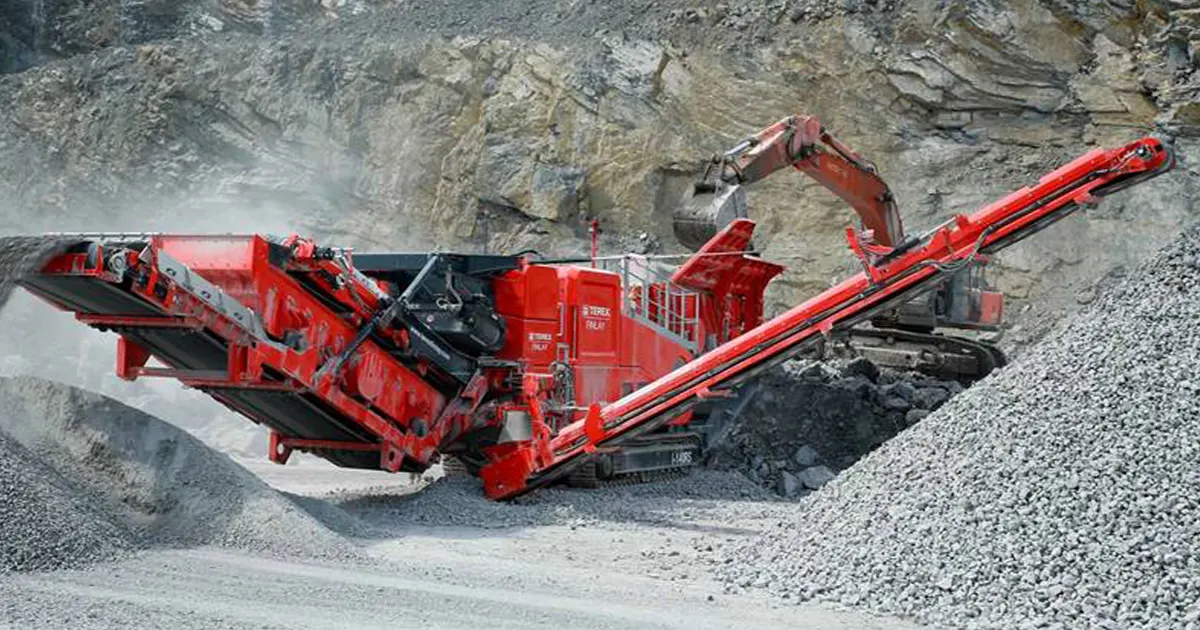
Without the right setup, plants face frequent downtime from destroyed screen panels, clogged decks, and inconsistent material sizing. This guide breaks down the concrete screening process, equipment selection, and maintenance strategies to help you maximize plant throughput and RCA quality.
Key Takeaways
- Maximize Profitability: Efficient screening is the only way to transform abrasive, mixed C&D waste into strict-specification Recycled Concrete Aggregate (RCA).
- Match Media to the Challenge: Crushed concrete requires specific screen media to handle extreme impact, stray rebar, and high abrasion.
- Prevent Downtime: Blinding (clogging) from damp concrete dust and clay can be solved by upgrading to self-cleaning mesh or polyurethane (PU) panels.
- Balance Capacity and Life: Heavy-duty woven wire provides maximum immediate throughput, while PU panels offer superior wear life for secondary sizing.
What Is Concrete Screening?
Concrete screening is the mechanical process of separating crushed or recycled concrete materials by particle size. This feed often contains a harsh mixture of cement paste, aggregate, stray rebar, wood, soil, and brick fragments.
The primary goal of this process is to classify the material into specific fractions required for construction applications. Proper screening improves the consistency of the final product, reduces blockages in downstream crushers, and elevates the overall structural quality of the RCA.
When Do You Need Concrete Screening?
Screening is required at multiple stages within a material recovery facility or aggregate plant. It is heavily utilized in dedicated C&D recycling centers, on-site temporary demolition crushing setups, and specialized RCA production plants.
Operators typically deploy screens either before crushing (to scalp out dirt and fine debris) or after crushing (to size the final product). The ultimate objectives are to remove unwanted contaminants, strictly control particle sizing, and minimize the negative impact of excess clay and fine dust on the final aggregate.
Concrete Screening Process Step-by-Step
Achieving efficient sizing requires a systematic approach to material flow. The process generally follows these stages:
- Feed Preparation: Before reaching the screen, the material must be prepared. This involves passing the rubble through magnetic separators to remove heavy rebar and using feeders to ensure a steady, uniform spread of material across the screen deck.
- Screening Stage: The material moves through a series of decks. Primary scalping removes massive chunks, secondary screening handles mid-sized fractions, and tertiary screening isolates the fine aggregates.
- Stockpiling & Quality Assurance: Sorted materials are conveyed to specific stockpile zones. At this stage, operators monitor moisture levels, clay content, and strict particle size distribution to ensure compliance with RCA standards.
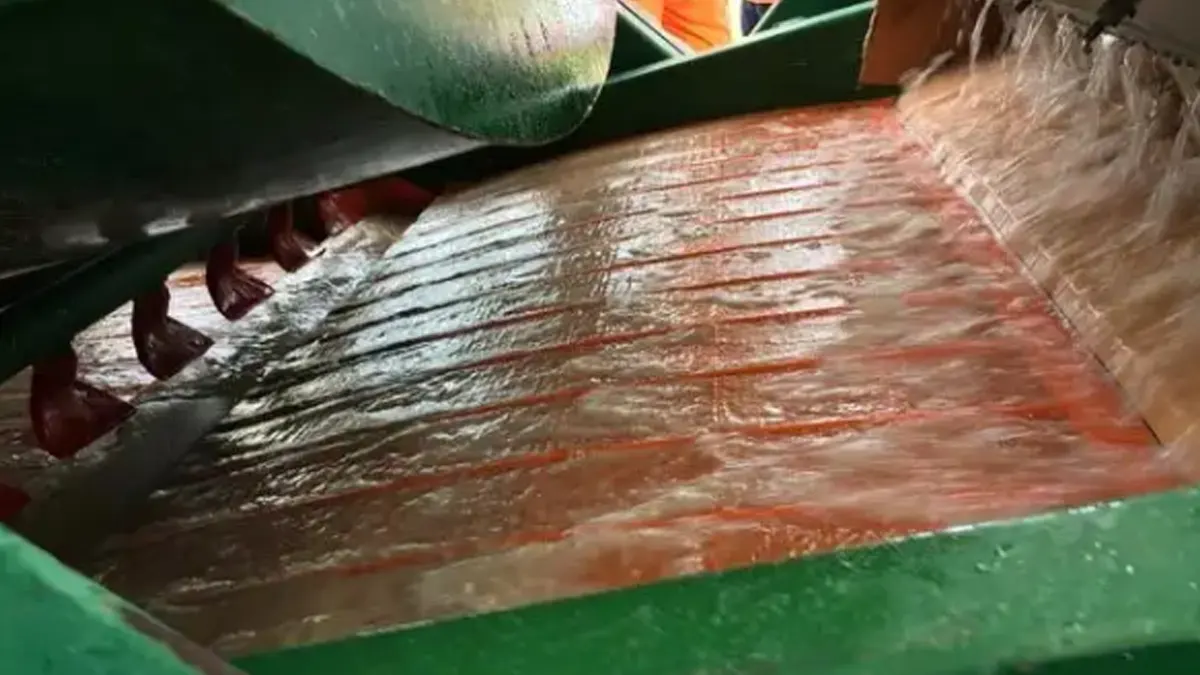
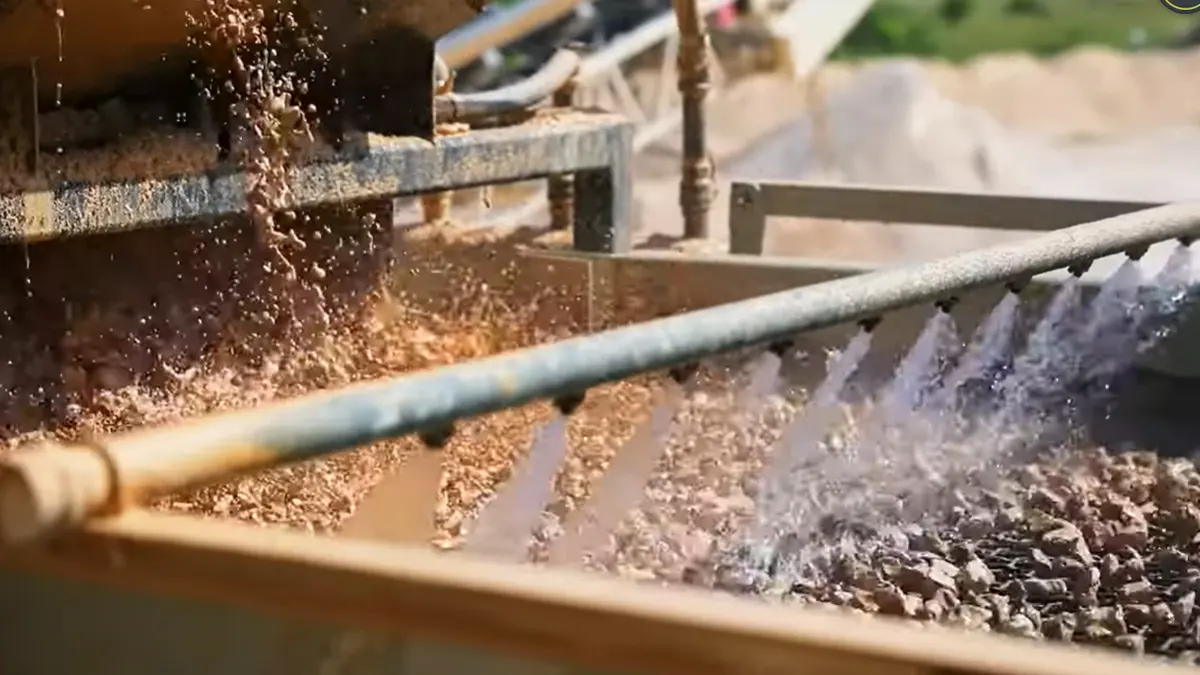
In scenarios involving heavy clay or strict dust suppression mandates, operators will utilize wet screening. High-pressure water sprays are added to the decks to wash away fine particles and prevent the concrete dust from acting like a cement paste on the screen media.
Equipment for Concrete Screening
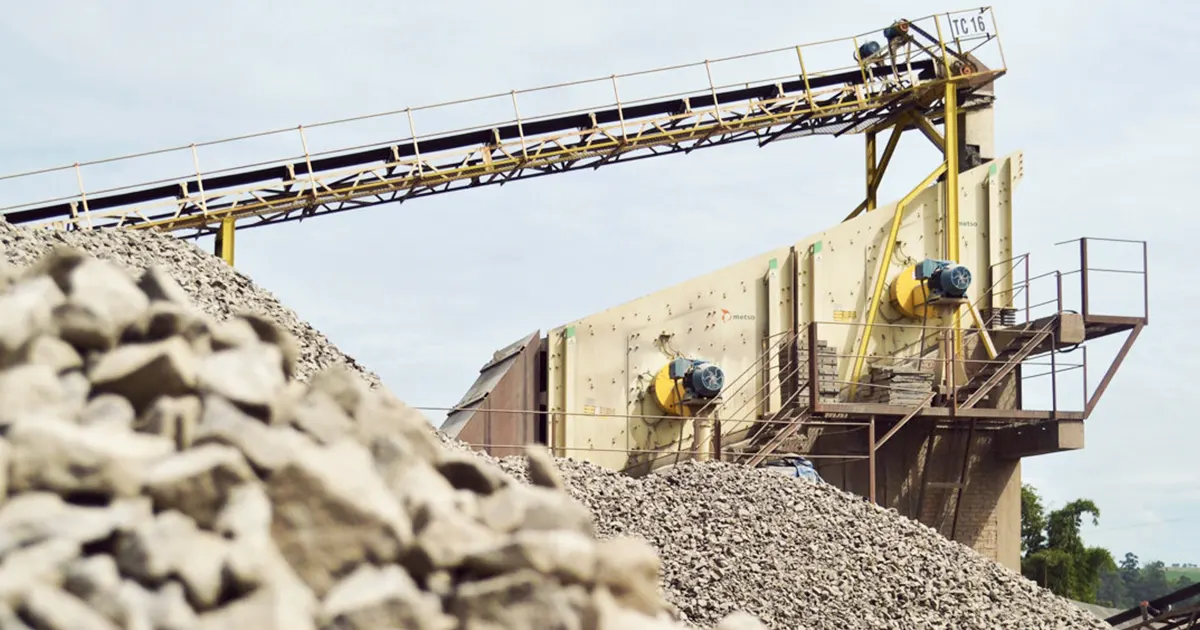
Selecting the right machine dictates your baseline capacity. Vibrating screens (incline or horizontal) are the industry standard for accurate sizing, while heavy-duty trommels are sometimes used for initial rough scalping of sticky, soil-heavy demolition waste.
Multi-deck vibrating screens (typically 2 or 3 decks) allow plants to produce three to four different product fractions from a single machine footprint.
However, the machine itself is only part of the equation. Your actual screening efficiency relies heavily on a stable feed rate, optimized machine parameters (stroke and RPM), and the vital ratio between the screen deck’s surface area and its open area.
Screening Media Matters Most
The screen media is the only part of your plant that physically touches every piece of crushed concrete. Selecting the correct surface is the single most important decision for maximizing throughput and minimizing downtime.
- Woven Wire Screens: Manufactured from high-carbon or stainless steel, woven wire offers the highest open area. It delivers maximum immediate capacity and is ideal for dry sizing and primary classification.
- Self-Cleaning Screen Mesh: Engineered with independently vibrating wires, this media prevents damp concrete dust and clay from clogging the holes (blinding). It is essential for high-moisture environments.
- Polyurethane (PU) Screen Panels: PU panels absorb impact and offer exceptional resistance to sliding abrasion. They operate with lower noise and are the optimal choice for highly abrasive feeds or wet wash screening.
- Perforated Plate / Rubber: These thick, rigid options are used strictly for top-deck scalping to absorb massive impact forces from large concrete chunks and protect the finer meshes below.
Operators must balance their choices. Woven wire maximizes throughput but may require more frequent changes in abrasive conditions, whereas PU panels sacrifice a small percentage of open area for a massive increase in wear life.
Concrete Screening Media Selection Matrix
| Operating Condition | Recommended Media | Primary Reason | Trade-off |
| Dry, High Capacity Sizing | High-Carbon Woven Wire | Maximum open area and throughput. | Shorter lifespan in highly abrasive conditions. |
| Damp, Sticky Fines / Clay | Self-Cleaning Screen Mesh | Wires vibrate independently to reject blinding. | Lower impact resistance than standard square mesh. |
| Wet Screening / High Abrasion | Polyurethane (PU) Panels | Exceptional sliding abrasion resistance and lifespan. | Lower open area compared to wire mesh. |
| Heavy Impact / Scalping | Perforated Plate / Rubber | Absorbs massive shock loads from large rubble. | Lowest open area; heavy to install. |
How to Prevent Blinding and Boost Throughput
Reduced throughput is usually caused by screen blinding (fines coating the wire) or pegging (flaky stones wedging in the holes). This is frequently triggered by residual moisture, high clay content in the demolition waste, or using the wrong aperture shape.
To solve this, operators can switch from square apertures to slotted openings to allow flaky particles to pass. Adjusting the screen’s stroke angle, increasing vibration amplitude, or adding water sprays can also force sticky material through the deck.
If tensioning adjustments and slotted wires fail to clear the deck, it is time to upgrade the media. Transitioning to self-cleaning mesh or flexible polyurethane panels provides the active movement necessary to eject trapped concrete particles.
Selection Checklist for Efficient Concrete Screening
Before ordering replacement screen media, use this checklist to ensure you specify the correct product for your plant:
- Material Specs: Evaluate the feed’s size distribution, moisture content, clay/soil percentage, abrasiveness, and the presence of residual rebar.
- Production Goals: Identify your exact cut sizes, the number of required fractions, target tons per hour (TPH), and how much maintenance downtime your operation can tolerate.
- Equipment Specs: Note your screen type (incline/horizontal), number of decks, exact dimensions, and installation method (side-tensioned hooks vs. modular flat deck pins).
Maintenance and Troubleshooting
Routine maintenance prevents catastrophic screen failures. Daily and weekly inspections should focus on verifying proper tensioning, checking clamp bars for wear, inspecting the rubber crown bar (support beam) covers, and looking for localized hole expansion.
Addressing minor issues early prevents them from escalating. Loose tensioning leads to rapid wire fatigue and breakage, while worn crown bar rubber causes the media to flap against the steel frame, destroying the panel.
Concrete Screening Troubleshooting Guide
| Symptom | Possible Cause | Quick Check | Solution |
| Oversize material in undersize pile | Broken wires / holes in media | Inspect deck for localized tears or expanded apertures. | Replace damaged panels; ensure proper tensioning. |
| Rapid wire breakage | Loose tensioning or worn crown rubber | Check torque on clamp bar bolts; inspect rubber supports. | Retension media; replace worn crown bar rubber. |
| Severe Blinding / Pegging | Damp clay, wrong aperture shape | Check if feed moisture has changed; inspect wedged rocks. | Switch to slotted openings or Self-Cleaning Mesh. |
| Uneven bed depth | Feed mechanism issue / uneven wear | Observe material spread as it hits the feed box. | Adjust feed conveyor or spreader plate. |
Conclusion
Screening crushed concrete does not have to result in constant machine downtime and torn mesh. The key to a profitable Construction & Demolition (C&D) recycling operation lies in treating your vibrating screen as a highly customizable system.
By understanding your feed material and strategically deploying the correct screening media—whether relying on heavy-duty woven wire for maximum primary throughput, or upgrading to self-cleaning mesh to defeat damp concrete dust—you can drastically improve both your plant’s capacity and the quality of your Recycled Concrete Aggregate (RCA). Combining the right media selection with a strict routine maintenance schedule is the proven formula for efficient concrete screening.
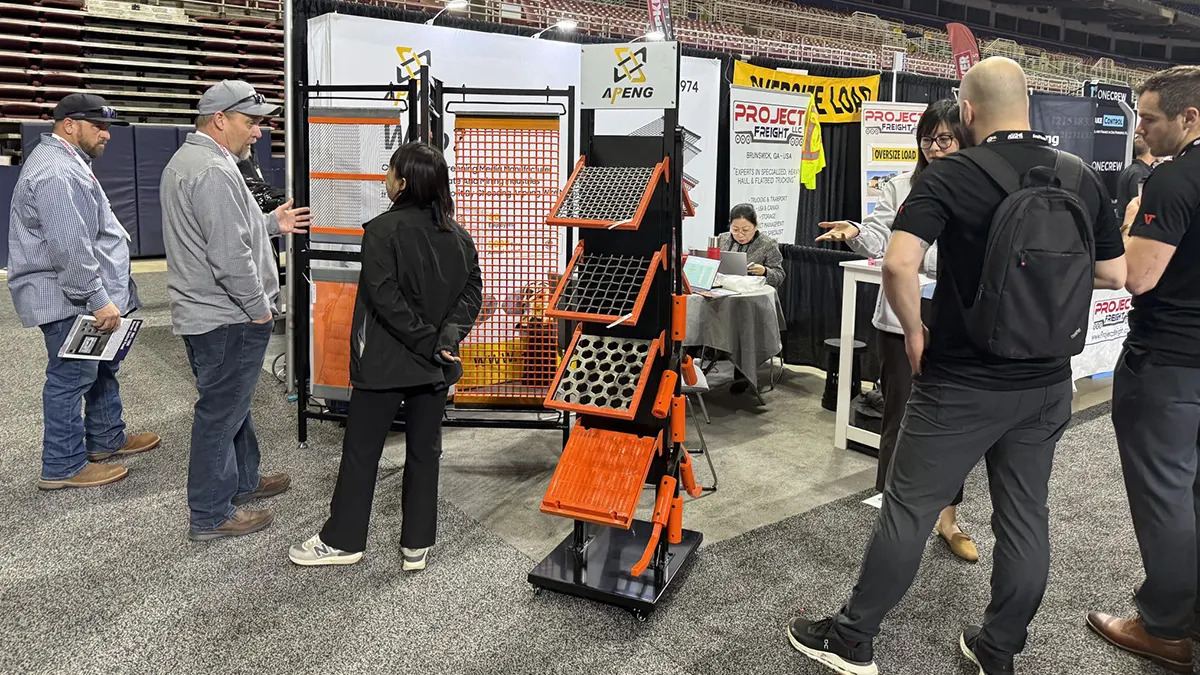
We are a professional manufacturer of industrial screening media. Anpeng provides customizable woven wire, PU panels, and self-cleaning screens to fit your specific concrete screening equipment.
FAQ
What is the best screen media for wet concrete recycling?
Polyurethane (PU) screen panels are highly recommended for wet screening. They resist the corrosive nature of water and concrete sludge while providing excellent sliding abrasion resistance.
How do I reduce screen blinding when clay is present?
Switching to a self-cleaning screen mesh is the most effective mechanical solution. If the problem persists, utilizing high-pressure water sprays (wet screening) can help wash the sticky clay through the apertures.
Woven wire vs polyurethane panels: which is better for concrete?
It depends on your priority. Use woven wire for primary sizing where maximum throughput (open area) is critical. Use polyurethane for secondary or wash stages where maximizing wear life and reducing maintenance downtime is the primary goal.
What aperture size should I use for RCA?
Aperture size depends entirely on your local DOT or construction specifications for the final RCA product (e.g., road base vs. drainage rock). You must select an aperture slightly larger than your target cut size to account for the screening angle and wire thickness.
How often should screening media be replaced?
Replacement frequency varies drastically based on feed abrasiveness, tonnage, and media type. Tensioned wire may need replacement every few weeks in harsh conditions, while modular PU panels can often last several months. Inspect weekly and replace when apertures exceed your tolerance limits.