Designing an aggregate processing plant or upgrading an existing circuit requires absolute precision. One of the most frequent causes of severe production bottlenecks is an improperly sized vibrating screen. Get the dimensions wrong, and you will either choke your downstream crushers with material carryover or waste hundreds of thousands of dollars in capital expenditure on oversized equipment. Sizing a screen is a complex engineering calculation that must balance your target tonnage, material characteristics, and the critical open area of your screen media. This comprehensive guide breaks down the industry-standard sizing formula and reveals how to maximize your plant’s effective capacity.
Key Takeaways
- Preventing Bottlenecks: Accurate screen sizing is critical. Undersizing causes severe bottlenecks and material carryover, while oversizing wastes capital expenditure (CAPEX) and energy.
- The Math Behind the Machine: Sizing is not guesswork. It relies on a specific formula involving target capacity, basic capacity per square foot, and a series of material-specific correction factors.
- The “Effective Area” Illusion: A 6×16 foot screen does not guarantee 96 square feet of screening capacity. Actual capacity is dictated entirely by the open area of your chosen screen media.
- Optimize Before You Buy: Before purchasing a larger vibrating screen, upgrading your screen media—such as switching to high-carbon woven wire for maximum open area or self-cleaning screens to stop blinding—is the most cost-effective way to increase plant throughput.
Why Accurate Vibrating Screen Sizing Matters
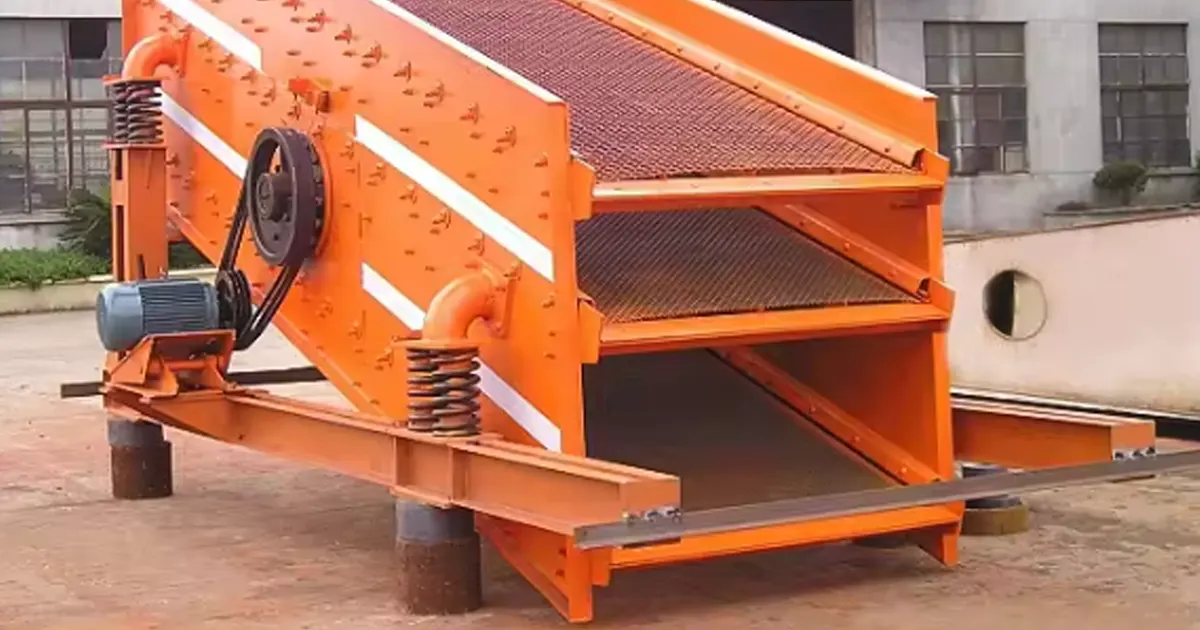
In any aggregate processing or mining operation, the vibrating screen acts as the cash register of the plant. It dictates the final product size, controls the closed-circuit crushing loop, and directly determines the overall throughput.
When plant engineers design a new circuit or attempt to upgrade an existing one, accurate vibrating screen sizing is the most critical calculation.
If a screen is undersized, the material bed depth becomes too thick. This prevents proper stratification (the process where smaller particles settle to the bottom of the material bed). Consequently, undersized material fails to find an aperture and passes over the deck into the oversize chute—a phenomenon known as carryover. This forces crushers to re-process material unnecessarily, causing severe bottlenecks.
Conversely, if a screen is oversized, the operation suffers from inflated capital costs, excessive structural footprint, wasted energy consumption, and increased maintenance overhead. Furthermore, if the material bed is too thin on an oversized screen, particles may bounce excessively and skip over the apertures entirely.
The Basic Formula: How to Size a Vibrating Screen
Sizing a vibrating screen is a process of determining the required deck area to handle a specific tonnage of material accurately. The industry standard methodology, often derived from the Vibrating Screen Manufacturers Association (VSMA), calculates the required area based on theoretical capacity and numerous correction factors.
The fundamental formula to calculate the required screening area A in square feet is:
A = T ÷ (C × F1 × F2 × F3 × F4 × F5 × F6 × F7)
Where:
- A = Required screen area (square feet)
- T = Target feed rate or design capacity (Tons Per Hour, TPH)
- C = Basic capacity of the screen (TPH per square foot)
- F1 to F7 = Correction factors based on material and operational variables.
Understanding Basic Capacity ($C$)
The Basic Capacity C is the theoretical amount of material that can pass through one square foot of screen media in one hour. It assumes an ideal scenario: screening standard crushed stone weighing 100 lbs per cubic foot, with 25% oversize material, 40% half-size material, and a standard percentage of open area.
Because ideal conditions rarely exist in a real quarry or recycling plant, engineers must apply specific correction factors to adjust the theoretical capacity to reality.
7 Key Factors That Impact Your Calculation
To accurately determine the required size of your vibrating screen, you must calculate the exact material conditions. Each of the following factors F acts as a multiplier in the sizing formula.
1. Bulk Density Factor (F1)
The basic capacity assumes a material density of 100 lbs/ft³. If you are screening a lighter material (like coal or pumice) or a heavier material (like iron ore or zinc), you must adjust the calculation. Lighter materials require a larger screen area to process the same tonnage.
2. Oversize Factor (F2)
This accounts for the percentage of the feed material that is larger than the aperture size. If the feed contains a massive amount of oversize rock, the bed depth increases rapidly. A thick bed makes it difficult for fine particles to work their way down to the screen media, thereby requiring a larger screen area to maintain efficiency.
3. Half-Size Factor (F3)
Half-size refers to the percentage of feed material that is less than half the size of the screen aperture. These particles pass through the mesh almost instantly upon hitting the deck. A high percentage of half-size material increases screening efficiency, allowing for a smaller calculated screen area.
4. Deck Location Factor (F4)
On a multi-deck vibrating screen, the lower decks are less efficient than the top deck. This is because the top deck utilizes the full length of the machine for stratification, while material reaching the second or third deck has already lost some of its forward momentum. Lower decks require a reduction factor in the capacity calculation.
5. Wet Screening Factor (F5)
Adding high-pressure water sprays to a screen deck washes away fine dust and clay, significantly increasing the capacity of the screen—especially for smaller apertures. Wet screening can increase theoretical capacity by up to 2.5 times for certain fine classifications.
6. Particle Shape Factor (F6)
The formula assumes standard, cubical crushed stone. If your material is highly flaky, slabby, or elongated (such as certain types of shale or recycled concrete), it is much harder to pass through standard square openings. Flaky material often pegs in the holes, reducing capacity and requiring a larger calculated deck.
7. Open Area Factor (F7) – The Critical Variable
This is the most frequently overlooked factor in the sizing equation, yet it holds the most power. The standard capacity charts assume a baseline open area for the screen media. If the screen media you install has a lower open area than the baseline, your capacity drops. If it has a higher open area, your capacity increases.
The Hidden Variable: Open Area and Screen Media
Many plant managers make a critical mistake: they calculate that they need a 6×16 foot vibrating screen, purchase the machine, and assume they have 96 square feet of screening capability.
This is an illusion. The steel frame of the machine does not screen rocks; the screen media does.
Your true, effective screening area is entirely dictated by the percentage of open area provided by the panels you install. If you install thick, heavy-duty media with only a 30% open area, your actual screening area on that 96-square-foot deck is only 28.8 square feet.
Before investing hundreds of thousands of dollars in a larger machine, you must evaluate if you can solve your capacity bottleneck by optimizing your screen media.
Maximizing Capacity with Woven Wire Mesh
If your sizing calculation shows your current machine is slightly undersized, the immediate solution is to increase the deck’s open area.
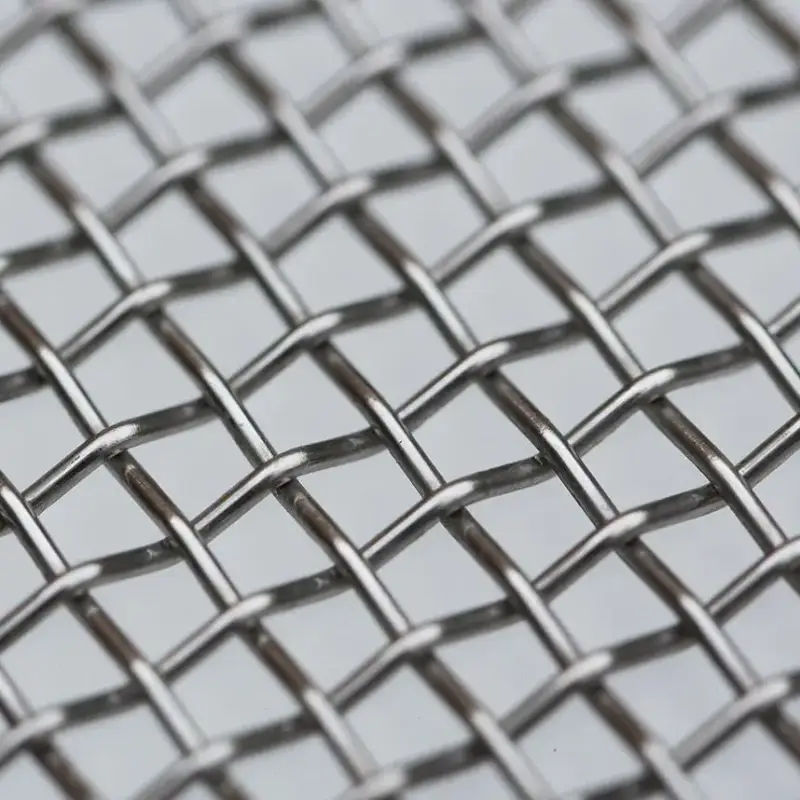
Anpeng manufactures high-carbon and stainless steel woven wire mesh engineered to maximize throughput. By utilizing high-tensile wire, we can maintain the structural integrity required for heavy aggregate while reducing the wire diameter. Thinner wires mean more holes per square foot, drastically increasing your open area and allowing a smaller machine to process a higher TPH.
Combating Moisture with Self-Cleaning Screens
A vibrating screen sized perfectly on paper will fail in the field if the material contains moisture and clay. Damp fines coat the wire mesh, gradually closing the holes in a process called blinding. When a screen blinds, its effective open area drops to 0%, and capacity vanishes.
Instead of buying a larger screen to compensate for blinding, plants can switch to Anpeng self-cleaning screens. Engineered with crimped wires that vibrate independently of the machine, these screens actively reject sticky materials and damp fines. By preventing blinding, self-cleaning media ensures your calculated open area remains active 100% of the time.
Balancing Area and Wear Life with Polyurethane (PU) Panels
When calculating screen size for highly abrasive materials or wet wash plants, downtime for maintenance must be factored into the plant’s overall operational capacity.
While polyurethane (PU) screen panels have thicker webs and slightly less open area than woven wire, they offer exceptionally long wear life. For secondary and tertiary sizing, installing Anpeng PU panels prevents the frequent plant shutdowns required to patch torn wire mesh. By keeping the plant running continuously, PU panels can yield a higher net daily tonnage, even if the instantaneous TPH is slightly lower.
How to Increase Capacity Without Buying a Bigger Screen
If you are facing carryover and your plant is bottlenecked at the screening stage, consider these media-based optimization strategies before replacing the machine:
- Change Aperture Shape: If flaky material is pegging in square holes and reducing your open area, switch to slotted openings. Slotted wire mesh allows elongated particles to pass through, instantly increasing capacity without altering the machine.
- Relieve the Deck (Scalping): If the bed depth is too thick, install a heavier scalping media (like perforated plate or ultra-heavy woven wire) on the top deck to remove large rocks earlier in the circuit, relieving the pressure on the finer meshes below.
- Mix Screen Media Types: You do not have to use the same media across the entire deck. A highly efficient strategy is to install durable Anpeng PU panels at the feed end (where impact and abrasion are highest) and transition to high-open-area woven wire mesh at the discharge end (where material is lighter and maximum stratification is needed).
- Verify Tensioning: Loose screen media flaps against the support decks, reducing the transmission of vibration into the material bed. Properly tensioned media ensures optimal stratification and maximum capacity.
Conclusion
Sizing a vibrating screen is a complex engineering task that goes far beyond measuring the length and width of a steel frame. To accurately calculate your required capacity, you must account for the density, shape, and moisture of your aggregate, while understanding that the actual work is done by the screen media.
You do not always need a bigger vibrating screen to achieve higher tonnage. Often, you simply need smarter screen media.
As a direct screening media manufacturer, Anpeng Wire Mesh engineers heavy-duty woven wire mesh, highly efficient self-cleaning screens, and durable polyurethane (PU) panels designed specifically for the rigorous demands of the aggregate and mining sectors.
We do not just supply standard sizes; we customize wire diameters, aperture shapes, and panel configurations to maximize the open area and wear life of your specific vibrating screen.
Stop letting inefficient screen media dictate your plant’s capacity. Contact the Anpeng engineering team today to discuss your capacity challenges, evaluate your current sizing calculations, and receive manufacturer-direct pricing on custom screen media solutions.
FAQ
What is the most common mistake when sizing a vibrating screen?
The biggest error is ignoring the open area of the specific screen media. Calculating that you need a 96-square-foot deck means very little if you install thick panels that only offer a 30% open area. Your effective screening capacity is always determined by the open apertures, not just the dimensions of the steel frame.
Can I increase my screen’s capacity without buying a larger machine?
Yes. In many cases, upgrading your screen media is the most cost-effective solution. Switching to high-carbon woven wire with optimized wire diameters increases your total open area. Alternatively, if your wet material is blinding the deck, installing slotted or self-cleaning screens will restore your effective area to 100% without altering the machine.
How does the screen incline angle affect my sizing calculation?
Incline directly impacts material travel speed. A steeper deck moves material faster (which can increase theoretical TPH), but it reduces the time particles have to find an aperture (decreasing sizing efficiency). Sizing formulas use specific correction factors to balance the incline angle with the required deck length.
Is it possible to mix different types of screen media on a single deck?
Absolutely. This is a highly recommended strategy to balance wear life and open area. For example, many aggregate plants install high-impact Anpeng polyurethane (PU) panels at the feed end to absorb heavy rock drops, and then transition to high-open-area woven wire mesh at the discharge end to maximize final throughput.