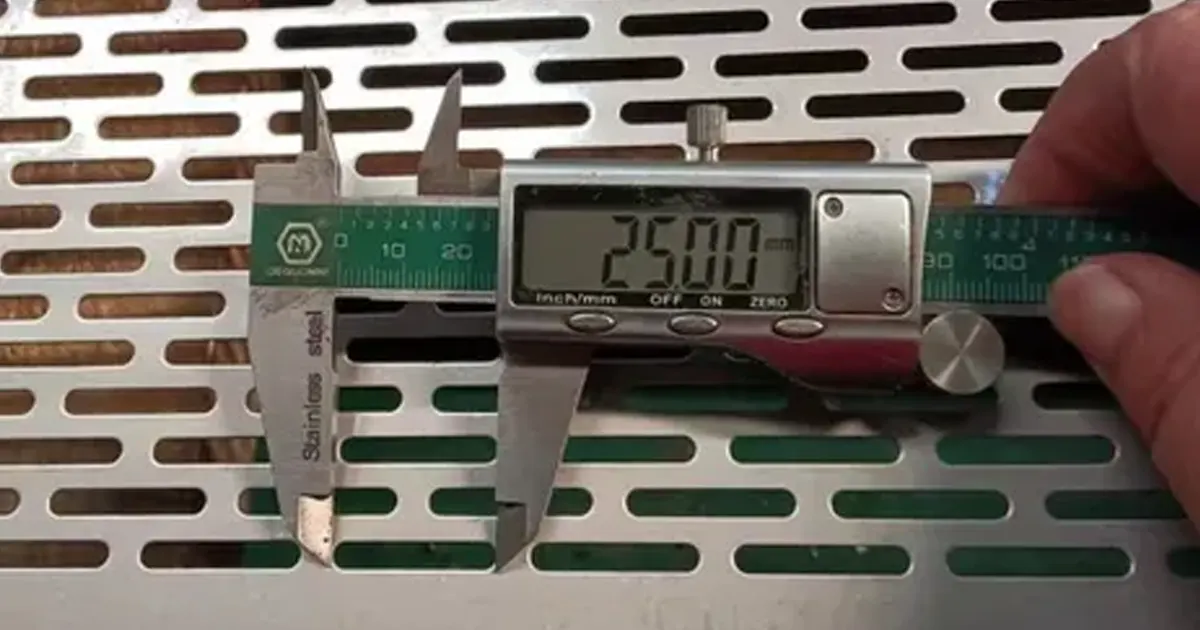
You need the right perforated metal sheet hole size for your project. Measuring correctly is important because it changes how your sheet works and how long it lasts. Check the hole size and the space between holes. Think about how thick the material is and how much open area there is. Look at this table to see how different hole sizes change strength and airflow:
| Hole Size | Impact on Performance and Longevity |
|---|---|
| Small holes (1–3mm) | Make the sheet stronger and safer; good for fine filtering. |
| Large holes (10mm+) | Let more air through and make it easier to see; can make the sheet weaker. |
| Open Area Percentage | More open area lets more pass through but can make the sheet less strong. |
Key Takeaways
- Pick the right hole size for your project. Big holes let in more air. Small holes are better for filtering things.
- Think about how thick the material is when you pick a hole size. Thick sheets can have bigger holes and still stay strong.
- Learn about open area percentage. More open space means better airflow. But too much can make the sheet weaker. Try to find a good balance.
- Choose a hole shape that looks and works how you want. Round holes are strong. Square holes look modern.
- Always measure carefully with calipers or rulers. Write down your measurements so you do not make mistakes when you order.
- Ask for samples before you buy a lot. Testing samples helps you know if the sheet is right for you.
- Talk to manufacturers for expert help. They can tell you the best materials and hole sizes for your job.
- Remember moisture. Big holes and staggered patterns can stop clogging when things are wet.
Key Factors for Perforated Metal Sheet Hole Size
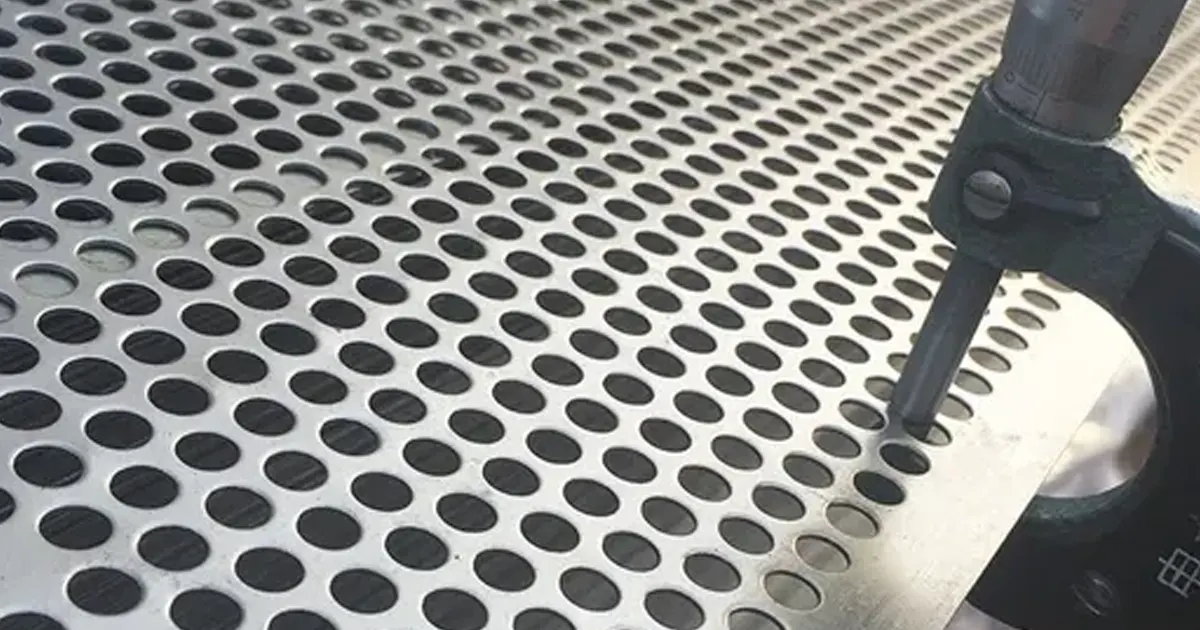
Application Needs
First, think about what you want your sheet to do. Different jobs need different hole sizes and patterns. If you want more air to move through, pick bigger holes or more open space. If you need to filter tiny things, use smaller holes and closer spacing. Sometimes, you want people to see through the sheet. Then, choose larger holes and more open area. Here’s a quick look at how your needs change your choices:
| Application Requirement | Influencing Factors | Examples |
|---|---|---|
| Airflow | Hole diameter & pattern | Ventilation, fencing, panels |
| Visibility | Hole diameter & pattern | Decorative screens |
| Filtration | Pore size & pattern | Airflow systems, sieves |
| Open Area Ratio | Permeability needs | Drainage, lighting, airflow |
The right hole size and pattern matter a lot. Always match your hole width and length to your project.
Material Thickness and Type
The metal type and thickness change how you pick hole size. Thicker sheets can have bigger holes and still stay strong. Thin sheets need smaller holes to keep from breaking. There’s a simple rule: hole diameter should be at least 1.2 times the sheet’s thickness. This helps the sheet stay safe and not bend.
Let’s look at some common metals:
| Metal Type | Cost Level | Durability | Common Uses |
|---|---|---|---|
| Aluminum | Medium | High (corrosion-resistant) | Electronics, architecture, lightweight panels |
| Carbon Steel | Low | Medium (needs coating) | Filters, construction, grilles |
| Stainless Steel | High | Excellent | Medical, food, marine |
| Brass | High | Good (aesthetic finish) | Decorative panels, fixtures |
Pick aluminum if you want a light sheet. Stainless steel is best for tough jobs. Always check hole width, length, and pore size to match the metal’s strength.
Open Area Percentage
Open area percentage shows how much of the sheet is empty. This number matters for air, light, and water flow. If you want lots of air or water to pass, pick a higher percentage open. If you need strength, pick a lower percentage.
- Higher open area (60–80%) lets lots of air and water through. Use this for ventilation or strainers.
- Medium open area (30–60%) gives both strength and flow. It works well for speaker grilles or elevator panels.
- Lower open area (10–30%) keeps the sheet strong. Use this for safety barriers or machine guards.
Here’s a table to help you see the effects:
| Open Area Percentage | Application | Effect on Airflow and Light Transmission |
|---|---|---|
| High (60–80%) | Ventilation, silencers, strainers | Maximizes airflow and drainage |
| Medium (30–60%) | Speaker grilles, solar panels | Balanced strength and permeability |
| Low (10–30%) | Safety barriers, equipment guards | Prioritizes structural support |
Always check pore size, hole diameter, width, and length to get the right open area for your project. The right balance keeps your sheet strong and useful.
Aesthetic and Strength Considerations
When you pick a perforated metal sheet, you probably want it to look good and stay strong. The hole shape and pattern change how your sheet looks and how it performs. You might want a modern style, a classic look, or something unique. At the same time, you need your sheet to handle stress and last a long time.
Let’s break down the main hole shapes and what they mean for both appearance and strength:
| Hole Shape | Aesthetic Considerations | Strength Considerations |
|---|---|---|
| Round Holes | Industry standard, versatile, uniform texture | Greatest structural integrity, stress distribution |
| Square and Rectangular Holes | Clean, modern look, higher open-area potential | May require thicker materials for stability |
| Slotted or Oblong Holes | Directional light control, privacy screening | Effective for specific angles, structural implications |
| Decorative and Custom Patterns | Unique designs, artistic expression | Varies based on design complexity and material choice |
You can see that round holes give you a classic, even look. They also make your sheet stronger because the stress spreads out evenly. Square and rectangular holes look sleek and modern. They let in more air and light, but you might need thicker metal to keep the sheet from bending. Slotted holes help with privacy and control how light passes through. Custom patterns let you show off your style, but you need to check if the design will weaken the sheet.
Here’s a quick checklist to help you decide:
- Choose the hole size and pattern that match your style and job.
- Check the metal thickness to make sure your sheet stays strong.
- Pick a material that looks good and lasts.
Tip: If you want your sheet to be both beautiful and tough, stick with round holes and follow the industry rule. The hole diameter should be at least 1.2 times the material thickness. This keeps your sheet from breaking or bending.
Hole size and pattern affect more than just looks. They change how much light, air, and sound pass through. They also decide how much weight your sheet can handle. If you want a sheet for an architectural project, think about how it will look in the space and how much strength you need.
You can mix and match hole shapes and sizes to get the right balance. Try different patterns for unique effects. Always measure carefully and check the strength before you order. When you choose the right perforated metal sheet hole size, you get a sheet that looks great and works well for years.
Perforated Sheet Hole Size Terminology
Hole Size Definition
When you look at a perforated sheet, the first thing you notice is the holes. You might hear people call them “apertures.” The aperture is the actual opening in the metal. You measure the aperture by checking the diameter if the hole is round, or the width and length if the hole is square or slotted. The hole size tells you how big each aperture is. If you want to filter tiny particles, you need small apertures. If you want more air or light, you pick larger apertures. You can use a ruler or caliper to measure the aperture. Always check the hole size before you order your sheet.
Here’s a table to help you understand the main terms:
| Term | Definition |
|---|---|
| Hole Size | The diameter or dimensions of the holes (apertures) in the perforated sheet. |
| Pitch | The distance from the center of one aperture to the center of the next aperture. |
| Spacing | The distance between apertures, which can change based on the design of the perforated sheet. |
Pitch and Spacing
Pitch is a word you’ll hear a lot when you talk about perforated sheets. Pitch means the distance from the center of one aperture to the center of the next aperture. You can have a regular pitch, where every aperture is spaced evenly, or a staggered pitch, where apertures are offset. Pitch affects how strong your sheet is and how much open area you get.
Spacing is the gap between apertures. If you have a 6mm aperture and a 9mm pitch, you get 3mm spacing between each aperture. People often describe sheets like this: “6 @ 9,” which means 6mm aperture at 9mm pitch. If you want more open area, you can decrease the pitch or increase the aperture. If you need more strength, you increase the pitch or decrease the aperture.
Here’s how pitch and spacing work in real life:
- You pick a pitch that matches your project’s needs.
- You check the spacing to make sure the sheet stays strong.
- You use the right aperture for airflow, filtration, or decoration.
Pitch and spacing help you control the look and performance of your sheet. You can change the pitch to get more open area or more strength. You can mix different apertures and pitches for custom designs.
Open Area Explained
Open area is the percentage of the sheet that is made up of apertures. If you have a lot of apertures, you get a high open area. If you have fewer apertures, you get a low open area. Open area matters for airflow, drainage, and visibility. You can calculate open area by measuring the aperture and pitch. For example, a sheet with 6mm apertures at 9mm pitch might have a 40% open area.
Open area changes how your sheet works. If you want maximum airflow, pick a high open area. If you need strength, pick a lower open area. You can use open area to balance performance and durability. Always check the aperture, pitch, and open area before you choose your sheet.
Tip: If you’re not sure about the right aperture or pitch, ask for a sample or talk to a manufacturer. You can see how the sheet looks and feels before you buy.
Tolerance in Manufacturing
When you buy a perforated sheet, you may think every hole will look the same. But small changes happen when the sheet is made. These changes are called “tolerances.” Tolerance means how much a hole size, spacing, or thickness can be different from what you wanted. Machines try to make holes perfect, but they can’t always do it.
Tolerances matter because they change how your sheet works. If holes are a bit bigger or smaller, it can change how much air, water, or light goes through. It can also change how strong the sheet is. Even a tiny change in hole size or spacing can make a big difference.
Let’s see what affects tolerances and how they change your sheet:
| Factor | Impact on Hole Size and Performance |
|---|---|
| Material Thickness | Thicker metal can handle bigger holes. Thin metal needs smaller holes to avoid bending. Smaller holes need special tools. |
| Hole Size | Bigger holes can make the sheet weaker. Smaller holes keep it stronger. |
| Open Area Percentage | More open area means less strength. Sheets with 50-60% open area are not as strong as solid metal. |
| Hole Spacing | Holes close together can make weak spots. The sheet can tear more easily. |
Thicker metal can have bigger holes. Thin metal needs smaller holes so it does not bend or tear. If you want lots of open area, your sheet may lose strength. If holes are too close, the sheet can rip.
Here are some things to remember about tolerances:
- Ask your supplier about the usual tolerances for your sheet.
- If you need holes to be very exact, ask for tighter tolerances. This can cost more.
- Try a sample sheet before you buy a lot. This helps you see if the tolerances work for your project.
Tip: If your sheet needs to be strong or have exact hole sizes, talk to the manufacturer. They can help you pick the right material, hole size, and spacing for your job.
Tolerances are normal when making metal sheets. If you know about them, you can make better choices. Always plan for a little difference, and your project will turn out well.
How to Measure Perforated Sheet Hole Size
When you want to measure perforated sheet metal, you need the right tools and a simple process. Getting the measurements right helps you pick the best sheet for your project, whether you need a round perforation or a square perforation. Let’s break down the steps and tools you’ll need.
Tools for Measurement
Before you start, gather your tools. The right tool makes the job easier and your measurements more accurate.
Calipers and Rulers
Calipers help you measure small holes and spaces with high accuracy. You can use digital or manual calipers. Rulers work well for larger holes or when you need to measure the distance between holes. Always make sure your tools are clean and in good shape before you start.
When to use each tool:
| Tool | Best For | Why Use It? |
|---|---|---|
| Caliper | Small holes, tight spaces | Gives precise measurements |
| Ruler | Larger holes, spacing | Quick and easy for longer gaps |
Tip: If you want the most accurate results, use a caliper for round perforation and a ruler for checking the pitch or spacing between holes.
Gauges for Small Holes
Gauges help you measure tiny holes that are too small for a regular caliper. You can use a pin gauge or a wire gauge. Just insert the gauge into the hole and read the size. This works well for fine filtration sheets or when you need to check a lot of small holes quickly.
Measuring Round Holes
Round perforation is the most common type you’ll see. Here’s how you measure it step by step:
- Prepare the Caliper: Open the jaws of your caliper wide enough to fit inside the hole. Make sure the caliper is clean.
- Place the Caliper: Gently put the jaws inside the hole. Keep them centered and straight.
- Take the Measurement: Close the jaws until they touch both sides of the hole. Read the number on the caliper. Try this at three different spots around the hole to check for any shape changes.
- Record the Measurement: Write down each number. Find the average to get the most accurate size.
If you want to check the spacing between round perforation holes, follow these steps:
- Mark the Holes: Use a pencil to mark the centers of two holes next to each other.
- Measure the Distance: Use a ruler to measure from the center of one hole to the center of the next.
- Repeat the Measurement: Do this for several pairs to make sure the spacing is even.
- Check for Uniformity: Find the average spacing and see if any holes are too close or too far apart.
Note: Always measure in millimeters or inches, depending on what your project needs.
Measuring Slots, Squares, and Hex Holes
Not all sheets have round perforation. Sometimes you’ll see slots, square, or hex shapes. Each shape needs a slightly different approach.
- For slots, measure the length and width. Use a caliper for the width and a ruler for the length.
- For square holes, measure both the width and height. Most square perforation holes are the same on all sides, but check both just in case.
- For hex holes, measure the distance across the flats (the widest part of the hexagon).
Here’s a quick checklist for these shapes:
- Measure the size of the hole (width, length, or diameter).
- Check the distance from the center of one hole to the center of the next (this is called the stagger or pitch).
- Measure the thickness of the sheet. This helps you know how strong the sheet will be.
| Hole Shape | What to Measure | Tool to Use |
|---|---|---|
| Slot | Length and width | Caliper, ruler |
| Square | Width and height | Caliper, ruler |
| Hex | Distance across flats | Caliper |
Tip: Always measure more than one hole. This helps you spot any mistakes or changes in the sheet.
If you want to measure a square perforation, make sure you check both the width and the height. Sometimes, a square hole can look perfect but be a little off. Measuring both sides helps you catch any problems early.
When you measure perforated sheet metal with different shapes, you get a better idea of how it will work for your project. Whether you need a round perforation for airflow or a square perforation for a modern look, these steps will help you get the right fit.
Recording Accurate Measurements
You have measured your perforated sheet. Now, you need to record your results the right way. Good records help you compare sheets, order the right size, and avoid mistakes. Let’s walk through how you can do this like a pro.
Why Accurate Records Matter
If you write down the wrong numbers, you might get a sheet that does not fit your project. You could waste time and money. Accurate records help you:
- Order the right sheet every time.
- Share clear info with your team or supplier.
- Check quality if you get a new batch.
What to Write Down
You should always record these details for each sheet:
| Measurement Type | What to Record | Example Entry |
|---|---|---|
| Hole Size | Diameter, width, or length | 5 mm (round), 8×2 mm (slot) |
| Pitch (Center-to-Center) | Distance between hole centers | 10 mm |
| Spacing (Edge-to-Edge) | Gap between holes | 5 mm |
| Sheet Thickness | How thick the metal is | 1.2 mm |
| Hole Shape | Round, square, slot, hex | Round |
| Open Area (%) | Percentage of open space | 40% |
| Material Type | Steel, aluminum, etc. | Stainless steel |
Tip: Use a notebook or a digital spreadsheet. This keeps your info safe and easy to find.
How to Record Measurements
- Write Down Each Number Right Away
Don’t wait. Record each measurement as soon as you take it. This helps you avoid mixing up numbers. - Use the Same Units
Stick to millimeters or inches. Don’t mix them. If you start with millimeters, use millimeters for everything. - Label Each Measurement
Write what each number means. For example, “hole diameter: 6 mm” or “pitch: 10 mm.” This makes your notes clear. - Double-Check Your Work
Measure each hole at least twice. If you get different numbers, measure again and use the average. - Take Photos (Optional)
Snap a picture of your sheet with a ruler or caliper in place. This gives you a visual record.
Sample Measurement Log
Here’s a simple way to set up your notes:
| Sheet Name | Hole Shape | Hole Size | Pitch | Spacing | Thickness | Open Area | Notes |
|---|---|---|---|---|---|---|---|
| Panel A | Round | 6 mm | 10 mm | 4 mm | 1.5 mm | 36% | For ventilation |
You can copy this table into your notebook or computer.
Common Mistakes to Avoid
- Mixing up units (mm vs. inches)
- Forgetting to write down the pitch or spacing
- Not checking more than one hole
- Skipping the sheet thickness
Note: If you share your measurements with a supplier, include all details. This helps them make or find the perfect sheet for you.
Final Check
Before you finish, look over your notes. Make sure you have every number you need. If something looks odd, measure again. Good records make your project smoother and help you get the best results.
Now you’re ready to move on to calculating open area or picking the right sheet for your job!
Calculate Perforated Metal Sheet Open Area
When you look at a perforated metal sheet, you might wonder how much of it is actually open space. This open area affects how your sheet works for airflow, drainage, and strength. If you want to get the best results, you need to know how to calculate perforated metal sheet open area for your specific hole size and pattern.
Open Area Formulas by Hole Shape
You can use simple math to figure out the open area. The formula changes based on the shape and layout of the holes. Here’s a handy table to help you see what you need for each type:
| Hole Type | Parameters Needed | Open Area Formula Example |
|---|---|---|
| Round Hole (Straight Pattern) | Diameter (d), Center Distance (c) | (π × d² ÷ 4) ÷ c² × 100% |
| Round Hole (45° Staggered) | Diameter (d), Center Distance (c) | (π × d² ÷ 4) ÷ (c² × 0.866) × 100% |
| Square Hole (Straight Pattern) | Side (s), Center Distance (c) | (s² ÷ c²) × 100% |
| Slotted Hole (Staggered) | Width (a), Length (b), Center Distances (c, c1) | (a × b) ÷ (c × c1) × 100% |
Tip: Always use the same units for all your measurements. If you measure in millimeters, keep everything in millimeters.
Why Open Area Matters
Open area tells you how much air, water, or light can pass through your sheet. If you need more airflow or drainage, you want a higher open area. If you need your sheet to hold weight or stay strong, you want a lower open area. Here are some quick facts:
- Higher open area percentages improve airflow and light penetration.
- Lower open area percentages keep your sheet strong, which is important for heavy loads.
You can see how open area changes the way your sheet works. For example, a speaker grille needs lots of open space for sound, but a safety guard needs more metal for strength.
Balancing Open Area and Strength
Finding the right balance is key. If you pick too much open area, your sheet might get weak. If you pick too little, you might block air or water. Check out this table to see how open area affects strength and use:
| Open Area Percentage | Effect on Mechanical Strength | Functionality Benefits |
|---|---|---|
| 10% – 30% | Keeps strength and rigidity | Good for load-bearing jobs |
| 30% – 50% | Some strength loss | Lets in air and light |
| 50% – 80% | Big drop in strength | Great for drainage and noise control |
If you want your sheet to last and do its job, always balance open area with strength. Start by thinking about what you need most—strength or flow. Then, use the formulas above to check your numbers. This way, you get a sheet that works just right for your project.
Perforated Sheet Hole Size for Common Uses
Filtration and Sieving
When you need to filter or sieve materials, the right hole size makes all the difference. You want to catch the right particles and let others pass through. For fine filtration, you usually pick small holes. These can be as tiny as 0.5 mm. If you need to separate bigger pieces, you can go up to 100 mm. The material you choose also matters. Stainless steel works well for sieves because it resists rust and stays strong.
Here’s a quick look at common hole sizes for filtration and sieving:
| Hole Type | Hole Diameter Range |
|---|---|
| Perforated Stainless Steel Sieves | 0.5 mm – 100 mm (0.02 in – 4 in) |
If you work with food, chemicals, or mining, you’ll see these sheets everywhere. Always match the hole size to what you want to filter. Too small, and your sheet might clog. Too big, and you might lose valuable material.
Screening and Separation
Screening and separation jobs need tough sheets that can handle heavy loads. You often see these in mining, quarries, or recycling plants. The hole size depends on what you want to separate. For fine screening, you might use holes as small as 3 mm. For bigger rocks or materials, holes can go up to 150 mm.
Check out this table for typical ranges:
| Hole Type | Hole Diameter Range |
|---|---|
| Quarry Screen | 3 mm – 150 mm |
Some screens use custom hole sizes to match your target cut size. If you need a special size, you can ask for a perforated plate screen made just for your job.
| Hole Type | Hole Size |
|---|---|
| Perforated Plate Screen | Custom to your required cut size |
You should always think about the strength of your sheet. Bigger holes mean less metal, so you might need a thicker sheet to keep it from bending or breaking.
Speaker Grilles and Decorative
Speaker grilles and decorative panels use perforated metal for both looks and function. You want sound to pass through, but you also want the sheet to look good. For speaker grilles, round holes are popular. These can be as small as 0.2 mm or as large as 100 mm. Square holes are also common, ranging from 3/4″ up to 200″. High open area helps with ventilation and sound flow.
Here’s a table to show you the usual options:
| Hole Type | Hole Size Range | Open Area Specification |
|---|---|---|
| Square Hole | 3/4″ to 200″ | High Open Area for Ventilation |
| Round Hole | 0.2 mm to 100 mm | Various configurations available |
You can pick from many materials, like plain steel, stainless steel, aluminum, copper, or brass. There are also lots of patterns—round, square, slotted, hexagonal, or even custom decorative holes.
- Main materials: plain steel, mild steel, carbon steel, stainless steel (302, 304, 304L, 316, 316L), aluminum, copper, brass, pre-galvanized steel, hot or cold galvanized steel.
- Hole patterns: round hole, square hole, slotted hole, hexagonal hole, decorative hole.
When you choose a perforated metal sheet hole size for speakers or decoration, think about both style and performance. A good choice lets sound and air move freely while making your project look great.
Industrial and Heavy-Duty
Sometimes, you need perforated metal sheets for hard jobs. These jobs need sheets that are strong and last long. If you work in factories or build things, you want a sheet that can handle lots of stress.
Thick sheets are best for heavy-duty work. If your sheet is 3 mm thick or more, it can hold more weight. Thick sheets stay strong when machines or people push on them. You can use them for floors, machine guards, or big panels. Thin sheets, from 0.4 to 1.5 mm, are good for lighter jobs. Medium sheets, between 1.5 and 3 mm, work well for guards and panels.
Here’s a simple list to help you choose:
- Thin sheets (0.4–1.5 mm): Good for light jobs.
- Medium sheets (1.5–3 mm): Used for guards and panels.
- Thick sheets (3–10 mm): Best for big machines and building.
The material you pick is important, too. Steel is strong and costs less. Stainless steel does not rust and stays clean, so it is good for food or medical tools. Aluminum is light and does not rust, so it works well for building fronts and airplane parts.
| Material | Key Properties | Best Applications |
|---|---|---|
| Steel (Carbon/Galvanized) | Strong and affordable | Machines, panels |
| Stainless Steel | Does not rust, stays clean | Food, medical tools |
| Aluminum | Light and does not rust | Building fronts, airplanes |
Open area percentage is something else to think about. If you want air to move through, pick a sheet with lots of open area, like 60–80%. This helps keep machines cool. If you need your sheet to be strong, pick less open area, like 10–30%. This keeps your sheet from bending or breaking.
You can use perforated metal sheets for many tough jobs:
- Floors in factories
- Guards for machines
- Big panels for buildings
- Safety barriers
- Equipment for construction
Tip: Always match the sheet thickness and open area to your job. If you need strength, pick thicker sheets and less open area. If you want air to move, pick more open area.
Choosing the right hole size and thickness makes your project safer. If you don’t know which sheet to use, ask a manufacturer or get a sample. You will get a sheet that works well and keeps your site safe.
Testing and Verifying Perforated Metal Sheet
Requesting Samples
You want to make sure the perforated metal sheet fits your needs before you buy a large order. Requesting samples is a smart move. When you get a sample, you can see and touch the real product. You can check if the hole size, pattern, and material work for your project. Here’s why samples help you:
- You can test the hole size and pattern in your actual setup.
- You see if the sheet meets your needs for airflow, filtration, or strength.
- You avoid costly mistakes from ordering the wrong size or type.
- You learn how durable the sheet is for your job.
Tip: Always test the sample in the same way you plan to use the final sheet. This gives you the best idea of how it will perform.
Using Templates or Sample Plates
Templates and sample plates make checking hole size and pattern easy. You can use a template to compare the holes on your sheet with the holes you want. Just place the template over the sheet and see if the holes line up. Sample plates work the same way. They let you see different hole sizes and patterns side by side.
Here’s how you can use them:
- Pick a template or sample plate with the hole sizes you are considering.
- Place it on your sheet or hold it up to your project area.
- Check if the holes match your needs for flow, visibility, or style.
You can also use templates to show your team or clients what the finished product will look like. This helps everyone agree before you order.
Note: If you do not have a template, you can make one from cardboard or plastic. Cut out the hole sizes you want and use it to test your sheet.
Consulting with Manufacturers
Talking to the manufacturer helps you get the best advice for your project. You should give them clear information so they can recommend the right hole size and pattern. Here’s what you need to share:
- Explain how you will use the sheet. This helps the manufacturer understand your main needs.
- Tell them what matters most—strength, airflow, or looks. This helps balance your needs with what is possible.
- List your top priorities. For example, you might need the sheet to filter small particles or support heavy loads.
Manufacturers know their products well. They can suggest the best options for your job. If you are not sure what to choose, ask for their advice. They might even send you more samples or show you similar projects.
Tip: The more details you give, the better the recommendation you will get. Always mention your application, target cut size, and any special needs.
By testing and verifying your perforated metal sheet, you make sure you get the right fit for your project. You save time, money, and avoid surprises later.
Match Perforated Metal Sheet to Your Needs
Feed Size and Material Flow
You want your perforated metal sheet to handle the right materials. Feed size matters a lot. If you work with coarse materials like gravel or grains, you need bigger holes. Fine powders or sand need smaller holes for precision. The hole size affects how fast materials move and how well your sheet separates them.
Here’s a quick table to help you decide:
| Hole Size Range | Suitable Materials | Purpose |
|---|---|---|
| 10–50 mm | Gravel, ores, grains | High-throughput screening |
| 0.5–5 mm | Powders, sand, food | Precision separation |
If you pick holes that are too small, your sheet might clog. If you pick holes that are too big, you could lose valuable material. Always match the hole size to your feed size. You get better flow and less waste.
Tip: Test your material with a sample sheet before you order. This helps you see how well the feed moves through the holes.
Moisture and Clogging
Moisture changes everything. Wet materials stick together and clog holes faster. If you work with damp sand or sticky grains, you need to think about clogging. Smaller holes clog more easily. Larger holes help prevent blockages, but you might lose control over separation.
You can use these tricks to fight clogging:
- Choose a sheet with larger holes if your material is wet.
- Try staggered hole patterns. They help materials move and reduce blockages.
- Pick a sheet with smooth edges. Sharp edges catch particles and cause clogs.
If you see clogging, clean your sheet often. You can also ask for anti-clogging designs from your supplier.
Note: Moisture makes clogging worse. Always check your material’s moisture level before you pick your hole size.
Target Cut Size
Target cut size means the size of the material you want to keep or remove. You need to match your hole size to your target cut size. If you want fine filtration, pick small holes. For bigger pieces, use medium or large holes. The right hole size gives you the best separation and keeps your process efficient.
Check out this table for quick guidance:
| Hole Size | Application Description |
|---|---|
| Small Holes | Fine filtration, noise absorption, security screening with controlled airflow |
| Medium Holes | Architectural panels, industrial strainers, balance strength and visual appeal |
| Large Holes | High-volume ventilation, decorative elements, maximize airflow |
You can use small holes for security screens or noise barriers. Medium holes work well for panels and strainers. Large holes are great for ventilation and decoration.
Callout: Always measure your target cut size before you order. If you know what you want to keep or remove, you can pick the perfect hole size.
Matching your perforated metal sheet to your needs is easy when you know your feed size, moisture level, and target cut size. You get better results, less waste, and a sheet that works just right for your job.
Conclusion
You can choose the right perforated metal sheet hole size by following a few clear steps:
- Define what your sheet needs to do.
- Set your pore size range based on your job.
- Adjust hole diameter and spacing for strength.
Testing and checking samples help you avoid mistakes. Complex projects need expert advice. Here’s why professional help matters:
| Key Factors | What You Should Know |
|---|---|
| Material Type | Impacts durability and use |
| Thickness | Decides strength and weight |
| Pattern Type | Changes looks and function |
| Open Area | Affects airflow and performance |
| Supplier Skills | Ensures custom quality |
As a screening media manufacturer, we design heavy-duty plates for high-impact and trommel jobs. Share your screen type, feed size, moisture, and target cut size. We’ll recommend the best fit for your site. Get the right sheet for your needs!
FAQ
What is the best tool for measuring perforated sheet holes?
You can use a caliper for small holes and a ruler for larger ones. Pin gauges work well for tiny holes. Always check your tools for accuracy before you start.
How do I choose the right hole size for filtration?
Think about the size of the particles you want to filter. Pick holes just smaller than your target particles. Test a sample sheet to see how well it works.
Can I use perforated metal outdoors?
Yes, you can. Choose stainless steel or aluminum for outdoor jobs. These metals resist rust and weather. Make sure you pick the right thickness for strength.
What does “open area percentage” mean?
Open area percentage shows how much of the sheet is holes. Higher percentages let more air, water, or light through. Lower percentages make the sheet stronger.
Will larger holes make my sheet weaker?
Larger holes reduce the metal’s strength. If you need a tough sheet, use smaller holes or thicker material. Balance open area with strength for your project.
How do I prevent clogging in wet conditions?
Pick larger holes or staggered patterns. Smooth edges help materials flow. Clean your sheet often. Ask your supplier about anti-clogging designs.
Can I get custom hole shapes and sizes?
Yes! You can order custom shapes and sizes. Share your needs with the manufacturer. They can help you design a sheet that fits your project.
What information should I give my supplier?
Tell your supplier your application, feed size, moisture level, and target cut size. Share your preferred material and open area. Clear details help them recommend the best sheet.