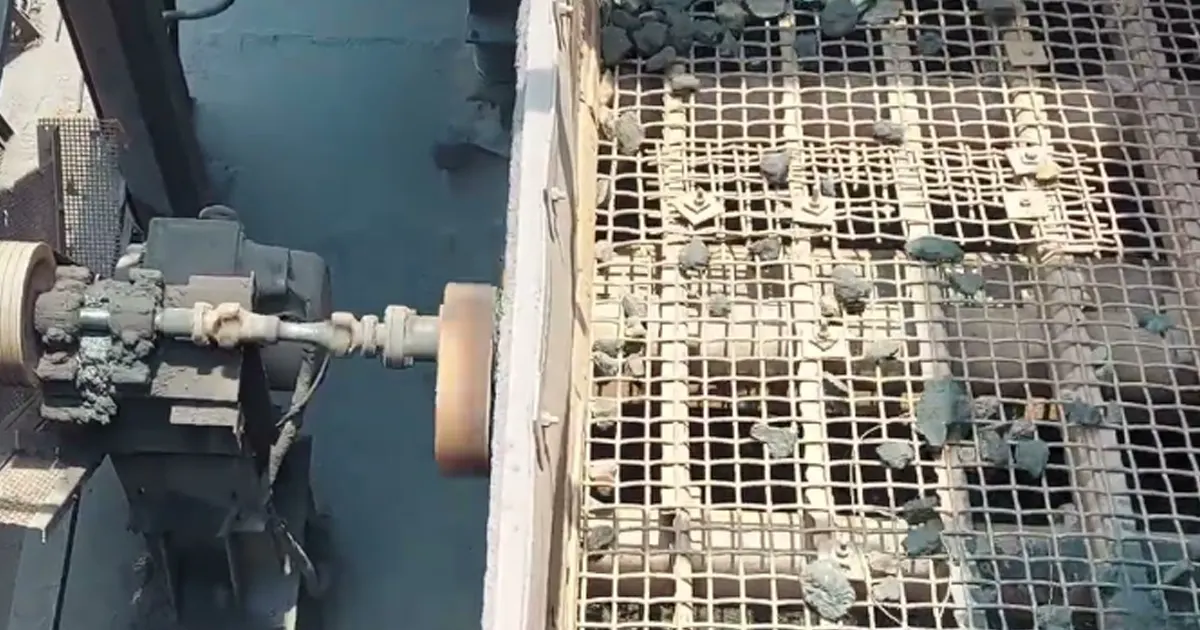
Iron ore screening is the “traffic control” of an iron ore plant. It decides what size material moves forward, what goes back for more crushing, and what becomes final product or feed for beneficiation. When screening is stable, you get consistent product sizing, protected crushers, lower circulating load, and less downtime. When screening is unstable, you see blinding, pegging, high wear, and throughput losses that ripple across the whole circuit.
This guide walks through the iron ore screening process step-by-step, then shares best practices, common problems and fixes, and the key data you should collect before making changes.
Key Takeaways
- Iron ore screening controls particle size so crushers and mills run smoothly.
- Most problems come from bad feed distribution, wrong bed depth, wet/sticky fines, or the wrong screen media—not from “weak machines.”
- Screen media choice is often the fastest way to improve throughput and reduce downtime.
- In closed circuits, unstable screening increases circulating load, wear, and energy use.
- The feed (impact) zone wears first. Protect it to extend screen life.
- Collect basic data (tph, moisture, cut size, current media life) before changing settings.
What Is the Iron Ore Screening Process?
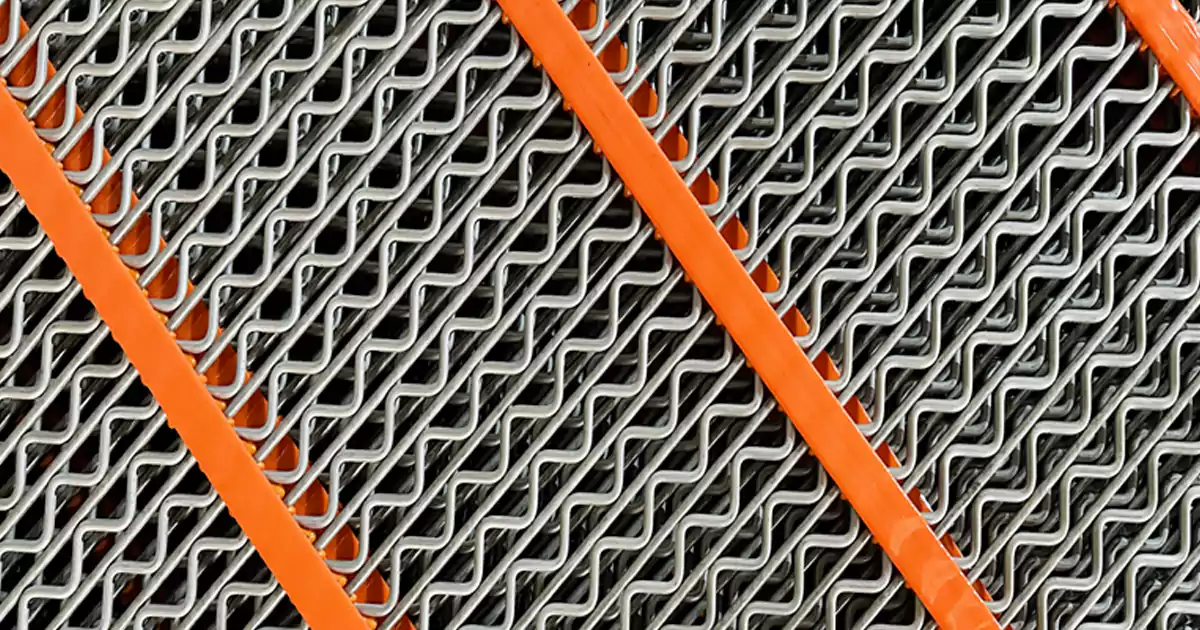
Iron ore screening is the separation of ore into size fractions using screening equipment (typically vibrating screens) and screen media (woven wire, self-cleaning wire, polyurethane, rubber, etc.). The purpose is to:
- Remove oversize before it damages or overloads crushers (scalping)
- Control top-size and cut-size for downstream crushing or grinding
- Stabilize product specifications (lump/fines split, sinter feed sizing, etc.)
- Reduce unnecessary energy use by sending only what needs crushing back into the circuit
Screening is not just “a sieve.” It’s a controlled process influenced by ore moisture, clay/slimes, particle shape, feed distribution, vibration parameters, and—most importantly—screen media selection and maintenance.
Where Screening Fits in an Iron Ore Plant Flow
Screening typically appears at multiple points:
- Pre-screen / scalping: remove large lumps, trash, or clay balls before primary crushing
- Primary screening: after a crusher to control what moves forward vs. what recirculates
- Secondary/tertiary closed-circuit screening: maintain a tight cut size and manage circulating load
- Final product screening: meet customer or process specs (lump, fines, sinter feed)
- Dewatering / desliming (when wet processing): reduce moisture and remove slimes that hurt efficiency
A key idea: the “best” screening setup is different for dry, hard ore than for wet, sticky, or clay-rich ore. Your process design and screen media must match your ore condition.
Step-by-Step: Iron Ore Screening Process (Practical Walkthrough)
Below is a practical walkthrough most plants will recognize. Your plant may combine or skip steps, but the logic stays the same: prepare feed, separate by size, control recirculation, and protect downstream equipment.
Process map of screening steps
| Step | Stage name | What it does | Why it matters | What to watch |
|---|---|---|---|---|
| 1 | Feed preparation | Controls feed rate and distribution onto the deck | Prevents overload and poor stratification | Uneven feed, surges,偏载, too thick/thin bed |
| 2 | Scalping (pre-screen) | Removes oversize or trash before crushing | Protects crusher, improves crusher efficiency | Grizzly gaps, sticky oversize, clay balls |
| 3 | Primary screening | Separates coarse fractions, sets top-size | Stabilizes downstream load | Cut size drift, carryover, wear at impact zone |
| 4 | Secondary/tertiary screening (closed circuit) | Controls final cut size with recirculation | Reduces over-crushing, improves product consistency | Circulating load, screen blinding, pegging |
| 5 | Final product screening | Tightens product spec for shipment or next stage | Prevents off-spec product | Near-size build-up, screen life, sealing leaks |
| 6 | Dewatering/desliming (if wet) | Removes water and slimes | Improves screening and downstream separation | Water balance, spray pattern, slime carryover |
Step 1: Feed Preparation (Uniform Feed Wins)
Even a perfect screen can perform poorly with bad feed. Aim for a stable feed rate, even distribution, and an appropriate bed depth. Practical actions include:
- Keep feeder speed stable; avoid surges
- Use proper chute angles and liners to reduce segregation
- Use a feed box / spreader plate to distribute across the full deck width
- Reduce free-fall height (protects media and reduces excessive breakage)
Step 2: Scalping (Remove the “Problems” Early)
Scalping is a high-value stage. It removes lumps, trash, and clay balls that can destroy screen efficiency later. Common scalping tools include grizzlies, heavy-duty scalper screens, or roller screens.
Best practice: If your downstream screens blind frequently, don’t only “fight” the blinding—first check whether your scalping stage is letting too many problem pieces through.
Step 3: Primary Screening (Set the Circuit Up for Stability)
Primary screening often splits material into:
- “Correct size” to move forward
- “Oversize” to return to crushing (or go to secondary crushing)
Success here depends on:
- Correct aperture selection relative to target cut size
- Adequate open area (to reduce bed depth issues)
- Strong impact zone protection (highest wear location)
Step 4: Secondary/Tertiary Closed-Circuit Screening (Where Efficiency Is Made)
Closed-circuit screening is where small mistakes become big costs. When the screen cut is not stable, circulating load rises, crushers choke, and product sizing drifts.
Best practices include:
- Keep feed distribution uniform across decks
- Avoid overloading the deck with fines or slimes
- Tune vibration parameters to improve stratification (don’t chase throughput at the cost of separation)
Step 5: Final Product Screening (Protect Your Spec)
Final product screening should prioritize consistency, not just tons per hour. If you sell or feed a downstream process that needs a spec, stability matters more than occasional peak throughput.
Key points:
- Ensure good side sealing to prevent bypass
- Watch for near-size accumulation (it drives pegging/blinding)
- Use media appropriate for the final cut (often finer, higher risk of plugging)
Step 6: Dewatering / Desliming (If Wet)
Wet ore adds two problems: water and slimes. Slimes can coat wire and reduce effective aperture; too much water can “float” fines and reduce stratification.
Best practices:
- Use sprays correctly (enough to wash, not enough to flood)
- Consider a dedicated desliming step before tight screening
- Use dewatering screens (often higher frequency) when moisture control is required
Key Equipment Used in Iron Ore Screening
Most iron ore plants rely on vibrating screens, but the “right” screen type depends on particle size, moisture, and capacity demands.
- Linear vibrating screens: common in many circuits; good for general sizing
- Banana screens (multi-slope): handle high capacity and improve stratification
- High-frequency screens: better for fines sizing and dewatering applications
- Grizzly / scalper screens: heavy-duty pre-screening, impact tolerance
- Roller screens: sometimes used to handle sticky lumps before crushing
Practical rule: If your ore is wet/sticky and blinding is frequent, “more power” is rarely the fix. The combination of screen media type + deck design + water/slime management usually matters more.
Screen Media Selection (Where Most Plants Win or Lose)
Screen media has a direct impact on:
- Throughput (open area and stratification)
- Separation accuracy (cut stability)
- Blinding/pegging behavior
- Wear life and downtime
Quick selection matrix
| Condition / Goal | Woven wire | Self-cleaning wire | Polyurethane (PU) | Rubber |
|---|---|---|---|---|
| Highest open area & sharp sizing | Excellent | Very good | Moderate | Low–moderate |
| Wet/sticky ore, blinding risk | Fair | Excellent | Good | Good |
| High abrasion (hard ore) | Good (depends on wire/heat treatment) | Good | Excellent | Very good |
| High impact at feed zone | Fair (use heavier wire / impact plates) | Fair | Good | Excellent |
| Fine screening (small apertures) | Good (risk of pegging) | Very good | Very good | Moderate |
| Fast changeout / maintenance | Good | Good | Panel-based often easier | Panel-based often easier |
How to use this table:
- If your main pain is blinding/pegging, self-cleaning wire or appropriate PU design often helps.
- If your main pain is wear life, PU or rubber may win—especially in high-abrasion, high-impact zones.
- If you need maximum capacity and crisp sizing, woven wire typically leads due to higher open area.
Aperture and hole shape matters
- Square/rectangular openings: common for general sizing
- Slotted openings: can help throughput in some flows, but may affect shape control
- Tighter cuts: increase near-size proportion → higher risk of pegging/blinding
Best practice: Don’t select media by habit. Select it by ore condition and failure mode (blinding vs. wear vs. impact vs. spec control).
Best Practices to Improve Screening Efficiency
Control the bed depth and stratification
Separation improves when fines migrate down and oversize rides up. That requires:
- Proper deck loading (not overloaded, not too empty)
- Even feed distribution across width and length
- Enough “travel time” on deck (affected by slope, speed, and vibration)
Tune vibration parameters with purpose
Instead of fixed numbers, use principles:
- If stratification is poor: adjust to encourage particle movement and layering
- If carryover increases: check bed depth, spray usage, and near-size build-up
- If media life is poor: check impact zone, tensioning, and fastener wear
Manage water and slimes intentionally
- Use sprays to wash—not to flood
- Prevent slime carryover into tight cuts
- Consider desliming before critical sizing points
Protect the impact zone
Most screen damage begins where feed hits.
- Use heavier-duty media or wear liners at the feed end
- Consider segmented media to replace only the worn zones
- Reduce drop height where possible
Common Problems and Proven Fixes
Troubleshooting guide
| Symptom | Likely root cause | What to check first | Practical fixes |
|---|---|---|---|
| Blinding (holes covered) | Wet sticky fines, clay/slimes, wrong media | Ore moisture, slime content, spray pattern | Self-cleaning wire; adjust sprays; consider PU with anti-blind design; pre-deslime |
| Pegging (particles wedged) | Near-size particles, aperture too close to particle shape | Cut size vs aperture; particle shape | Change aperture shape/size; switch to self-cleaning wire; reduce near-size load upstream |
| Low efficiency (carryover) | Overload, poor stratification, uneven feed | Bed depth, feeder distribution, slope | Improve feed distribution; tune vibration; consider banana screen; reduce surges |
| Rapid wear at feed end | High impact, abrasion, insufficient protection | Drop height, feed box liners | Heavy-duty media at impact zone; add liners; reduce drop; segment panels |
| Screen “runs hot” or high vibration issues | Mechanical problems, imbalance, loose fasteners | Bolts, bearings, exciter condition | Maintenance inspection; torque checks; align and balance system |
| Bypass/leakage at sides | Poor sealing, worn side plates or clamps | Side seals, tension bars | Replace seals; correct clamping; check deck flatness |
Operating & Maintenance Checklist
Good screening performance is usually “maintenance + discipline.” Here’s a practical checklist you can adapt.
Routine checklist
| Frequency | What to inspect | Why it matters | What “bad” looks like |
|---|---|---|---|
| Every shift | Blinding/pegging zones | Early detection prevents big losses | Plugged sections, heavy carryover |
| Daily | Tension/fasteners/clamps | Loose media reduces efficiency & life | Slack spots, broken hooks, loose bolts |
| Weekly | Impact zone wear | Prevents sudden failure | Broken wires/panels at feed end |
| Weekly | Springs/isolators | Protects structure and stability | Cracks, uneven compression |
| Monthly | Screen box cracks | Avoid catastrophic downtime | Hairline cracks near high-stress points |
| Monthly/quarterly | Exciter/bearing condition | Reliability and safety | Heat, noise, abnormal vibration |
Practical Examples by Ore Condition
Scenario 1: Dry, hard, abrasive ore (high wear, high throughput)
Focus:
- High open area for capacity (often woven wire)
- Strong wear strategy in the impact zone (heavier wire, liners, segmented replacement)
- Maintain stable feed and prevent excessive fines generation
Scenario 2: Wet, sticky ore (blinding dominates)
Focus:
- Reduce blinding with self-cleaning wire or anti-blind media designs
- Improve wash strategy (spray pattern, not flooding)
- Add or improve pre-desliming/scalping to remove the “sticky troublemakers”
Scenario 3: High impact + abrasion (the worst mix)
Focus:
- Reinforced feed zone (rubber/PU panels or heavy-duty wire + liners)
- Segmental design (replace only worn sections)
- Tight mechanical maintenance (loose components accelerate failures)
Data You Should Collect Before Optimizing
Before changing equipment or media, gather facts. These data points make troubleshooting faster and recommendations more accurate:
- Throughput (tph) and surges (min/avg/max)
- Feed top size and size distribution (especially near-size percentage)
- Moisture and clay/slime content (by season if possible)
- Target cut size and acceptable product tolerance
- Current screen details:
- Screen type, deck slope, frequency/amplitude (or manufacturer settings)
- Screen area and number of decks
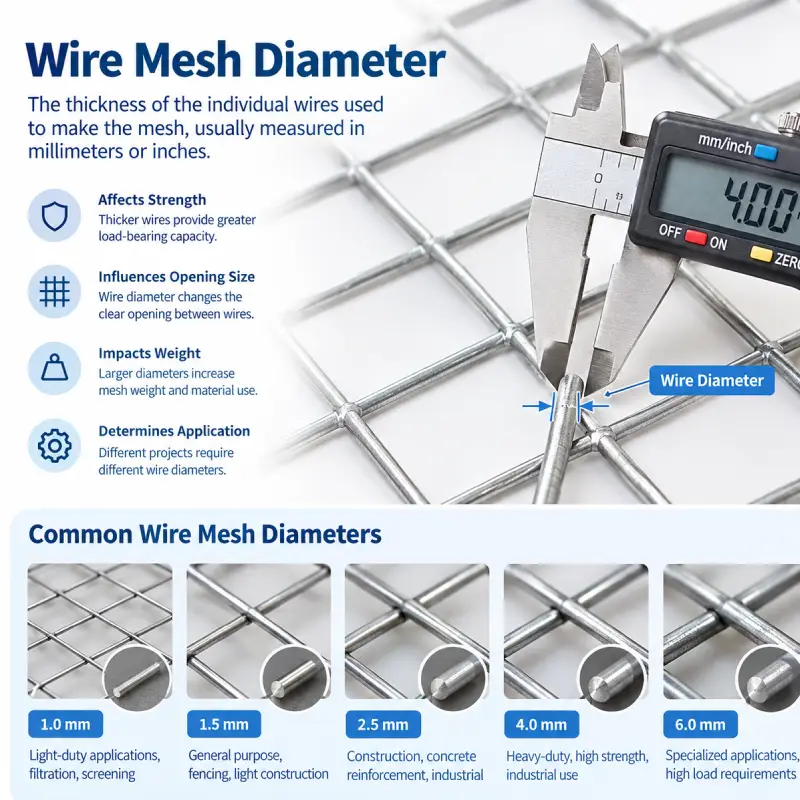
- Current media type, aperture, wire diameter/thickness, open area, typical service life
- Failure symptoms:
- Where blinding occurs (feed end vs discharge)
- Where wear occurs (impact zone vs full deck)
- Downtime reasons and frequency
Conclusion
A strong iron ore screening process is built on three foundations: stable feed, correct screen media, and disciplined operating/maintenance practices. If your plant struggles with blinding, pegging, low efficiency, or short media life, start by matching fixes to the real failure mode—then validate improvements with consistent data.
As a screening media manufacturer, we typically see the fastest wins come from (1) improving feed distribution, (2) selecting the right media for moisture and abrasion, and (3) protecting the impact zone—without overcomplicating the circuit.
If you want a practical media and aperture suggestion, share your throughput, target cut size, moisture/slime level, screen type, and current aperture/media, and you can usually narrow down the best option quickly.
FAQ
What is the iron ore screening process?
It is the step where iron ore is separated by size using screens. Oversize goes to crushing or back to the crusher, and correct-size material moves forward.
Why is iron ore screening important?
It protects crushers, controls product size, and keeps the whole plant stable. Good screening reduces energy use and unplanned downtime.
What causes screen blinding in iron ore?
Blinding usually happens when ore is wet and sticky, or when there are fine clays/slimes. The holes get covered, so material cannot pass through.
What causes pegging?
Pegging happens when near-size particles get stuck inside the openings. It is common with angular material and tight cut sizes.
How can I reduce blinding and pegging?
Common fixes include:
- Improve scalping or desliming before the screen
- Use correct spray water (wash, don’t flood)
- Switch to self-cleaning wire or anti-blind screen media
- Adjust aperture shape/size if near-size is high
Which screen media is best for iron ore?
It depends on the ore:
- Woven wire: high open area and sharp sizing (good for capacity)
- Self-cleaning wire: best for wet/sticky ore and blinding issues
- PU panels: long wear life, good for abrasion and fine screening
- Rubber: strong in high impact areas, quieter, longer life in some zones
What are the most important factors for screening efficiency?
The biggest drivers are:
- Even feed distribution across the deck
- Correct bed depth (not overloaded)
- Good stratification (time and movement on the deck)
- Proper moisture/slime control
Why does the feed end wear out so fast?
That area takes the highest impact. Reduce drop height, improve feed spread, add liners, and use stronger media in the impact zone.
How can I improve screening without changing the machine?
Start with basics: stabilize feed rate, fix chute angles, improve distribution plates, tighten clamps, replace worn seals, and clean/check the deck regularly.